


Uncategorized
Who can play a Jew — A debate in Germany
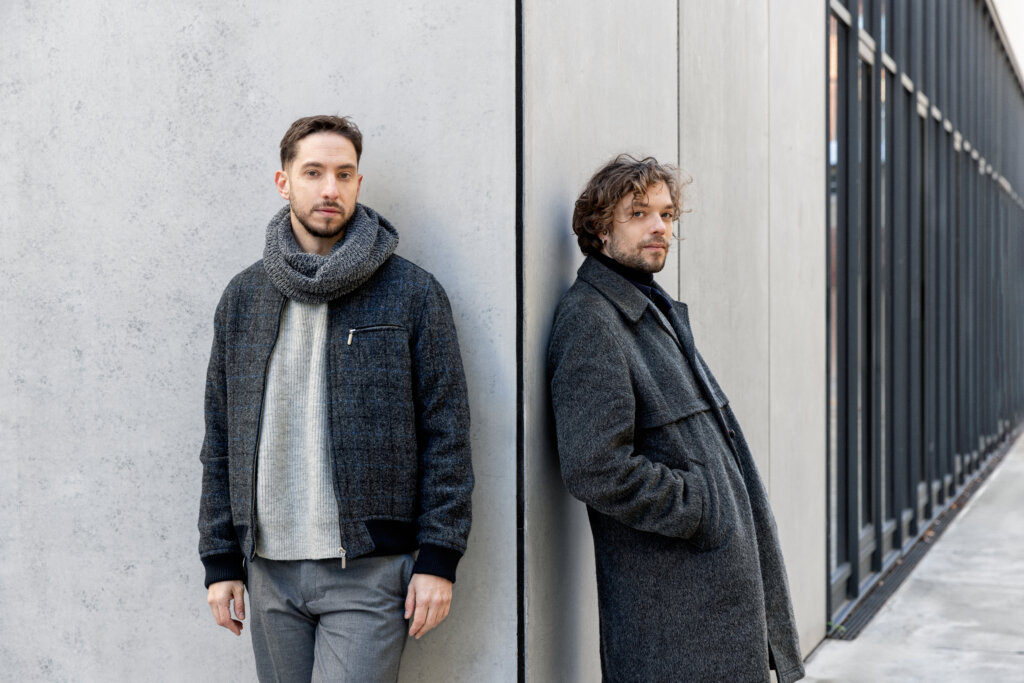
אױף דער בינע פֿון „דײַטשן טעאַטער“ אין בערלין טראָגט דער בלאָנדער שױשפּילער מאָריץ קינעמאַן אַ טלית. ס׳איז שװער צו זײַן אַ ייִד אין דײַטשלאַנד, גיט ער צו פֿאַרשטײן. שפּעטער שילט ער אין עולם אַרײַן מיט אױסגעשרײען פֿון „פּאַסקודנע גױים!“
מע װאָלט געקענט מײנען אַז קינעמאַן איז אַ ייִד, און אַז ער רעדט פֿאַר זיך אַלײן. ס׳איז אָבער נישט אַזוי פּשוט.
זײַן חבֿר דוד, דערציילט ער אין דער סאָלאָ־פֿאָרשטעלונג, איז אַן אַקטיאָר, נישט קיין ייִד, װאָס שפּילט גערן ייִדישע ראָלעס. ס׳איז אים אָבער שווער. „פּלוצעם װילן אַלע רעזשיסאָרן בלױז ׳עכטן׳ ייִדן!“ זאָגט ער. אײן מאָל האָט דוד אַפֿילו געבאָרגט בײַ מאָריצן זײַן יאַרמלקע כּדי צו פֿאַרבעסערן די שאַנסן צו קריגן אַזאַ ראָלע.
קינעמאַן שפּילט דאָ אַ פּאַרשױן וואָס, כאָטש ער טראָגט אַ טלית, איז נישט קײן ייִד. די פּיעסע הײסט טאַקע „פֿאַלשע ייִדן“ און זײַן פּאַרשױן איז באַשײַמפּערלעך באַזירט אױף אַ דײַטשן זשורנאַליסט אונטערן נאָמען פֿאַביאַן װאָלף.
יאָרנלאַנג האָט פֿאַביאַן װאָלף פּובליקירט פּראָװאָקאַטיװע פּאָליטישע עסײען פֿון אַ ייִדישן קוקװינקל אין אַ נאַציאָנאַלער צײַטונג – ביז זײַן לעצטן עסײ דאָרט אין 2023, װען ער האָט זיך מודה געװען אַז זײַנע מעשׂיות װעגן אַ ייִדישער באָבען זענען… פּוסטע באָבע־מעשׂיות. פֿאַביאַן װאָלף איז געװען אַזאַ מין „פֿאַלשער ייִד“, אַ װאָלף אין שאָפֿנפּעלץ, און פּונקט ווי וואָלף, האָט קינעמאַן דאָ אויך אָפּגענאַרט דעם עולם.
נאָך דער פֿאָרשטעלונג האָב איך בײַם שענק אין דער פֿאָיע פֿון טעאַטער געכאַפּט אַ שמועס מיט קינעמאַן און דעם דראַמאַטורג־רעזשיסאָר פֿון דער פּיעסע, נעם ברוזילאָװסקי. „קודם־כּל װיל איך װיסן, צי ביסטו טאַקע אַ ייִד?“ האָב איך געפֿרעגט בײַ קינעמאַן.
און איצט קלער איך, צי איז זײַן ענטפֿער װיכטיק?
ברוזילאָװסקי, װאָס איז יאָ אַ ייִד, האָט מיר דערקלערט׃ „ס׳איז מיר געװען װיכטיק צו טרעפֿן אַ בלאָנדן אַקטיאָר פֿאַר דער ראָלע. סוף־כּל־סוף האַנדלט זיך די פּיעסע נישט װעגן ייִדן, נאָר װעגן דײַטשן און זײערע נעװראָזן.“
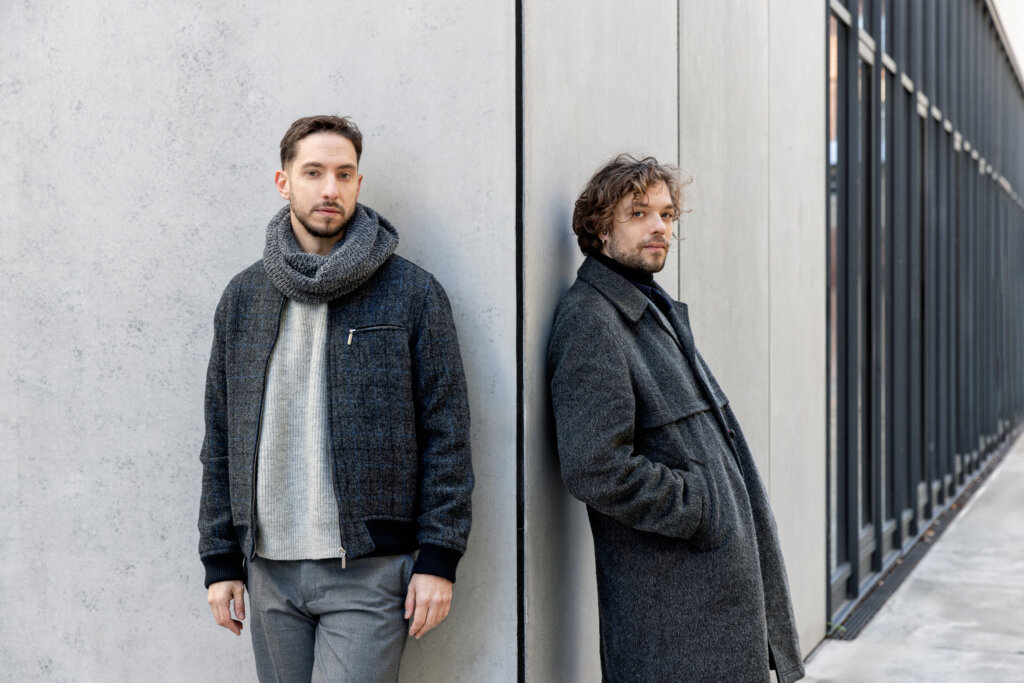
די צוקוקערס פֿון דער פּיעסע האָבן נישט געוווּסט צי קינעמאַן איז אַ ייִד ביזן סוף. אַפֿילו דער קלאַנג־טעכניקער האָט הינטער די קוליסן געשטעלט די זעלבע פֿראַגע. קינעמאַן און ברוזילאָװסקי װילן דער עולם זאָל פֿאַרגעסן די סטערעאָטיפּן װעגן ייִדישן אױסזען און גלײבן, בשעת־מעשׂה, אַז קינעמאַן איז יאָ אַ ייִד.
צװישן זײַנע מאָנאָלאָגן האָט מען איבערגעשפּילט אױסצוגן פֿון רעקאָרדירטע אינטערװיוען װעגן די אַזױ גערופֿענע „קאָסטיום־ייִדן“. דאָס איז אַן אמתער פֿענאָמען׃ דײַטשע שאַרלאַטאַנען װאָס מאַכן זיך פֿאַר ייִדן און רעדן עפֿנטלעך װעגן דעם חורבן פֿון אַ ייִדישן קוקװינקל. פֿריִער האָבן זיי זיך געמאַכט פֿאַר לעבן געבליבענע פֿונעם חורבן, און הײַנט — װי זײערע קינדער און אײניקלעך. עטלעכע „קאָסטיום־ייִדן“ האָבן, אײדער מע האָט זײ אַנטפּלעקט, דערגרײכט גרױסע הצלחה. אײנער איז אַפֿילו געװאָרן דער ראָש פֿון אַ ייִדישער קהילה מיט הונדערט מיטגלידער.
אין אַן אינטערוויו האָט באַרבאַראַ שטײַנער, די מחברטע פֿונעם בוך„די אינסצענירונג פֿון ייִדישקײט“, געטענהט אַז קאָסטיום־ייִדן „דערגאַנצן אַ בלױז אין מאַרק“. אין אַ געזעלשאַפֿט מיט קאָלעקטיװער שולד לגבי אַ מינאָריטעט ציִען שאַרלאַטאַנען צו אַ היפּשן עולם. זײ פֿאַרשטײען גאַנץ גוט װעלכע רעפּליקן פֿאַרקױפֿן זיך.
ענלעכע פֿאַלן געפֿינט מען אין אַנדערע געזעלשאַפֿטן. אין קאַנאַדע, למשל, האָט מען אין די לעצטע יאָרן אַנטדעקט שרעקלעכע באַװײַזן פֿונעם אַמאָליקן גענאָציד אױף די אָרטיקע ערשטע אײַנגעבוירענע פֿעלקער. גלײַכצײַטיק האָט מען אַנטפּלעקט אַז דער פּרעמירטער קאַנאַדער שרײַבער טאָמאַס קינג, באַקאַנט פֿאַר זײַנע ביכער אָנגעשריבן פֿון אַ טשעראָקי־קוקװינקל, שטאַמט בכלל נישט פֿון די ערשטע פֿעלקער.
בסך־הכּל לעבן אין אַ לאַנד פֿון 83 מיליאָן מענטשן בלויז אַ 200 טױזנט ייִדן, לרובֿ אימיגראַנטן פֿון אַמאָליקן ראַטן־פֿאַרבאַנד אָדער מדינת־ישׂראל – ווי אויך אַ גרױסע צאָל גרים פֿון דײַטשן אָפּשטאַם. דער „צענטראַלער ראַט פֿון ייִדן אין דײַטשלאַנד“ פֿאַרטרעט בלױז אַרום אַ העלפֿט פֿון די ייִדן, װײַל נישט אַלע ייִדן פֿילן זיך צוגעבונדן צו דער אָפֿיציעלער ייִדישער קהילה אין זײער שטאָט. נישט געקוקט אױף דער קלײנער פּראָפּאָרץ ייִדן אין לאַנד – 0.24% – קומען זײ צו רײד בײַ כּלערלײ געזעלשאַפֿטלעכע דעבאַטעס: בפֿרט װעגן געשיכטע, װעלטפּאָליטיק און דער ראָלע פֿון אימיגראַנטן אין דײַטשלאַנד. מע קוקט אױף ייִדן װי די „גוטע, אַסימילירטע“ מינאָריטעט. להיפּוך — לױטן ראַסיסטישן נאַראַטיװ — אַסימילירן זיך קוים די מאַכמעדאַנער אימיגראַנטן און פּליטים און ברענגען מיט זיך אַן „אימפּאָרטירטן אַנטיסעמיטיזם“.
דער סאָציאָלאָג י. מיכל באָדעמאַן ז״ל און דער פּאָעט מאַקס טשאָלעק באַשרײַבן די עפֿנטלעכע דיסקוסיע װעגן ייִדן װי אַ מין מעטאַפֿאָרישן בלאָף, דעם אַזױ גערופֿענעם „אָנדענק־טעאַטער“: צו ערשט שרײַבט אַ נישט־ייִדישער דראַמאַטורג אָן דעם סצענאַר; דערנאָך קלײַבט ער אויס אַ ייִד װאָס זאָל רעדן פֿאַר אַלע ייִדן אין דײַטשלאַנד; אָט דער „רעפּרעזענטאַנט“ זאָגט אױס דעם דראַמאַטורגס רעפּליקן ווי געהעריק — און דער נישט־ייִדישער עולם אַפּלאָדירט. די מעטאַפֿאָרישע פּיעסע רעדט זיך װעגן די טױטע ייִדישע קדושים פֿון אַ מאָל, װעגן אַ נײַעם אױפֿבלי פֿון ייִדישקײט אין דײַטשלאַנד און מדינת־ישׂראל, װעגן אַנטיסעמיטיזם בײַ לינק־געשטימטע מענטשן און בײַ מאַכמעדאַנער, װעגן דײַטשן תּשובֿה טאָן און ייִדישן מוחל זײַן. אמתע ייִדן מיט אײגענע מעשׂיות אָדער מיט די „פֿאַלשע“ מײנונגען געהערן נישט אױף אַזאַ מעטאַפֿאָרישער בינע.
די שרײַבערין דבֿורה פֿעלדמאַן, באַקאַנט פֿאַר איר בוך „נישט־אָרטאָדאָקסיש“ און דער נעטפֿליקס־אַדאַפּטאַציע דערפֿון, האָט געשריבן אַ בוך אױף דײַטש מיטן טיטל „ייִדן־פֿעטיש“. לױט איר איז דער איצטיקער דײַטשער פֿילאָסעמיטיזם ענג פֿאַרבונדן מיטן אַלטן אַנטיסעמיטיזם. בײדע פֿאַרגרינגערן און פֿאַרשטומען די ייִדישע פֿילמיניקײט.
דאָס אויסטײלן ראָלעס אין טעאַטער קען זײַן פּריקרע, אַפֿילו ווען עס האָט גאָרנישט צו טאָן מיט אידענטיטעט. קינעמאַן האָט אפֿשר אַ מוסקוליעזן גוף אָבער ער זעט נישט אויס ווי קיין קינאָ־שטערן. די ראָלע־דירעקטאָרן (casting directors, בלע״ז) װײסן אָפֿט נישט װעלכע ראָלעס פּאַסן אים: איז ער אַ „נערד“ צי אַ „העלד“? „װי אַ שױשפּילער בין איך בײַ די ראָלע־אויסטײלער אין די הענט“, האָט קינעמאַן געזאָגט.
אין 2023 האָט דער אַמעריקאַנער נישט־ייִדישער אַקטיאָר־רעזשיסאָר ברעדלי קופּער, שפּילנדיק דעם דיריגענט און קאָמפּאָזיטאָר לענאַרד בערנשטײן אינעם פֿילם „מאַעסטראָ“, געטראָגן אַ פֿאַלשע „ייִדישע“ נאָז. דאָס האָט דערפֿירט צו אַ קלײנעם סקאַנדאַל, אָבער בערנשטײנס קינדער האָבן קופּערן פֿאַרטײדיקט.
ס׳איז שױן דורכױס פּסול, אַז אַ װײַסער אַקטיאָר זאָל זיך אױספֿאַרבן דאָס פּנים און שפּילן אַן אַפֿראָ־אַמעריקאַנער אױף דער בינע. אַזױ האָט געטאָן דער ייִדישער אַקטיאָר על דזשאָלסאָן (אַסאַ יאולסאָן) אין די פֿאַראײניקטע שטאַטן אין די 1910ער יאָרן אָן – און איז דעמאָלט געװאָרן אַ שטערן פֿון טעאַטער און קינאָ, דער „מלך פֿון ׳בלעקפֿײס׳“. מיט זײַנע קאָמישע פֿאָרשטעלונגען פֿון טראַדיציאָנעלע אַפֿראָ־אַמעריקאַנער לידער האָט דזשאָלסאָן, צװײ דורות נאָך דער שקלאַפֿערײַ, צעזײט און צעשפּרײט כּלערלײ ראַסיסטישע סטערעאָטיפּן.
אָבער װער מעג דען שפּילן אַ ייִד, און װער נישט? װײַטער׃ װער מעג רעדן פֿאַר די ייִדן אין דײַטשלאַנד 81 יאָר נאָכן חורבן?
אױף אָט די פֿראַגעס האָט קײנער אינעם שענק פֿון „דײַטשן טעאַטער“ געהאַט קײן קלאָרן ענטפֿער. סיר הענרי, אַ שױשפּילער בײַ דער בערלינער „פֿאָלקסבינע“, אַ געבױרענער אין קאַנאַדע, טענהט׃ „בעסער זאָלן דאָס די ייִדן דערצײלן די ייִדישע װיצן. אױף דער בינע, פֿונדעסטװעגן, װענדט זיך אַלץ אינעם קאָנטעקסט און די כּללים זענען נישט אַזױ פֿעסט.“
דער ייִדישער רעזשיסאָר ברוזילאָװסקי איז מסכּים׃ „מיר האָבן נישט קײן כּללים אין טעאַטער.“
The post Who can play a Jew — A debate in Germany appeared first on The Forward.
Uncategorized
Car Torched in Antwerp in Suspected Antisemitic Attack, Says Belgian Official

A Jewish man rides past Belgian army personnel patrolling a street as part of a deployment of soldiers outside Jewish institutions in Antwerp and Brussels following attacks at Jewish sites in Belgium and other European countries, in Antwerp, Belgium, March 23, 2026. Photo: REUTERS/Yves Herman
The torching of a car overnight in Antwerp, for which two minors were arrested, is being treated as a suspected antisemitic attack, a Belgian official said on Tuesday.
European countries including Belgium, the Netherlands, and Britain have witnessed incidents targeting the Jewish community since the United States and Israel launched their war on Iran on Feb. 28.
Belgium on Monday deployed soldiers on the streets of its biggest cities to bolster security at Jewish sites including synagogues and schools.
A spokesperson for the Antwerp prosecutor said an investigation was under way, and that the two suspects had been arrested shortly before midnight on Monday, moments after the attack.
They said a video circulating on social media that purportedly showed the arson attack appeared authentic and was part of the investigation. Reuters did not independently verify the video.
Over the past two weeks, synagogues have been attacked in Liege, Belgium, and in the Dutch city of Rotterdam, as well as a Jewish school in Amsterdam. In Britain, counter-terrorism officers are leading an investigation into an attack on Jewish community ambulances.
“There must be a thorough investigation and decisive action to put an end to this climate of intimidation before it spirals further,” Israel’s ambassador to Belgium, Idit Rosenzweig-Abu, said on X.
The SITE Intelligence website said an Iran-aligned multinational militant collective called Islamic Movement of the People of the Right Hand had claimed responsibility for the attack near a synagogue in Golders Green, London.
It said the group had been behind the fires in Liege, Rotterdam, and Amsterdam.
Mark Rowley, London’s police chief, said the claim was one of the lines of inquiry being pursued.
Uncategorized
Iran Toughens Negotiating Stance Amid Mediation Efforts, Sources Say

Iranian Foreign Minister Abbas Araqchi speaks during a press conference following talks with Russian Foreign Minister Sergei Lavrov in Moscow, Russia, Dec. 17, 2025. Photo: REUTERS/Ramil Sitdikov/Pool
Iran’s negotiating posture has hardened sharply since the war began, with the Islamic Revolutionary Guard Corps (IRGC) exerting growing influence over decision-making, and it will demand significant concessions from the United States if mediation efforts lead to serious negotiations, three senior sources in Tehran said.
In any talks with the US, Iran would not only demand an end to the war but concessions that are likely red lines for US President Donald Trump – guarantees against future military action, compensation for wartime losses, and formal control of the Strait of Hormuz, the sources said.
Iran would also refuse to negotiate any limitations to its ballistic missile program, they said, an issue that had been a red line for Tehran during the talks that were taking place when the US and Israel launched their attack last month.
Trump said on Monday that Washington had already had “very, very strong talks” with Tehran more than three weeks into the war, but Iran has publicly denied this.
The three senior sources said Iran had only had preliminary discussions with Pakistan, Turkey, and Egypt over whether the groundwork existed for talks with the United States over ending the war.
A European official said on Monday that, while there had been no direct negotiations between Iran and the US, Egypt, Pakistan, and Gulf states were relaying messages. A Pakistani official and a second source also said on Monday that direct talks on ending the war could be held in Islamabad this week.
Pakistan‘s prime minister said on Tuesday he was willing to host talks between the US and Iran on ending the war in the Gulf, a day after Trump postponed threats to bomb Iranian power plants, saying there had been “productive” talks.
However, the US was expected to deploy thousands of troops from the elite 82nd Airborne Division to the Middle East, two people familiar with the matter told Reuters on Tuesday, adding to the massive military buildup in the region and fueling fears of a prolonged conflict.
In a post on X, Prime Minister Shehbaz Sharif said Pakistan welcomed and fully supported ongoing efforts to pursue dialogue to end the war.
“Subject to concurrence by the US and Iran, Pakistan stands ready and honored to be the host to facilitate meaningful and conclusive talks for a comprehensive settlement,” he said.
A Pakistani government source said discussions on a meeting were at an advanced stage and if it did happen, “a big ‘if,’” it would take place within a week. Pakistan has long-standing ties to neighboring Iran‘s Islamic Republic and has been building a relationship with Trump.
If any such talks were arranged, Iran would send Parliament Speaker Mohammad Baqer Qalibaf and Foreign Minister Abbas Araqchi to attend, the three Iranian sources said, cautioning that any decisions would ultimately lie with the hardline IRGC.
Iran’s use of ballistic missiles and its ability to effectively close the Strait of Hormuz, through which about a fifth of the world’s oil and liquefied natural gas usually flows, have been its most effective responses to the US-Israeli strikes.
It could not agree to give these up without leaving itself defenseless against further attacks, analysts say.
Inside Iran, domestic concerns are also constraining Tehran’s maneuvering room in negotiations, the senior Iranian sources said.
These concerns included the greater clout of the Revolutionary Guards, uncertainty at the top of the system, with the new Supreme Leader Mojtaba Khamenei having not yet appeared in photographs or video since his appointment, and a public narrative of resilience in the war.
Uncategorized
The JCPOA’s Sunset Has Arrived — and Iran Just Proved It
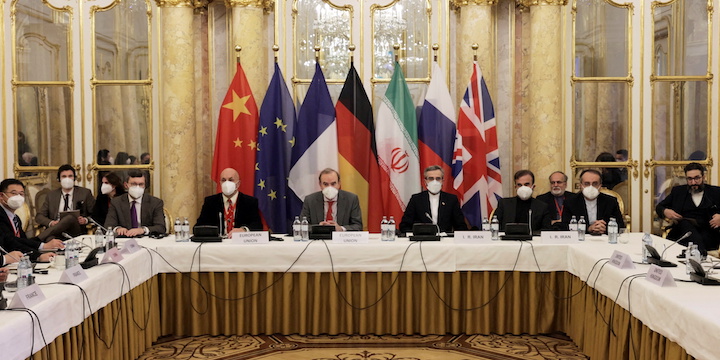
Deputy Secretary General of the European External Action Service (EEAS) Enrique Mora and Iran’s chief nuclear negotiator Ali Bagheri Kani and delegations wait for the start of a meeting of the JCPOA Joint Commission in Vienna, Austria December 17, 2021. EU Delegation in Vienna/EEAS. Photo: Handout via REUTERS
On the night of March 20-21, 2026, Iran launched two ballistic missiles at the joint US-UK base on Diego Garcia, an atoll in the Indian Ocean nearly 4,000 kilometers from Iranian territory. One failed in flight; the second was intercepted. Neither struck the base.
Iran’s Foreign Minister had stated weeks earlier that Tehran had deliberately capped its missile range at 2,000 kilometers. The gap between that claim and this week’s launch is not merely a military story. It is the story of the Iran nuclear deal (known as the Joint Comprehensive Plan of Action — JCPOA), and a direct answer to the question dividing Western foreign policy for a decade: what happens when the world tries to engage diplomatically with Iran?
On July 14, 2015, President Obama announced the JCPOA, and declared: “This deal is not built on trust. It is built on verification. We will be in a position to know if Iran is violating the deal.”
In 2026, that verification looks like a missile fired at a base 4,000 kilometers away, when Iran claimed its range limit was half that distance.
The Iran nuclear deal rested on a core assumption: that Tehran had come clean about its military history. The exposure of Iran’s nuclear archive by the Mossad, presented by Prime Minister Netanyahu in 2018, proved otherwise. Tehran had transferred its ambitions to a classified track, preserving its knowledge base intact and waiting for the restrictions to expire.
The JCPOA’s sunset clauses tell the story plainly. In October 2020, the UN arms embargo expired, allowing Iran to legally purchase tanks and aircraft from Russia and China. In October 2023, all restrictions on Iran’s ballistic missile and drone programs expired. In October 2025, the nuclear file was removed from the UN Security Council’s agenda.
Obama acknowledged this in an April 7, 2015 NPR interview with Steve Inskeep: in years 13 through 15, breakout times would shrink toward zero. The deal bought time. The question was always what that time would be used for.
The financial consequences were immediate. Iran gained access to over $100 billion in frozen assets. EU-Iran trade peaked at 20.7 billion euros in 2017. Airbus signed a $19 billion aircraft deal. TotalEnergies signed a $5 billion energy contract. Iran’s GDP grew 12.5 percent in 2016, per IMF data.
When asked in April 2016 whether this windfall would empower the Revolutionary Guard Corps, President Obama, speaking to Jeffrey Goldberg for The Atlantic’s “The Obama Doctrine,” argued that Iran’s infrastructure needs were too vast to leave room for IRGC expansion.
The evidence did not support that premise. The precision-guided munitions transferred to Hezbollah, the drones supplied to the Houthis, and the missile program that reached Diego Garcia were not funded by a government that ran short of money for domestic investment. The capital was fungible, and a revolutionary government proved capable of allocating it accordingly.
In that same interview, Obama called on Saudi Arabia and Iran to share the neighborhood, treating their rivalry as symmetrical rather than as a confrontation between a US partner and a state committed to violently reordering the region.
Within the administration, JCPOA preservation had become the flagship foreign policy achievement, generating a powerful institutional logic: any action risking Iranian withdrawal had to be weighed against losing the agreement. Governments in Jerusalem and Riyadh did not need to be told that escalation carried costs in Washington. Tehran read the architecture with precision. The years between 2015 and 2018 were among the most consequential in the construction of Iran’s regional proxy network.
The deal’s defenders argue, correctly, that it extended Iran’s nuclear breakout time from roughly two months to approximately one year, and that the 2018 withdrawal accelerated the nuclear advances it was meant to prevent. Iran today enriches uranium to 60 percent, a level prohibited under the agreement. These are factual claims.
The harder question is whether the framework was ever capable of a durable outcome. The sunset clauses suggest it was not designed to be. It was designed to buy time. In effect, it risked enabling Iran to reach a nuclear arsenal with international legitimacy. In such a scenario, the Middle East would face a new reality in which Iran possesses nuclear capability and reshapes the regional balance of deterrence. The missiles fired at Diego Garcia offer one answer.
Obama said in 2015 that the best outcome was to place Iran inside a box. The execution rested on assumptions that the nuclear archive, the proxy wars, and the Diego Garcia launch have each challenged in turn.
The next framework will need a different foundation: one that does not schedule its own obsolescence, does not assume capital flows moderate revolutionary ideology, and does not treat military responses to Iranian aggression as threats to diplomatic progress. Building it, before the current conflict forces the question under far worse conditions, is the most urgent task in Western foreign policy today.
Sagiv Steinberg is the CEO of the Jerusalem Center for Security and Foreign Affairs (JCFA), a leading Israeli research institute. He has an extensive background in senior leadership positions across the Israeli and global media landscape.