



World Views
Beyond the Ballot: Chicago Demands a Higher Standard of Civic Leadership

As political campaigns conclude, the conversation in major urban centres like Chicago must shift beyond mere electoral promises. Experts argue that the city urgently requires a redefined benchmark for civic leadership—one rooted not in political expediency, but in active, empathetic representation of all residents. This elevated standard demands that leaders actively listen when communities express distress and possess the fortitude to confront prejudice, even when it is politically inconvenient.
The Crisis of Trust and Targeted Hate
Amid rising community divisions and declining faith in established institutions, the ability of local government to foster unity is being severely tested. For specific groups, particularly the Jewish community in Chicago, concerns regarding the normalization of hate are growing alarmingly. Reports indicate that many residents feel unheard, witnessing a disturbing increase in anti-Jewish hate crimes. Civic leaders, it is argued, have a profound duty to treat these concerns with the utmost seriousness, focusing on local realities within neighbourhoods, schools, and places of worship.
From Policy to Practice: The Need for Action
The source material highlights a critical flaw in municipal governance: the gap between policy creation and measurable implementation. While mechanisms exist, such as the Commission on Human Relations, accountability demands clear, actionable next steps. Leaders must move past merely creating advisory bodies; they must ensure that recommendations lead directly to tangible change. Furthermore, the responsibility for combating hatred cannot rest solely on educational systems. All citizens bear a duty to speak out against prejudice, regardless of the identity of the targeted individual.
A Call for Inclusive Governance
The core message emphasizes that a city’s strength lies in its capacity for mutual understanding, not in pitting diverse communities against one another. Leaders must demonstrate that representing Chicago means representing its entirety—Jewish, Black, Latino, Christian, and Muslim communities alike. This requires creating safe public spaces where difficult conversations can occur without the assumption that disagreement automatically precludes dialogue. This civic culture, however, is not manufactured solely at City Hall; it is nurtured in daily interactions, classrooms, and dinner tables.
Ultimately, the litmus test for future leaders should be simple: Do their actions reflect their words? Do they genuinely bring people together or further drive them apart? Chicago deserves governance that prioritizes listening, action, and the unwavering defense of dignity for every single resident.
World Views
Source Scrutiny Mounts Over Al Jazeera’s Exclusive Hamas Military Footage
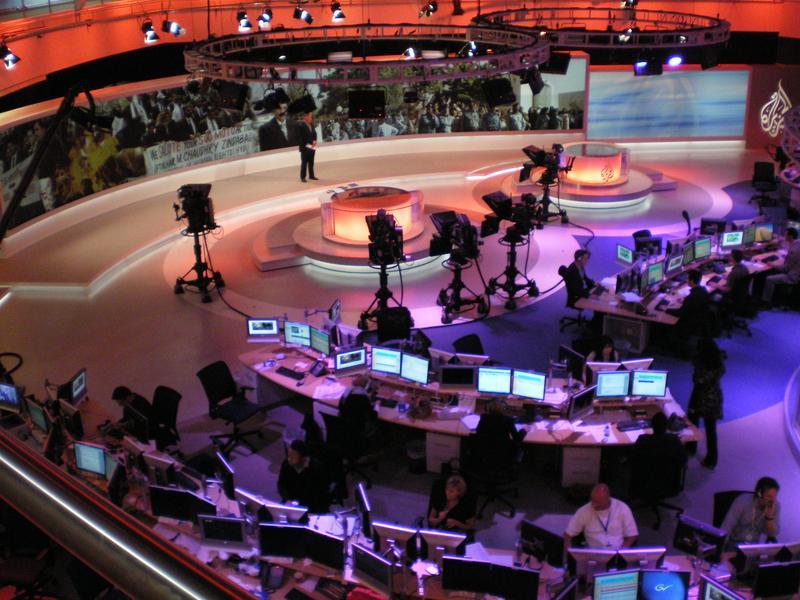
A recent investigative broadcast by the Qatari network Al Jazeera has ignited a significant debate regarding journalistic sourcing and control. The network aired an episode titled ‘What Is Hidden Is Greater,’ showcasing internal military records and footage of high-ranking Hamas commanders who have since been killed in combat. However, the channel has failed to provide any explanation for how it acquired this sensitive material, leading to intense scrutiny from media analysts and military observers alike.
The Content and The Contradiction
The program featured documents detailing a February 2023 meeting of Hamas’s military council, along with an operational order signed by Mohammed Deif in October 2023. The network promoted the episode as a presentation of top-secret information. Crucially, Hamas quickly amplified the broadcast by publishing the footage of its deceased leaders on Telegram within hours of the original airing. This immediate self-publication by the group makes the theory of an external, unauthorized leak increasingly difficult to maintain.
Allegations of Editorial Influence
The lack of clarity surrounding the source has prompted Israeli military documents to surface, suggesting a history of Hamas attempting to influence the narrative presented by the program’s producer, Tamer Al Misshal. These disclosures indicate that in 2022 and 2023, Hamas had sought to establish a secure communication line with the network and had issued directives related to the coverage of the conflict. One document reportedly instructed Al Misshal to ensure the group’s approval before airing material received from Islamic Jihad.
Despite these claims, Al Jazeera has firmly refuted the allegations put forth by Israeli military sources. While some of the footage presented was not entirely novel, with earlier images of commanders having been published previously, the network still maintains its claim of exclusivity for the specific compilation. Media watchdogs have noted that the confluence of Hamas’s own dissemination of the material, combined with documents indicating a dedicated communication channel, strongly points toward the militant group being the primary source.
The Unanswered Questions
The situation leaves two fundamental questions unanswered: whether Hamas explicitly authorized the release of this specific material, and to what extent the militant group shaped the way the information was ultimately presented to the global audience. As the investigation continues, the incident serves as a stark example of the complex intersection between state-sponsored media, non-state actor communications, and the integrity of international journalism.
World Views
New Jersey Bill Sparks Fierce Debate Over Defining Islamophobia in Law Enforcement

A contentious legislative proposal in New Jersey is drawing sharp criticism from civil liberties advocates, as Democrats move forward with a bill that seeks to establish a statewide definition of Islamophobia for use in criminal and civil investigations. Assembly Bill A1146, championed by Democratic Assemblyman Joe Danielsen, would require state officials and police officers to consider a broad, specified definition of Islamophobia when reviewing alleged violations of existing anti-discrimination laws.
The Scope of the Proposed Definition
The legislation defines Islamophobia as a form of prejudice targeting expressions of Muslim faith or perceived Muslim identity. While the bill does not create a brand new crime for criticizing Islam, its critics argue that incorporating this sweeping definition into government investigative processes could drastically alter public discourse and the enforcement of current bias-related statutes. The definition includes provisions addressing clear acts of hostility, such as threats or physical assaults, but also delves into far more contentious areas.
These controversial elements include references to general hostility toward Islam, the propagation of stereotypical claims about Muslims, and assertions regarding a demographic threat posed by the faith community. Critics worry that this inclusion risks suppressing speech that critically examines Islam as both a religion and a political ideology.
Legal Implications and Free Speech Concerns
The core concern revolves around the requirement that authorities must consider the proposed definition when determining if a violation of existing law was motivated by Islamophobia. Since New Jersey already possesses bias-intimidation statutes that can increase penalties, this mandate is seen by opponents as potentially influencing how evidence of motive is interpreted in criminal proceedings. Opponents warn that the broad and subjective nature of the definition could lead authorities to interpret legitimate academic or political discussions—such as those concerning Islamic demographics or women’s rights—as evidence of prejudice.
In response to these fears, supporters point to FBI data showing that Muslims constitute a significant portion of reported religion-based hate crimes, despite being a small percentage of the total population. Furthermore, the bill includes a constitutional disclaimer stating that First Amendment rights are not diminished. However, legal experts note that a constitutional safeguard alone cannot resolve ambiguities inherent in the language.
International Context and Future Outlook
The proposal draws inspiration from a definition developed by lawmakers in the United Kingdom. However, the UK adopted a non-statutory framework that explicitly protects academic criticism, a key distinction from New Jersey’s proposed investigative mandate. Opponents, including Republican Assemblyman Paul Kanitra, argue that the bill equips the state with a powerful new instrument, allowing factual criticism of Islamic history or texts to be treated as evidence of discriminatory intent. The bill has yet to pass a committee hearing or receive a full legislative vote, leaving the crucial question of balancing protection against discrimination with the fundamental right to religious criticism unresolved.
World Views
New Off-Broadway Production Examines How Family Survives Deep Political Division

A powerful new theatrical production currently running Off-Broadway in New York City is forcing audiences to confront the agonizing question of whether familial bonds can endure profound ideological disagreement. Titled ‘The Blue Violinist Over West End Avenue,’ the play delves into the complex intersection of faith, heritage, and contemporary geopolitical tensions surrounding Israel and Jewish identity.
The Fractured Stein Family Dynamic
Set in 2023 on Manhattan’s Upper West Side, the story centers on the Stein family as they gather for an engagement celebration. The initial harmony quickly dissolves when Jake, the youngest family member, introduces his new partner, Jenna. Jenna is portrayed as a student activist with strongly held pro-Palestinian, anti-Zionist views, immediately exposing deep fissures within the family structure. The Steins, whose lineage carries the weight of Holocaust history, are compelled to engage in difficult conversations about loyalty, tradition, and what it means to maintain their cultural heritage in a polarized world.
Navigating Acceptance Versus Assimilation
The drama is driven by generational conflict. Dina, the family matriarch, delivers a pivotal speech addressing the choice between accepting difference and assimilating into a broader culture. This theme echoes throughout the narrative, where patriarch Abe Stein struggles to balance his commitment to ancestral traditions against the evolving choices of his descendants. The play explores whether the younger generation is truly preserving its Jewish roots or if they are being influenced by conflicting narratives regarding the nation of Israel.
Playwright Debbie Goodstein, whose work is inspired by the spirit of Sholem Aleichem, emphasized that while the story is deeply rooted in Jewish culture, the issues of belonging and identity are universal. She stated that the core inquiry is how individuals can evolve and change without destroying the connections that define them.
Urgency and Universal Relevance
The playwright shared that her own understanding of Jewish history and the importance of safety for the community was shaped by the experiences of her mother and in-laws, both of whom survived the Holocaust. Although the play is not strictly autobiographical, the conflict reflects struggles she observed in her own social circle. Goodstein noted that the initial concept developed before the October 7, 2023 attacks, but the violence gave the thematic material an immediate and critical urgency. She explained that she was struck by the vastly different ways people viewed the same issues, leading to increasing concern about where such intense passion and misunderstanding could lead.
Ultimately, the production argues that love and family do not necessitate agreement, nor does loyalty require the abandonment of deeply held convictions. The piece functions as a plea for dialogue, aiming to leave the theatre audience more inclined to listen to those with whom they fundamentally disagree, suggesting that even when common ground remains elusive, the door to understanding must stay open.
