



World Views
Myanmar Genocide Ruling Creates New Legal Framework for Gaza Case at ICJ
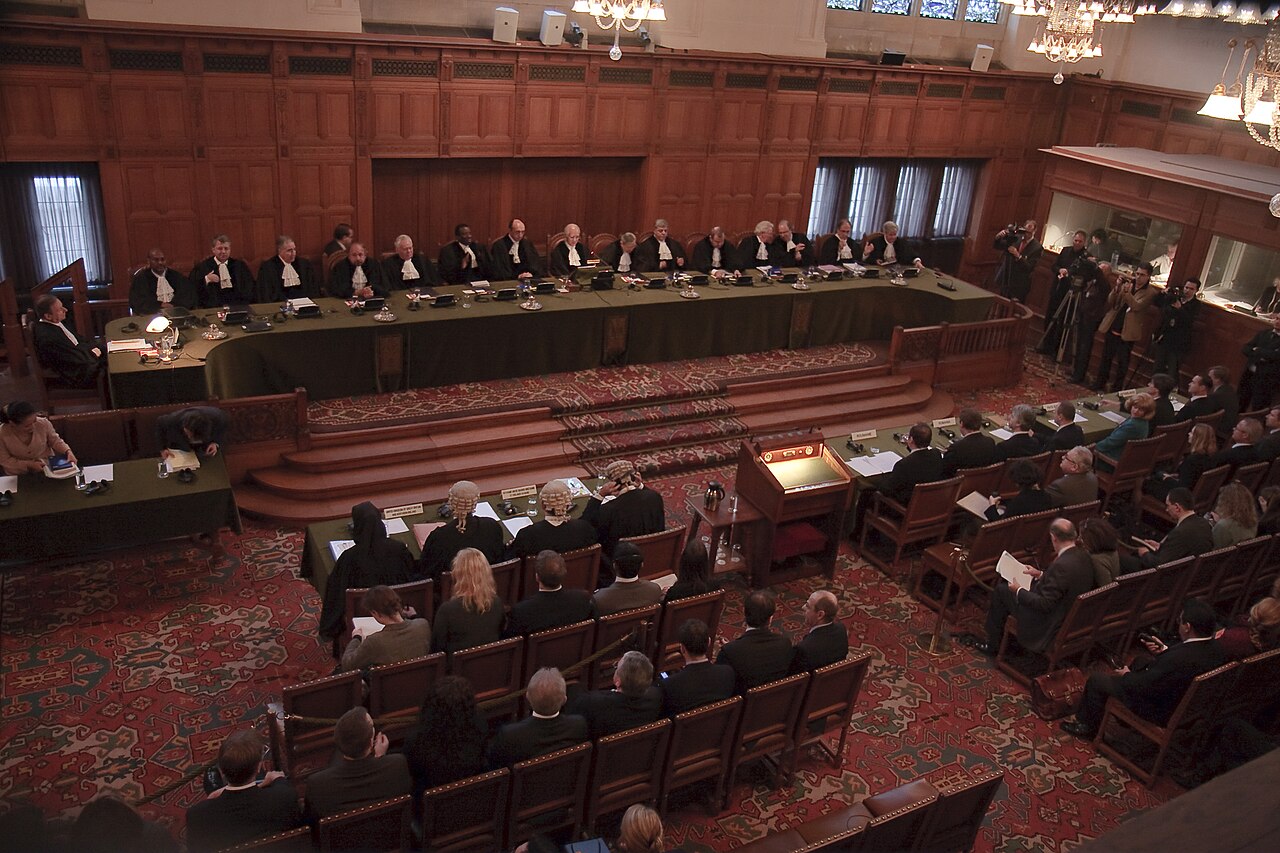
A landmark ruling by the International Court of Justice (ICJ) finding Myanmar responsible for genocide against the Rohingya has generated significant discussion among legal scholars regarding the ongoing genocide charges against Israel in relation to the conflict in Gaza. Experts suggest that the ICJ’s decision, which marked the first time the court found a state guilty of genocide, provides a crucial legal precedent that may strengthen South Africa’s case against Israel.
The Shift in Legal Standards
The genocide allegations against Myanmar stem from its military actions against the predominantly Muslim Rohingya minority in 2016-2017, where the court found evidence of mass killings, sexual violence, and systematic attacks. This judgment introduced a fundamental change in how international law assesses genocidal intent. According to international law professors, the ICJ moved away from requiring applicants to prove very narrow patterns of conduct, adopting instead a ‘much broader, holistic evaluation of the entire record of evidence.’
This expansive approach is particularly relevant to the Gaza situation. Legal analysts point out that the criteria used in the Myanmar case—including systematic discrimination, official hate speech, and the mass destruction and forced displacement of homes—could potentially be applied to the actions of the Israeli Defence Forces (IDF) in Gaza.
Analyzing the Gaza Conflict
South Africa initiated its case against Israel following the attacks in southern Israel on October 7, 2023. The case centers on the claim that Israeli actions constitute a violation of the Genocide Convention. While the ICJ has not yet scheduled hearings on the merits of the Israel case, the ruling against Myanmar has provided a new lens through which the conduct of both conflicts can be viewed.
Some commentators note that while the conflicts are not identical—citing differences in the nature of the combatants, such as Hamas being an Iranian proxy versus the Arakan militia—the precedent remains potent. Experts believe that the way the ICJ assessed the destruction of Rohingya residences alongside mass deportations will be highly relevant, given that many Palestinians in Gaza have been instructed to evacuate their homes, which were subsequently destroyed.
Future Outlook and Caution
Despite the potential legal boost, legal experts caution that the path forward is complex. Some analysts highlight that the Myanmar judgment itself contained dissenting opinions, and that the ICJ’s reliance on UN and non-governmental organization reports raises concerns regarding the politicization of evidence. Nevertheless, one senior legal fellow noted that even if the court rules against a finding of genocide, the judicial assessment of non-compliance with the laws of war and international humanitarian law would still inflict significant reputational damage upon Israel.
The Myanmar precedent thus establishes a powerful comparative tool, compelling judges to examine alleged discriminatory policies and official rhetoric in Gaza with a new, broader level of scrutiny.
World Views
President Herzog Calls for Dialogue to Potentially End Netanyahu’s High-Profile Legal Battle
In a significant move aimed at bringing an end to the protracted legal saga involving Prime Minister Benjamin Netanyahu, Israeli President Isaac Herzog has publicly urged the prosecution team and the Prime Minister’s legal counsel to enter into a structured dialogue. Herzog proposed that these discussions take place under the auspices of the President’s Residence, with the express goal of reaching mutual agreements and concluding the lengthy criminal proceedings.
Judicial Scrutiny Spurs Mediation Push
This appeal comes directly after remarks made by presiding Judge Rivka Friedman-Feldman last week. The judge indicated that the probability of securing convictions against the Prime Minister in the three ongoing cases—which involve allegations of bribery, fraud, and breach of trust—is considered low. Furthermore, the court suggested that the prosecution should consider dropping one of the existing charges and re-evaluating another accusation concerning alleged favors exchanged for favorable media coverage.
The judicial skepticism has placed immense pressure on all parties involved. Netanyahu, who has consistently refuted the accusations across all three matters, reacted strongly to the court’s suggestion. He publicly stated that the judicial commentary represented a ‘ray of light for truth and justice.’ In a televised address from the Knesset, the Prime Minister lamented the years of suffering endured by his associates, alleging that many had their lives ruined while being interrogated using criminal methods to provide false testimony against him.
Defense Accepts Meeting; Prosecution Remains Cautious
In response to the President’s call, the defense team representing Netanyahu announced they would participate in a meeting held at the presidential residence. Their statement emphasized that, given the judge’s observations, there is no doubt that the legal case must be finalized as quickly as possible. Meanwhile, the Attorney General’s office confirmed its willingness to engage with the defense counsel. However, the office stipulated that such engagement would follow a thorough review of the court’s comments and would proceed through an orderly and accelerated process with the prosecution staff.
A New Chapter in Political Legal Affairs
Herzog’s intervention marks a renewed effort to find a resolution, particularly since his previous attempt to encourage dialogue several months ago was met with silence from the Prime Minister’s attorneys. This latest push suggests a growing consensus among high-level officials that the current legal stalemate is unsustainable. The potential dialogue could fundamentally shift the trajectory of the high-stakes political trial, offering a mechanism to resolve the charges without a full judicial verdict, thereby potentially providing an early conclusion to a highly publicized and divisive chapter in Israeli politics.
World Views
Vienna’s Impossible Choice: How One Woman’s Survival Unveils the Collapse of a Jewish Metropolis

For Mignon Langnas, the Nazi occupation of Vienna presented a devastating ethical dilemma: remain behind to care for her elderly parents, or join her husband and young children in a desperate flight from the city. Her agonizing choice, detailed in wartime correspondence, serves as a profoundly intimate lens through which historian Douglas Smith examines the systematic destruction of Vienna’s vibrant Jewish community. Smith’s comprehensive work, ‘The City Without Jews: Life and Death in Jewish Vienna,’ moves beyond mere casualty counts, offering a nuanced look at the impossible decisions faced by a once-thriving urban population as fascism consumed their lives.
From Prosperity to Persecution: The Shock of the Anschluss
Before the rise of Nazism, Vienna was a global beacon of Jewish achievement. The city boasted an exceptional concentration of Jewish professionals, with estimates showing Jewish individuals comprising nearly 70% of its financiers and a similar proportion of its industrialists and legal experts. Figures like Sigmund Freud and Gustav Mahler emerged from this remarkable cultural crucible. However, this success bred intense resentment, which local politicians exploited. The sudden annexation of Austria by Hitler’s forces, known as the Anschluss in 1938, triggered an immediate and brutal societal shift. Smith noted the profound shock among observers regarding how quickly seemingly respectable local citizens turned violently against their Jewish neighbours.
The ‘Vienna Model’: Dispossession and Endurance
The ensuing campaign of humiliation and dispossession rapidly escalated. The process, termed the ‘Vienna Model,’ involved the organized seizure of Jewish assets and businesses. This initial chaos of private looting was eventually formalized by Nazi authorities, who adopted and implemented these methods elsewhere across Europe. While many fled early, Langnas’s story highlights the profound strain of separation. Her husband, Leon Langnas, managed to escape in 1939, eventually reuniting with their children in England. Mignon, however, remained in Vienna, enduring seven years of arbitrary and cruel regime rule. During this time, she survived Allied bombings and continued her work as a nurse, documenting the terror and resilience through her private writings.
The Complexities of Survival and Compromise
Smith’s research also illuminates the complicated figures within the Jewish community itself. He reassesses Josef Löwenherz, the head of the communal organization, challenging the simplistic narrative of collaboration. Smith argues that Löwenherz was a tragic figure, continually compromised by the desperate need to protect those under his charge. His efforts to raise funds abroad for abandoned Jews, even while his family was held captive by the Nazis, underscore the moral ambiguities of survival. Furthermore, the survivors themselves faced scrutiny; those who managed to evade deportation, like Mignon, were often viewed with suspicion by others who feared collaboration.
Mignon’s survival, though often attributed to luck, was a testament to her tenacity. Yet, even after her family was finally reunited in New York in 1946, the trauma left a lasting silence. Her son, George Langnas, later revealed that the family rarely spoke of his mother, a silence that lasted decades. Smith’s work ultimately presents a vital counter-narrative: the history of endurance and the quiet, ordinary lives that persisted even when the machinery of persecution made existence nearly unbearable.
World Views
From Bankruptcy to Renewal: Modern Jewish Camps Battle to Preserve Tradition Amid Ownership Changes
Two highly regarded Modern Orthodox Jewish sleepaway camps, Camp Lavi and Camp Mesorah, are undergoing dramatic transitions following severe financial difficulties. What began as a crisis of corporate insolvency has shifted into a complex community conversation about preservation versus progress. Families, who viewed these institutions as integral parts of their children’s lives, are now scrutinizing the new leadership to ensure that the core spiritual and communal values remain intact.
The Crisis and the Community Response
The turmoil originated when SIMAD Holdings, controlled by brothers Michael and David Shabsels, filed for Chapter 11 bankruptcy earlier this year. Both Lavi and Mesorah were among 30 facilities placed up for sale, having been utilized as collateral for substantial bonds. The news caused widespread alarm among parents. At Camp Lavi, for instance, the uncertainty spurred hundreds of emails and led to a petition signed by nearly 5,000 individuals, reflecting the deep emotional attachment families have to the institutions.
The question facing these communities is no longer whether the camps will survive, but how their identity will be shaped under new management. For many campers, these settings are seen as more than just summer programs; they are described as a long-term sanctuary for spiritual growth.
Shaping the Future: Lavi and Mesorah Under New Hands
At Camp Lavi, relief arrived with the appointment of Joey Hoening as a new co-owner. Hoening, alongside new co-owners like Yael Rudolph, has assured the community that the goal is continuity, not reinvention. The new administration plans extensive campus upgrades, including improved facilities, updated water treatment, and enhanced security measures. However, some long-time attendees remain apprehensive. One young attendee voiced concern that the camp’s religious focus might shift, particularly with the relocation of the daily Torah leader.
Meanwhile, Camp Mesorah is also transitioning under new ownership, with real estate investor Daryl Hagler taking the reins alongside Avishai Neuman. Mesorah’s plans focus heavily on modernizing amenities, introducing features such as a new indoor trampoline park, an outdoor golf range, and a dune buggy course.
Balancing Tradition and Modernity
While both camps are promising growth—with Lavi reporting strong enrollment despite the changes—the central tension remains the balance between new facilities and established culture. Experts in Jewish education stress that maintaining the foundational experiences is just as vital as introducing new staff or infrastructure. New leadership teams are actively meeting with families to address concerns, emphasizing their commitment to maintaining the current religious character of the institutions. Despite the upheaval, the future of these cherished communal spaces appears to be one of cautious, yet promising, evolution.
