


World Views
Israel’s Deepening Divide: War Forces Reckoning Over Ultra-Orthodox Military Conscription

The ongoing conflict in Israel has brought to a fever pitch a decades-old societal schism: the mandatory military service of ultra-Orthodox (Haredi) men. Once a politically tolerated exemption, the practice of allowing religious students to substitute deep Torah study for national defense has faced unprecedented legal and social pressure following the devastating attacks of October 7, 2023. As the nation grapples with severe manpower shortages on multiple fronts, the question of whether to extend conscription to the Haredi community has moved from a legislative debate to a national security imperative.
The Legal and Military Imperative
The war effort dramatically increased the demand for soldiers and reservists, forcing many military personnel to serve extended periods. This heightened need coincided with a crucial legal shift. The long-standing de-facto exemption for yeshiva students, which had been tolerated for decades, was officially struck down by the Supreme Court in 2024. Consequently, all Haredi men now legally face the same requirement to enlist as the general population. While enforcement has gradually increased since the ruling, the political resistance remains formidable, with traditional community leaders maintaining that military duty is incompatible with their religious lifestyle.
A New Voice Emerges Amidst Resistance
Despite the widespread traditional opposition, a new political movement is challenging the status quo. Led by Rabbi Yehoshua Pfeffer, a British-born religious figure, a new party is advocating for greater Haredi integration, including mandatory military service for non-full-time students. Pfeffer argues that the community’s survival depends on its contribution to the wider nation, noting that the war has internalized the reality that the past cannot continue. His platform also addresses the severe economic vulnerability of many Haredi families, many of whom struggle with poverty due to low employment rates.
Political Hurdles and Societal Pressure
The path toward mandatory conscription is fraught with political obstacles. Historically, Haredi parties have held significant sway in the Knesset, allowing them to influence coalition governments and resist sweeping military mandates. This political power has often shielded the community from full enforcement. However, the sheer scale of the manpower shortage, coupled with the personal hardship faced by exhausted reservists who have served hundreds of days, is fueling public discontent. Surveys indicate that a majority of Jewish Israelis prefer a government that actively rejects the demand for broad military exemptions. As the next election approaches, the government will face intense pressure to balance religious freedom with the existential needs of a nation fighting for its survival.
World Views
Decades-Old Mystery Solved: Legendary Negro League Pitcher Oscar Levis Confirmed Jewish
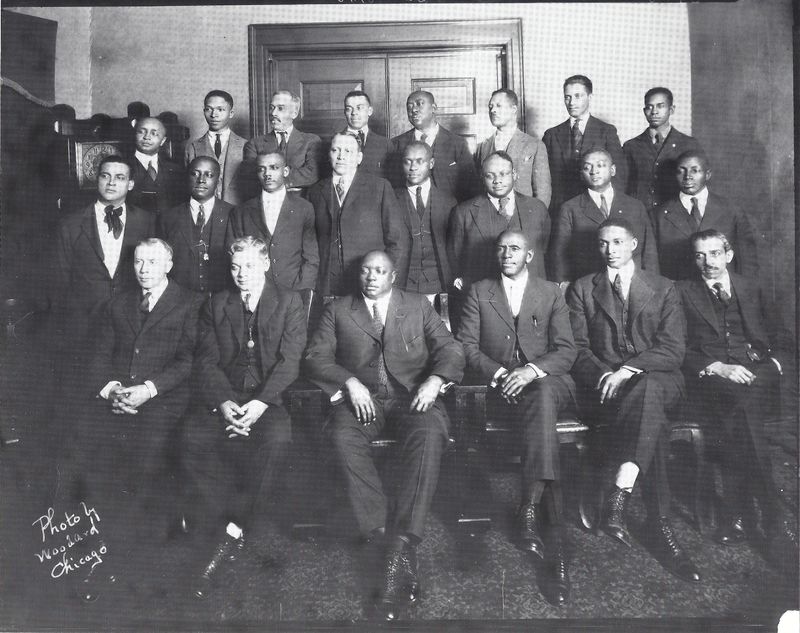
A century of baseball history has been significantly rewritten following the definitive identification of Oscar Levis, a legendary pitcher whose exceptional career remained historically invisible. Levis, a dominant force in the Negro Leagues and Cuban Winter League, has long been cited as a benchmark of pitching excellence, yet his name never appeared on any official roster of Jewish major leaguers. The reason for this prolonged omission was rooted in systemic historical blind spots: the Negro Leagues were unrecognized as major professional leagues until 2020, and prevailing assumptions held that Black and Jewish identities rarely overlapped.
The Journey of Discovery
The revelation stemmed from months of intensive archival research, family testimonies, and genealogical detective work. The initial clue surfaced in 2018 when Gary Ashwill, a leading authority on Negro League statistics, detailed Levis’s birth in Jamaica. Readers reacting to this information began sharing family knowledge, leading researchers to discover that Levis’s father, Amos DaCosta Levy, was Jewish. This seemingly small comment sparked a deep dive into historical records. Researchers reviewed digitized Jamaican newspapers, accessed civil and ecclesiastical archives, and consulted with Caribbean Jewish history specialists. These independent sources consistently confirmed that DaCosta Levy was a prominent member of Jamaica’s Jewish community, and Levis was his son.
A Complex Heritage
Levis’s background is steeped in the unique cultural dynamics of the Caribbean Sephardic world. His father, who was a successful merchant and civic leader in Jamaica, married Theodosia Foreman, a Black Jamaican woman. This union reflects the historical reality of the region, where relationships between Jewish men and women of colour were common. Scholars note that in this specific Sephardic tradition, patrilineal descent held considerable communal weight, shaping how men like Levis were perceived. His family confirmed that Levis was proud of his Jewish heritage throughout his life, even as he navigated the complex social boundaries of the era.
Racial Barriers and Legacy
Levis’s early life in Panama, drawn by the economic opportunities of the Canal Zone, exposed him to intense racial hierarchy. Despite the pervasive segregation and prejudice, he rose to become a premier baseball star on the isthmus. The discovery challenges the rigid historical narratives surrounding race and religion in American sports. By establishing Levis’s identity, researchers are not merely filling a gap in a roster; they are providing crucial context to the often-overlooked experiences of Black individuals who held complex, marginalized identities at the intersection of race and faith.
World Views
The Political Paradox: Why Settler Violence in the West Bank Doesn’t Define Israeli Elections

For many observers, particularly within the American Jewish community, a profound disconnect exists in contemporary Israeli politics. Despite the severity of incidents involving extremist settler violence in Judea and Samaria (the West Bank), this issue rarely dominates the national political agenda. While political figures across the spectrum condemn these aggressive acts, and security experts have issued urgent warnings regarding the rise of nationalist crime, the problem has yet to become a defining wedge issue in the electoral campaigns.
The Political Obstacle to Dialogue
The primary reason this violence has not become a central campaign battleground is its political inconvenience for both the ruling coalition and the opposition bloc seeking to replace it. The complex nature of the territory means that even opposition parties, though united in their condemnation of violence, are deeply divided on the ultimate fate of the settlements themselves. The major political groups, such as B’Yachad, Yisrael Beiteinu, and Yashar, hold radically different views on the viability of a Palestinian state and the long-term status of the region.
This division allows politicians to strategically separate two critical questions. The first is a manageable, immediate issue: how should the state address violence committed by Israeli citizens against Palestinians? The second, far more contentious question, concerns the strategic control and future of the settlements. By focusing on the first, politicians can address the immediate crisis without forcing a vote on the deeply entrenched territorial debate.
Framing the Crisis: Crime vs. Terrorism
The political framing of the issue is proving to be the most powerful tool. The Netanyahu camp has largely framed the matter as a law enforcement challenge, describing perpetrators as criminals and urging police action. This approach is echoed in proposals by defense officials who advocate for transferring civilian enforcement duties from the military to the Israel Police, reinforcing the notion of state sovereignty and law adherence.
However, some voices, notably Yair Golan of the Democrats, have chosen a far more consequential path, consistently employing the term ‘Jewish terrorism.’ This choice of language elevates the issue beyond mere criminality, raising profound questions about the state’s use of counterterrorism tools. If the violence is classified as terrorism, it compels a discussion about whether exceptional security measures, similar to those used against Palestinian militant groups, should be applied.
The Dilemma of Political Messaging
For politicians, this presents a delicate dilemma. For the governing coalition, highlighting the systemic nature of extremist actions risks exposing failures within a crucial political constituency. For the opposition, emphasizing the problem as a distinct political crisis risks reopening the larger, divisive debate over settlement continuity, which they themselves cannot resolve. Consequently, the most politically viable path for many parties is to demand vigorous state enforcement against violent settlers, without committing to either the protection or the dismantling of the settlement enterprise as a whole. The focus remains, for now, on immediate security and governance rather than the ultimate geopolitical future of Judea and Samaria.
World Views
Escalating Security Costs and Cultural Flourishing Mark Modern Jewish Life in NYC

The landscape of Jewish life in New York City is currently defined by a stark duality: intense financial pressure resulting from heightened security needs, set against a backdrop of vibrant cultural and intellectual expansion. New data indicates that institutions across the city are grappling with unprecedented operational expenses following the October 2023 attacks on Israel. A recent survey conducted by the UJA-Federation of New York’s Community Security Initiative revealed a significant financial strain on local organizations.
The Financial Burden of Safety
According to the survey, thirty-nine Jewish organizations—a group that includes local synagogues, community centers, and educational institutions—have more than doubled their annual expenditures on security measures since the Hamas aggression. Prior to the October 7th events, the median security outlay for these groups was approximately $50,000. Post-attack, this median figure soared to over $152,000, highlighting the dramatic shift in priorities and the substantial financial commitment required to maintain safety across the community.
A Renaissance of Culture and Arts
While security concerns dominate headlines, the cultural heartbeat of the city remains robust. The literary world recently saw the launch of Odessa Editions by High Line Publishing. This new venture, unveiled in Manhattan, aims to establish itself as a major international hub for Jewish and Israeli writing, encompassing both fiction and non-fiction. Notable figures, including CBS news editor Bari Weiss, attended the unveiling, underscoring the literary significance of the move.
The Stage and Screen
The arts scene continues to thrive. On Broadway, beloved Jewish comedian Billy Crystal debuted his solo production, ‘860,’ a show that references the street number of a home lost during a major fire. The production is scheduled to run through January 3, 2027. Furthermore, the city’s independent cinema is receiving new additions. The indie comedy ‘Yaniv,’ a film centered on teachers who infiltrate an underground gambling ring run by Hasidic Jews, is set to premiere at New Plaza Cinema this weekend.
Community Resilience and Outlook
These diverse activities—from major theatrical runs and new publishing ventures to the critical need for increased security funding—paint a complex picture of a resilient community. The financial data presents a clear challenge, requiring institutions to reassess budgets and risk management. Yet, the simultaneous flourishing of cultural endeavors suggests a powerful commitment to preserving identity and creativity. As the community navigates these heightened security demands, the sustained vitality seen in its arts and intellectual sectors demonstrates a powerful determination to continue building and enriching Jewish life in New York City.
