


World Views
Michigan Rep’s Shock Endorsement Deepens Democratic Divide Over Israel and Identity
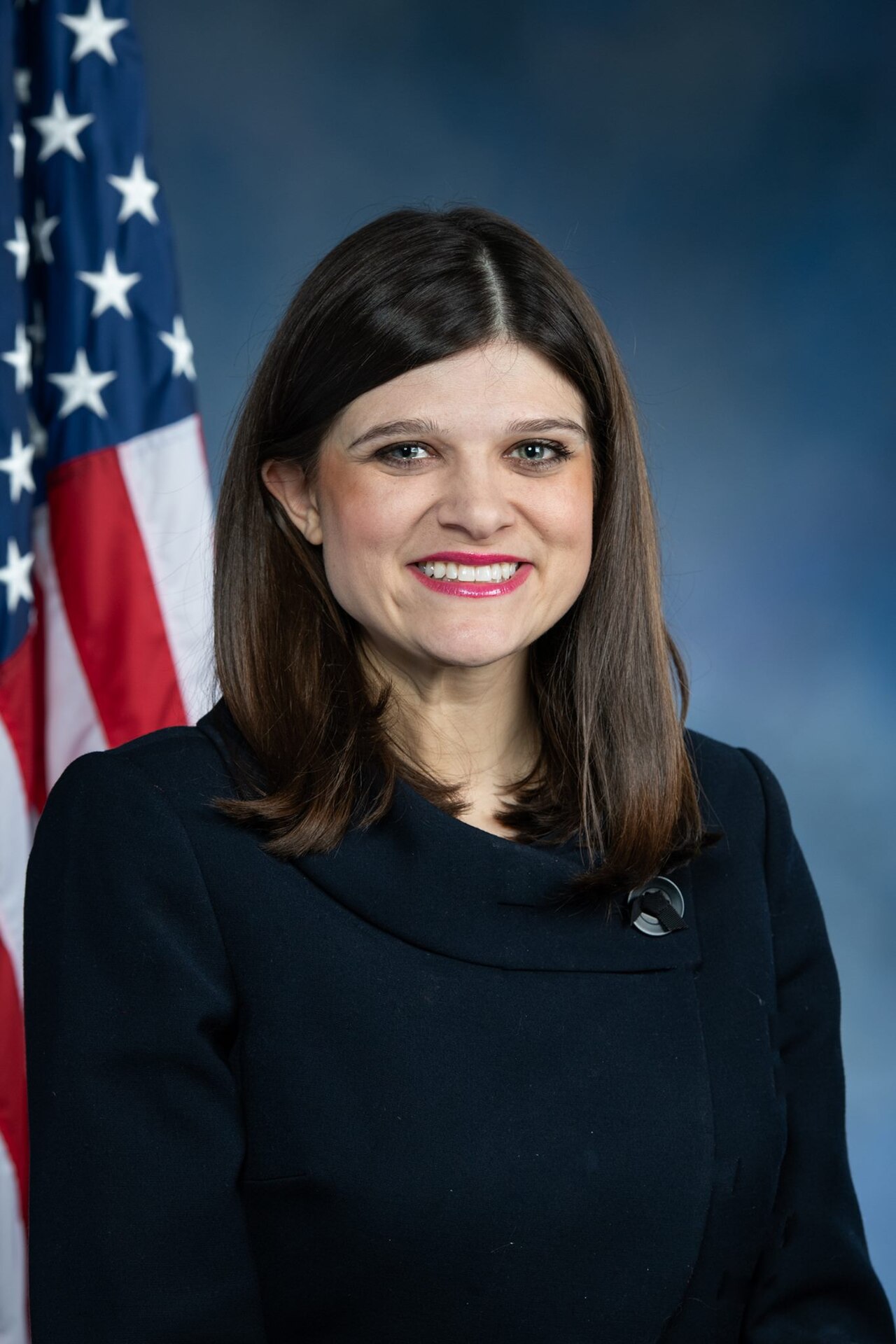
A dramatic political reversal has sent shockwaves through Michigan’s Democratic ranks, as Congresswoman Haley Stevens abruptly switched her support from the party’s candidate, Abdul El-Sayed, to Republican Mike Rogers for the U.S. Senate race. This unexpected endorsement, delivered just days before the election, has significantly intensified existing ideological fissures within Jewish communities and the broader Democratic Party regarding foreign policy and political alignment.
The Sudden Political Pivot
Stevens, who represents a heavily Jewish district in suburban Detroit, announced her shift by citing concerns over rising antisemitism. She specifically targeted El-Sayed’s previous campaign appearances with anti-Israel streamer Hasan Piker, stating that she could not align herself with Piker’s rhetoric. Stevens publicly asserted that opposition to hate was a fundamental principle, while also linking the issue to her broader belief that ‘education is on the ballot.’ This change came despite earlier public commitments to El-Sayed’s campaign and the support of her fiancée, a major Democratic donor.
Reactions from Both Sides
The move prompted intense criticism from Democratic leaders. Senate Minority Leader Chuck Schumer condemned the action as a severe betrayal. Furthermore, moderate Jewish Democrat Senator Elissa Slotkin criticized Stevens, arguing that her focus on personal grievances was overshadowing the greater good of the state and the nation. Meanwhile, the Republican side quickly capitalized on the shift. Rogers, standing beside Stevens, invoked historical parallels, referencing the danger of blaming specific groups for societal problems, and expressed concern that Jewish Democrats were feeling apprehension about the state’s future.
The political maneuver has also drawn scrutiny from advocacy groups. J Street, a liberal pro-Israel lobby, suggested that Stevens was utilizing genuine fears about increasing antisemitism to advance her own political agenda. El-Sayed, in his own press conference, dismissed the significance of Stevens’ decision, while his campaign has been criticized for leaning heavily into anti-Islam messaging in its attacks against Rogers.
A Wider Ideological Struggle
The controversy highlights a larger national debate concerning the role of identity politics and the definition of ‘hate’ in modern American elections. While Stevens insisted she remained a committed Democrat, the mass resignation of her senior staff following the announcement underscored the deep internal conflict within her own party. This episode serves as a stark example of the complex, evolving relationship between political identity, religious affiliation, and partisan loyalty in the current political climate.
World Views
Illinois Anti-Boycott Law Faces Municipal Challenge Amid Growing Political Division
A decade-old state law in Illinois, designed to shield the state from investment in international companies that boycott Israel, is facing a powerful grassroots challenge at the local level. As municipal ballot measures are set to appear in communities like Oak Park and Peoria, the debate has ignited deep political and cultural divisions, pitting Jewish advocacy groups against local free speech proponents.
The Battle Over State Investment
Illinois was one of the first states to enact legislation targeting the Boycott, Divestment, and Sanctions (BDS) movement. When the law was initially passed, it was strongly supported by Jewish leaders, who viewed it as a vital measure to align state priorities with the values of a key ally. However, the law, which requires state pension funds to avoid companies involved in boycotts, has become a flashpoint for renewed political friction. Activists in several towns are now mobilizing signature drives to repeal the measure, arguing that the state’s interference constitutes a restriction on fundamental rights.
Leaders of Jewish federations, including the Jewish United Fund in Chicago, are actively organizing counter-efforts. They maintain that the legislation is a necessary defense against the BDS movement. One official noted that their organizations plan to mount ‘meaningful opposition’ to the attempts to overturn the policy. Despite the fact that the law requires legislative action to be overturned entirely, the local ballot measures are seen as symbolic victories for those seeking repeal.
Political Climate and Legal Precedents
This pushback occurs against a backdrop of shifting political sentiment. Following recent international events, interest in BDS as a form of protest has reportedly increased on the left. While the state law was established years ago, the current climate is fueling the local campaigns. Legal experts point out that these anti-boycott statutes have been tested in court many times, with some objectors arguing they infringe upon free expression. The legal debate centers on the delicate balance between protecting free speech and ensuring equal protection under the law, a theme historians note has long affected Jewish Americans.
Daniel Biss, a political candidate in Illinois, recently voiced support for repealing the state regulation, stating that he does not endorse the BDS movement but also believes government should not criminalize free speech. Conversely, some Jewish community members and organizations fear that eliminating the law would have ‘catastrophic’ social consequences for the Jewish community. Local groups in Oak Park, which has one of the most organized Jewish communities in the area, are actively campaigning to ensure voters reject the repeal measure.
A Defining Moment for Local Democracy
The local votes are far more than ceremonial. In municipalities like Oak Park, the measure asks voters to repeal the ban on state investments in companies boycotting Israel. The intense mobilization from both sides—from civic activists championing free expression to Jewish community groups defending the existing policy—underscores how this issue has transitioned from a policy debate into a defining local referendum on the limits of political action and identity in modern America.
World Views
Deepening Bonds, Widening Divides: New Study Maps Ideological Fault Lines in Global Jewish Community

Despite heightened global pressures, including conflicts and rising antisemitism, a remarkable strengthening of emotional ties has been observed between Jewish communities in the United States and Israel. Research indicates that while Americans and Israelis feel closer than ever, this growing sense of shared peoplehood exists alongside significant and deeply rooted ideological differences. A new analysis reveals that the primary source of friction is not geographical separation, but rather distinct political and religious worldviews, creating a complex landscape of mutual connection and internal disagreement.
Growing Ties, Diverging Paths
The data confirms a significant increase in perceived closeness. Since 2021, the percentage of American Jews who view Israelis as extended family has jumped substantially, and the reverse trend is similarly evident. Furthermore, a large majority of Jews worldwide affirm a common destiny, underscoring a profound sense of shared fate. However, the study found that when examining core issues, the differences are overwhelmingly driven by ideology rather than location. Specifically, the research showed that a majority of American Jews tend toward progressive political leanings, while the majority of Israelis lean toward conservative stances.
The Ideological Chasm in Security and Peace
This political spectrum is closely tied to religious affiliation in both nations; traditional and Orthodox Jews tend to hold more right-leaning views, while secular and progressive groups lean left. The ideological divergence is particularly stark when discussing Israeli security and the path to peace. For example, a significant portion of Israelis believe that maintaining democratic control over the West Bank is achievable, a view held by a much smaller percentage of Americans. Similarly, while many Israelis view Israeli security and the establishment of a Palestinian state as fundamentally incompatible goals, Americans hold a significantly lower conviction on that premise. Conversely, the belief in a two-state solution as the long-term path to peace is championed by a larger segment of American Jews than Israeli Jews.
Reciprocal Influence and the Role of Engagement
The research also examined the extent to which one community should consider the interests of the other. In matters of Jewish identity—such as immigration policy or recognition of Jewish status—Israeli Jews are notably more likely than their American counterparts to believe that Israeli decision-makers should weigh the impact on American Jews. Conversely, when addressing security matters related to the Israeli-Palestinian conflict, American Jews are far more inclined to want consequences for their community to be factored into Israeli decisions. The study highlighted that for Americans, the level of personal engagement in Jewish life often matters more than pure ideology; highly involved American Jews show greater concern for Israeli identity issues. For Israelis, political ideology remains the dominant predictor of opinion.
Ultimately, the analysis suggests that the perceived rifts between global Jewish communities are better understood as internal debates within those respective communities. The study concludes that while disagreements are inherent, the commitment to mutual care remains strong. Experts suggest that fostering personal connections—through travel or emissaries—is crucial to transforming abstract disagreement into healthy, constructive conversation, upholding the principle of maintaining relationship even amidst profound differences.
World Views
Ambitious Global Initiative Faces Internal Hurdles Amidst Post-Conflict Review
The closing conference of the Voice of the People (VOP) initiative, held in Budapest, showcased a monumental effort to address some of the most complex and divisive issues facing the global Jewish community. While the program has generated numerous innovative solutions, the event also brought to light significant operational and ideological challenges. The initiative, conceived amid deep political disagreements in Israel, aims to bridge divides ranging from antisemitism and polarization to the relationship between Jews and non-Jews worldwide.
The Scope of the Vision
Partnering with major Jewish organizations and funded by several foundations, VOP assembled 150 council members from Israel, North America, and various parts of the world. These individuals were divided into working groups tasked with developing actionable answers to five major challenges. Over eighteen months, the participants generated a substantial body of work, producing thirty-eight distinct initiatives. Many of these concepts moved into proof-of-concept stages, and numerous projects secured initial funding grants of up to $20,000.
Networking and Impact
The conference, attended by Israeli President Isaac Herzog, emphasized the necessity for Israel to listen more closely to the Diaspora, underscoring that actions taken locally affect communities globally. Participants highlighted the profound network they built, which several members cited as the program’s greatest achievement. Specific projects included the development of the Jewish & Indian Alliance, designed to foster cooperation in technology and education between Jewish communities and the vast Indian diaspora. Furthermore, initiatives focused on promoting social cohesion within Israel through educational materials reached dozens of schools.
Operational and Ideological Friction
Despite the high level of commitment—with some participants sacrificing their professional careers—the process was not without friction. The final conference saw lower attendance than anticipated, with only 89 of the original 150 members present, partially due to the ongoing geopolitical instability. Critiques from council members focused on the lack of clarity regarding the program’s operational rules, with some feeling that expectations were never adequately defined. Furthermore, ideological tensions persisted, as participants struggled to reconcile differing political views on Israel’s actions, highlighting the difficulty of achieving consensus among diverse groups.
A Path Forward
Organizers acknowledged these difficulties, citing the voluntary nature of the commitment and the complexity of coordinating across international time zones. In response to feedback, the initiative has vowed to improve its structure. The upcoming second cohort, which received thousands of applications, will be shortened to sixteen months. Crucially, the initial months will be dedicated to relationship building before challenges are voted upon, and the program will offer clearer guidance on how contentious discussions are managed. Organizers maintain that the experience, including its inevitable failures, is part of a necessary process of growth and innovation.
