



World Views
Network Sparks Firestorm Over Controversial Ad Opposing US Military Support for Israel

Major network NBC is facing intense backlash from prominent Jewish leaders and pro-Israel organizations after airing a highly contentious advertisement during its recent Thanksgiving special. The commercial, which directly challenged the continuation of United States military assistance to Israel, immediately ignited a national debate regarding media bias, political advocacy, and the rising tide of antisemitism in America.
The Contentious Commercial and Its Critics
The 30-second advertisement, funded by the Institute for Middle East Understanding (IMEU) Policy Project, juxtaposed the personal savings of a young American girl against the visible suffering of a Palestinian child in the Gaza Strip. The narrator drew a direct comparison, stating that the government allocated funds equivalent to a modest personal savings amount to Israel every few seconds. Viewers were subsequently directed to a website urging them to lobby Congress to halt new military aid agreements with the Jewish state.
Critics quickly condemned the piece. Representatives from the American Jewish Committee (AJC) and the Israeli American Council (IAC) argued that the ad was deeply skewed and manipulative. They highlighted the deliberate exclusion of Hamas’s actions, specifically referencing the October 7, 2023, terrorist attacks, the subsequent war in Gaza, and the use of civilians as human shields by the militant group. The IAC strongly asserted that the omission constituted a form of antisemitic libel, denying the Jewish nation its right to self-defence.
Accusations of Misinformation and Hate Speech
Several advocacy groups leveled severe accusations against the network. B’nai Brith International labeled the advertisement as ‘hateful’ and ‘misleading,’ warning that the piece exploited historical narratives related to Jewish suffering. The Anti-Defamation League (ADL) CEO characterized NBC’s decision to air the spot as ‘indefensible,’ arguing that it served no justifiable purpose other than to ‘fan the flames’ of prejudice. Furthermore, the National Jewish Advocacy Center demanded evidence to refute the ad’s unsubstantiated claim that American taxpayer money was directly responsible for a child’s physical injury.
Broader Political and Social Context
The controversy surfaces amidst ongoing political discussions regarding US foreign policy. While the existing 2016 US-Israel Memorandum of Understanding commits Washington to providing substantial annual military assistance, there are shifting political winds. Earlier statements from high-profile political figures suggested potential changes to the annual funding structure in the coming years, although concrete timelines remain unclear. Experts noted that the debate over military aid is intertwined with growing tensions and documented increases in antisemitic incidents across the United States. The outcry against NBC underscores a wider societal concern about how media platforms handle highly polarized political narratives and the responsibility they bear in combating hate speech.
World Views
Australia Imposes Sanctions on Individuals Linked to Iranian-Backed Antisemitic Attacks

The Australian government has escalated its diplomatic and security measures against Iran, announcing counterterrorism financing sanctions against two men, Zohair Hassib and Kazem Hamad. These actions follow intelligence findings that link the individuals to orchestrating antisemitic arson attacks targeting Jewish community institutions in Sydney and Melbourne in 2024, according to Foreign Minister Penny Wong. The sanctions are specifically designed to restrict the defendants’ financial access and disrupt their capacity to organize and execute further violence.
Intelligence Links and Targeted Attacks
The investigation revealed that Hassib and Hamad utilized an intricate network of intermediaries to carry out the attacks, which included firebombing a kosher establishment in Sydney and targeting the Adass Israel Synagogue in Melbourne. The intelligence agency, the Australian Security Intelligence Organization (ASIO), has provided detailed information regarding the alleged plotters. Director-General Mike Burgess stated that the individual responsible for the Sydney incident was an Australian national residing in Iran and functioned as a senior operative for the IRGC’s Quds Force, the unit overseeing foreign operations. Furthermore, the director of ASIO indicated that the perpetrator of the Melbourne attack was a former Australian resident living in Iraq, recruited through a web of local militia groups.
A History of Escalation
These recent sanctions are part of a broader, aggressive policy shift by Canberra toward Tehran. In August 2025, the government had already attributed the fires to Iranian influence, leading to the expulsion of the Iranian ambassador—a diplomatic action unprecedented since the Second World War. The government also moved to suspend operations at its Tehran embassy and formally designated the Islamic Revolutionary Guard Corps (IRGC) as a terrorist organization. Minister Wong emphasized that these measures are a crucial step in undermining the IRGC’s ability to direct violence against Australian citizens and interests.
The Geopolitical Fallout
The government asserted that the men were fully directed by the Iranian regime in their attacks on buildings connected to Jewish Australians. However, representatives from Tehran have officially rejected these allegations. The sanctions imposed on Hassib and Hamad are intended to sever the financial lifelines necessary for such operations. The intelligence agency previously shared details of these alleged agents in a June threat assessment, though their names were initially kept confidential. This latest move signals a deepening commitment by Australia to combat religiously motivated violence that is perceived to be state-sponsored by a foreign power.
World Views
National Broadcaster Under Scrutiny: Independent Probe Launches into Alleged Institutional Antisemitism
A high-profile investigation has been initiated into the British Broadcasting Corporation (BBC), following serious claims of an institutional problem regarding antisemitism within the national broadcaster. Lord John Mann, the government’s independent adviser focused on this issue, formally announced the probe, stating his goal is to determine if the corporation is meeting its public charter obligations and ensuring that Jewish employees feel they have an equal and confident role.
Concerns Over Hostile Work Environment
Lord Mann, who was appointed in 2019 by former Prime Minister Theresa May, launched the inquiry after receiving reports indicating a growing sense of unease among Jewish staff. He emphasized that his mission is not to target the BBC but to guarantee that the organization is functioning correctly. Mann indicated that the concerns being shared with him suggested a pervasive ‘hostile work environment.’ He noted that previous attempts by the broadcaster to address the issue had been unsuccessful, leading him to believe the problem runs deeper than surface-level issues.
The adviser stressed the importance of employee voices, assuring those who came forward that their identity would remain completely confidential. He expressed deep concern that some senior management levels within the BBC appeared unaware of the seriousness of the situation. Mann confirmed that he intends to deliver a factual report to both the BBC and the government before Easter, detailing his findings.
Government and Corporate Response
The BBC issued a statement acknowledging the gravity of discrimination allegations, asserting that such behaviour has no place within the organization. The broadcaster confirmed it maintains mandatory training on antisemitism for all its personnel. Meanwhile, the UK’s Department for Culture, Media, and Sport strongly affirmed the government’s absolute rejection of antisemitism in society. The department stated it would carefully review the final report once Mann delivers it.
This investigation comes against a backdrop of increasing scrutiny surrounding the BBC. The corporation has faced multiple crises, including a significant settlement paid to a Jewish filmmaker, Lucie Kon, after she alleged workplace discrimination. Furthermore, the broadcaster previously apologized for omitting mention of the Holocaust during coverage of International Holocaust Remembrance Day. The instability has been compounded by the departure of the director-general and the head of news in late 2025, amid mounting criticism over editorial bias and coverage related to the Israel-Hamas conflict.
Mann previously approached the organization with suggestions regarding antisemitism after meeting with numerous Jewish employees, but these efforts were reportedly ignored. The current probe seeks to uncover whether the staff’s concerns about feeling unheard are widespread and systemic, ultimately holding the public entity accountable for its internal culture.
World Views
US Targets Commercial Vessel Attempting to Bypass Iran Blockade; Tehran Vows Confrontation
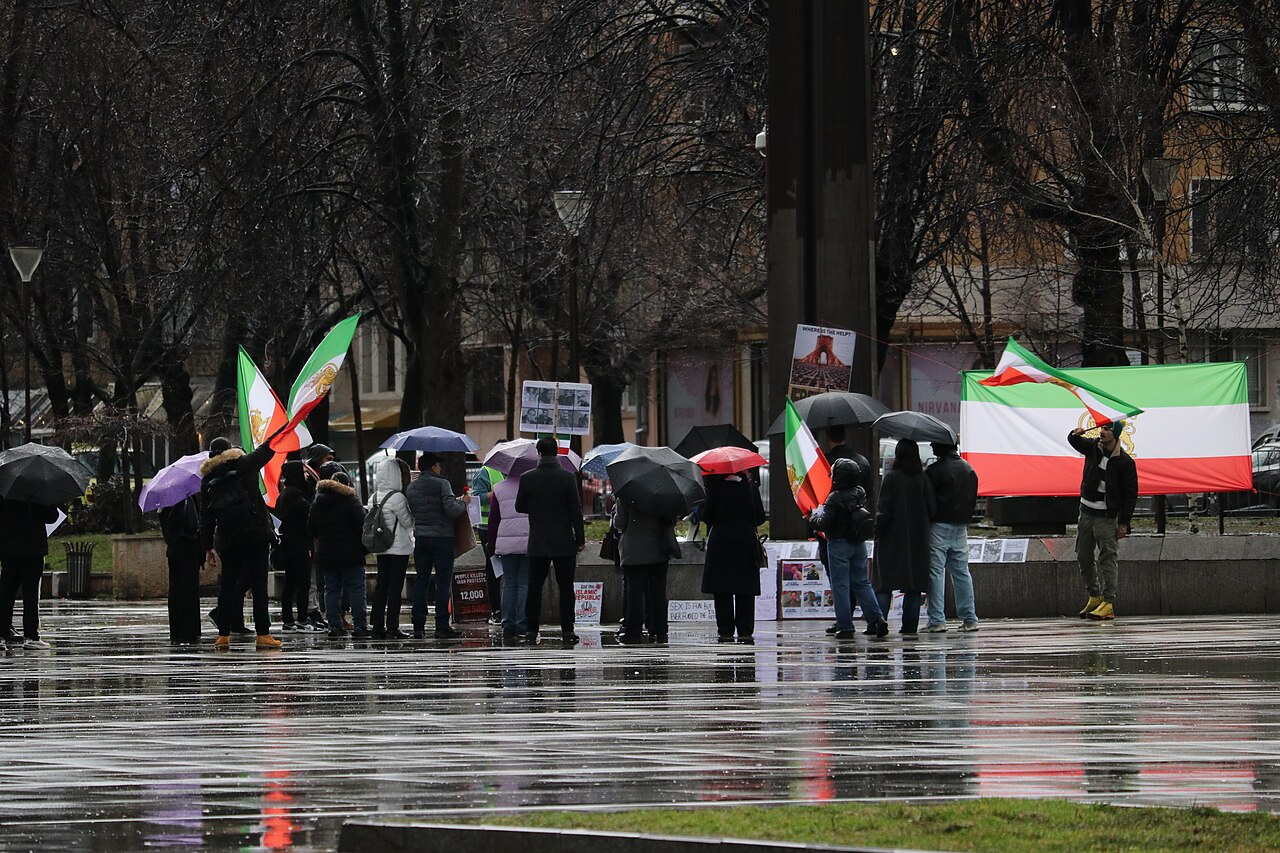
A significant maritime confrontation unfolded in the Gulf of Oman this week as the United States military disabled a commercial vessel attempting to circumvent a naval restriction imposed on Iran. The incident, which occurred after the ship departed from the Iranian port of Bandar Abbas, highlights the deepening geopolitical tensions in the Persian Gulf region. The US military utilized precision weaponry to disable the propulsion system of the Palau-flagged M/V Pacific Archer, ensuring the civilian crew remained safe during the operation.
Maritime Enforcement Meets Iranian Defiance
The action was a direct response to the ongoing US enforcement of a naval blockade targeting Iranian ports. In a separate but equally defiant move, Mohammad Mokhber, an advisor to Iran’s supreme leader, issued a strong statement indicating that the nation would neither allow the Strait of Hormuz to reopen nor permit the current embargo to persist. While Mokhber did not elaborate on specific strategies for breaking the sanctions, his rhetoric signaled a firm commitment from Tehran to challenge international restrictions.
The Expanding Scope of US Restrictions
This incident is part of a broader and intensifying campaign of US economic and military pressure. The naval blockade on Iranian ports was reimposed by the United States in July. Furthermore, earlier this month, the US announced the establishment of Task Force Iron Gate. This new military initiative is designed to strictly limit the movement of weapons and sanctioned materials across Iran’s various land borders, including those bordering the Caspian Sea. These combined measures demonstrate a comprehensive strategy aimed at choking off Iran’s access to vital resources and international markets.
Geopolitical Implications and Risk Assessment
The targeting of the commercial ship underscores the high stakes involved in the region’s trade routes. The Strait of Hormuz remains one of the world’s most critical chokepoints for global energy supplies. The actions taken by both Washington and Tehran suggest a dangerous spiral of escalation. Military command officials confirmed that the disabling of the vessel was a necessary enforcement action, while Iranian officials framed the move as an act of aggression against their sovereignty. Analysts suggest that the continued hardening of positions by both major powers increases the risk of an accidental or deliberate military clash, placing global shipping and energy markets under extreme duress.
