


Features
The Dark Side of Albert: Einstein and Marie Winteler, his First Love
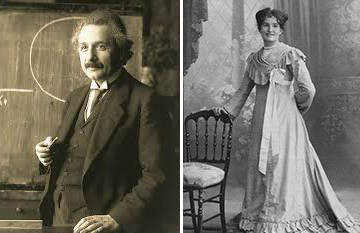
By DAVID R. TOPPER As I recall, in the TV series, Genius – which began with a series on Albert Einstein, this one by Ron Howard – the opening sequence showed a middle-aged Albert and his secretary having sex in his office.
I was disappointed, but not surprised. I knew that Albert liked sex and had several partners (in addition to his two wives) over his lifetime. But, for me, it portended the wrong obsession in his life. The true passion throughout Einstein’s life was another “s–word”: namely, science.
But this was TV for a general audience and … well, you can fill in the rest. Plus, what am I being petulant about? After all, here am I, doing the same thing!
We’ll come back to Howard’s portrayal of Einstein’s life at the end; for now I need to put all this in context. For this essay is the second (and last) part of my story of Einstein’s “dark side.”
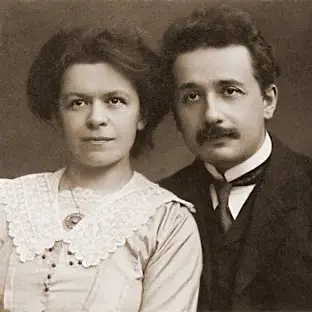
As shown in the first part, on this website at: The Dark Side of Albert: Einstein and Mileva Marić, his First Wife, which was first published in The Academy of the Heart and Mind, February 7, 2025– Einstein’s loathsome treatment of his first wife often bordered on abuse, or at least very malicious behavior, that diminishes his image as a saintly man; even though many photos of him – especially late in life and with the halo of hair – herald that impression. The other reality, the focus of my first part, was how his maltreatment impacted Mileva and fostered the depression that haunted her all her life. In a sense, and as will be seen here, all this was foreshadowed by Albert’s previous relationship with Marie Winteler, which also had lasting consequences. (As an aside – while I’m in a disagreeable mood about TV portrayals – and since, in part one, I never commented on the TV series: I found Ron Howard’s treatment of Mileva downright offensive. He was obsessed with her orthopedic foot, ever focusing with close-ups of her gait, as she limped into a room. His camera was repeating the shameful behavior of Mileva’s childhood schoolyard chums, who taunted her.)
Now, back to Albert and Marie: we begin with how they met.
In 1895 Albert spent a year enrolled in the cantonal school in the town of Aarau, near Zurich. He had previously taken the rigorous entrance exams for the Polytechnic in Zurich (which Mileva later passed) and had flunked the non-science and non-math parts. But since he did so well with science and math, it was recommended that he do a year of make-up in Aarau; plus, he was applying at age 16, a year early. In Aarau he boarded with the family of Jost Winteler, a teacher at the school (although Albert never took a course from him). Jost and Pauline had three daughters and four sons; the youngest and prettiest daughter was Marie. The family had very progressive social and political views, which Albert admired. They were freethinking, liberal pacifists, and he quickly was comfortable and at ease in this household. Soon he called the parents Papa and Mama.
Marie was two years older than Albert, and was finishing courses toward becoming an elementary school teacher. She was an accomplished pianist, and so she played duets with him on his violin. Albert quickly fell for her, and she for him. We know about this relationship because there are letters exchanged between them when one or the other was out of town, such as Albert visiting his family during a holiday. The relationship eventually was taken seriously by both sets of parents, as seen in a surviving correspondence between the mothers. They gladly anticipated that a marriage was forthcoming. (Incidentally, both mother’s names were Pauline, and so Albert sometimes called them Mama-1 and Mama-2.) While I’m on a tangent here, it will be fitting to mention other connections that later came about. After Albert left Aarau, his sister, Maja, took courses in the city and also boarded with the Winteler family. She fell in love with and married their son, Paul, in 1910. Also Albert’s best friend, Michele Besso, married daughter, Anna, in 1898. In short, these were other ways in which Albert remained linked with the family over his life.
For a glimpse into their relationship, let me quote from letters between Albert and Marie. Listen to the turns of phrase; later I want to contrast this with Albert’s love letters to Mileva. Here are some of his salutations: “My dear little Marie,” “Dearest Sweetheart,” “Sweet Darling,” “Beloved Marie.” Some short phrases: he calls her “my child,” “you delicate little soul,” “you little rascal,” “my comforting angel.” And some sentences. “I love you with all the powers of my beleaguered soul.” “Music has so wonderfully united our souls.” The latter, of course, shows how significant their musical duets were.
Here is a longer piece dated 21 April 1896, where he is replying to a letter from her: “It is so wonderful to be able to press to one’s heart such a bit of paper which [your] two so dear little eyes have lovingly beheld and on which the dainty little hands have charmingly glided back and forth. I was now made to realize to the fullest extent, my little angel, the meaning of homesickness and pining. But love brings much happiness – much more so than pining brings pain. Only now do I realize how indispensable my dear little sunshine has become to my happiness.”
Receiving love letters like this, Marie was smitten by Albert and hence believed that marriage was in the offing. In fact, Albert even corresponded with her mother, saying, for example, “I have thought about you a great deal” and then calling himself her “stepson.” This was in August of 1896, so I’m inclined to believe that he too was thinking of marriage. But inevitably, he was to leave Aarau after passing all his courses, and in October of that year he moved to Zurich to study at the Polytechnic. We know that at the Polytechnic Albert met Mileva, the only woman in his small Physics classes, who was ignored by the other students.
Nonetheless, his correspondence with Marie continued. She was teaching elementary school, writing of her struggles in the classroom, and clearly expecting some talk of marriage. But a hint that something was amiss in their relationship emerges in the opening lines of this letter from Marie, written sometime in November of 1896. To put this into context, you need to know that Albert was sending her his dirty laundry, which she would wash and send back. (Believe me: I’m not making this up.) It goes to show how domestic the relationship was, which reinforces for me Marie’s continued belief in a forthcoming wedding.
She writes: “Beloved sweetheart! Your little basket arrived today and in vain did I strain my eyes looking for a little note, even though the mere sight of your dear handwriting in the address was enough to make me happy.” Nothing but the dirty laundry! Was Albert just taking Marie for granted? We need to keep this in context. We don’t know the extent of his relationship with Mileva this early in the school term. Maybe he still was thinking of marrying Marie. So, at the least it was insensitive. What we do know is that Marie made it clear that this laundry business was no small task; for, later in the letter, she writes. “Last Sunday I was crossing the woods in pouring rain to take your little basket to the post office, did it arrive soon?”
In the same letter she also makes reference to a previous letter from Albert. “My love, I do not quite understand a passage in your letter. You write that you do not want to correspond with me any longer, but why not, sweetheart?” Yes, why not? Perhaps he was involved in some way with Mileva by now and was distancing himself from Marie. She ends the letter with: “I love you for all eternity, sweetheart, and may God preserve and protect you. With deepest love yours, Little Marie.”
Albert wrote to her again. We know this from a letter to him of November 30, 1896 where Marie mentions that she had sent him a gift of a teapot. Apparently he wrote back, calling it “stupid,” which would be downright nasty – but not surprising, since we know how erratic Albert can be. At least, that’s how I interpret this sentence: “My dear sweetheart, the ‘matter’ of my sending you the stupid little teapot does not have to please you as long as you are going to brew some good tea in it.” Quite clearly, Marie doesn’t have it in her to reprimand him for his sometimes nasty behavior.
Later in her letter, Marie talks of her teaching duties, and how much she enjoys the task. Interestingly, she tells him of a “little boy in the first grade who shares with you a facial feature and, imagine that, whose name is also Albert.” She goes on to say how she gives this boy extra help.
Then there is this letter from Albert in March 1897. “Beloved little Marie, I love you with all the powers of my beleaguered soul. … To see you saddened because of me is the greatest pain to me. … How inhuman I must have become for my darling to perceive it as coldness. … What am I to you, what can I offer you! I’m nothing but a schoolboy & have nothing. … And yet you ask whether I love you so much out of pity! … Alas, you so misunderstand the empathy of ideal love.” Remember that phrase “ideal love”; we’ll come back to it at the end.
This brings me to an important letter from Albert to Pauline Winteler, sometime later in 1897, perhaps May. “I am writing you … in order to cut short an inner struggle whose outcome is, in fact, already settled in my mind.” He goes on to speak of the pain he has caused “the dear child through my fault. It fills me with a peculiar kind of satisfaction that now I myself have to taste some of the pain that I brought upon the dear girl through my thoughtlessness and ignorance of her delicate nature. Strenuous intellectual work and looking at God’s Nature are the reconciling, fortifying, yet relentlessly strict angels that shall lead me through all of life’s troubles. If only I were able to give some of this to the good child! … I appear to myself as an ostrich who buries his head in the desert sand so as not to perceive the danger. … But why denigrate oneself, others take care of that when necessary, therefore let’s stop.”
Unmistakably, we know now that, in Albert’s mind, the relationship with Marie is over and he is making a Mea Culpa – of sorts – to her mother. He is repeating what he wrote to Marie, that he is in pain because he has caused her pain – a rather egocentric idea, to say the least. And his excuse? He was too busy with his physics – probing into the mechanism of God’s creation – to deal with the triviality of human interaction. Of course, all this indeed is true, since this is Einstein. But at this stage of his life, it’s really only a young student’s fantasy. More importantly, it exposes what I’ve said above: science was the overriding infatuation in his life. And, God forbid, if someone would try to get in his way.
Indeed, let me repeat this phrase: “if only I were able to give some of this to [Marie].” I read this in light of the fact that in Zurich, Mileva was a fellow student, who knows the physics. It’s now a year into their studies and we know that they were at some stage of a relationship. So, indeed, Mileva could do what Marie could not; namely, converse with Albert about his beloved physics.
This brings me to the first item that proves that Albert and Mileva were in a relationship. It is a letter from Mileva to Albert in 1897, sometime in late October. She is in Germany taking physics courses. The language is formal; like intellectual friends exchanging ideas and experiences. Interestingly, it begins by her thanking him for a four-page-letter to her – which, sadly, we don’t have. But, importantly, she refers to “the joy you provided me through our trip together.” So we know that by now they are a couple. In fact, she mentions that her father gave her some tobacco to give to Albert; so, clearly their relationship is also known to her parents.
It’s also obvious how Mileva has filled in the hole left by Marie’s departure from Albert’s world. Listen to this musing from Mileva. “Man is very capable of imagining infinite happiness, and he should be able to grasp the infinity of space. I think that should be much easier.” Right up Albert’s alley, one might say. And this: “Oh, it was really neat at the lecture … yesterday … on the kinetic theory of heat of gases … [where the professor calculated that the colliding molecules] travel a distance of only 1/100 of a hairbreadth.” Surely, Marie wouldn’t have found this to be “neat” – no, not at all.
Despite Albert and Mileva now being a couple, he was still communicating with the Winteler family, possibly since his sister, Maja, was living with them. Thus, during a visit to his sister, we have this letter from him dated Aarau, 6 September 1899. At the time Marie was no longer living at home. “Dear little Marie, Little Mama relayed to me the friendly greeting that you sent me & the permission to write you. … Until now, the fear of upsetting your delicate heart has always kept me from doing so. … I know, dear girl, what pain I have caused you, and have already experienced grave suffering myself as a result.” Notice how Albert always turns the argument around, excusing himself. It’s like saying: “Oh, I hit you so hard, now my hand hurts. Pity me too.” Pathetic, I say.
He continues: “But if you look forward innocently to communicating with me & are able to replace old unfounded pain with new joy, write to me again.” His phrase “unfounded pain” tells it all. For Marie, the shabby way he treated her, and just dumped her, was real and hurtful. Calling it “unfounded” is an insult. Nonetheless, like Mileva, Marie remained love-struck by the charm of Albert and was ever eager to forgive him.
The story of Albert’s subsequent abusive relationship with Mileva was told in the first Part of the “dark side” of Albert. For now, we need to recall a few milestones in this story, since there is more to tell of Marie – as we follow her through the rest of her life, despite the meagre information we have about this.
Early in 1902 Mileva gave birth to Lieserl, whom she had to give up, after raising her with her Serbian parents for several months. As seen, Albert never saw his only daughter, and Mileva never forgot her. As I argued in part one: giving up Lieserl was probably a major source of the episodically occurring depression throughout her life. In January 1903, Albert and Mileva were married in a small civil ceremony. Neither set of parents attended. Their married life initially went smoothly, settling in Bern, where Albert got a job in the patent office. In his spare time, he was writing landmark papers on physics, while Mileva was the dutiful housewife. Two sons, Hans Albert (1904) and Eduard (1910), were born.
At this point, I sadly need to interject that back in Aarau in 1906, in the Winteler household, their son, Julius – after returning from a trip to America as a cook on a merchant ship – shot and killed his mother along with his sister Rosa’s husband, then himself. I believe this is important for, among other things, the impact it surely had on Marie; although, as far as I know, we have no documented record of this. But we do have the letter that Albert wrote to Jost. Referring to him as “Highly esteemed Professor Winteler,” he offers his “deepest condolences” despite knowing how “feeble words are in the face of such pain.” He also talks of the “kindness” that Pauline bestowed upon him, “while I caused her only sorrow and pain”– clearly referring to his relationship with Marie.
Meanwhile, by around 1909, Einstein was being seen as an important physicist within the European Physics community. In a letter to a close friend, Mileva says that Albert “lives only for his work” and the family is “unimportant to him.” That there was a strain on the marriage is further seen in the fact that Albert sends a letter to “Dearest Marie,” seemingly, of all things, to rekindle their relationship. He tells her that his “life is as wretched as possible regarding the personal aspect. I escape the eternal longing for you only through strenuous work & rumination. My only happiness would be to see you again.”
We don’t have Marie’s immediate reaction to this from Albert, but we can surmise that it would have been quite a shock – or what my late therapist wife would call, using her vernacular, “for crazy making.” Apparently Marie did reply to this letter of September 1909, because we have another letter from Albert in March 1910 in which he speaks of her having “trusted” him last year, but that she regrets it now; and he refers to a meeting between them, naming specific places where they walked in and around Bern. (Marie, at this time, had a teaching job not far from Bern.) And he reiterates: “I think of you with heartfelt love every free minute and am as unhappy as one can be.” Apparently she never replied to this letter, for we have this postcard from him to her on 15 July 1910: “Warm regards to the eternally silent one from your A. E.”
But she did reply to this; we have a letter of 7 August 1910 to her from Albert that begins: “As I was reading your letter, …” However, the message was not what Albert was waiting for, since he continues thusly, “it seemed to me as if I were watching my grave being dug.” I am quite sure I know what is happening here: Marie became engaged around this time, which eventually led to a marriage. So she has obviously told Albert of this, and this letter is his response. He thus goes on: “The little leftover joy that I still had has been destroyed. … However, I thank you … for giving me … the few hours of pure joy … 15 years ago [1895] and last year. Now you are a different person. … Farewell … and think of me [as] the unhappy one, rather than … with hatred and bitterness. … Your, Albert.” Knowing how Marie, like Mileva, was ever-forgiving, she probably harboured no animosity.
On 16 November 1911, Marie married Albert [!] Müller, a watch factory manager, 10 years younger that her. (So, again, another “Albert” has come into her life.) At the time, the Einsteins were in Prague, where Albert accepted an appointment in the German University. Besso told him of the marriage. In his reply, 26 December 1911, Albert writes: “I am sincerely pleased about Marie’s getting married. Thus wanes a dark stain in my life. Now everything is as it should be. Whom is she marrying?” (Incidentally, while mentioning Besso, it’s worthwhile to point out that there is an extensive correspondence between them that continued until Besso died in 1955, just a month before Einstein. For me, one of the riveting highlights of their relationship is the clear resentment of Albert by Besso’s wife, who openly reprimands Einstein for the dreadful way he treated her sister, as well as Mileva – and Anna harps on this, over and over, until she dies in 1944.)
Sometime around the spring of 1912, Besso informs Albert that Marie is pregnant. We know this because in a long letter to Besso of 26 March, near the end, Albert says, “I am happy that you are doing so well, and also that Marie is expecting a little boy (?), to whom I will be a kind of uncle, as a matter of fact.” The reference here is due to the fact that his sister Maja was married to Marie’s brother, Paul. On 8 August 1912 Marie gave birth to a son, they named Paul Albert. She later had a second boy, but I don’t have any further information on this.
While on this topic around Albert and Marie, let me add this. Albert also continued in contact with Marie’s sister Rosa. In a letter to her in January of 1914 he ends it this way (note the sly reference to Marie’s husband, also Albert): “With kindest regards to you and the kids, to Marie and to my namesake and general representative Albert, whose acquaintance I still hope to make one of these days.” As far as I know, Einstein never met Marie’s husband, nor saw Marie ever again.
Her subsequent life, it seems, was not a happy one – although we only have an outline of it, unlike the detailed agonizing life of Mileva that we saw in Part one. Marie and her Albert were divorced in 1927. As seen, she was an elementary school teacher, although records show that she missed a lot of classes due to sickness. She gave piano and organ lessons, possibly to supplement her income; she may have been dismissed from jobs later in life.
We also know that she tried to reach the first Albert in 1940; there exist two letters in June and September to him in Princeton, N.J. (Albert and his second wife, Elsa Löwenthal, had moved to the USA in 1933.) Similar to Mileva pleading for help to get their son Eduard out of Nazi-surrounded Switzerland, Marie wants to immigrate with a son to the USA and is asking for money and help. However, there is no record of him having read these letters. Most probably, his secretary, Helen Dukas – who was known to censor his mail – never showed it to him. But she did save it, along with the rest of the many items she sorted in his daily mailbox.
Marie was often plagued with depression, and in the end she died in a mental institution on 24 September, 1957, over two years after Einstein died. She was 80 years old, having been born on 24 April, 1877.
I will end this story where I began – the TV series by Ron Howard. Not surpassingly, in the episode involving Albert and Marie, he portrays them having an intimate relationship, which I’m quite sure never happened.
My aim here is not about moral values or judgements, but historical accuracy. Somewhere into the third or fourth episodes of Howard’s “Einstein,” I gave up keeping a list of the historical errors – and just sat back and watched it. Nonetheless, it perturbs me how the popular media often play fast and loose with the facts of history. I could harp on and on about how much work and effort goes into the writing of serious history by serious historians – but I’ll leave it there.
Albert and Marie met in the late 19th century, not the late 20th. They were living in a house with two parents and usually six siblings. There was little to no space available for privacy. Recall the salutations of Albert to Marie, and compare them with the following to Mileva: “sweet little witch,” “wild little rascal,” “my little beast,” “my street urchin,” “you wild witch,” “my little brat.” Of course, we know that their relationship eventually was intimate.
To me, the evidence of history suggests that the relationship between Albert and Marie was Platonic. Recall the quote above by Albert about “ideal love” in 1897. Sometime later in her life, Marie succinctly summarized her friendship with Einstein this way:
“Wir haben uns innig geliebt, aber es war eine durchaus ideale Liebe.”
“We loved each other deeply, but it was a completely ideal love.”
* * *
Readings:
The Collected Papers of Albert Einstein, Vol. 1-16 (1879-1927), by multiple editors (Princeton University Press, 1987–2021), a work in progress.
The Life and Letters of Mileva Marić, Einstein’s First Wife, edited by Milan Popovic (The Johns Hopkins University Press, 2003).
A Solitary Smile: A Novel on Einstein, by David R. Topper(Bee Line Press, 2019).
#
David R. Topper writes in Winnipeg, Canada. His work has appeared in Mono, Poetic Sun, Discretionary Love, Poetry Pacific,Academy of theHeart & Mind, Altered Reality Mag., and elsewhere. His poem Seascape with Gulls: My Father’s Last Painting won first prize in the annual poetry contest of CommuterLit Mag. May 12, 2025











Uncategorized
Four Seats or No Seats? Why Israel’s Final Polls Disagree Over Amcha Yisrael

Conflicting projections for Ofer Winter’s party illustrate the uncertainty of measuring public support near an electoral threshold.
A Channel 12 poll gives Ofer Winter’s Amcha Yisrael four parliamentary seats.
An i24NEWS survey reaches the same seat total.
Other final polls find that the party does not qualify for representation.
How can surveys conducted close to the same election produce such different results?
The answer lies partly in the difference between measuring a vote share and converting it into parliamentary seats.
A Statistical Boundary
Israel’s electoral threshold is 3.25 percent.
For a party receiving substantially more than that percentage, modest sampling fluctuations may change its expected number of seats without calling its parliamentary presence into question.
For a party whose support lies near 3.25 percent, the same type of fluctuation may change its projected representation from several seats to zero.
This does not necessarily mean the polls are measuring completely different political realities.
They may be producing estimates close to the same threshold but on opposite sides of it.
Sample Size Is Only One Factor
The i24NEWS survey conducted on October 22 included 5,124 adult respondents and reported a sampling error of plus or minus 1.4 percentage points at the 95 percent confidence level.
That is a substantial sample by conventional political polling standards.
But a larger sample does not eliminate every source of uncertainty.
Different pollsters may employ different recruitment methods, weighting systems and procedures for estimating turnout.
They may also differ in how they handle respondents who are undecided or reluctant to state their preferences.
These choices can matter particularly for smaller parties.
The Problem of Turnout
Opinion polls generally estimate voting preferences before actual voting takes place.
Election results reflect the ballots cast by people who participate.
Differences between intended and actual turnout can affect parties in different ways.
Analysts must therefore consider not only how many respondents express support for a party, but also whether the poll’s turnout model accurately reflects the eventual electorate.
Without transparent, comparable information about the methods used by each polling organization, it is difficult to identify which methodological difference is responsible for a particular disagreement.
Reading the Final Surveys
The appropriate interpretation of Amcha Yisrael’s polling is neither that its parliamentary representation is guaranteed nor that exclusion is certain.
The available surveys demonstrate uncertainty around a legally decisive boundary.
The four-seat projections reported by Channel 12 and i24NEWS are meaningful observations.
So are the below-threshold findings published by Channel 13, Maariv and Zman Yisrael.
Each survey is a measurement of electoral intentions under a particular methodology, not a count of actual votes.
For readers following Israel’s election, this makes Amcha Yisrael an instructive case study in how polling uncertainty interacts with electoral law.
The final result will provide the definitive seat allocation. The polls explain why the outcome was difficult to measure in advance.
Features
What Constitutes Genocide, and is Israel Guilty?
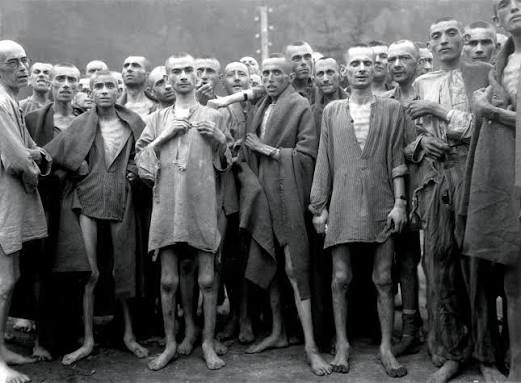
By HENRY SREBRNIK Genocide is a grave and exceptional violation of international law, defined and prohibited by the Genocide Convention of 1948. But maybe Raphael Lemkin did us no favour in coining the word during the Holocaust. It is now used by antisemites against Israel.
Raphael Lemkin was a Polish-Jewish jurist who escaped from Europe when the Nazis occupied Poland. He moved to Washington, DC, in the summer of 1942, and went on to document Nazi atrocities in his 1944 book, Axis Rule in Occupied Europe. In this text, he introduced the word “genocide,” the destruction of a nation or of an ethnic group. This new word is made from the ancient Greek word genos (race, ethnicity or tribe) and the Latin cide (killing).
But it’s not that cut and dried. Even before the antisemites accused Israel of genocide in Gaza, as a way of ridding themselves of any residual guilt about the destruction of European Jewry, the word had become little more than a term used by states and “human rights” groups who for one reason or another want to punish their adversaries.
Most of the time they really are talking about “ethnic cleansing,” pogroms, massacres and war crimes. By such criteria, every participant in World War II committed “genocide.” The mass killings of civilians in Hiroshima and Dresden in 1945 would today qualify. But these were acts against even far worse perpetrators of what we now call genocide, designed to speedily end the war.
What about the American war in Vietnam, and of course the almost numberless conflicts across Africa? The wars that dismembered Yugoslavia involved terrible massacres, particularly in Bosnia-Herzegovina and Kosovo, but did they really meet the criterion for genocide? The numbers killed needn’t be huge. About 8,000 Bosniak Muslims were murdered in Srebrenica by Bosnian Serb militias in 1995 during the Bosnian war. In the Western Hemisphere it would — and lately does — refer to the cultural and also physical extinction of pre-contact peoples from the Arctic down to Patagonia.
Are ideological attempts to kill groups of identifiable people within a state — the Holodomor in Ukraine, but also elsewhere in Stalin’s USSR — genocide? What about the Khmer Rouge in Cambodia? Should we call this an “auto-genocide,” since it was perpetrated by the nation’s own mad Maoist regime? Was China’s Cultural Revolution a genocide? Millions probably died. Rwanda is an interesting case — obviously a mass murder by one class-cum-ethnic group against another, a giant pogrom involving intertwined peoples, but where the victims have now turned the tables.
Actually, there have been very few ideologically intentional attempts to destroy a powerless and helpless people, in whole or in part. Only a few qualify by that definition, the Holocaust being an obvious one, as well as the Turkish mass murders of Armenians in World War I. The allegations that Israel committed this crime do not meet the established definition and standards of genocide, are unsupported by established facts, nor do they stand up to common sense scrutiny.
A finding of genocide requires evidence of acts that are intended to destroy a national, ethnic, racial, or religious group, in whole or in part. Israel has neither intended to, nor destroyed, Palestinians as a group in Gaza. Israel’s accusers allege genocide mostly because of the supposed number of civilians killed in Gaza. Such claims are rife with flaws. Genocide is not a quantitative crime; there is no specific number of civilian casualties that constitutes genocide.
Israel set a high bar for how to conduct urban warfare against an enemy who will stop at nothing, including the death of its own civilians. What kind of genocide is it when the population of Gaza is larger today than it was three years ago? And how could it be that Israel is trying to kill innocents when the ratio of civilian-to-combatant casualties is lower than that of other urban wars fought in even less-difficult conditions?
Dave Rich, an Associate Research Fellow at the Pears Institute for the Study of Anti-Semitism, writes extensively about the intersection of anti-Israel activism, far-left politics, and modern antisemitism. He observes that people respond to the genocide charge through facts and data: Israel’s supporters take the charge of genocide on its face, as an evidence-based allegation of a crime, and try to construct the case for the defence. But there is no defence, because the charge is not made on that basis, or for that purpose, he states.
The term “genocide,” he notes in “From Be’eri to Bondi: Global Antisemitism After October 7, published in Fathom, October 2026, has shed its legal meaning and become a political label, whose antithesis is “resistance.” These two terms represent two states of being: in a colonial setting, either you are engaging in genocide or you are resisting it. There is no middle ground. “Israel is condemned as genocidal, not by observation, but through logical deduction: Israel is colonial, therefore by definition it is genocidal. It cannot be otherwise. And Gaza represents resistance against the entire Western colonial and capitalist power structure.”
Maia Zelkha, editor-in-chief of Yad Mizrah, a Sephardi and Mizrahi cultural magazine, also contends that the left employs the word “genocide” as an ideological weapon. “Before Israel had even launched its ground invasion of Gaza, and before there was any evidentiary record of Israel’s military campaign,” she writes, in her article “Genocide and Its Jurors,” in Quillette, Sept. 24, 2026, many leftist groups “were already describing Israel’s response as genocide.”
On Oct. 8, just a day after Hamas’s massacre and kidnappings, thousands of demonstrators gathered in New York’s Times Square in an “All Out for Palestine” rally to support “Palestinian resistance.” Within days, other organizations were issuing statements describing Israel’s unfolding military response as genocide, situated within a pre-existing theory of Israel as a colonial project that had produced genocidal dehumanisation. Prominent academics, human-rights organisations, activists, journalists, and public intellectuals described Israel’s conduct as genocidal.
Although the conviction that Israel is committing genocide against the Palestinians is not new, it has garnered ever more strength since the beginning of this war. In March 2024, the UN special rapporteur on the Palestinian territories, Francesca Albanese, published a report alleging that the Israeli war in Gaza constituted a genocide. In December of the same year, both Amnesty International and Human Rights Watch did the same. Then in July 2025 came both Physicians for Human Rights and B’Tselem, followed almost immediately by the International Association of Genocide Scholars. A resolution from the latter organization requires a two-thirds vote of its members, academics in the field of genocide studies, to pass. One would be hard-pressed to find a more reputable source for the libel.
On Sept. 16, 2025, a UN Commission of Inquiry concluded that Israel was committing genocide in Gaza; other prominent left-wing organisations and scholars have reached the same conclusion. And finally, on Oct. 9, the Norwegian Nobel Committee announced that it awarded the Nobel Peace Prize for 2026 to South African judge Navanethem “Navi” Pillay, who led the 2025 UN commission that found Israel guilty of genocide against the Palestinians while completely ignoring many of the world’s worst human rights abusers, including, of course, Hamas. Pillay’s commission found that Hamas and other Palestinian armed groups committed war crimes. Yet it accused Israel of genocide. This is a staggering moral inversion. And now the award of the Nobel; this appears to be the greatest possible legitimization of the now-established consensus about Israel’s war in Gaza. The icing on the cake!
But remember this: When a jihadist terrorist organization like Hamas applauds a Nobel Peace Prize, the moral judgment of the Nobel Peace Prize Committee should rightly be called into question.
Henry Srebrnik is a professor emeritus of political science at the University of Prince Edward Island.
Features
Launch Black Friday Promo Spots Fast with an AI Video Generator

Black Friday campaigns often require rapid decision-making, consistent messaging, and promotional materials on multiple digital channels. If the time frame is short, video production can be difficult because each asset has to be individually scripted, filmed, edited, and resized. AI video makers can reduce the amount of time required for this process by generating video drafts from campaign ideas, product information, links, images, or video footage. Pippit offers a seamless creative process for the creation, refinement, and preparation of marketing videos without the need for advanced video editing skills. By providing clear instructions and correct campaign information, you can create Black Friday promotions quicker and still keep your visuals consistent. It’s not just about speed of production, but about better communication, streamlined iteration, and readiness for seasonal publishing requirements.
Why Black Friday Promo Videos Need a Faster Production Workflow

Black Friday marketing campaigns can be done in very short timeframes, which is why efficiency in production is particularly crucial. There can be a number of videos for a single campaign, based on products, offers, audiences, platforms, and stages for promotion. Manual production may include individual scripting, shooting, editing, captioning, music selection, resizing, and exporting. Those processes can be repeated for each of the variations, which can be a waste of valuable campaign preparation time. Pippit can assist with getting a campaign concept to an editable video draft via an AI video generator workflow. Creative inputs can be text, links, files, images, videos, or other media. Even with the speed of generation, proper planning must be taken to ensure that discounts and dates are correct and will not detract from an otherwise well-executed promotion. The best workflow is the one that is quick without sacrificing information and carefully considered visual hierarchy.
Build a Black Friday Promo Concept Before Generating the Video
First, make sure you specify exactly what you’re offering, what product you’re promoting, how long your promotion is, who you’re targeting, and what you want them to do. Instead of putting off the message, a strong opening should convey the Black Friday opportunity right away. Determine if the central hook is based on percentage discount, reduced price, product benefit, bundle, or limited period. Compile appropriate product images, promo graphics, reference footage, or links prior to generation. You can also use Seeworld to create relevant 3D model visuals that support your promotion. Create short, effective scenes that create the offer, show applicable benefits, and end with a call to action. Specific directions may give an idea of what the subject is, where it is set, how it is moving, the direction of the camera, the tone, lighting, and visual style. Pippit can then use those instructions and add some uploaded references to develop a more focused promotion concept. Ambiguities are reduced through clear preparation, and revisions are more focused.

Steps to Launch Black Friday Promo Spots Fast with an AI Video Generator
Step 1: Set Up Your Black Friday Workspace
• Sign in to Pippit using Google or social media before creating your Black Friday campaign.
• Open the “Video generator” from the left menu under the “More” tab to begin.

Step 2: Build Your Black Friday Promo
• Select Dreamina Seedance 2.5, Dreamina Seedance 2.0, or Dreamina Seedance 2.0 Fast.
• Choose Dreamina Seedance 2.0 Mini, Dreamina Seedance 1.0, or “Auto Route”for value.
• Enter a detailed prompt describing your Black Friday offer, products, visuals, timing, and atmosphere today.
• Click “+” to upload reference images or videos from your device, phone, Dropbox, or a link.
• Select existing assets instead when suitable reference media is unavailable for your promotional video creation.
• Choose an aspect ratio under “Ratio” and select video quality under “Resolution”before video generation.
• Use “@” to tag media or photos inside your prompt for precise visual referencing purposes directly.
• Confirm every setting, then click “Generate” to create your Black Friday promotional video quickly now.

Step 3: Polish and Publish Your Offer
• Preview the generated video and adjust details

• Click “Regenerate” when results need further changes.
• Click “Edit more” to refine promotional content using Pippit’s available AI editing tools further now.
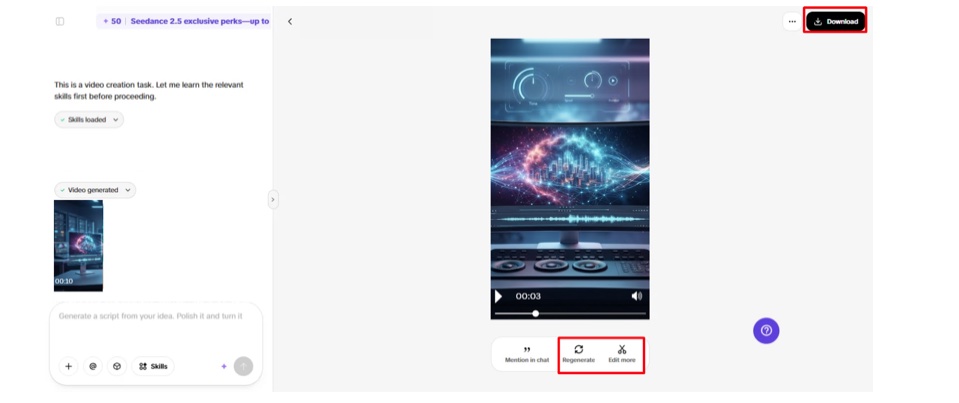
• Manually edit captions, add text, and adjust size, color, alignment, filters, and effects for polish.
• Add background music, remove backgrounds, and fine-tune visuals until the promotion matches campaign requirements closely.
• Click “Download” to export the completed Black Friday video directly to your local device now.
• Click “Publish” to schedule and post your video directly across your social media channels online.

Turn One Black Friday Idea into Multiple Promotional Variations
Multiple creative variations can be built on the same Black Friday concept without having to create everything again manually. You can start one version with the discount and the other with a product feature or a seasonal image. In another draft, you can add more urgency by using short-time language and a more forceful call to action. Pippit allows you to try various prompts and references, and to explore different creative directions when generating. Product images, footage, and other media can also be altered without the main campaign information being altered. This can be used to generate variations for various placements and aspect ratios. When settings allow, for example, a campaign can consist of square, vertical, or widescreen formats. Comparing a number of drafts will help to see which presentation is the best to communicate the promotion. Ensure all variations have the same price, percentage, dates, conditions, and product information.
Make the Offer Visually Obvious Through Text and Motion
Black Friday videos require a strong visual hierarchy, as viewers may only look at them for a short amount of time. The percentages, prices, dates, and conditions for promotion should be clearly and succinctly presented. Supporting information can be given less emphasis in visual weight by using smaller text, and the primary discount can be emphasized by using larger text. Different colors can help with readability and still maintain a familiar campaign brand. Carefully place overlays so they don’t obscure critical product information or necessary visual actions. Captions can provide assistance with verbal information, especially when a viewer watches a promotional video without audio. Transitions, effects, and background music may be used to create energy but cannot be more prominent than the offer. Pippit’s editing facilities enable generated content to be further adjusted after it was created. Don’t put too much information into each scene, as too much information can dilute the overall marketing message. Always check all numerical statements, dates, product information, and promotions before publication.
Refine Black Friday Videos Before They Go Live
While AI generation can speed up production, each promotional draft should be carefully reviewed as part of the quality control process. Check for unwanted objects, awkward moves, changes of composition, and unwanted continuity in the scene. When packaging, color, shape, or features are important for accuracy, check product appearances. Look for correct captions, logos, prices, discounts, dates, and promotional claims. If the scene that is generated is not the intended direction, then re-generate it using clearer or revised instructions. Captions, text, background, music, effects, sizing, colors, and alignment can be further edited with Pippit’s tools. Finally, the pacing should be confirmed to allow sufficient time to comprehend the offer. Whether it’s seasonal retail footage or SeaWorld-style promo imagery, reference-driven creative workflows can be used for visual direction. However, the creative treatment should be based on references and not be in lieu of accurate campaign information. Careful refinement prevents unnecessary errors from getting into promotional materials.
Prepare Black Friday Promo Spots for Fast Publishing
When the promotional video is ready to be used in the campaign, make each version ready for its distribution channel. Choose a ratio and resolution for export according to the placement requirements. Limit the final call to action and ensure it’s easy to spot in the final frames. Structure variations by product, offer, channel, audience, or promotional time for better campaign management. Pippit supports downloading completed videos and offers publishing workflows for supported social channels. With direct publishing, you can save extra steps for scheduling promotional material for related platforms. Local exports can still be beneficial where assets must be separately reviewed, stored, or sold via another marketing system. Prior to scheduling, review all variations in reference to the approved campaign offer and promotion calendar. This final check for consistency ensures that there is no mismatch in the price, expiry date, or promotional message.
Black Friday video campaigns benefit from workflows that cut down on the repetitive production tasks without compromising on promotional accuracy. Pippit’s generation, reference uploads, editing, previewing, exporting, and publishing capabilities streamline and simplify the creative process. Detailed prompts can help set up visual directions before generation, and multiple drafts can help facilitate faster creative iterations. Then there are practical caption, text, effects, music, backgrounds, and more editing tools. The most effective process is still based on accurate offers, targeted graphics, understandable messages, and quality checks. Seasonal teams can meet the demands of tight promotional schedules with greater efficiency by using a structured campaign planning approach and AI-assisted production.
