


Local News
Gustavo Zentner talks about his role as CIJA Vice-President for Manitoba and Saskatchewan
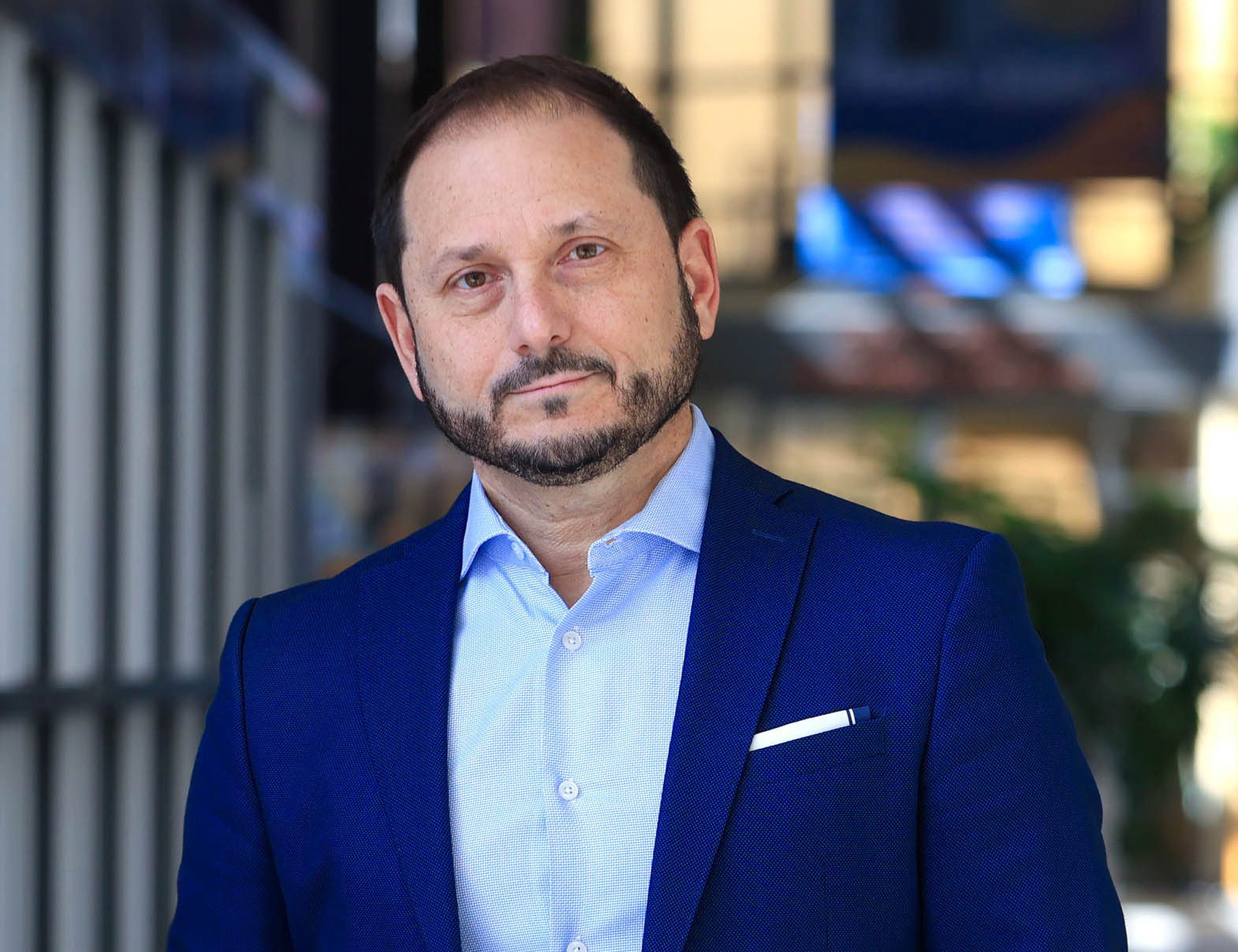
By BERNIE BELLAN Gustavo Zentner has played many roles since arriving in Winnipeg from his native Argentina in the late 1990s.
In a May 2022 article written for The Jewish Post & News by Myron Love, Love wrote this about Zentner, who had just become President of the Jewish Federation of Winnipeg at the time:
“The new president of the Jewish Federation of Winnipeg – who originally hails from the city of Corrientes in northeastern Argentina – notes that his great-grandfather, among the earliest Jewish immigrants to the country, was one of the founding members of the organized Jewish community and its cemetery – and his mother was the first (and thus far still the only) female to lead the community.
‘My earliest memories are of my mother always chairing meetings of the Federation,’ he recalls.
Thus, it is no surprise that Zentner threw himself into volunteering with the Jewish Federation of Winnipeg very soon after he arrived in our community – among the wave of Jews from Argentina who immigrated here 20–25 years ago.
‘I was delighted to come to Winnipeg,’ the new Federation president said. ‘I found a warm and welcoming community and was happy to contribute in any way I could.’ Zentner added, ‘This is a wonderful community, and I believe that everyone counts. Every person has a story to tell and something to contribute. Let’s make sure everyone is part of the conversation.’
As a board member, Zentner has, over the past 15 years, chaired first the Human Resources Committee, followed by the Community Planning and Allocations Committee, and most recently served as Treasurer, chairing the Finance and Audit Committees. He has volunteered with many other organizations; no doubt that experience will serve him well as he builds bridges throughout the community.
In his business career, Zentner was the president of InterPOC, an international business consultancy, and Honorary Consul of Brazil in Manitoba. Zentner places a lot of emphasis on consultation and planning.”
It was during his term as President of the Federation, in the immediate aftermath of the October 7, 2023 Hamas massacre, that Zentner played a pivotal role in rallying not only members of the Jewish community, but also members of the broader Winnipeg community, in support of Israel. Zentner headed a Manitoba government secretariat dealing with economic diplomacy and worked with many organizations developing trade and investment relations.
That year, Zentner chaired three major rallies: the first at the Asper Campus in October, when more than 2,000 individuals gathered on the campus lawn; a second at the Manitoba Legislature; and a third in the Rady JCC gym, held in memory of the late Vivian Silver.
Each time, Zentner struck just the right chord, demonstrating eloquence and a sincere passion for Israel and the Jewish community. In 2024, he developed strong lines of communication with various levels of government to raise awareness about the surge in antisemitism that followed the October 7 attack. He was especially successful in forming a strong bond with then–Winnipeg Police Service Chief Danny Smyth, along with other WPS members, to respond to and, where possible, prevent antisemitic incidents in the city.
Thus, it was no surprise that shortly after completing his term as Federation President, Zentner assumed a new role as Vice-President for Manitoba and Saskatchewan for the Centre for Israel and Jewish Affairs (CIJA).
On September 25, Zentner spoke at the Remis Forum Luncheon, where he outlined his role with CIJA.
Zentner began by describing his firsthand experience with terrorism as a young Argentine Jew during the 1990s:
“I was there when there were two terrorist attacks – on March 17, 1992, and July 18, 1994. That forged my Jewish identity and my commitment to becoming more visible in terms of leadership in the Jewish community, while building a business or working for others or government. I understood that antisemitism shouldn’t define me; instead, it highlighted a path for my involvement in open society, celebrating the contributions of those who came before me – our leaders who built community and led countries.”
While much of his talk focused on the need for Winnipeg Jews to support Israel and engage younger generations, Zentner also explained CIJA’s mission and his particular role within the organization.
“Our main business is Canadian Jewish advocacy,” he said. “CIJA is the advocacy agent of Jewish federations across the country.”
The head office of CIJA is located in Toronto. Zentner noted that the organization’s President and CEO, Noah Shack, made his first official visit to Winnipeg shortly after assuming his new role.
“We met with Premier Kinew, Mayor Gillingham, MP Ben Carr, and with community organizations, funders, and allies,” Zentner said.
In addition to Winnipeg, CIJA has staff in Montreal, Ottawa, and Vancouver.
“Our core objective today is to combat antisemitism across Canada,” Zentner stated.
In addition, CIJA consults with other Jewish advocacy organizations worldwide in a group known as the “J7,” modeled after the G7 economic alliance.
“Canada’s is one of the seven largest Jewish communities in the world,” he explained. “Our counterparts include Argentina, Australia, France, Germany, the United Kingdom, and the United States. When the Prime Minister of Australia or Great Britain is considering a policy, we engage in discussion with our counterparts so we can anticipate and respond—not only to support another Jewish community abroad, but also to understand the implications for Canada.”
Zentner also noted that CIJA represents Holocaust survivors in Canada through the Claims Conference.
When it comes to combating antisemitism, he emphasized, it cannot be left to one organization alone.
“In Canada, antisemitism has to be confronted by society at large, not exclusively by the Jewish community,” he said. “Working closely with the Jewish Federation, other organizations, volunteer groups, and individuals is the only way forward.”
“The ideal scenario is one where we identify advocacy channels, messaging, and issues, and support organizations and individuals to advance our cause—protecting Jewish life and ensuring that Jews have access to all aspects of society, free from intimidation, harassment, or hostility.”
We are placing a strong emphasis on community partnerships and recently celebrated a meaningful example through the Asper Community Shabbat program. The Gwen Secter Creative Living Centre and CIJA co-hosted a special Shabbat gathering with members of Indigenous communities, including First Nations Elders, representatives from the Manitoba Métis Federation, the Inuit community, and the Southern Chiefs’ Organization.
As CIJA’s representative, Zentner described his approach to working with governments, the Winnipeg Police Service, and other law enforcement agencies:
“As the advocacy agency for the federation system, we support Jewish organizations and individuals when they need advocacy or policy change. Our work includes engaging with the City of Winnipeg and the Province of Manitoba, driving accountability and action when our community is attacked or discriminated against.”
He added that he has been direct in telling officials, particularly the police, to take concrete action against antisemitism.
“To do that, we consult and engage with law enforcement on an ongoing basis,” he said. “When it comes to defending Jewish members of the community, we look to law enforcement to do that for us. At the same time, the community can play an important role through volunteers and professional programs through the Jewish Security Network.”
Zentner clarified that asking governments to protect Jewish Canadians is not a special plea for the community:
“We’re not telling civil society to defend the Jews,” he said. “We’re saying: defend Canadian citizens, Canadian values, and minority groups under attack.”
A second objective, Zentner explained, is revitalizing partnerships with Israel so that governments can maintain “positive, healthy relationships” with the Jewish state.
“In my role, I’m responsible for ensuring that we have viable, credible, open lines of meaningful engagement with all levels of government. That is not easy. We hope that the U.S.-led peace plan will open opportunities to reimagine and strengthen Canada–Israel friendship and collaboration. A recent example was the official visit of H.E. Iddo Moed to Saskatchewan, advancing economic diplomacy, collaboration, and market diversification opportunities for both countries.”
A third component of his work, he said, is “community mobilization”—educating and activating members of the Jewish community.
“This is where I spend a lot of time speaking with members of our community—those born here and those who immigrated from elsewhere, like me. There is a large South American Jewish community that began with the Federation’s Grow Winnipeg initiative 25 years ago, as well as significant Hebrew-speaking folks from Israel and Russia. These communities bring valuable lived experience in facing antisemitism and security challenges. Working with them and mobilizing their networks gives us greater access to the broader community.”
Zentner also highlighted CIJA’s ongoing advocacy efforts:
“We advocate for Jewish life, protecting synagogues, community centres, and schools, and influencing policy,” he said, citing the federal government’s recent passage of Bill C-9, which strengthens laws against hate crimes.
Zentner also addressed the federal government’s recent decision to recognize a Palestinian state, pointing to their communication with the PMO:
“Recognition cannot come without clear conditions for Palestinian statehood,” he said. “We have been communicating with Prime Minister Carney since he first signalled that intent in July, to ensure it was not a unilateral, pre-emptive gift to Hamas. CIJA advocates not only for Israel or the Jewish community, but for upholding Canadian values.”
Another aspect of CIJA’s work, Zentner added, is providing antisemitism training and Holocaust education.
“We support organizations qualified to deliver training for all levels of government and civil society. Currently, we are working with the provincial government, the Civil Service Commission, and others to increase training opportunities and accountability, ensuring anti-racism policies are in place and enforced.”
During the Q&A, Zentner discussed CIJA’s consultations with police during Folklorama, when regular pro-Palestinian protests occurred outside the Asper Campus.
“We reached an understanding to ensure that, whether through permits or other mechanisms, such protests would not take place immediately outside the campus in the future,” he said, adding that the Winnipeg Police Service has committed to a stronger presence and more effective action next year.
To advance these advocacy projects, he emphasized, CIJA works collaboratively with the Jewish Federation, Asper Campus, Rady JCC, and community representatives who share their perspectives with police leadership.
At the close of his remarks, Zentner returned to his personal story, recalling that his family left Argentina following two terrorist attacks against Jews in 1992 and 1994.
“We must not go into a dark space,” he said. “That’s my role every day—and it’s a difficult role. But I won’t let that define who I am or how we define our community.”
He noted that collective advocacy has already produced tangible results, such as the provincial government’s appointment of a hate crimes prosecutor, commitments to hate training across public institutions, and increased financial support for Jewish organizations in Winnipeg resulting from a first time ever pre-budget consultation held with the province earlier in the year. CIJA has also worked with the City of Winnipeg on measures to protect Jewish institutions from hostile demonstrations and to ensure that publicly funded cultural organizations do not engage in antisemitic programming.
“Our community is not alone,” Zentner concluded. “We have countless allies who actively support our right to exist—here at home and in Israel. The Jewish community has played a significant role in building this country and contributing to all aspects of life. We need to continue engaging allies to stand visibly and vocally with us today.
I believe we all have a role to play in improving Jewish life in Canada and supporting the relationship between our community, Canada, and Israel. There is truly no work I could imagine more meaningful or impactful than serving our community, advancing our advocacy, strengthening government relations, and expanding our partnerships.
We are resilient, strong, and proud of our Jewish identity, and our relationship with Israel, as the homeland of the Jewish nation.”
Local News
“Fiddler on the Roof”: First ever joint production between Winnipeg Jewish Theatre and Rainbow Stage is a smash hit

By BERNIE BELLAN You really can’t go wrong by mounting a production of “Fiddler on the Roof” – and Rainbow Stage has proven that four previous times: in 1971, 1977, 1984, and 1993.
What each of those productions had in common though – aside from the fact that they were solely Rainbow Stage productions, was that each time the star role of Tevye the milkman was played by Cliff Gardner who, in his day job, was the program director at CJOB radio.
I can’t remember how many times I saw Fiddler at Rainbow State previously but, after a while it wasn’t quite the novel experience it was the first time I had seen it there.
But now – as a result of a very creative idea, “Fiddler on the Roof” has been brought back to Rainbow Stage once more – but this time as a co-production with the Winnipeg Jewish Theatre.
The idea for mounting a joint production came from WJT’s artistic director, Dan Petrenko who, as Myron Love noted in an article for The Jewish Post this past February, had observed that “ Because of the times we’re living through, and particularly the growing antisemitism in our communities and across the country, I felt there is a need to tell a story that celebrates Jewish culture on the largest stage in the city – to reach as many people as possible.’ ”
Myron’s article went on to say that “Last year, WJT approached Rainbow Stage with a proposal for the co-presentation of “Fiddler on the Roof.” Rainbow Stage management was really enthusiastic in their response, Petrenko said.”
In my own profile of Dan Petrenko, which I wrote in April 2023, when he first came to Winnipeg, just after having been hired as the WJT’s new artistic director, I noted that “Dan was born in Israel, the son of Jewish parents who had moved from their hometown of Odessa in Ukraine.
“A formative influence in his life, he says, was his grandmother, who had been a pianist in Ukraine. She had aspirations early in her life to study in a music conservatory, but the antisemitism that was pervasive in the Soviet Union prevented her from achieving that ambition. Instead, she had to travel all the way to Siberia in order to obtain training to become a pianist.”
After re-reading my own article about Petrenko in preparation for writing about the new production of “Fiddler on the Roof,” now on at Rainbow Stage until Sept. 13, I couldn’t help but note the parallels in Petrenko’s own life and the story that is at the heart of “Fiddler,” which is one of Jews having to cope with antisemitism in their native Ukraine and finally being forced to leave their home community of Anitevka – for parts unknown.
While “Fiddler” has so many dimensions – from its story of persecution, of girls being kept from studying because of age old taboos, of marriages being arranged, to notions of democracy – and socialism, starting to be espoused in the late 1800s in Eastern Europe – it’s the music that really drives the show.
I don’t have to remind anyone how timeless the songs from “Fiddler” have become. There have been documentaries produced, both about how the Broadway show came about and later, how Norman Jewison crafted a quite different approach to telling the story of Tevye the milkman in his brilliant movie adaptation of the Broadway musical. There have also been several books telling the story how three geniuses: Sheldon Harnick, Joseph Stein, and Jerry Bock, combined to create something that is as timeless in its own way as any musical could ever be.
But, what can you say about the WJT-Rainbow Stage co-production of “Fiddler'” that couldn’t possibly avoid using superlatives? Playing to a sold-out audience on opening night, Wednesday, September 9, even though there was a slight chill in the air as the evening wore on – and certainly mounting a show at Rainbow Stage in September is a chancy proposition – the evening was one of pure magic.
I don’t know who came up with the idea of having the orchestra play behind the performers – as opposed to the usual practice of having them play in the pit in front of the stage – but it was sheer genius to do that. I’ve often attended Rainbow Stage and been frustrated that the singers’ voices are drowned out by the musicians’ instruments – but not this night.
Each note sung could be heard clear as a bell – even from the children who played Tevye and Golde’s youngest daughters.
The performances were universally excellent – all the way from Daniel Kash as Tevye and Debbie Maslowsky (a name very familiar both to WJT and Rainbow Stage attendees) to everyone else in the cast. It would be unfair to single out anyone in the cast for special praise; they were all so good, but if there was one moment that was absolutely thrilling above all else, it was when the opening note to the Russian song “Za vashe zdorovye” (to your health) in the famous tavern scene that culminates with “To Life” was belted out.
And, having the Rusalka Ukrainian dancers perform only added to the evening’s excitement. The exuberance they brought to the wedding scene was a demonstration of how combining the talents of one of Winnipeg’s most exciting dance troupes with many Winnipeg performers who had previously appeared either in WJT or Rainbow Stage productions was a demonstration of just how much talent there is right here in Winnipeg.
Sadly, by the time this is published this version of “Fiddler on the Roof” is only scheduled to be performed two more times: Saturday, Sept. 12, at 7:30 pm and Sunday, Sept. 13, at 2:00 pm. Tickets had been going fast as of the time of publication, but if you want to check with the box office, the number is 204-989-0888
Local News
From a ‘pie in the sky’ idea to 2,400 young hockey players

By BERNIE BELLAN I didn’t used to cover sports for The Jewish Post & News except for the odd occasion.
For years we could count on the late, great Harvey Rosen to comb the waterfront, looking for any sports story that might have the least connection to anything Jewish. Harvey would even go into visiting teams’ locker rooms during Winnipeg Jets games and, if a player had a name that sounded Jewish, inquire whether that player might be Jewish.
Then, for a few years, we added well-known sports writer Scott Taylor to the mix. Scott offered quite a different perspective, looking for stories about athletes that went far behind the scenes to uncover details that other reporters might have missed.
With both Harvey and Scott gone from our pages, I’ve occasionally found myself filling the sports void. These days, however, I tend to wait for an interesting story to find me.
And that’s exactly what happened with Wheatland Hockey.
Recently, my neighbours Elliot and Linda Katz mentioned that they knew of a Jewish couple who had started a hockey development program in Winnipeg. The couple, Rich Hechter and Rachel Wolfenson, had apparently started Wheatland Hockey only about 16 months earlier.
I subsequently learned that, in that short time, more than 2,400 young hockey players had gone through Wheatland’s various programs.
That number got my attention.
So, I contacted Rachel and Rich to find out what they had created — and why.
It started with a gap
The idea for Wheatland began, as Rachel described it to me, as “this little pie in the sky idea that we were going to have a spring development program in the spring of 2025.”
They started with about 50 kids spread across three age groups.
Sixteen months later, Wheatland has grown into a broad hockey-development organization offering programs for players from U9 through U15, along with specialized programming, female hockey, spring and summer teams, events and high-performance opportunities.
But the numbers aren’t really the story.
The story is why they thought Wheatland needed to exist in the first place.
Rich and Rachel felt there was a gap between traditional minor hockey and the highly specialized — and often expensive — training programs available to elite players.
There were plenty of opportunities for kids to play hockey. But what about the player who needed to improve one particular part of their game? What about the U9 player whose parents had no idea what skills their child should be working on? What about the player who wasn’t an elite athlete but had the potential to become a much better hockey player with the right instruction?
That was the space they wanted Wheatland to occupy.
As Rachel explained it, some families come to Wheatland knowing exactly what their child needs.
“They might know that the kid’s gap is power skating,” she told me. “They might have a great shot and great stick handling, but they’re not strong skaters.”
Other families arrive with a much less specific question.
“They’re new U9 families,” Rachel said. “Their kids have been spat out of the Timbits world and into the U9 world and they don’t know what to focus on.”
That’s where Rich comes in.
‘Pedagogy on ice’
Rich brings an unusual background to hockey coaching.
He is currently taking a one-year sabbatical from his role as vice-principal of Brock Corydon School, the Winnipeg school often known as the only public school Hebrew bilingual program in North America. For many families in Winnipeg’s Jewish community, Brock Corydon is where they know Rich best.
Before becoming a vice-principal, he worked as a high school teacher and as a university professor in the Faculty of Education. He has also spent more than a decade coaching youth hockey.
This year, rather than stepping away from education, Rich is using his sabbatical as an opportunity to continue learning, writing, and growing as a coach and mentor while devoting more time to developing Wheatland Hockey.
That additional time will also allow Wheatland to extend its reach beyond Winnipeg through a new initiative called “Wheatland on the Road”.
Over the coming year, Rich will travel to rural Manitoba communities including Manitou, St. Laurent, Lundar, Steinbach and Elm Creek to lead coaching and mentoring sessions for local players and coaches.
The initiative reflects Wheatland’s belief that access to quality coaching should not depend on where a young player lives. It also gives Rich an opportunity to work directly with local hockey communities, sharing ideas and helping coaches develop their own approaches to teaching the game.
For Rich, education and hockey aren’t separate worlds.
Rachel described his approach as “pedagogy on ice.”
The idea is simple: coaching isn’t just about showing a young player how to execute a skill. It’s about understanding how that player learns, figuring out what they need, and creating an environment where they can improve.
That educational philosophy is evident in the way Wheatland approaches development.
Its programs focus on areas such as skating, puck control, shooting, passing and receiving, positional play, defensive skills, checking, hockey IQ and tactical understanding.
But the organization also talks openly about developing confidence, resilience and character.
The Wheatland philosophy is summed up on its website as building “skills, character and excellence — on and off the ice.”
And that distinction is important to Rich.
The objective isn’t simply to produce better hockey players.
It’s to help young people become better learners, teammates and competitors.
A Jewish leadership team in an unlikely business
There is also an irony at the heart of Wheatland’s success.
We are not exactly the people known for our sporting prowess, and none of the people leading Wheatland played in the NHL. Yet, the organization is run by Rachel and Rich, with Ryan Paul, Eleni Wener, Avi Walker and Dustin Roitelman in senior leadership roles.
That may be unusual in the hockey world, but it is also part of what makes Wheatland distinctive.
This is not a business built around former professional players leveraging on their own playing careers. It is being led by people who believe deeply in the values Wheatland has developed — and continues to develop.
They believe in teaching young people how to learn, how to work with others, how to persevere and how to contribute to their communities.
In that sense, Wheatland’s leadership team reflects the organization’s broader philosophy: hockey expertise matters, but so do education, mentorship, organization, empathy and a commitment to making the game more accessible.
The fact that this group has helped build a hockey organization serving thousands of young players from across Manitoba is, in its own way, pretty remarkable.
Making hockey and coaching accessible
Perhaps the most important word in Wheatland’s philosophy is accessibility.
“Accessibility is one of our guiding principles,” Rachel said. “We believe that all kids should have the opportunity to get on the ice, regardless of socioeconomic conditions.”
For Rich and Rachel, accessibility means more than making hockey available. They believe that good coaching should be accessible, too.
That commitment is reflected in Wheatland’s “Pay-What-You-Can” program, which helps ensure that financial circumstances do not prevent children and families from participating in quality hockey programming.
For Rachel and Rich, the program is one way of giving back to the broader community. They believe that hockey — and the opportunity to learn from good coaches — should be available to as many young people as possible, not limited only to families who can afford the full cost of specialized training.
That doesn’t mean Wheatland is trying to be everything to everyone.
Rather, the idea is that a family shouldn’t need to have an elite-level hockey player — or an elite-level hockey budget — to access good coaching.
The organization keeps its groups relatively small. A typical session might have four or five players, while a larger session could have as many as 20, with several coaches on the ice.
The result is that a player who shows up to a smaller session can end up receiving something approaching a semi-private lesson without the family having to pay a premium for that experience.
And, Rachel noted, if only a handful of players show up for a session, “they would get the benefit of a semi-private class for a very inexpensive cost.”
Building coaches, too
Wheatland’s emphasis on development doesn’t stop with the players.
The organization has also created a Junior Coach program, through which some of its younger participants have an opportunity to begin learning how to teach the game themselves.
Five of Wheatland’s junior coaches are under the age of 15.
That’s significant because it reflects another part of Rich and Rachel’s philosophy: hockey development isn’t simply about producing better players. It’s about creating people who can contribute to the hockey community.
The organization’s coaching staff also includes experienced coaches with backgrounds in player development, athletic development and hockey education.
The same philosophy is at the heart of Wheatland on the Road. By working with coaches in rural communities, Rich hopes to help build local coaching capacity so that players can continue benefiting from quality instruction long after his visit is over.
Hockey as a bridge between communities
One of Wheatland’s most memorable recent initiatives involved a visiting Israeli hockey club.
The visiting players took part in two on-ice sessions with Rich and Ryan. After changing out of their gear, the young players then visited Rich at Brock Corydon School, where they met with grade 5 and 6 students.
For the players from Israel, the experience offered more than additional hockey instruction. It gave them an opportunity to connect with Winnipeg students through a shared language — the language of hockey — while also learning about one another’s communities.
For Wheatland, the sessions demonstrated how hockey can create meaningful connections that extend well beyond the rink.
Rachel and Rich
While Rich is the face of Wheatland on the ice, Rachel’s role is largely behind the scenes.
A Senior Investment Advisor with TD Private Wealth Management, Rachel brings an entirely different skill set to the organization, overseeing operations and communications and helping ensure that families have a positive experience from the moment they register.
The division of responsibilities seems to work. Rachel brings the organizational perspective needed to turn an idea into an operation. Rich brings the educator’s perspective to player development.
The broader leadership team brings additional experience, energy and commitment to the values that guide Wheatland.
And somewhere along the way, that little “pie in the sky” idea became something considerably larger.
More than 2,400 kids have now gone through Wheatland’s programs in just 16 months.
That’s a lot of hockey players. But when I asked Rachel what she thought accounted for that kind of growth, her answer wasn’t really about hockey.
It was about giving families something they were looking for.
“We teach people first, we teach hockey second,” is the philosophy Rich and Rachel have adopted.
Perhaps that’s why Wheatland has grown so quickly.
Because for all the talk about hockey development, what they are really trying to develop is something bigger: young people who feel supported, challenged and capable of getting better.
And through initiatives such as the Pay-What-You-Can program, Wheatland on the Road and its work with visiting teams, Wheatland is also showing how hockey can be both accessible and a bridge between communities.
If the first 16 months are any indication, there are a lot of Winnipeg families — and perhaps many potential community partners across Manitoba — who were looking for exactly that.
For more information about Wheatland Hockey, visit Wheatland Hockey.
Local News
“Chanukah Guilt: A Jewish Holiday Murder Mystery”
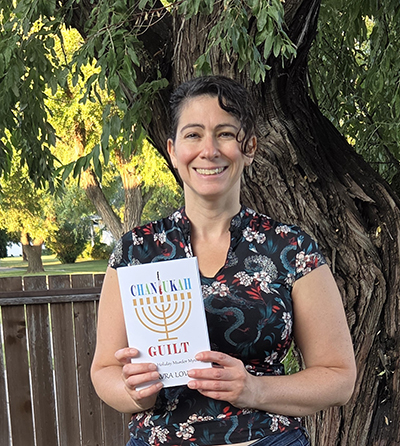
Review –Interview by MARTIN ZEILIG
With “Chanukah Guilt: A Jewish Holiday Murder Mystery” (Scribal Scion Publishing 182 pg. $20.00) Winnipeg author Avra Love steps confidently into the world of cozy Jewish crime fiction, delivering a warm, witty, and culturally textured novel that feels instantly familiar to anyone who has spent time in a synagogue social hall.
Published by Scribal Scion in August 2026, the book marks a notable shift from Love’s earlier works — the playful children’s book “Don’t Wake Mommy!” and her flash fiction collection “Into the Junk Drawer” — yet it carries forward her trademark blend of humour, character insight, and affection for the small dramas of everyday life.
Love, who was interviewed by email for this article, grew up surrounded by stories and language, and that early immersion shows. She had long wanted to take on a larger scale project, and this idea — sparked by her own experiences participating in holiday craft sales — lent itself naturally to expansion.
“I was always struck by the diversity and energy you find at these events,” she says. “When I considered it as a background for my story, I chose to make it a Jewish setting.”
The novel unfolds over a single day: the pre Chanukah craft sale at a local synagogue. It’s the kind of event many Jewish readers will recognize immediately — twenty vendors, tables overflowing with handmade goods, the hum of conversation, and the quiet hope that the turnout will justify all the effort.
Into this bustling scene steps Becky, the first time coordinator of the sale, who has taken on the job mostly because no one else would. Becky’s background as a theatre director gives her a keen eye for personalities, staging, and the subtle tensions that animate a room. It also makes her an unexpectedly capable amateur sleuth when a sudden death shatters the cheerful atmosphere.
Love’s decision to set the mystery within a single communal event is inspired. The synagogue social hall becomes a microcosm of Jewish communal life — warm, opinionated, occasionally chaotic, and full of characters who are both endearing and exasperating. The vendors, each with their quirks and motivations, form a lively ensemble cast. Their interactions provide humour, texture, and a steady stream of clues as Becky tries to piece together what happened before the police arrive.
The tone throughout is unmistakably cozy.
Love isn’t interested in grisly details or procedural complexity; her focus is on character, community, and the gentle absurdities that arise when ordinary people are thrust into extraordinary circumstances. The dialogue is sharp and often funny, peppered with Hebrew and Yiddish expressions that feel authentic rather than ornamental. A glossary at the end ensures that readers of all backgrounds can follow along without missing the cultural flavour.
Behind the scenes, Hanukah Guilt was very much a labour of love.
The book began as a “piecework project built over sporadic bouts of creativity,” Love explains, and then underwent multiple revisions.
All told, it took most of three years to complete. When it came time to publish, she didn’t hesitate to bring the manuscript to Scribal Scion.
“I had such a great experience working with James Gershfield on my first children’s book that I went to him first — and I’m glad I did. I’ve been so appreciative of his hard work and expertise in helping me craft the finished product.”
What elevates Hanukah Guilt is Love’s ability to balance levity with sincerity. Beneath the humour lies a genuine appreciation for Jewish communal spaces — their warmth, their imperfections, and their role as gathering points for tradition, creativity, and connection. Becky’s determination to solve the mystery is less about heroism and more about responsibility: to the vendors, to the event, and to the community she cares about.
Love’s writing career continues to expand. In addition to this novel, she has two new Jewish children’s picture books underway with Scribal Scion Kids and continues to write short stories in her spare time. Hanukah Guilt is her third published book — and her most ambitious to date.
In Hanukah Guilt, Avra Love has crafted a charming, accessible, and distinctly Jewish mystery that will resonate with readers across generations. It is a welcome addition to holidaythemed fiction and a delightful new chapter in the career of a Winnipeg writer whose voice continues to grow in range and confidence.
This is a book that belongs on Jewish bookshelves — and one that will make readers smile even as they turn the pages in search of clues.
Avra Love is a Winnipeg educator with a background in English Language studies and Philosophy. She is the author of three books: the flash fiction collection “Into the Junk Drawer,” the children’s book “Don’t Wake Mommy!,” and her new cozy mystery “Hanukah Guilt: A Jewish Holiday Murder Mystery.” She loves to read, write, craft, and practice healthy living.
