


Uncategorized
She was a dancer who leapt to the top of her field — then the Trump administration fired her

When she walked up to the Kennedy Center on the first day of her internship in 2013, she was Jane Rabinovitz, a recent grad from William & Mary, fresh off a stint as stage manager for an Argentine aerial tango company performing in Miami, and newly determined to forge a career in the arts.
By the time security escorted her out with her personal belongings 12 years later, she was Jane (Rabinovitz) Raleigh, a veteran employee who’d risen in the ranks to become director of dance programming. In August, she and her small team were fired amidst the upheaval fomented by President Donald Trump, who in his second term has installed himself as Kennedy Center chairman and attempted to reshape the institution.

The team was dismissed on a Thursday. By Monday, the center announced its new dance director: former Washington Ballet dancer Stephen Nakagawa. Raleigh was hardly shocked. She’d known since early March about the letter Nakagawa had sent to Richard Grenell, the center’s new president, praising Trump and lamenting “radical leftist ideologies” and the “rise of ‘woke’ culture” in the ballet world.
For six months, Raleigh saw firsthand that “what was happening inside of the Kennedy Center very much mirrored the general chaos that was happening in the government, the DOGE experience that people were having,” she told me over Zoom from her home in D.C. “You’re watching the chess pieces be moved around the board, but it’s people’s lives.”
“There was definitely an overarching feeling of waiting for the shoe to drop,” Raleigh said. “I was committed to staying until I was removed,” she added. But “I did believe from the beginning that everyone would be fired at some point.”
When her time came, the choreography felt familiar. “The cadence of it mirrored what had been happening at the center for many months,” she said. In some cases, entire teams were erased and their programs sunset. In other cases, like hers, “the leader would be fired, and then one, two, or three days later, a new person would just show up.” Often, she said, that person had some connection to Trump or Grenell. (Grenell and the Kennedy Center press office have not responded to multiple requests for comment.)
In the five or seven minutes Raleigh said it took for her and her two assistant managers to be fired, she was informed that this move was the result of “a loss of confidence in my leadership and a loss of confidence in the team’s ability to align with leadership’s vision.”
According to Raleigh, Grenell had communicated that vision in a meeting only the previous week, suggesting they present more “broadly appealing” programming in the vein of So You Think You Can Dance or Paula Abdul. She left the conversation with “a directive to start exploring more commercial offerings,” and immediately began reaching out to agents to pursue it. But before she had a chance to share a proposal, the team was out.
“I didn’t really have a chance to even try,” she said.
From Purim spiels and horas to a career in the arts
Raleigh was born in Washington, D.C., and raised just across the river in Virginia by her Jewish father — that’s the Rabinovitz — and her Catholic mother. Theirs was a mixed household, like the one Raleigh now shares with her husband, who grew up Catholic. But her parents decided to raise their kids Jewish and joined Temple Rodef Shalom, a reform synagogue in Falls Church, Virginia.

A language lover and future Spanish major, Raleigh “ate up” Hebrew school lessons, even “practicing writing secret notes in Hebrew to myself,” she said. She connected to her Jewish community primarily through the arts. She sang in the youth choir and later became a founding member of the teen choir, Kol Machar. And for many years she performed in the Purim spiels her dad wrote and directed as a hobby. One year when she was in college, the woman playing Esther dropped out of the Tarzan-themed Purim spiel at the last minute. “My dad called me,” she recalled, “and he was like, either you can be Esther or I’m gonna have to be Esther.”
Raleigh danced a formative hora at her bat mitzvah and another at her wedding a few years ago. “The hora and Jewish artistic experiences have always been a moment to blend my Jewish life and my secular life,” said Raleigh.
In her secular life, she trained seriously in ballet. She minored in dance at William & Mary, led the student dance company, and interned one summer at the American Dance Festival. Soon after graduation, she decided to pursue a career in the arts instead. She grew up going to the Kennedy Center frequently, so that’s where she went.
Her path there led from intern all the way up to dance director. Raleigh curated ballet seasons and contracted, budgeted, and presented both ballet and contemporary dance with an eye toward exposing audiences to a broader variety of work. She brought in Alonzo King LINES Ballet from San Francisco for their Kennedy Center debut in 2024, for example, introducing audiences familiar with classical, narrative productions to a more contemporary vision of ballet by an important living artist.
Raleigh says she felt lucky to put the center’s ample resources to use to support local and emerging artists and present some of the world’s best companies in a worthy setting. “I frequently would have striking moments of realization sitting in the Opera House, when the curtains would go up on shows that I’d be working on,” she said.
“That sense of wonder,” she added, “does not go away.”
A Trump tailspin
Trump took little interest in the Kennedy Center during his first term. He never attended performances back then, Raleigh said, though his daughter Ivanka Trump frequently came to the ballet. Like other presidents before him, he did appoint new members to the historically bipartisan board; Raleigh said she worked closely over the years with a few who were “real ballet supporters.” Unlike his predecessors, Trump repeatedly skipped the annual Kennedy Center Honors.

“We had lived through a previous term, so there was certainly no expectation that anything would be different,” Raleigh said. Until Trump posted on social media in February, shortly after his second inauguration, announcing his intentions to take over as chairman, oust board members, and shake up programming in order to “make the Kennedy Center in Washington, D.C. GREAT AGAIN” and usher in “a Golden Age in Arts and Culture.”
Raleigh found out about Trump’s plan when the public did. At first, she didn’t give it much credence — Trump had said a lot of things during his first administration that he hadn’t acted upon, she said. However, it quickly became clear he would follow through this time, and it “put everybody into a tailspin.”
The purge began immediately. Several board members and longtime chair David Rubenstein were dismissed and replaced by Trump and his appointees. Center president Deborah Rutter was removed after an 11-year tenure, to be succeeded by Grenell.
“Every single day you would come in and be like, what will have happened today?” Raleigh said. A pattern emerged where “basically every payday Friday was mass firings day.” Sometimes it was three people, she remembered, and sometimes 20. Those waves of dismissals were “the most chaotic, traumatic, repeatedly painful thing.”
In response to the uncertainty and upheaval, staff at the Kennedy Center began working to form a union. “The Kennedy Center’s new management has communicated its intention to radically alter the Center’s programming priorities, eliminate staff, and dismantle our mission-essential programs,” the union website states. “We no longer believe our institution trusts us and we no longer trust our institution.” Raleigh said her team participated in the organizing effort — which members hoped would help them fight to protect jobs, working conditions, creative autonomy, and more — and she was vocal in backing it.
When she and her team were notified around 11:40 a.m. on Aug. 21 of a meeting that was to take place in the HR suite five minutes later, they knew what was coming. It took just a few minutes for HR and legal to fire them and hand over their termination paperwork, Raleigh recalled.
On the way back to their desks, Raleigh and her team sent a few texts to share the news and “staff from every corner of the building” showed up, as they had done for others so many times by then. They had an hour to say goodbye, get their things, and get out.
Suddenly jobless, they set up at her apartment, divvied up the list of artists they were presenting in the upcoming season, and called them all to share the unfortunate update. It felt particularly difficult to digest the fact that they couldn’t be behind the scenes to support the performances scheduled to take place that weekend as part of the center’s local dance commissioning project. “The piece was about how Black women can support other Black women and femmes to have rest and resilience in the world,” Raleigh said. Without a team, they worried, “Who’s going to take care of this piece of art?”
Next steps
Raleigh’s fears extend beyond the Kennedy Center. She told me she’s concerned about the fate of dance and the arts in the face of the “dismantling, essentially, of the NEA” by the Trump administration and recent shifts by key arts funders, with reports that longtime supporters like the Andrew W. Mellon Foundation, Doris Duke Foundation, and Ford Foundation are now focusing on other priorities. And all this while arts organizations are still recovering from the pandemic’s crushing blow.
“The dance field has not been in a moment of incredible glory and surplus in my entire lifetime,” Raleigh said. So while the current state of affairs is “horrible,” perhaps “this is a moment for us to be thinking about what are new ways and new paths that we can chart going forward.”
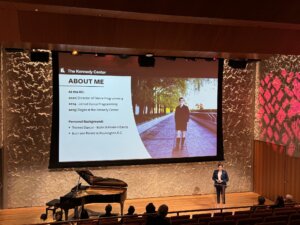
Since her departure from the Kennedy Center, she’s been focused not only on the search for a new full-time job, but also on launching the DC Dance Network. It’s an effort to connect artists to resources and one another. “If we want to build a better fabric, a more supportive fabric, of the dance community nationally, why not start at the tiniest, most local version?” said Raleigh, whose fledgling organization announced its first commission in early November.
Living through the turmoil at the Kennedy Center and witnessing the tumult in the government “has totally transformed my approach to community, my approach to what it means to be a good neighbor,” Raleigh said. “This idea is very Jewish, that we’re commanded to do mitzvot so that we have the opportunity to do more in the future, that we’re compelled to repair the world through tikkun olam. All of that has really been informed from my Jewish childhood.”
She’s stayed in touch with her former colleagues and the union and participated in advocacy efforts. She was part of a group that showed up at the Kennedy Center to personally deliver a petition with more than 1,600 signatures collected by Hands Off the Arts demanding the organization reinstate wrongfullly terminated employees, recognize the union, and more. “They’re not getting off the hook,” she said.
Raleigh is waiting to see what kind of dance season, if any, the Kennedy Center announces for 2026-27. It remains to be seen which companies will agree to perform there and whether audiences will attend. In the meantime, Raleigh’s been heartened to see that none of her programming — which runs through June 2026 — seems to have been changed or canceled.
And she’s returned as a spectator, back in the seats where she fell in love with the arts as a kid. In October, she went to see the Stuttgart Ballet perform at the Kennedy Center for the first time in more than 30 years. At the first intermission, the older woman sitting next to her — who said she’d seen the company during their last visit — turned to Raleigh and said, “Isn’t this amazing?!”
“In that moment, we were just audience members having the same transformative experience at the ballet,” Raleigh said. “She clearly didn’t know who I was,” Raleigh added, and “I just got to revel in the ballet with her.”
The post She was a dancer who leapt to the top of her field — then the Trump administration fired her appeared first on The Forward.
Uncategorized
Synagogue attacks were part of massive ISIS-inspired plot last week, FBI says
(JTA) — A 21-year-old man from Valencia, Pennsylvania, suggested poisoning food in synagogues as part of a mass attack in support of the Islamic State group last week, according to the FBI.
The suspect, Jonathan Kramer, said in an online forum using the pseudonym “Hamza Al Rashid” that “i wish to inject ricin or cyanide into places such as grocery stores inside water/food with a syringe, or going to food events, preferably synagogues and putting the chemicals in their food and drink…,” according to a sworn FBI affidavit.
The prospective poisoning was part of a broader plot of mass violence that included “repeated attempts to encourage and coordinate violence through encrypted platforms, such as advising others on attack methods, discussing chemical poisons, arson, vehicle attacks, drone delivery explosives and firearm based assaults,” FBI Special Agent in Charge Richard Evanchec said at a press conference last week.
The Jewish Federation of Greater Pittsburgh said in a security update on Friday that no synagogue had been specified by the FBI. , “We are in close contact with our law enforcement partners and federal prosecutors, and if we learn of anything concerning, we will share that immediately,” the organization noted.
Assistant Attorney General for National Security John Eisenberg announced last Tuesday that Kramer was “preparing for a mass shooting that could have taken many lives, having already secured a rifle and approximately 190 rounds of ammunition for what he called his ‘mission.”
Efforts to reach Kramer’s public defender Jake Morrison were unsuccessful.
FBI agents arrested Kramer in a hotel parking lot in Cranberry, Pennsylvania, the Justice Department said. They seized a semiautomatic rifle, five rifle magazines, a rifle bipod and scope, a total of 190 rounds of rifle ammunition and about 30 knives following a search of him, his house and his hotel room.
Kramer was charged with receiving a firearm and ammunition believing they would be used to commit terrorism. He appeared in court last Wednesday to waive a preliminary hearing, according to CBS News. A court date has not been set for Kramer’s next proceedings, the network reported.
Kramer had been on the FBI’s radar since 2023, when he was charged by Pennsylvania state authorities “for his role in a plot to commit a mass casualty incident” and sent to a juvenile detention facility, FBI special agent Gregory Battaglia said in a sworn affidavit.
Nearly eight years ago, 11 worshippers were killed at Pittsburgh’s Tree of Life synagogue in the deadliest antisemitic attack in U.S. history.
This article originally appeared on JTA.org.
The post Synagogue attacks were part of massive ISIS-inspired plot last week, FBI says appeared first on The Forward.
Uncategorized
Proposed U.S. $24.3 billion sale of F-35 fighter jets to Saudi Arabia advances
(JTA) — The State Department has approved a possible $24.3 billion sale of 48 F-35 fighter jets to Saudi Arabia — a move that would make the kingdom the second Middle Eastern country after Israel to have the world’s most powerful combat aircraft.
“This proposed sale will support the foreign policy and national security objectives of the United States by improving the security of a major non-NATO ally,” the department said in a statement.
Israel wants the sale attached to a normalization deal with Saudi Arabia, but that doesn’t appear to be on the horizon. However, there is a small chance that Congress could keep the sale from happening.
When President Donald Trump first confirmed that he was considering the sale last November, Israeli officials told Axios that while they don’t oppose the sale itself, they wanted it “to be subject to Saudi normalization with Israel.”
Although Israeli Prime Minister Benjamin Netanyahu reportedly brushed off the deal’s significance last fall, a security source at the time warned on CNN that the possibility of Saudi Arabia acquiring “the same capabilities” as Israel was “very concerning.”
The prime minister was more vocal in his opposition to a July announcement from Trump that he was weighing selling the advanced jets to Turkey as well, telling CNN that Turkish President Recep Tayyip Erdogan is “not exactly a model ally of the United States.”
Israel has already purchased 50 F-35 jets, in two procurement rounds that occurred in 2016 and in 2017, according to the Israeli Defense Ministry. However, local media reports indicate that two of the 50 have yet to arrive, meaning that just 48 are on the ground – the same number of planes that the State Department has approved for Saudi Arabia’s potential purchase.
Israel would have many more F-35s than Saudi Arabia for the time being, because its Defense Ministry announced in 2024 that it would be procuring 25 more of the planes, slated to begin arriving in 2028. Earlier this year, the Defense Ministry revealed that it would be procuring yet another squadron of the jets, although the quantity remained unclear.
Congressional approval is not assured; wariness of the Saudi regime, stemming in part from the state-sanctioned 2018 murder of a U.S.-based journalist in Turkey, crosses party lines.
The U.S. Arms Export Control Act requires the executive branch of the government to notify Congress regarding major defense equipment sales to most countries. Congress can then deem a country ineligible to participate in a sale through a joint resolution. The president can then veto the resolution, which Congress would need a two-thirds supermajority to override.
Additionally, U.S. law requires the president to ensure that Israel maintains “a qualitative military edge over military threats” when considering arms sales to other Middle Eastern countries. Israel, per the law, must be able “to counter and defeat any credible conventional military threat” from both other nations and “non-state actors.”
“The proposed sale of this equipment and support will not alter the military balance in the region,” the State Department said on Thursday. It called Saudi Arabia “a force for political stability and economic progress in the Gulf region,” adding that the sale would help “deter current and future threats by strengthening its homeland defense.”
The department maintained that not only would the sale improve Saudi Arabia’s defense capabilities, but it would also boost “interoperability” with both U.S. forces and other players from NATO and the region.
As for the potential deal’s logistics, Saudi Arabia has requested 48 of Lockheed Martin’s F-35 Lightning II Joint Strike Fighter Jets, as well as 49 Pratt & Whitney engines, according to the State Department.
The kingdom is also seeking to acquire other non-major defense equipment, such as cryptographic devices, precision navigation, secure communications, simple key loaders and support for electronic warfare databases, maintenance and personnel training.
Producing and delivering these planes can take many years.
Meanwhile, just a day before Trump’s announcement, The New York Times surfaced intelligence concerns that China could acquire F-35 technology by spying on Saudi Arabia or through its partnerships with the kingdom.
U.S. House Rep. Raja Krishnamoorthi, a Democrat from Illinois, warned in a statement on X that “Beijing has spent decades stealing American intellectual property” and that this deal could “help them do it.”
“Our own intelligence community is warning that it could put the crown jewels of American military technology within reach of the Chinese Communist Party,” Krishnamoorthi added.
The Biden administration reportedly ended a past F-35 deal with the United Arab Emirates — secured by the first Trump administration — due to similar concerns about the country’s connections to China, as well as to Russia.
This article originally appeared on JTA.org.
The post Proposed U.S. $24.3 billion sale of F-35 fighter jets to Saudi Arabia advances appeared first on The Forward.
Uncategorized
After outcry, Texas lieutenant governor says schools should teach Holocaust books ‘Night,’ ‘Anne Frank’
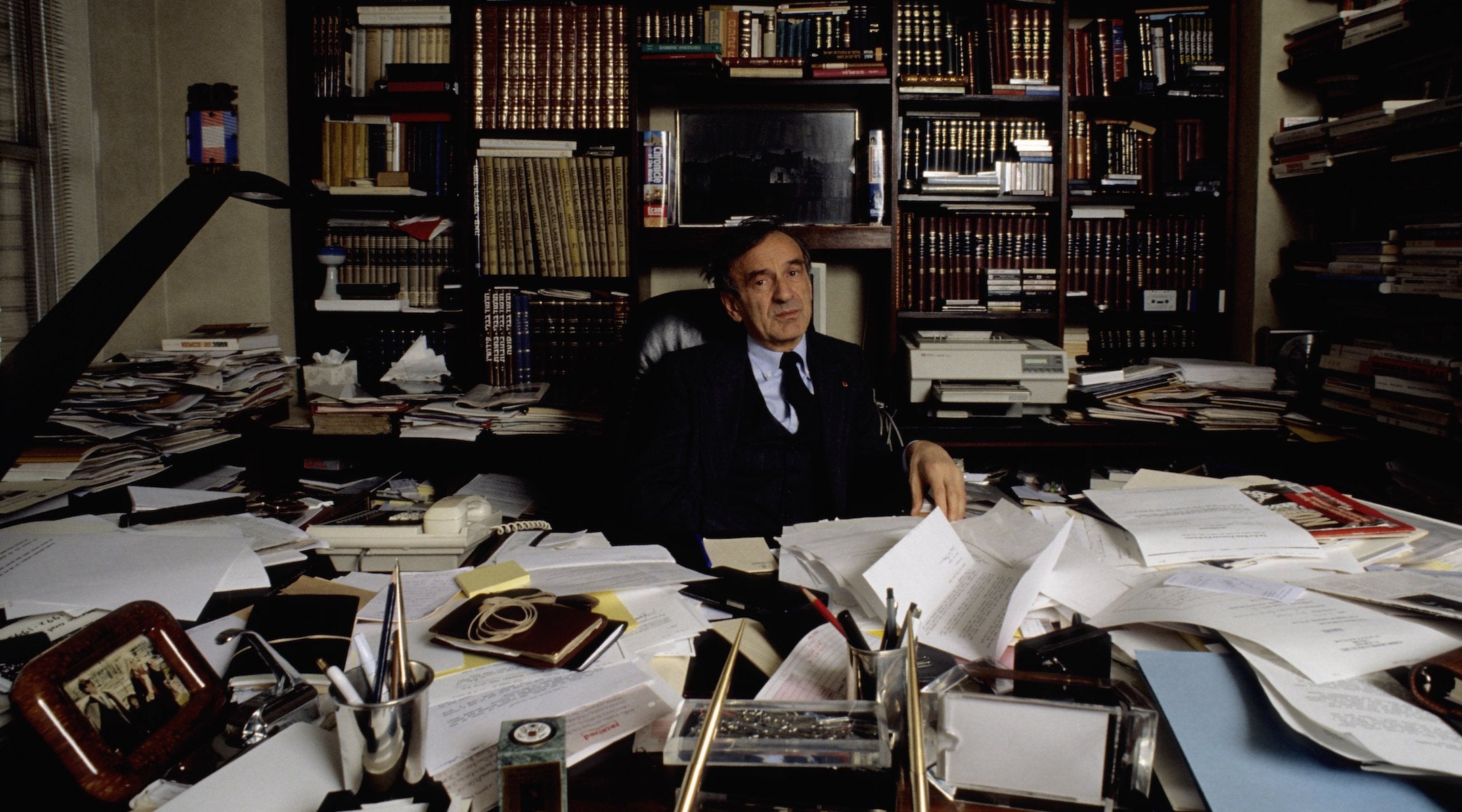
(JTA) — The lieutenant governor of Texas says his recent call for the state’s public schools to remove “over 2,000 titles” of “dirty, filthy and vulgar books” was not meant to include books about the Holocaust.
Dan Patrick’s statement, provided exclusively to the Jewish Telegraphic Agency on Friday, comes after a month of confusion following a press conference in which he and a conservative Christian activist threatened schools with potential loss of state funding if they did not comply with his directive to purge their libraries.
“I believe Texas students must learn about the Holocaust, and that includes reading books such as ‘Night’ by Elie Wiesel, ‘The Diary of Anne Frank,’ and other books about the Holocaust,” Patrick told JTA, singling out two books on the removal list he had promoted – one of which, “Night,” that he previously explicitly called for removal from middle schools.
Patrick added that his initiative was “focused on age-inappropriate, sexually explicit books in public school libraries across Texas.” At his earlier press conference, he had directed viewers to an online list compiled by an activist group that features several books about the Holocaust and Jewish identity.
Patrick’s threats have teeth. In Texas, lieutenant governors are more powerful than in many other states, playing central roles in shaping the budget and determining the legislative agenda.
Patrick also appeared to walk back some of the harsher proclamations from his Aug. 19 press conference, at which the Republican had stated, “We’re coming for the books.”
“As the law states, local communities have the right to make their own decisions about their public school libraries,” he told JTA Friday.
The lieutenant governor, who is up for reelection this fall, appeared at the conference with Bonnie Wallace, the head of the activist group Recover America, and told viewers to “go to RecoverAmerica.com.” That group has circulated a list of more than 2,100 “Harmful Books in Libraries.” Its list, which it describes as “books with harmful, sexually explicit, and vulgar content,” includes more than a dozen titles of particular import to Jewish readers.
Recover America’s flagged books include both volumes of Art Spiegelman’s “Maus,” a comic-book adaptation of Frank’s diary and Bernard Malamud’s novel of a blood libel “The Fixer” — all books that have been removed from school districts in Texas and other states in the past amid broader conservative-led library culture wars. In some cases those books were restored to the districts following public outcry, but spurred deeper dialogue about the state of Holocaust education and antisemitism awareness in public schools.
Patrick’s latest push would go much further than a handful of districts, affecting the more than 5.5 million students in public schools across the state.
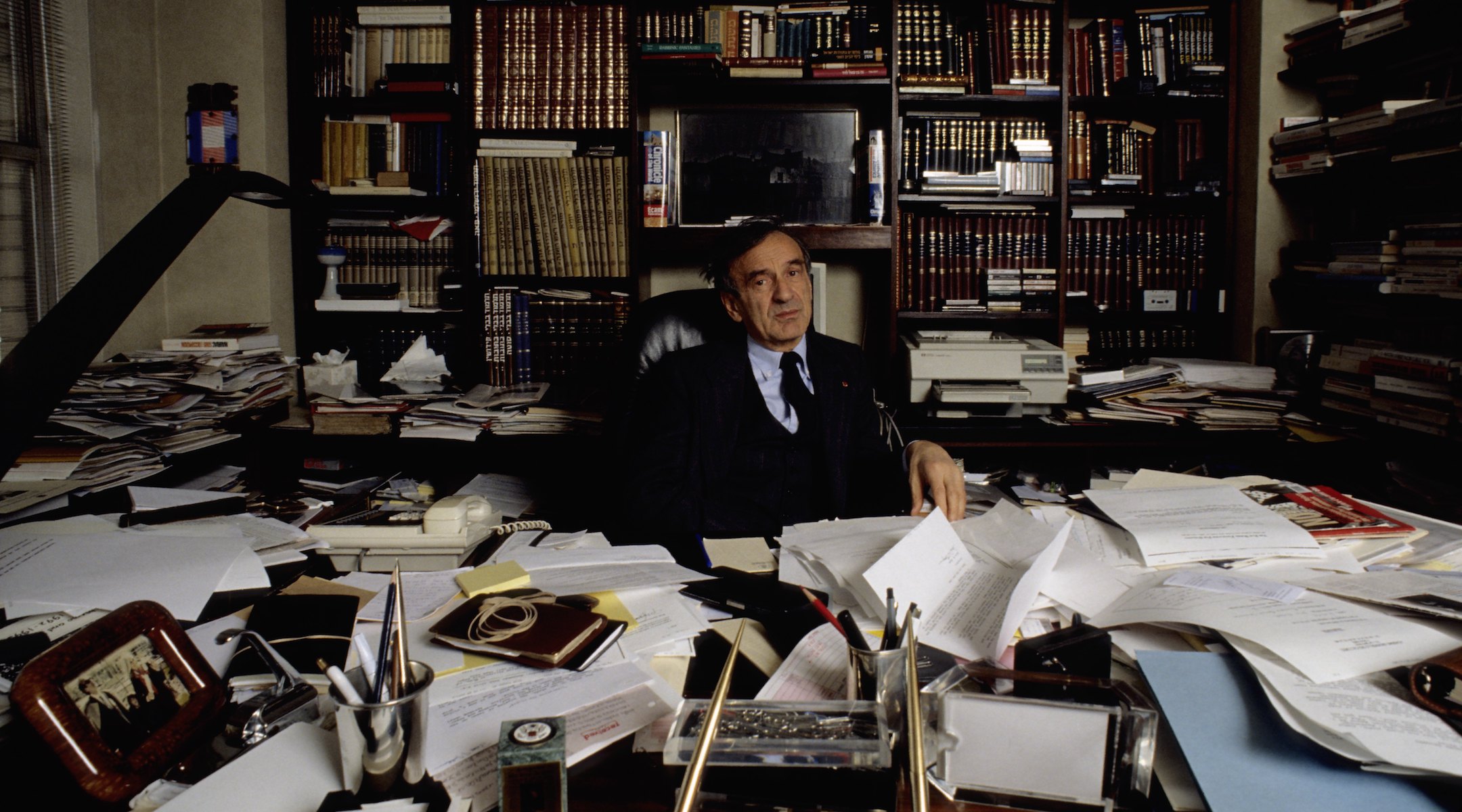
One book of particular contention on Recover America’s list was “Night,” Elie Wiesel’s bestselling memoir of surviving Auschwitz and Buchenwald, which has been taught in schools for decades. After a Houston Chronicle story noted the book’s inclusion on the Recover America “harmful” list, Patrick initially doubled down on “Night,” saying that it was not appropriate for middle schools owing to its “violence.”
“If ‘Night,’ by Elie Wiesel, were made into a movie, it would likely be rated R,” Patrick wrote on the social network X on Aug. 26. “‘Night,’ which includes depictions of graphic violence and the machine-gunning of babies, should not be available to sixth graders in middle-school libraries. High school is more age-appropriate.”
His tweet appeared to contradict the state’s own K-12 required reading list, passed this summer, which mandates that “Night” be taught in the eighth grade beginning in 2030.
Now, in response to questions from JTA, the lieutenant governor said he would defer to the Texas State Board of Education on the appropriate grade to teach “Night.”
“The State Board of Education decides the appropriate grade level for books and will determine whether ‘Night,’ by Elie Wiesel, is at the appropriate grade level,” Patrick told JTA in his statement.
He continued to insist that books in schools should be held to “FCC standards,” referring to the Federal Communications Commission, an agency that governs broadcasting content and does not regulate publishing.
The head of the Texas Holocaust, Genocide and Antisemitism Advisory Commission, a governor-appointed panel which advised the state on the inclusion of “Night” and other Holocaust texts on its required reading list, did not return a JTA request for comment.
In a statement, the Texas Educational Authority, which drafted the required-reading list, told JTA, “When Texas students learn about the Holocaust, they will be exposed to the horrors of the Holocaust. That is why the SBOE placed the book in 8th Grade to ensure age appropriateness for students.”

At the Emmys this week, when “The Librarians,” a documentary about librarians facing book removal threats, won an award, retired Texas librarian Carolyn Foote joined the producers on the stage and held up a copy of “Night” in protest.
“I felt like it was very symbolic to bring ‘Night,’” Foote, a subject of the film and a co-founder of the librarian activist group FReadom Fighters, told JTA. “Having read it, I just know the importance of not forgetting our past. And that’s part of Elie Wiesel’s whole legacy, is remembrance, and so it just felt very important for me to carry that book, coming from Texas.” Another librarian onstage for the win held up “Anne Frank’s Diary: The Graphic Adaptation.”
Elisha Wiesel, Elie’s son and chair of the Elie Wiesel Foundation, told JTA that “Texas deserves credit for recognizing that Holocaust education belongs in the eighth-grade curriculum.” Yet, the younger Wiesel suggested, Patrick’s concerns about the book’s violence were misplaced.
“‘Night’ contains violence because the Holocaust was violent; its purpose is not to shock young people, but to help them understand where hatred and indifference can lead,” he wrote in an email. “With context and guidance, students should not be shielded from this history. They should be equipped to confront it.”
Despite having directed viewers to Recover America’s book list during his press conference, Patrick’s new statement to JTA said, “I do not have a book list.” He pointed instead to a law passed in the state legislature in 2025 regulating school books that he said districts were required to follow.
Yet some districts in the state have removed every book on Recover America’s list from their own libraries out of fear of losing funding, Foote told JTA. While the list nominally contains a ratings system, many of the books do not have a rating.

Besides “Night,” “Maus,” “Anne Frank’s Diary” and “The Fixer,” other books about Judaism and the Holocaust on Recover America’s list of “Harmful Books” include:
- “Annexed,” a young-adult novel about Peter van Pels, who hid in the Amsterdam annex with Anne Frank
- “The Berlin Boxing Club,” a young-adult historical novel based on German boxer Max Schmeling, who helped young Jews during Hitler’s rise to power
- “Black, White and Jewish,” a memoir by Rebecca Walker, the mixed-race Jewish daughter of author Alice Walker
- “Caste: The Origins of our Discontents,” a nonfiction book analyzing the “caste systems” of Nazi Germany. “Caste” had been included on an earlier, Wallace-spearheaded list of books for removal from a Texas public library in a case that the U.S. Supreme Court declined to hear in 2025, allowing the removals to proceed.
- “Kasher in the Rye,” a memoir by Jewish comedian Moshe Kasher
- “Pride: the story of Harvey Milk and the Rainbow Flag,” a children’s picture-book biography of the pioneering Jewish LGBTQ legislator
- “Sophie’s Choice,” the bestselling Holocaust novel for adults
- “The Violin Maker’s Daughter,” a historical novel about a Jewish family of musicians during the Holocaust
- “White Bird,” a young-reader graphic novel about a Jewish girl in Nazi-occupied France
In response to JTA sharing a list of the above books, Patrick’s statement mentioned only “Night” and Anne Frank by name. The Recover America list is largely made up of romance and fantasy novels, many with an LGBTQ element, while also including classics such as “The Glass Menagerie” and “Cat’s Cradle” and some picture books for children.
Recover America did not immediately return a JTA request for comment Friday on Patrick’s new statement. Wallace, the group’s leader who has also appeared on Patrick’s podcast, previously told the Houston Chronicle that she had “thought long and hard” about including “Night” on her list.
She ultimately did so, she said, because “an eighth-grade student is 13 years old. Do they need to read about soldiers massacring, throwing up babies, and killing them with machine guns?”
She added, “It’s not to say this doesn’t happen in life. And the Holocaust was maybe the worst tragedy in the history of the world.”
For Cameron Samuels, a Jewish alum of Texas public schools and founder of the activist group Students Engaged in Advancing Texas, such efforts do not help Jewish students.
“Non-Jewish people are deciding for us what’s best, and making this public policy,” Samuels said. “We can’t readily access these books and stories. And that makes students feel alone. It also means that our classroom peers are not learning authentic Jewish narratives.”
This article originally appeared on JTA.org.
The post After outcry, Texas lieutenant governor says schools should teach Holocaust books ‘Night,’ ‘Anne Frank’ appeared first on The Forward.
