


Uncategorized
In the face of conflict over assimilation, appropriation, colonialism and hegemony, a plea for human dignity through dance
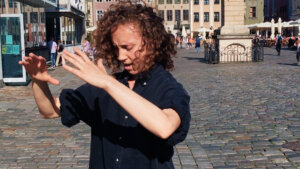
Some movies cut so close to home that they make it impossible to have an objective response. When I was watching Tatyana Tenenbaum’s debut feature documentary Everything You Have Is Yours, the moment of truth hit about halfway through.
The film’s protagonist, dancer and choreographer Hadar Ahuvia, is rehearsing in an empty studio, talking about doing her homework at the Jewish Community Center in Hawaii as a child, while her mother taught Israeli folk dance classes in another room. She’d only stop when she heard a favorite song.
“I’d rush out,” Ahuvia says in voiceover “to join a dance or two with women my mother’s age, tucking into their palms for ‘Mah Navu.”
I leaped up because I suddenly remembered dancing with my own Israeli mother, at a New Jersey JCC in the 80s, my small hand tucked into her palm, as we moved softly in a circle with American Jews, to the opening notes of “Mah Navu.” My middle-aged legs were convinced that they still knew what to do. They didn’t, and I slammed into the coffee table, leaving angry bruises on both shins that still refuse to heal.
It’s a little on-the-nose, but so is life:
Like Ahuvia, I’m the daughter of kibbutzniks who moved to the U.S. and raised me here, and I loved the old dances. Like Ahuvia, I knew very little then about the history of how they’d come into being. I only knew they belonged to us, just as Israel belonged to us. And like Ahuvia, I come from a family full of conflict over the war. We throw words at each other: genocide, terrorists, resistance, safety, peace, justice. We wield facts and figures as weapons, we challenge each other’s sources. We demand empathy while offering none; we yell, we sulk, we storm out of group chats, and then collapse into that most un-Jewish of compromises: silences that sometimes last weeks. And this is just with my parents. Don’t even get me started on the uncles.
Despite all our best and worst efforts, we never change each other’s minds.
But perhaps that’s the trouble. And part of what makes Everything You Have is Yours such a necessary offering. Tatyana Tenenbaum and Hadar Ahuvia, both of them dance artists, are interested in the body, not the mind. Over the course of seven years, Tenenbaum films Ahuvia’s trips from New York to Poland to Palestine and to her mother’s kibbutz in Israel — everywhere that Ahuvia can, in her own words, “exercise my freedom of movement,” in pursuit of her troubled, troubling lineage.
Tenenbaum’s camera dances with Ahuvia as she wrestles with the folk traditions on which she was raised. The film’s title is taken from one of Ahuvia’s own works in which she and her collaborators demonstrate and re-enact the ways in which early Israeli folk dances appropriated, assimilated, and finally claimed ownership of Palestinian and Jewish Arab traditions.
Everything You Have Is Yours is not a screed or polemic but rather a gorgeous, engrossing portrait of committed dancers — Israeli, Ashkenazi, Sephardi, Mizrahi, American and Palestinian — as they, like Ahuvia, claim their own “freedom of movement” within the shackles that bind past and present. And while Ahuvia’s performances draw from her specific identity and heritage — as her collaborators draw from theirs — her questions are universal: How does history live in our bones? What do we lose, and what do we gain, when we challenge the myths of our childhood? How do we carry the violence inflicted on us and the violence we inflict on others? And where do we go from here?
Ahuvia and Tenenbaum talked to me over Zoom about the film’s long journey to the screen, the impact of the past two years on their relationships and work, and why such a critically well-received project has yet to find a distributor.
I told them I’d connected with the film. I didn’t tell them it was the first movie I’ve seen about Israel that I could imagine watching with my own mother, across our differences, my palm tucked once more in hers.
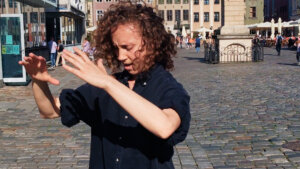
When I first reached out to you for this interview, Tatyana, you expressed a very strong conviction that you and Hadar needed to be in the conversation together.
Tatyana Tenenbaum: Hadar and I are both dance artists, and that’s how we met, so the movie grew out of a horizontal friendship. Before I proposed to Hadar that we document her process, we had already worked together as performers.
Also, the themes we’ve explored are related: I’m not Israeli, but I do have Ashkenazi Jewish lineage, so for me this project was also a reflection of what it means as an American to have assimilated into a national project and into empire.
You shot and edited over seven years. What kinds of conversations did you need to have as you were working out accountability over the long haul, both to each other and to the other dancers on camera?
TT: So many! I’m a process-based artist and I had never made a film before, and at first I thought it would just be a 10-minute short. And then 15, and then 20, and it kept evolving. Hadar and I had a lot of catch-up work to do around consent. This is personal work and her relationships with her family are very tender. Ultimately the process mattered, not only because of the political ideas Hadar is grappling with and her beautiful artistry, but also her vulnerability.
Was it a shared editing process?
Hadar Ahuvia: No, I am really glad this is Tatyana’s film. I don’t think it would be an interesting thing to see a documentary that I made about myself.
The film has been very well received by audiences and critics, but there has been some struggle getting distribution and getting it shown, particularly by Jewish festivals. What do you think is happening there?
TT: Our struggles with distribution aren’t unique. Films that are critical of Zionism are not films that distributors want to take a risk on. There are exceptions: The Jewish Film Institute, for example, presented the movie in San Francisco for Winterfest, and they made a beautiful panel as the centerpiece of the weekend about it, which was lovely.
Because we were on their roster, all the Jewish festivals then solicited the film. But none of them programmed it. I think it’s worth saying, and worth naming that. It’s a missed opportunity.
HA: And we invite them to reconsider.
While the film has a point of view, it also features Israeli and American dancers rehearsing and performing together while navigating political disagreement. That diversity of thought feels both satisfying and precarious. How have the past two years of fracture, both between and amongst Israeli and American Jews, impacted these dancers and your relationships with them?
TT: It’s been hard. But we’re still in relationship with everyone in the film.
HA: We knew right from the start that we didn’t all sit in the same place politically. Even if we disagree about the exact makeup of what political futures should look like, we believe in the humanity and dignity of all people. And I think that continues to be true for everybody who participated, which enables us to continue to be in relationship.
On the other hand, while the Palestinian-Americans in Freedom Dabka Group are featured prominently, they only appear in parallel. There’s never an intersection, or a moment of seeing the two sets of dancers come together.
HA: It would have been superficial to try to invite Palestinians into my work. That wouldn’t change the power dynamics of it still being my work, and my authorship. Also, the politics in the real world are such that this kind of collaboration in my work about Israeli dance didn’t feel possible. It would have been superficial for me to rush to solutions.
I even thought about putting videos of Palestinians in different pieces, and that didn’t feel right either, because it wouldn’t give them the agency of representing themselves. And so what I decided to do instead was to “notice the absence.” The absence of relationship with Palestinians comes from the way that apartheid in the State is actualized in my body.
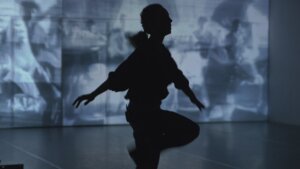
There’s a particularly arresting scene featuring Hadar’s on-stage breakdown of how early Israeli folk dances altered and absorbed Yemeni Jewish steps, and how this represents a “de-Arabization” of the form. Then there is a similar process through which Palestinian dabka becomes Israeli debka. When asked about it on camera, Amer Abdelrasoul of the Freedom Dabka Group says “I don’t know about Israeli Debka, and I don’t wanna see it. Because I’m gonna get pissed.”
TT: Amer didn’t explicitly know about those Israeli dances. At the same time, he wasn’t surprised about them, because they reminded him of other cultural appropriations. That moment creates a visceral response in audiences, but I thought it was a great answer: direct, clear and honest.
I can imagine a critique from the left that within the context of what Palestinians are currently experiencing in Gaza, the occupied territories and elsewhere, art that focuses on Israeli perspectives — even critically — might be problematic. How would you respond to that?
HA: I think it’s important for us to do this work, so that Palestinians don’t have to. As Jews, it’s our responsibility to speak to our people.
How would you respond to the other side, to those who might feel that the critiques embedded in this film harm Jewish safety, and delegitimize Israeli experience?
HA: We really center Israelis. We humanize Israelis and show our diversity. And that itself could actually be critiqued from the Left. But from the Right, what I’ve heard most is, well, cultural exchange is good, isn’t it? Even some of the dancers you see in the movies disagree with my critique of the cultural appropriation in these dances.
I think that cultural exchange is great too. But, again, this is about power dynamics. For example when I see Christian Zionists appropriating Jewish culture — as we see them do with my mother’s dancing in the film’s archival footage — it makes the dangers really clear to me.
TT: The largest Zionist voting bloc in the U.S. are evangelical Christian Zionists. It’s a fact that is often obscured politically, and I actually learned it from Hadar. We hope that the film also gives audiences a tangible experience with the way that, under Christian hegemony, there are people claiming to support us but who do not actually care about Jews.
When you ask the dancer and choreographer Ze’eva Cohen about her identity, she says that the answer to the question of where you come from lies not in your citizenship but in your heritage. What heritages do you invoke in this film?
TT: I am going to say… Somatic abolitionism.
HA: And especially the work of Resmaa Menakem.
I was expecting the answer to be Poland, or Eastern Europe.
TT: Hadar and I share an education in postmodern dance, and we share the idea of being with the body on the level of sensation and function and integration. This is where Menakem has been so important for our dance field. The need for reintegration only emerges because of colonialism. Without colonialism, we wouldn’t need to reintegrate: Our bodies would just be there.
This brings us back to Ze’eva Cohen saying that in Yemeni Jewish culture “if you didn’t dance, if you didn’t sing…you didn’t believe in God, unless it was embodied.”
HA: Dance continues to be a way that I process grief and anger. I’ve been researching Ashkenazi culture, and especially Ashkenazi vernacular and cantorial music, reclaiming this long chain of transmission.
As I’ve been dancing, I’ve been active with Rabbis for Ceasefire, and I’m also in rabbinical school. So, davening and prayer has been another way that I feel I stay connected to being Jewish — to being deeply rooted, while also holding what’s happening in the world, and ultimately being able to envision what else is possible.
Mor Mandel, an Israeli collaborator and dancer featured in the film, says of leaving Israel: “I left the ship sinking, but I still dream in Hebrew.” Hadar, are you still able to dance in Hebrew?
HA: In my research around Yiddish dance, I’ve discovered that there exists a beautiful sense of pride in each dance. I’ve reconnected to Jewish strength through that posture rather than through Zionism. So no, I no longer dance Israeli folk dance for fun.
Except that it felt meaningful to me at my wedding to do “El Ginat Egoz,” a dance by Sarah Levi Tanai, with my mom. It felt like a gesture that acknowledges our shared language. Context matters, right? So I don’t do these dances on the fields of the kibbutz, but it felt right to me to do them at my wedding, with my mom. It felt good to acknowledge this particular dance that…
TT: …that she loves.
HA: Yes, exactly. That she loves.
Everything You Have Is Yours screens on March 5 and 8 at the Laemmle Theater in Los Angeles. Information on further screenings is available on the film’s website.
The post In the face of conflict over assimilation, appropriation, colonialism and hegemony, a plea for human dignity through dance appeared first on The Forward.
Uncategorized
Four Seats or No Seats? Why Israel’s Final Polls Disagree Over Amcha Yisrael
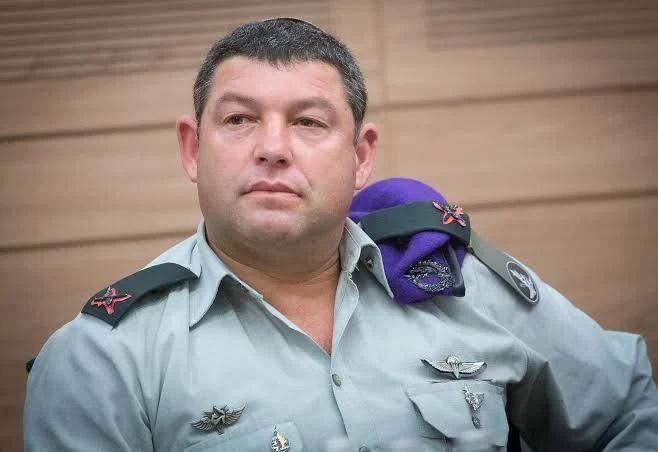
Conflicting projections for Ofer Winter’s party illustrate the uncertainty of measuring public support near an electoral threshold.
A Channel 12 poll gives Ofer Winter’s Amcha Yisrael four parliamentary seats.
An i24NEWS survey reaches the same seat total.
Other final polls find that the party does not qualify for representation.
How can surveys conducted close to the same election produce such different results?
The answer lies partly in the difference between measuring a vote share and converting it into parliamentary seats.
A Statistical Boundary
Israel’s electoral threshold is 3.25 percent.
For a party receiving substantially more than that percentage, modest sampling fluctuations may change its expected number of seats without calling its parliamentary presence into question.
For a party whose support lies near 3.25 percent, the same type of fluctuation may change its projected representation from several seats to zero.
This does not necessarily mean the polls are measuring completely different political realities.
They may be producing estimates close to the same threshold but on opposite sides of it.
Sample Size Is Only One Factor
The i24NEWS survey conducted on October 22 included 5,124 adult respondents and reported a sampling error of plus or minus 1.4 percentage points at the 95 percent confidence level.
That is a substantial sample by conventional political polling standards.
But a larger sample does not eliminate every source of uncertainty.
Different pollsters may employ different recruitment methods, weighting systems and procedures for estimating turnout.
They may also differ in how they handle respondents who are undecided or reluctant to state their preferences.
These choices can matter particularly for smaller parties.
The Problem of Turnout
Opinion polls generally estimate voting preferences before actual voting takes place.
Election results reflect the ballots cast by people who participate.
Differences between intended and actual turnout can affect parties in different ways.
Analysts must therefore consider not only how many respondents express support for a party, but also whether the poll’s turnout model accurately reflects the eventual electorate.
Without transparent, comparable information about the methods used by each polling organization, it is difficult to identify which methodological difference is responsible for a particular disagreement.
Reading the Final Surveys
The appropriate interpretation of Amcha Yisrael’s polling is neither that its parliamentary representation is guaranteed nor that exclusion is certain.
The available surveys demonstrate uncertainty around a legally decisive boundary.
The four-seat projections reported by Channel 12 and i24NEWS are meaningful observations.
So are the below-threshold findings published by Channel 13, Maariv and Zman Yisrael.
Each survey is a measurement of electoral intentions under a particular methodology, not a count of actual votes.
For readers following Israel’s election, this makes Amcha Yisrael an instructive case study in how polling uncertainty interacts with electoral law.
The final result will provide the definitive seat allocation. The polls explain why the outcome was difficult to measure in advance.
Uncategorized
As Trump betrays Ukraine, it’s beginning to feel a lot like Munich
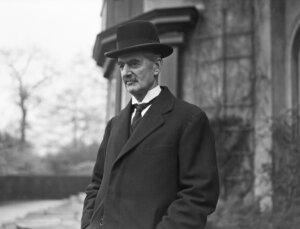
In Munich on Sept. 30, 1938, the leaders of Britain and France signed an agreement with Adolf Hitler that caved to the Nazi leader’s demand that Germany be given a chunk of Czechoslovakia. Five months later, Hitler ordered the German military to forcibly take the remainder of the neighboring country.
On Oct. 9, 2026, Donald Trump and Vladimir Putin struck a deal allowing Russia to sell diesel fuel to global markets, most importantly to the US. Then Trump waived a package of sanctions on Russia that had been passed by Congress. By replenishing Russia’s war coffers, it is likely more Ukrainians will die because of these twin gifts from America’s president to the warmongering Russian autocrat.
Why is Trump doing this? He seems to be hoping the diesel deal will help him avert disaster in the upcoming midterms. Or maybe there’s more to it than that. Perhaps Trump seriously thinks that this will get him the Nobel Peace Prize by ending the war in Ukraine through helping Putin win it. Perhaps it’s one more scheme to further enrich himself and his family. Or maybe Putin really does have something on Trump.
In any event, it feels like Munich all over again.
There are some remarkable parallels between Czechoslovakia’s predicament in 1938 and Ukraine’s nine decades later: separatists in two vulnerable Central European democracies were encouraged and supported by a neighboring authoritarian regime that sought to seize adjacent territory under the pretext of protecting a minority from oppression.
And at the center of both narratives is betrayal: of Czechoslovakia by Britain and France, and Ukraine by Trump.

In the spring and summer of 1938, Konrad Henlein, leader of the Nazi-allied Sudeten German Party in Czechoslovakia, held secret meetings with Hitler and other Nazi officials. They concocted a plan: Cause so much disorder in the Sudetenland that the Czech government would declare martial law, thus creating an excuse for German troops to march in to protect the ethnic German minority.
Tensions that had long existed along the Czech frontier erupted into gunfire and death in the Sudeten town of Habersbirk on the morning of Sept. 13, 1938. A mob of German separatists hung a swastika banner from a church tower, stormed the police station, kidnapped the wife of a cop, and engaged in gunfights with police officers that lasted hours. Four Czech police officers and four insurgents died. Outbreaks of violence, terror and torture raged along the border for days, backed by Freikorps paramilitary troops who crossed from Germany and by SA and SS men who took part in cross-border sabotage and armed attacks.
The uprising had the desired impact. Just 17 days later — on Sept. 30, 1938 — Britain, France, Italy and Nazi Germany signed the Munich Agreement, yielding to Hitler’s demand that the Sudetenland be ceded to him. After landing at an airport outside London, Prime Minister Neville Chamberlain waved a document in his hand and jubilantly proclaimed:
“The settlement of the Czechoslovak problem which has now been achieved is, in my view, only the prelude to a larger settlement in which all Europe may find peace.”
“I believe it is peace for our time,” Chamberlain said later that day.
But it didn’t take long for Hitler to show he could not be trusted. Hitler’s army marched into Czechoslovakia on March 15, 1939. Germany’s invasion of Poland followed less than six months later, and by 1942 German forces controlled territory spanning from the Atlantic Ocean to deep inside the Soviet Union.
Ethnic Germans’ uprising in Czechoslovakia in 1938 found an echo nine decades later in Ukraine’s Donbas region, where unrest that began with pro-Russia protests in 2014 evolved into the war Russia has been waging on its neighbor for nearly five years.
In the spring of 2014, paramilitary units led by Russian intelligence officers stormed government office buildings in several towns and cities in Donbas, seizing weapons and clashing with police. In a scene reminiscent of the Habersbirk siege of 1938, on April 14, 2014, pro-Russian militants seized the police station in Horlivka, beat up the police chief, and murdered a member of the city council, whose body was found in a river. Similar clashes occurred throughout Donbas.
Two Kremlin-backed pseudo-states soon emerged: the Donetsk People’s Republic and the Luhansk People’s Republic. Russia funneled tanks, artillery, air defense systems and fighters into Donbas, fueling a war between separatists and Ukrainian forces that dragged on for years.
Like Hitler in the Sudetenland, Russia’s de facto occupation of Donbas was not enough for Vladimir Putin. His eyes were on all of Ukraine, and he spent years manufacturing pretexts for the full-scale invasion that began on Feb. 24, 2022.
Trump has been buttering up Putin for more than a decade, starting with his 2015 campaign for president, when he effusively praised the ruthless Russian autocrat’s leadership style. Putin is a “strong leader,” is “far more respected than our president,” meaning the immensely popular Barack Obama, and was someone he “would get along with very well,” Trump said back then.
Trump’s admiration for Putin took on ominous tones after becoming president. During a press conference after the two leaders’ 2018 Helsinki summit, Trump questioned intelligence findings on Russian election interference and said he believed Putin’s denial. “I don’t see any reason it would be Russia,” Trump told reporters, with the Russian strongman standing at his side.
After Russia’s invasion of Ukraine in 2022, during Biden’s presidency, Trump called it “a pretty smart move,” praised Putin as a “genius,” and also said it wouldn’t have happened if Trump was still president, remarks that were amplified by Russian state media.
During Trump’s second term, his buddy-buddy relationship with Putin has turned into a virtual strategic alliance, as the American president repeatedly makes moves and statements that seem designed to please the Russian autocrat. There are Trump’s threats to abandon NATO, his humiliation of Ukraine President Volodymyr Zelensky during a February 2025 meeting inside the Oval Office, and most recently Trump’s demand that Ukraine cease its drone attacks on Russian oil refineries, his call for Zelensky’s ouster, and envoy Steve Witkoff thanking Putin for being a “humanitarian.”
Putin has proposed a summit between himself, Trump, and Chinese leader Xi Jinping to discuss ending the war in Ukraine. It’s notable that Ukraine has not been invited. This is also what happened in Munich nine decades ago, when Czech delegates were excluded from the room, and others decided Czechoslovakia’s fate.
Last October, aboard Air Force One, Trump told reporters the Donbas region should be “cut up,” leaving most of it in Russian hands.
“Let it be cut the way it is,” he said. “They can negotiate something later on down the line.”
It seems the fate Trump envisions for Ukraine is similar to the one Hitler envisioned for Czechoslovakia. It would be naïve to think that Putin’s expansionist ambitions would stop there.
The post As Trump betrays Ukraine, it’s beginning to feel a lot like Munich appeared first on The Forward.
Uncategorized
A Chabad Jew was stabbed in NYC. He returned the next day to continue wrapping tefillin.
(JTA) — Less than 24 hours after he was stabbed in midtown Manhattan, Yosef, a Chabad-Lubavitch man from Crown Heights, was back on the same street where he’d been assaulted, popping into Diamond District businesses as usual to help employees wrap tefillin.
Yosef, 26, who did not share his last name to maintain his privacy, told the Jewish Telegraphic Agency that he was back on 47th Street on Thursday afternoon, the day after the stabbing, without missing a beat in his Monday-through-Thursday rounds even as police investigate the incident as a possible hate crime.
A number of the people he visited pieced together that the widely circulated footage of a man being stabbed the previous night was of him.
“They were in shock. They were obviously scared for me,” said Yosef, who has been wrapping tefillin and distributing Shabbat candles to Jewish Diamond District employees for about three years. He started that routine when his father, a Chabad Jew who works in the jewelry business, realized he needed his son’s help to handle the demand for those acts. Yosef told Chabad.org that he was “still shaken” by the attack a day later.
Still, he told JTA, “We can’t allow some hate to stop us.”
Yosef said he felt it was important to communicate that message because “we need more mitzvahs in the world, we need more light in the world.”
Yosef was taken to Bellevue Hospital on Wednesday evening around 6 p.m., where medical staff assessed that he had no internal bleeding and would not need stitches. No arrests have been made, but the assailant has been described as a woman in her 40s.
The attack has renewed concerns about security that have faced Chabad adherents and institutions, which often host public events and maintain a visible street presence. But the threat didn’t diminish their presence in midtown Manhattan on Friday.
Multiple Chabad men stood under a bright yellow tent on the sidewalk wrapping tefillin for a steady stream of workers in the heavily Jewish Diamond District.
“The Rebbe says that the way to defeat darkness is only through the addition of light,” said Shmuel Cohen, who was handing out small photographs of the movement’s late leader, the Lubavitcher Rebbe Menachem Mendel Schneerson.
Cohen told JTA that he had not heard about the attack that took place just down the block two days earlier, though his partner under the sidewalk tent had. Cohen said that the best way to respond is through “the observance of Torah and mitzvot without being ashamed of our Judaism but presenting it to everyone.”
Also on Friday, Chabad officials met with New York Police Department representatives for their annual meeting about security ahead of Chabad’s international conference in Crown Heights, the Brooklyn neighborhood where the movement is headquartered. The conference begins on Nov. 5.
Chabad has been targeted in multiple high-profile attacks in the past year, including the deadly Bondi Beach shooting in Australia in December. The following month, a man rammed a car into the doors of the Chabad-Lubavitch headquarters in Brooklyn, raising further questions over how the movement should balance its commitment to making its events accessible with security.
Meanwhile, Jews have been targeted in more than half of hate crimes committed in New York City in 2026, despite making up about 12% of the city’s population.
“Security is our top priority. Our goal is to provide an environment where every participant feels safe and can fully experience the purpose and spirit of the gathering,” said Rabbi Mendy Kotlarsky, a top organizer of the upcoming conference.
In the wake of the attack, Yosef said he is not concerned about going out in public as a visibly Jewish person and doesn’t plan to change how he approaches the world.
“I was wearing the same clothes on Tuesday and Wednesday and Thursday,” he said. “I didn’t change my routine.”
This article originally appeared on JTA.org.
The post A Chabad Jew was stabbed in NYC. He returned the next day to continue wrapping tefillin. appeared first on The Forward.
