


Uncategorized
Israel’s most dangerous war is with itself
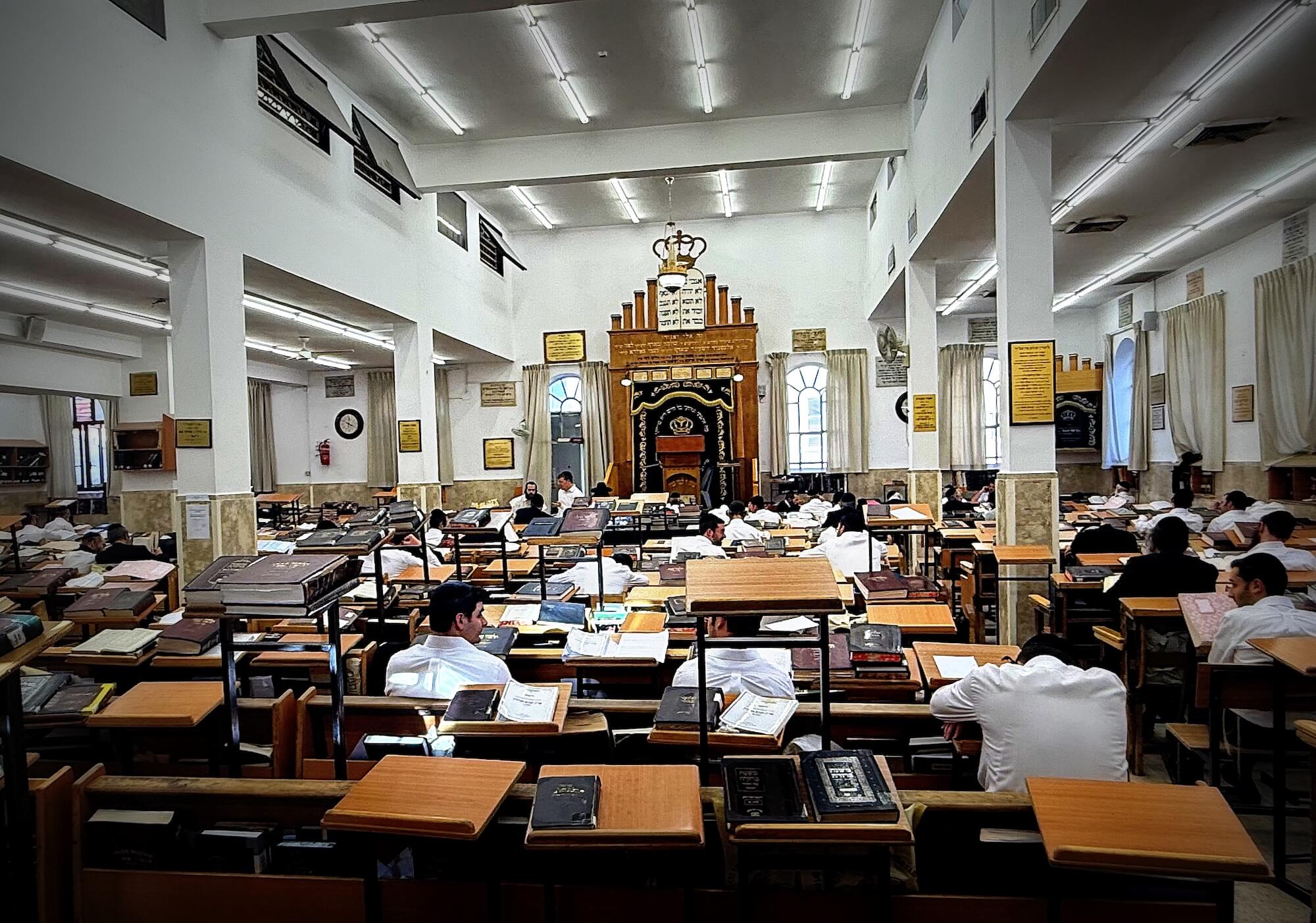
My friend Rabbi Heshy Grossman recently invited me to Jerusalem to meet top Haredi rabbis. Unhappy with my critical writings about the Haredim, this well-meaning true believer hoped to jump-start fruitful dialogue.
So I took the train to Jerusalem, and spent a fascinating day with pleasant and welcoming scholars who left me in even greater despair.
The background: Angst is now dominating Israeli discourse amid a strong feeling among non-Haredi Jews that the country is running out of time to save itself. This can seem related to the Palestinian conflict, or to disputes over authoritarian reforms. But at the end of the day the main issue — for the non-Haredi Jews who are still a majority in the land — is the Haredim.
Concerns used to be about the Haredim — who have always held sway over right-wing coalitions — trying to impose religious strictures, like banning commerce and public transport on the Sabbath, which they have done with varying degrees of success. But the clash has gone far beyond such matters. The wars that began on Oct. 7, 2023 have exposed profound tensions over this large minority evading military service, and the opposition promises to enlist them should it win this fall’s election.
But even that change — heavy lift though it may be — wouldn’t come close to fixing the actual problem.
The Haredi system largely refuses to teach high school boys math, science, English and other non-religious topics. It routes as many men as possible to religious study well into adulthood, for which they expect to receive state stipends rather than pay tuition. With very low male participation in the economy, the community pays minimal taxes and depends on a huge web of ever-expanding welfare. Increasingly, Haredi women do work, but rarely in high-end jobs. The community, which currently makes up about a sixth of the population, is exploding as family sizes approach seven children on average, certainly among the highest for any significant community in the developed world.
This will clearly lead to an economic collapse if nothing changes. On top of that, it does not seem as if the Israeli Haredim can coexist happily with others from a philosophical and cultural standpoint, and the feeling is very much mutual.
‘A sense of separatism’
Heshy drove me all over the city in a whirlwind tour that included the head of the Hebron Yeshiva, one of the most senior rabbis of the Mirer Yeshiva — the world’s largest — the head of a major yeshiva serving mainly youth from the United States, a visiting U.S. Haredi rabbi much involved in the local political scene, and Heshy’s own charming father-in-law, who was the chief rabbi of Atlanta and has long been a beloved columnist for the iconic Mishpacha Magazine.
The tone throughout was cordial, at times warm, somewhat prickly and occasionally intellectual. These were serious men who are easy to like. That made the substance of what they said doubly unsettling.
The first fault line, as expected, was education. My question to the rabbis was straightforward: How can a modern economy function when a large and growing share of its population receives little to no instruction in mathematics, science or “secular” language skills?
Rabbi Moshe Meiselman, who holds a Ph.D. from the Massachusetts Institute of Technology, was dismissive of the premise. Meiselman, the U.S.-born founder and head of Yeshivat Toras Moshe, described secular studies as an “intellectual game” that he had experienced at the highest levels and found vastly inferior to studying the Torah. He said that Haredi communities from the beginning of the state perceived an aggressive and arrogant stance from the Zionist authorities, who felt “that no intelligent person” would want to be Haredi.
“There is a basic tension in society, and that tension is what created, more than anything else, a sense of separatism within our own environment,” he said.
“Even at the cost of self-harm?” I asked.
“In your view it’s self-harm,” he said. And if the state cut off funding, he added, “we’d simply get money from our people abroad to support us … we will handle it.”
Like the others, he seemed to believe that whatever practical skills are needed for work can be acquired in a year or two. He offered the existence of certain successful Haredi professionals — lawyers, doctors, accountants — as proof. “What relevance does my knowledge of trigonometry have to anyone’s employment? Where does Euclid come in?” he said. “I don’t have to learn to talk with Plato in order to get a profession.”
I was glad to find a more flexible position expressed by Heshy’s father-in-law, Rabbi Emanuel Feldman.
“I’m not sure personally why they should not be able to study physics or chemistry or mathematics,” he said. “I don’t understand why there’s an objection to it.” He argued that this “is not ideological but political and a decision based upon circumstances.” I suggested the circumstances were the Haredi leadership’s preference for a compliant and unquestioning flock. “It’s unfortunate that there is no effective communication and there are elements on both sides who are interested in maintaining a conflict,” he sighed.
Menachem Zupnik, the U.S.-based rabbi, from Passaic, N.J., was also more pragmatic than the Israeli cohort.
“The biggest problem,” he said, “is that nobody goes to work and has a profession… many, many issues are the outgrowth of the fact that they believe that everybody has to sit and learn Torah all the time.” But even he rejected the idea that external pressure — including cutting subsidies and restructuring incentives — would change behavior. “All you’re going to do is cause more hatred.”
Rabbi Shlomo Spitzer, who preferred that I not mention his affiliation, explained the indifference to practical outcomes this way: From the Haredi perspective, Torah and mitzvot are the organizing principles of life. Everything else a person does — work, eating, recreation — is secondary: “these are means, not ends.”
I asked: “When you describe unwavering commitment to Torah, doesn’t that risk becoming fanaticism?”
“What is fanaticism? That is a serious question,” he argued, explaining that following the Torah “to the end” means accepting it literally. “But societies change,” I said. “Values evolve. Why shouldn’t religious frameworks adapt?” His answer was that there are foundations that must be regarded as absolute.
Military tensions
The issue of military service brings the divide between secular and Haredi priorities into the sharpest relief for most Israelis. Here, too, the argument is about identity.
Again and again, the concern surfaced that exposure to the army would erode the religious character of Haredi young men. The fear was personal, and almost visceral. It is not without foundation: Many Israelis would love to have more of the Haredim join mainstream society — and indeed, exposure to that society is well understood as a trigger for leaving Haredi life.
Rabbi Chaim Yitzhak Kaplan, the dean of students at Hebron Yeshiva, put it plainly: “There’s no way that a young man… is going to go in for two, three years in the army and come out the same Haredi.” Moreover, he noted that the specific ages in question — late teens and early twenties — are precisely when he needs youth to be studying, lest they go astray.
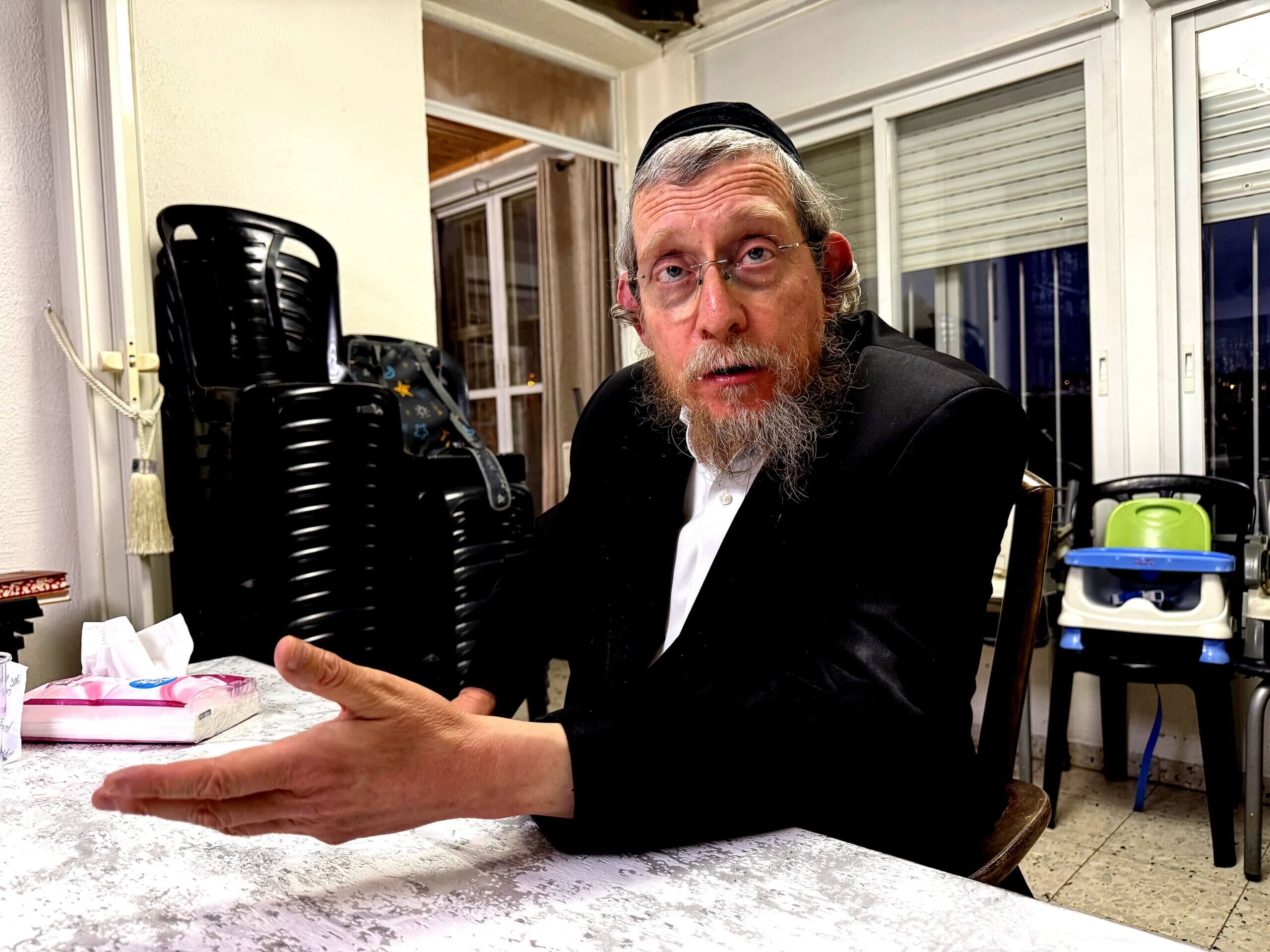
It was clear he was sharing a genuinely felt defense of a way of life, not speaking out of cowardice or selfishness.
“Our nation is about learning,” Kaplan said, describing Torah study as the defining activity of Jewish existence. Once that premise is accepted, the hierarchy of obligations shifts. But the truth is that most secular Israelis cannot in honesty accept this idea. Many don’t ascribe much importance to religion as a vocation. It is one of many things that might be important to a person, but seems imbalanced to insist must be important to a country. So the Haredi argument becomes a little like someone telling you they cannot serve in the military because they must become a pilot, plumber, poet or mathematician, and do nothing else, ever. “Very nice,” many Israelis would say, “I’ll see you in the army.”
Kaplan did concede that at some point in the future Haredim may have to either agree to serve or leave the country. Meiselman was more strident, saying, in effect, that sages were more valuable than soldiers. “Wars in the world are caused by people not being sufficiently Jewish, religious. … if the Jews were here, acting as they’re supposed to act, then there would be no more war, ” he said. Then the Arab world would not be as antagonist.”
I asked: “Do you think Hitler carried out the Holocaust because the Jews were insufficiently religious?” Exactly, he replied, to my despair. I told him this is the language of an irreconcilable cultural war. “I’m a very honest person,” he replied, quite calmly.
Joy, and denial
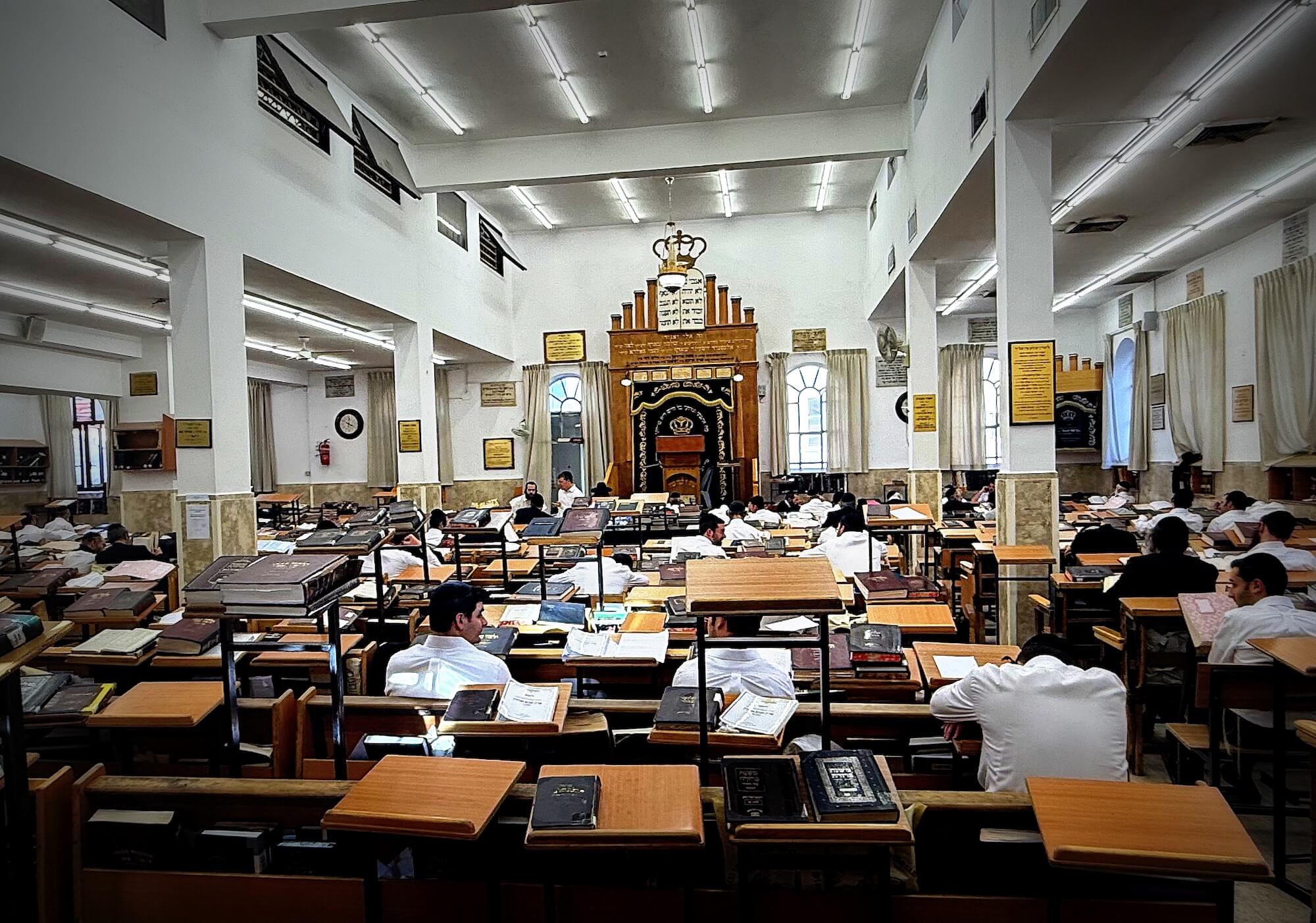
In general, there is a pleasingly cerebral atmosphere of learning and debate in these institutions. Study can go on, Kaplan noted proudly, well into the night. The Mirer Yeshiva especially positively teems with boys, many from the U.S., who clearly care deeply about the culture they’re preserving. The entire Mea Shearim neighborhood seems designed to serve that yeshiva, with nary a business visible that is not somehow involved — whether that be the kosher eateries or bookstore full of young men reading and debating in a joyous scene for which I could not recall a secular equivalent.
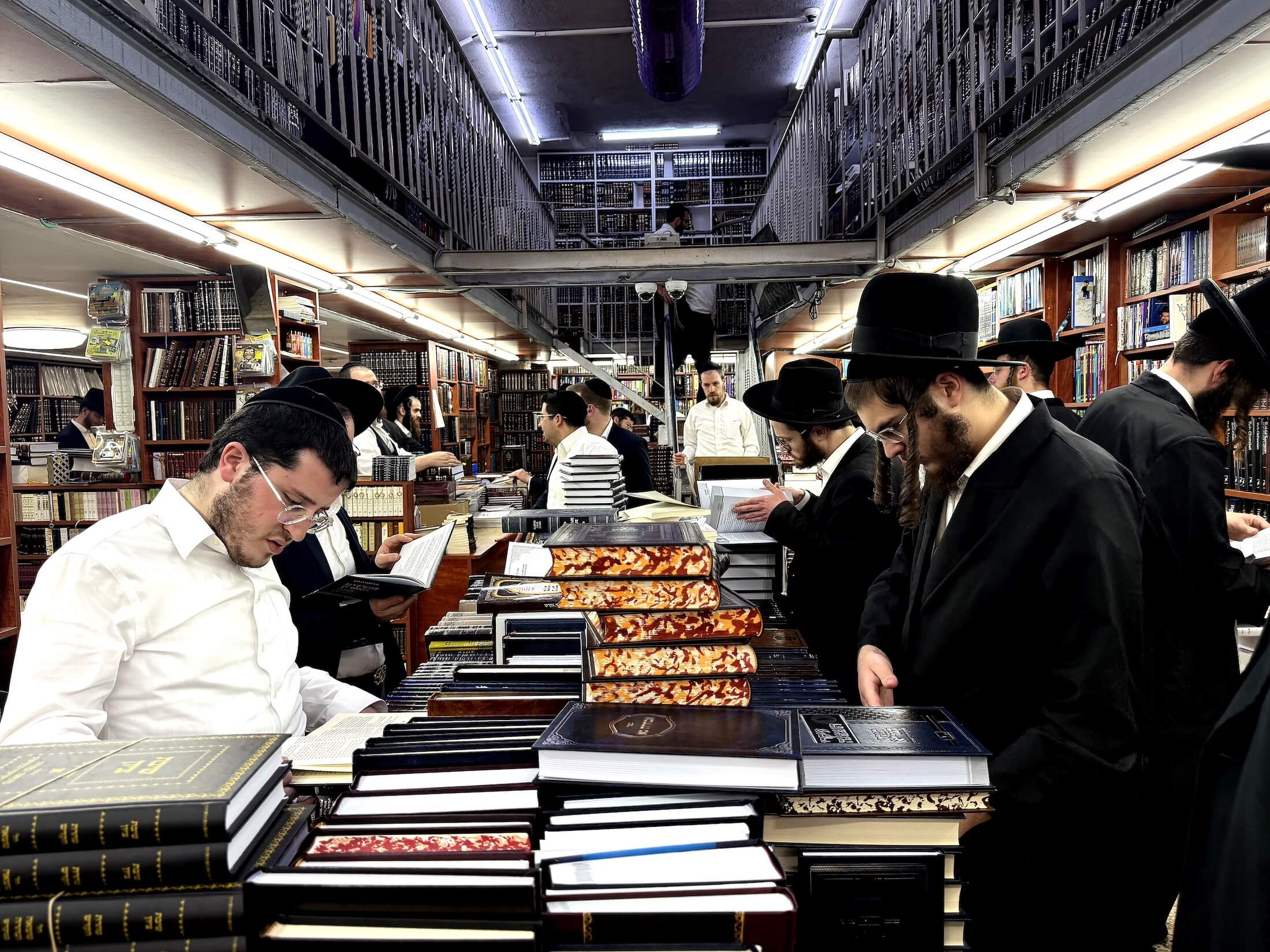
It was an appealing environment in a strange way, and I understood the desire to preserve it. I proposed to some of those I met that the conflict might remain manageable, enabling that preservation, if the community that was at such loggerheads with society were stable in size.
This line of argument is an awkward and delicate business, as it’s not normally advisable to advise others on reproduction. But it’s also the heart of the matter — and Heshy, for one, knows it, frequently bragging, with eyes twinkling, that his side is “winning.”
“Why don’t you go fight with all the people in Tel Aviv that they should get rid of their dogs and they should have five children?” asked Rabbi Zupnick. My points — that the explosive growth of a welfare-dependent sector risks collapsing the very economy it depends on to sustain it — went unacknowledged.
The theological problem
It was when the conversation moved from policy into theology that things got especially hopeless.
Rabbi Spitzer, for example, said scripture allowed no leeway on the matter of the halakhic prescription of capital punishment by stoning for Sabbath violations. When pressed on whether he’d apply it to his own child, he said: “I don’t want to, I have to.” He clarified, though, that the institutional framework required to implement such sanctions is presently absent — for example, there is no Sanhedrin or Jewish Temple.
But then again, if the Haredim end up as the large majority, there will be.
In the car, as we zoomed around Mea Shearim, Heshy tried to explain that the Haredi community and I simply speak different languages, and I had not understood what the learned rabbi meant. “So I shouldn’t take it literally?” I asked, grasping at a straw.
“I didn’t say that,” Heshy snapped.
A modern state depends on a set of shared assumptions: that citizens will be educated in ways that allow them to participate in a complex economy, that they will contribute to collective defense, that public policy will operate within a framework of shared accountability.
What came across very clearly in my listening tour was that a society organized around Torah study operates according to a different set of assumptions: that insulation from external influence is a virtue, that the Torah is the only valuable truth and that no moral or legal framework except what is ordained therein has any meaning.
These two systems can coexist for a time, if the Haredim are in the minority and they are economically supported. If the Haredim become a majority, as is inevitable unless the birth rate comes down fast, that fragile peace will break. Even though demographic predictions must be couched, it seems clear that without change, soon, non-Haredim will start to despair, and many will flee the country.
Correcting the course
Heshy will not be so happy, but the meetings he set up convinced me all the more that radical steps are needed to completely upend the current dynamic. The leaders of Israel’s opposition say they will move to draft the Haredim if they win the upcoming election. They should go much further. Among the steps necessary:
- Impose a secular core curriculum for all religious schools, and completely cut off state funding to any schools in any sector that resist.
- Eliminate most yeshiva stipends, or funds for those who study Torah full-time.The original draft exemption allowed by Israel’s first leader, David Ben-Gurion, allowed for funds for several hundred students, and that’s a number most Israelis could live with.
- Cap the number of child stipends — state funds allocated per child, to help support young families — at three per family. The idea here would be to encourage the birthrate to come down.
- Generously fund adult education and professional training for Haredim, and set up a state authority for absorbing, housing, training and assisting those who want to leave the fold altogether.
Recently, an Israeli news program interviewed a Haredi mother of nine who works to support her husband’s study. She seemed proud of his economic cluelessness since his job was to “keep the flame alive.” She predicted the Haredim will never join the army no matter what. When the exasperated reporter — himself religious but not Haredi — asked whether it was fair that other mothers should spend their days in fear for their sons’ lives as they serve, she replied that she too spends her days in fear of her children becoming secular. She seemed very serious, and not at all apologetic.
Is she an exception? Can this way of thinking be changed? If the answers to these questions are no, we have a national emergency.
The post Israel’s most dangerous war is with itself appeared first on The Forward.
Uncategorized
Tidbits: New German textbooks about the Jewish religion
Tidbits is a Forverts feature of easy news briefs in Yiddish that you can listen to or read, or both! If you read the article and don’t know a word, just click on it and the translation appears. Listen to the report here:
צום ערשטן מאָל זינט דעם חורבן האָבן די דײַטשישע עפֿנטלעכע שולן באַקומען לערנביכער געווידמעט דער ייִדישער רעליגיע, כּדי די לערערס זאָלן קענען זיי ניצן ווי אַ טייל פֿונעם קוריקולום.
די סעריע פֿון אַכט בענד, „דעת הדורות“ (דאָס וויסן פֿון די דורות), וועט לערנען תּלמידים צווישן 10 און 16 יאָר אַלט אויף דײַטש וועגן דער תּורה, דעם תּנך, די תּפֿילות, ייִדישער עטיק, הלכה, יום־טובֿים, דעם ייִדישן לעבנס־ציקל און דער ייִדישער געשיכטע.
דער ערשטער באַנד, וואָס קאָנצענטרירט זיך אויף דער תּורה, וועט מען אָנהייבן ניצן אינעם נײַעם שוליאָר.
די ביכער, וואָס זענען צונויפֿגעשטעלט געוואָרן דורכן „צענטראַל-ראַט פֿון די ייִדן אין דײַטשלאַנד“ בשותּפֿות מיטן „ערנסט קלעט פֿאַרלאַג“, ווערן געצילעוועט סײַ אויף פּריוואַטע ייִדישע שולן סײַ אויף מלוכישע שולן איבער גאַנץ דײַטשלאַנד.
דער ציל איז צו באַקענען די תּלמידים מיט דער ייִדישער רעליגיע און טראַדיציעס אין אַ צײַט וואָס עס וואַקסט דער אַנטיסעמיטיזם איבערן לאַנד.
ביז איצט האָבן די לערער פֿון רעליגיעזע ייִדישע לימודים נישט געהאַט קיין מאָדערנע לערנביכער וועגן יהדות אין הסכּם מיטן קוריקולום, אַזוי ווי ס׳האָבן געהאַט די לערער פֿון קריסטלעכע רעליגיעזע לימודים. צוליב דעם בלויז האָבן די לערער פֿון דער ייִדישער רעליגיע געמוזט אַליין צונויפֿשטעלן אַרבעט־בויגנס און אַנדערע מאַטעריאַלן, וואָס זיי האָבן איבערגעזעצט פֿון אַנדערע שפּראַכן.
אין אַ מעלדונג האָט שילה ערלבוים, די אָנפֿירערין פֿונעם אָפּטייל פֿון פּאָליטיק און רעליגיע בײַם ייִדישן צענטראַל־ראַט, געזאָגט: „מיר האָבן טאַקע געדאַרפֿט אַ סיסטעמאַטישן לערן־רעסורס, וואָס באַזאָרגט די קינדער נישט בלויז מיט לערן־מאַטעריאַל, אָבער מוטיקט זיי זיך אַקטיוו צו באַטייליקן,“ האָט זי געזאָגט.
„דורך ׳דעת הדורות׳ קענען זיי לייזן בילדער־רעטענישן; זיך דערוויסן וועגן די געשעענישן פֿון משה רבינוס לעבן דורך אַ ווערפֿל־שפּיל, אָדער אויספּרוּוון זייער וויסן פֿון ייִדישע טערמינען דורך דער מאָבילקע אָדער אַ „גיכענטפֿער קאָד“ (QR code),“ האָט ערלבוים געזאָגט.
יאָזעף שוסטער, דער פּרעזידענט פֿונעם ייִדישן צענטראַל־ראַט, האַלט אַז די לערנביכער זענען אַ וויכטיקער אויפֿטו. „אַ דאַנק דעם פּראָיעקט וועט די ייִדישע רעליגיעזע בילדונג איצט זײַן גלײַך מיט די קריסטלעכע רעליגיעזע לימודים,“ האָט ער געזאָגט.
צו לייענען וועגן דעם אויף ענגליש גיט אַ קוועטש דאָ.
To read about this in English click here.
The post Tidbits: New German textbooks about the Jewish religion appeared first on The Forward.
Uncategorized
Far-right win in German regional race sends shockwaves through Europe
(JTA) —
A victory for Germany’s far-right party in an eastern federal state has reverberated across the globe, exposing the widening rifts between alarmed centrist leaders and insurgent nationalist movements in Europe.
The Alternative for Germany (AfD) party won 43.8% of the vote in an election in Saxony-Anhalt on Sunday, crushing the center-right Christian Democratic Union (CDU), German Chancellor Friedrich Merz’s party, which held 17.2% support, according to preliminary figures.
The AfD is now heading toward 39 seats in Saxony-Anhalt’s 83-seat state parliament. It’s expected to fall 3 seats short of an outright majority, leaving open the question of whether it can form Germany’s first far-right state government since World War II. The party has proposed a sweeping nationalist agenda that includes deporting immigrants, defunding “anti-German art” and teaching children less about the country’s Nazi past.
Merz told reporters in Berlin on Monday he was “deeply shocked” and “unsettled” by the results, which he said rippled through the rest of the country and the world. He added that it was impossible for Germany to “go back to business as usual” after so many voters in Saxony-Anhalt chose a party that “questions the democratic institutions in our country.”
The results dealt the CDU its “most severe defeat” in decades, conceded Merz, who leads the party once headed by former German Chancellor Angela Merkel.
Merz said that he was searching for answers to “why far-right populism and far-right extremism was able to rise in such a rapid manner,” suggesting that his party may have underestimated the “fears of our population” amid economic crises and rapid technological change. He said that minorities in Saxony-Anhalt would be particularly vulnerable under an AfD government, but noted that the state would still have obligations to follow federal law, including regarding immigration policy.
Merz also directed his message to the rest of Europe, saying that Germany had a “special responsibility because of its history” to keep its political order “deeply anchored in Europe.”
Despite the scale of the CDU’s defeat in Saxony-Anhalt, Merz ruled out stepping down, saying, “Giving up is not an option.”
Though Saxony-Anhalt is one of Germany’s smallest regions, home to some 1.7 million voters, its election results quickly sent shockwaves through other European countries whose leaders, like Merz, are fighting to fend off far-right, anti-immigrant parties in national elections next year.
French Europe Minister Benjamin Haddad called the AfD’s regional win a “grave moment in Europe” and said that “nationalism and xenophobia will never be a solution.”
“We cannot forget our history,” said Haddad, an ally of centrist President Emmanuel Macron. “That is the meaning of the choices made by France and Germany.”
France’s government faces its own fears of a right-wing populist wave. Marine Le Pen, the head of the far-right National Rally, has dwarfed all other candidates in polls heading into France’s presidential election in 2027, when term limits force Macron to step down.
Across the Channel, British Chief Secretary to the Treasury Emma Reynolds said in an interview on Times Radio that the U.K.’s Labour government “will not be reaching out to a right-wing populist party.” She added that she put the AfD in “the same political bracket” as Reform UK, the far-right party that surged in local elections earlier this year.
Polish Prime Minister Donald Tusk also condemned the AfD’s victory. The far-right party has alarmed Poland, Ukraine’s neighbor, with its pro-Russia stance, as it seeks to halt Germany’s military aid to Ukraine and sanctions against Russia.
“In Poland, only idiots or traitors can rejoice at the triumph of the AfD in Germany,” said Tusk.
Meanwhile, the AfD was cheered by nationalist, anti-immigration party leaders in Spain, Portugal and the Netherlands, all of whom have sought to capitalize on economic and social grievances similar to those that contributed to the AfD’s victory Sunday.
Santiago Abascal, the head of Spain’s far-right Vox party, called the result “a great hope for Germany and for Europe.”
André Ventura, the founder of Portugal’s far-right Chega party, said that “the Germans too are opening their eyes against illegal and uncontrolled immigration, corruption, and the capture of our freedom and identity.”
And in the Netherlands, the AfD received a “Congratulations” from the far-right Party for Freedom’s leader, Geert Wilders.
While President Donald Trump has yet to officially respond to the Saxony-Anhalt election, he posted a screenshot of the results without comment on his Truth Social account Sunday night.
Trump’s post was shared by Kirill Dmitriev, a Russian presidential envoy and businessman, who said the AfD scored a “historic win” that would “put migration under control.”
Elon Musk, the billionaire and former Trump adviser who campaigned for the AfD last year, gave his support to the national party leader Alice Weidel on X, which he owns, writing “Well done” in German.
Ulrich Siegmund, the AfD’s candidate in Saxony-Anhalt who hopes to become the state premier, responded by praising Musk.
“Thank you, @elonmusk, for your support and for your clear and highly important perspective on the political developments of our time — including here in Germany,” he wrote.
The post Far-right win in German regional race sends shockwaves through Europe appeared first on The Forward.
Uncategorized
In new ‘Fauda’ season, the aftershocks of Oct. 7, without a thought for Gaza
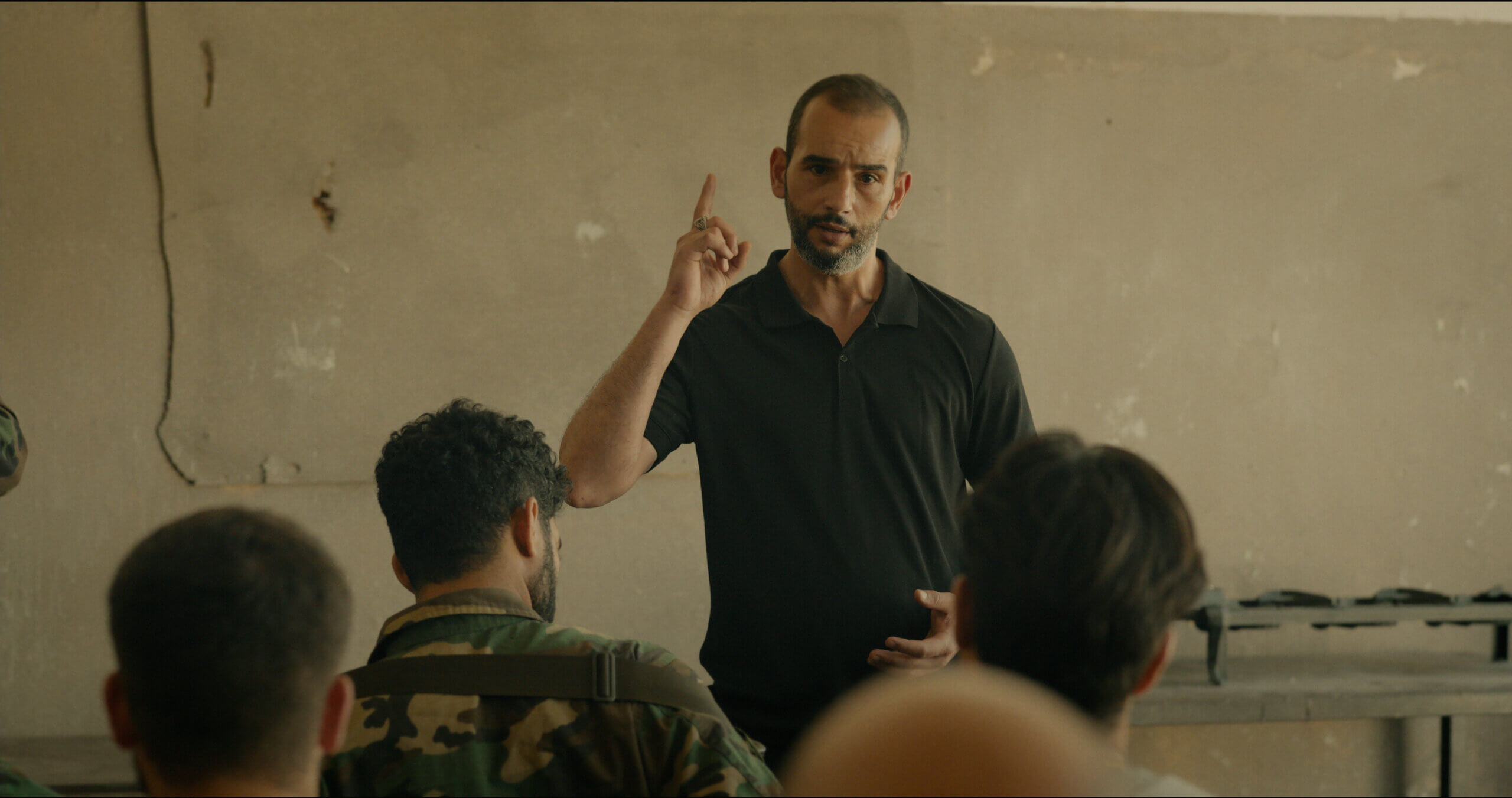
When Fauda Season 4 ended an eternity and a devastating war ago, our hero was at death’s door, reciting both the central prayer of Judaism, the Shema, and the Muslim Fatiha.
It was a cliffhanger with monumental implications for Doron Kavillio (Lior Raz), an Israeli Jew who spent his days undercover as a Muslim Arab — an identity crisis long in coming. Zoom out and you can see the doomed duality of Israel and Palestine, Jew and Muslim, connected in a cycle of death and more alike than they may seem.
Season 5 begins bilingually, with Hebrew and Arab definitions of the Arabic word Tha’r, blood revenge, “restoring violated honor or avenging injustice.” This concept is now the point of commonality — not how men pray, but how they seek revenge.
Welcome to a post-Oct. 7 Israel. Doron is in therapy, struggling to recall eight missing hours of his life on the day of Hamas’ attack on the Gaza envelope.
Comrades have left the country — Steve (Doron Ben-David) is protecting oligarchs in London, Sagi and Nurit are in Australia. Eli (Yaakov Zada-Daniel) is now Orthodox, living in a settlement and reeling from the murder of his wife and stepchildren at his now-torched kibbutz. When a Bedouin friend, Salem (Bian Anteer) who lost his son in the raid on Eli’s home, approaches him with a tip on the Nukhba fighter responsible, they depart for Marseille to answer the call of Tha’r.
It would hardly be Fauda if this act of vengeance didn’t give way to a much larger plot. Marseille is the staging ground for Saeed el Hatib (French-Algerian actor Hakim Djaziri), “the Sinwar of Europe,” who is recruiting sympathetic, white continentals for a fresh massacre in Israel.
Fauda has always made some viewers uncomfortable. Massively entertaining, bingeable to those of us who stream it in the Netflix aftermarket, its existence was premised on ongoing injustices in the West Bank and Gaza and the violence that bursts through their borders. (The BDS movement labelled it a “war-crimes glorifying” series;” Haaretz called it “morally dubious.”)
And yet as late as the last season it contained very real criticism of Israel’s conduct, including its costly campaigns to recover captured soldiers and the torture used to extract information on their whereabouts. The show always alluded to real operations — Cast Lead, Brother’s Keeper — in dialogue. But because it can’t merely mention an attack as raw and monumental as Oct. 7, and because it has no desire to question the response to it, it chooses to recreate its savagery.
Episodes 7 and 8, flashbacks to that day, are front-loaded with a trigger warning and a disclaimer that you can skip them and still be able to follow the main plot.
It’s hard for me to recommend those episodes. If not exactly atrocity porn, their central, race-against-time set piece is too anchored in recent events and constructed too much like an action movie. It feels in a sense exploitative, even if intended as a tribute. (To give them credit, both Lior Raz and his co-creator Avi Issacharoff, who said they “wrote from their trauma,” were on the ground helping the south of the country evacuate in the aftermath.)
The new season starts with the promise of complexity. It opens on a grieving Muslim father and shifts to a milksop accountant who worked for Hamas, seemingly tortured by Eli in a blind rage for a crime he didn’t commit. Could an excessive devotion to Tha’r, a tribal code of retribution, be the diagnosis of the show’s creators of Israeli society at this moment?
If it is, it’s not a critical one. The villains are the villains, and, most revealingly, they now number people with no connection to the conflict.

Hatib’s enlistment of white Europeans for a mass-casualty terror attack services a trite narrative of postcolonial guilt finding an outlet in the pro-Palestinian cause. It works on another level too: This fighting force is squaring off against Doron’s corps of Mizrahi Jews, whose mere presence dismantles the lie that Israelis are themselves all white colonizers, and that Israel and the European empire of yore are in any way analogous.
When, back at mission control, the counterterrorists speak of “suspicious-looking Europeans” who are “in their 30s,” the derision for this type of fellow traveller is palpable. Their standard bearer, Mélanie Laurent, formerly Tarantino’s “face of Jewish vengeance,” plays Anne, a blonde, “high middle-class Catholic French woman” who straps up with C-4, a keffiyeh ever-draped around her neck. Through her, and in a quite literal way, the show suggests the Western love affair with Palestinians — which in this season’s logic means Hamas — is misguided.
All the while, we never see Gaza, where much of Season 3 was set, with some among its population humanized. We never reckon with the destruction there. We hear about it, and a kind of lip service is paid to the crime of collective punishment — the sort that we hear at the end of almost every season — but it’s secondary to storytelling as elegy and justification. One could just have easily placed the Hebrew word Zachor before that first cold open: Remember what they did to us.
At one point, after a shootout with more blood spatter than I ever recall seeing on the show, Doron empties his clip into an enemy with the words “this is for October 7.” Seconds later, in a Shin Bet command room his handler Gabi (Itzik Cohen, whose between-seasons weight gain is a running joke) quips, a la Danny Glover in Lethal Weapon, “I’m too old for this.”
He’s not the only one.
In the past week I’ve chatted with some folks older than me — they don’t know each other and are largely to my right on Israel — who don’t relish the thought of another season. Not just because they don’t want to watch Oct. 7 reenacted, but because following the exploits of Israeli security agents has vastly different optics after the Hamas-Israel war, unprecedented settler violence and National Security Minister Itamar Ben-Gvir’s recently-stated ideal scenario of killing “30 or 40” Palestinians in Gaza each night.
This may well be the privilege of the diaspora, but the fatigue points to a shift in attitude that’s worth paying attention to. If these horrors are out of sight, out of mind this season, they’re top of mind to many who are watching — and many others who might have once tuned in.
The post In new ‘Fauda’ season, the aftershocks of Oct. 7, without a thought for Gaza appeared first on The Forward.
