


Uncategorized
Abe Foxman built the Jewish establishment. He died troubled by what it had become
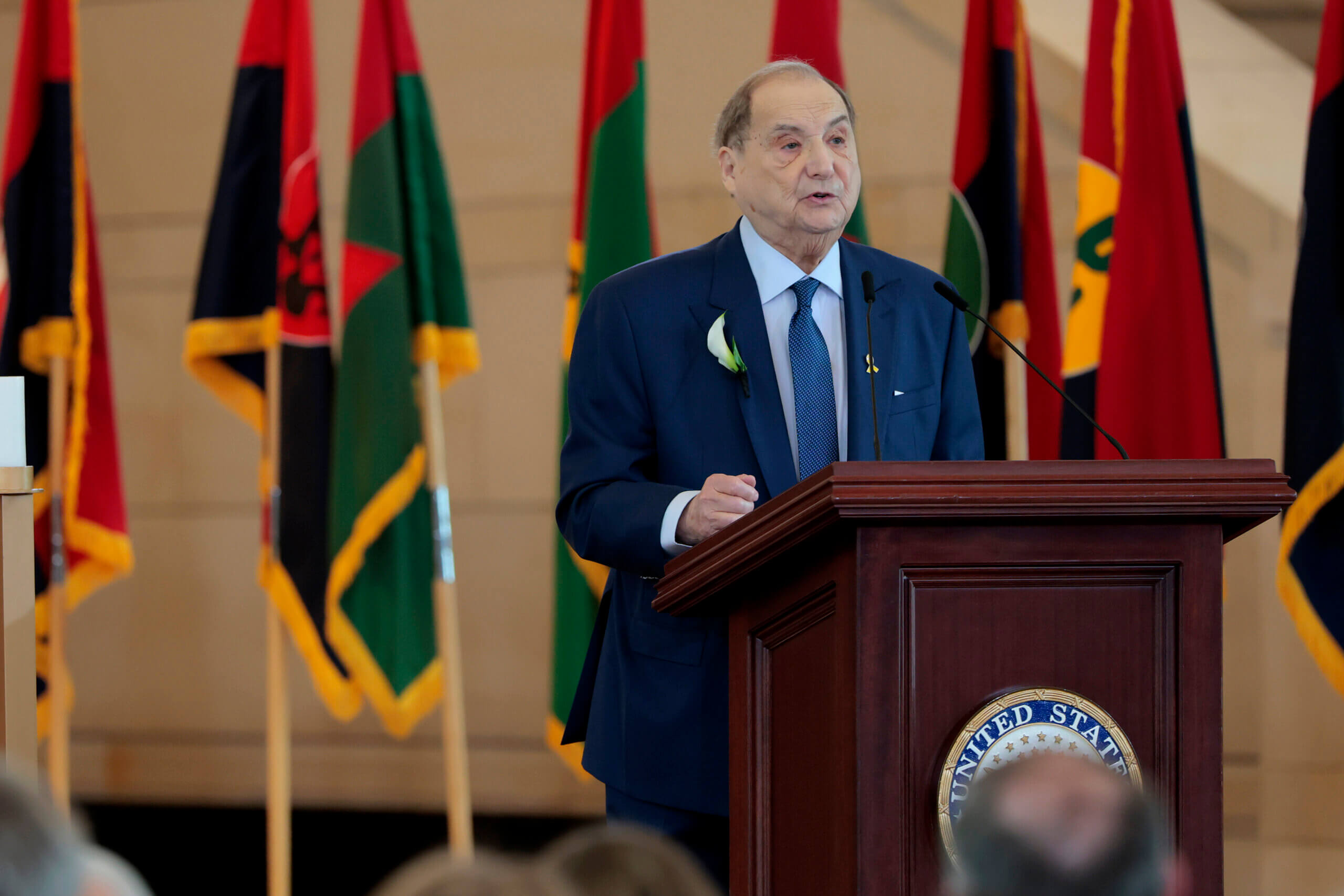
Abe Foxman never texted me Shabbat Shalom, and he didn’t always answer my calls. I couldn’t blame him, because I was often looking for something more from Foxman than his comment on current events.
Foxman, who died on Sunday, was a consummate insider who had become troubled by what he viewed as the cowardice of the very Jewish establishment he helped create during his five decades at the Anti-Defamation League. This dynamic fascinated me, and I sometimes pressed him articulate these concerns more candidly. But Foxman didn’t want to become a gadfly following his retirement in 2015 and picked his words carefully.
Occasionally, though, his frustration slipped through.
When I asked him a few years ago about the boom in new organizations created to fight antisemitism — more than 75 nonprofits with that mission have been created since he left the ADL in 2015— he lamented that it had become much more difficult for legacy organizations to say no to donors with political agendas because they could now take their dollars elsewhere.
“I had rules,” Foxman said. “Maybe that’s why they’re able to raise more money than I could.”
The erosion of rules that had once governed American society alarmed Foxman because he recognized that it was those norms — political correctness, trust in the mainstream media, bipartisanship — that had protected Jews.
“Antisemitism has always been here,” Foxman said on Israel’s Army Radio in 2018, during Donald Trump’s first term as president and after the Charlottesville “Unite the Right” rally had opened the nation’s eyes to an emboldened antisemitic movement. “What has changed is a new permissiveness, a new legitimacy, a new emboldenment, as if it’s OK — or more OK — today to be an antisemite.”
Unlike many of the leaders who succeeded him atop the country’s most powerful Jewish organizations, Foxman drew a direct line between the rise of Trump and skyrocketing hostility toward Jews.
“Trump’s presidency — in spirit and in deed — has given succor to bigots, supremacists, and those seeking to divide our society,” Foxman wrote in his endorsement of Joe Biden. “He and his administration dehumanize immigrants, demonize the most vulnerable, and undermine the civility and enlightened political culture that have allowed Jews to achieve what no diaspora community outside Israel can claim in two millennia.”
Foxman slammed Jonathan Greenblatt, his successor at the ADL, and other Jewish leaders for failing to follow his lead during the campaign.
But Foxman had, in some respects, paved the way for the state of affairs that he later bemoaned.
Take his relationship with Fox News owner Rupert Murdoch, who he met in the shvitz during one of Foxman’s biannual visits to a spa for billionaires, where each week-long stay cost nearly $9,000, paid for by an ADL donor. “I have come to know the man, not his image,” Foxman said after presenting Murdoch with a leadership award in 2010.
When I asked Foxman whether he regretted feting the founder of Fox News, which had almost certainly contributed to the erosion of political correctness and trust in the media that he later lamented, he cryptically brushed aside the concern: “Fox wasn’t Fox back then.”
And Foxman could claim impunity when it came to countering antisemitism in the way that he saw fit.
After the ADL found itself embroiled in a scandal over its close monitoring of political activists in the early 1990s, including activists against South African apartheid who were also critical of Israel, a Washington Post reporter wrote that Foxman “testily argued” to him that the ADL “has a right to do whatever it must within the law to combat antisemitism,” including receiving files the police said were stolen from the FBI.
Foxman also lobbied Congress not to recognize the Armenian genocide, worried that doing so would endanger Turkey’s Jewish community and damage the country’s relationship with Israel, before eventually reversing course. And, in what became the central allegation in longstanding complaints from the left that Foxman had stoked Islamophobia, he insisted that it was offensive to build a proposed mosque near Ground Zero in Manhattan.
Foxman also deeply believed that Israel’s security was connected to the safety of Jews in the United States, and that animus toward Israel was often a veiled expression of animosity toward Jews, something he remained concerned about until the very end.
This willingness to play ball with billionaires and stake out controversial political positions intended to protect Jews or Israel — often blurring the line between the two — would help shape how the Jewish community evolved in the decades after Foxman became ADL director in 1987.
Foxman achieved his towering status partly through his gravitas and charisma, what Nicole Mutchnik, chair of the ADL board, referred to as his ability to be a “warm friend, advisor, spirited antagonist and hugger — all over lunch.”
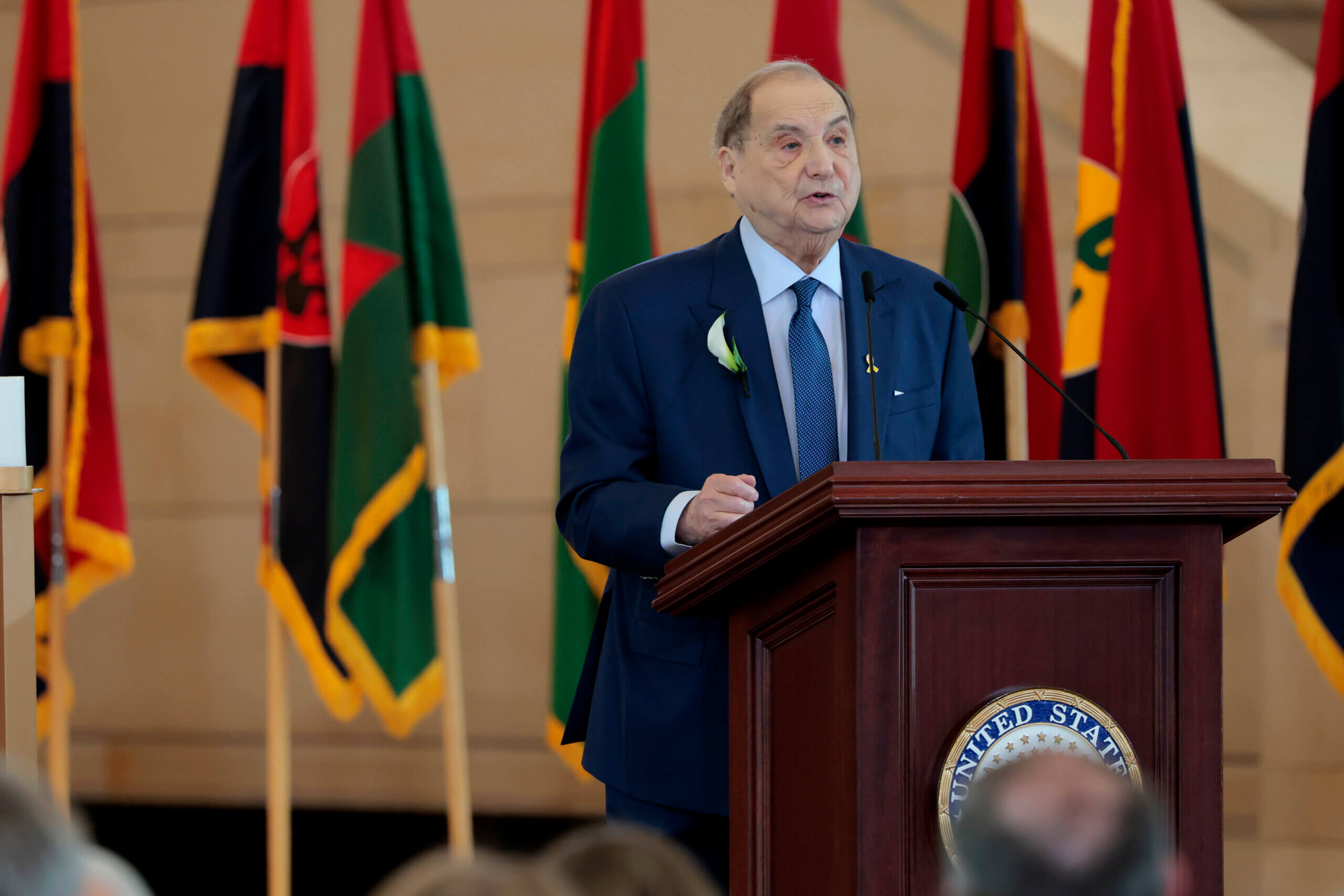
But I suspect it also had to do with his ability to maintain what has become an untenable political stance: a deep belief that Jews must fight for civil rights without giving up particular Jewish concerns around Israel and antisemitism.
This meant investing in the ADL’s civil rights portfolio — voting rights, immigration, racial justice, LGBTQ equality — even as he defended Israel in ways that rankled many liberals inside and outside of the organization.
And it meant becoming a forceful voice against both Trump and Israel’s far-right turn in recent years, even as he complained about what he viewed as unfair criticism of AIPAC by progressives and Democratic politicians drifting away from support for Israel in recent interviews.
Foxman shared this commitment to both liberalism, and a connection to Israel that at least sometimes conflicts with that liberalism, with a plurality of American Jews giving the ADL arguably the strongest claim of any legacy organization that it actually represented the American Jews it claimed to speak for.
But despite Foxman’s success — praise for his legacy came from wildly diverse corners of the Jewish community — the current crop of Jewish leaders have not adopted his politics.
The largest establishment organizations, including the current iteration of the Anti-Defamation League, seem to have determined that a wider-ranging commitment to civil rights advocacy and vocal opposition to Trump is a nonstarter if they intend to continue advocating for Israel, at a time when much of the Democratic Party has turned actively hostile to the Jewish state.
Meanwhile, the progressive Jewish groups who remain most committed to civil rights work have largely abandoned Zionism as part of their missions.
This may be a more honest form of Jewish politics than what came before. But it has also left many Jews feeling politically homeless and played into the erasure of a political center that Foxman, and no shortage of Jewish historians, have insisted is integral to Jewish safety.
“We do well when we’re in the center,” Foxman told me shortly after I started this job. “And there is no center today.”
The post Abe Foxman built the Jewish establishment. He died troubled by what it had become appeared first on The Forward.
Uncategorized
With Jewish New Yorkers on edge, Julie Menin says new protections will help keep them safe over High Holidays
As Jewish New Yorkers prepare for the High Holidays amid continued worries about rising antisemitism, City Council Speaker Julie Menin says her historic role as the chamber’s first Jewish leader has become even more important than she expected when elected in January.
In an exclusive interview with the Forward earlier this week, Menin pointed to her synagogue-protection law and successful fight against the Met’s John Galliano exhibition as proof that having a Jewish leader with a powerful bully pulpit matters.
“It’s incredibly important at this pivotal time,” Menin said. “We need to be standing up loudly, clearly, unequivocally in the fight against antisemitism.”
Many Jewish leaders see Menin, 58, as a check on Mayor Zohran Mamdani, whose rhetoric on Israel and handling of antisemitism have strained relations with parts of the Jewish community.
Mamdani has met in recent weeks with Jewish leaders and visited the Orthodox-populated neighborhood of Borough Park. The administration was expected to release a comprehensive citywide strategy to combat antisemitism before the High Holidays. Mamdani’s spokesperson did not respond to an inquiry about the rollout timetable. Menin said that City Hall has not briefed her on its plan.
Services at synagogues across the city this year come against a backdrop of rising antisemitism. Synagogues already spend millions of dollars a year on security, a reality her children have noticed, Menin said. Recent NYPD statistics showed that in the first seven months of 2026, anti-Jewish incidents rose 8.5%, and 57% of the reported hate crimes in the city involved Jewish victims. “This has now become the new normal,” she said. “It’s terrible. It is just shameful that we have entered this new era.”
Menin is scheduled to speak at Central Synagogue, the site of an antisemitic attack last month, at its evening services before heading to a friend’s home, where she and her eight-year-old daughter will bring an apple pie they bake together as an annual tradition.
A High Holidays test
Menin said she hopes the Council’s recent efforts to combat antisemitism will help Jewish New Yorkers feel safer and more protected as they head to synagogues for the High Holidays.
One of Menin’s first legislative priorities after taking over the Council was a package of bills that included protest protections for houses of worship, a hate-crime reporting hotline, Holocaust education initiatives and additional security assistance. “I do see that we have made some real progress,” Menin said.
The most controversial part of Menin’s agenda focused on limiting protests outside synagogues. The Council ultimately passed legislation requiring the NYPD to develop a plan for establishing a buffer zone when demonstrations involve harassment, intimidation or physical threats. Mamdani, who had raised concerns about restricting protests, allowed the synagogue measure to become law without his signature.
The law now faces its first big test. The High Holidays coincide with the annual United Nations General Assembly, which is expected to draw protests against Israeli Prime Minister Benjamin Netanyahu, encouraged by Mamdani.
Menin said the new law should help protect people entering and leaving synagogues if tensions rise around Netanyahu’s visit, and demonstrations cross the line into intimidation. “I think that bill is really important in terms of making a difference to assure congregants of their safety and security as they enter and leave,” she said.
Asked directly what she would say to Jewish New Yorkers who remain worried about Mamdani, Menin avoided criticizing the mayor by name. But she also offered a pointed message about the political climate. “It is incumbent to ensure that the rhetoric is turned down,” Menin said, because there remains a “heightened sense of fear within the Jewish community.”
On Wednesday, Mamdani and Police Commissioner Jessica Tisch, a lifelong member of Central Synagogue who spoke at services after the attack, announced increased NYPD security outside synagogues and other Jewish institutions for the High Holidays. Mamdani acknowledged that some Jews are “understandably afraid to come together and celebrate openly,” and said their safety “during these sacred days is of the utmost importance to our administration.”
The power to speak out
Menin has also used her position to speak out beyond the Council chamber, pointing to her recent fight over a Metropolitan Museum of Art planned exhibition as an example of the power of her bully pulpit.
Menin scored a significant victory as fashion designer John Galliano — who has a history of antisemitic remarks — bowed out following mounting criticism. Menin said she privately warned museum officials before the exhibition was announced that she would oppose it. She later went public after realizing that others who objected were reluctant to speak out.
“They might have been upset by the decision, but they weren’t comfortable speaking out,” Menin said. “We can’t shy away from speaking out. We have to be loud.” Menin called the development “a huge victory in the fight against antisemitism.”
A wish for unity
When Menin became speaker in January, she told the Forward that she hoped to use the position to help bridge some of the deep divisions in the city. Nearly a year later, she said that mission has only become more urgent.
Menin traced her own path into public service to the aftermath of the Sept. 11 attacks, when her Lower Manhattan business was devastated. She later chaired Community Board 1 and became involved in efforts to rebuild the neighborhood. What she remembers most from that period, she said, was a sense of unity that she believes New York has lost.
“Right now, it just feels very divided and very divisive,” Menin said.
As she approaches her first Rosh Hashanah as speaker, her wish for the new year is for some of those divisions to ease.
“As we really focus on the issue of atonement, we need to figure out how we can ensure the safety and security of the Jewish community at this very, very difficult time,” Menin said. “It’s my fervent hope and wish that we can try to galvanize the community together, and that we can bring along many of our allies who are not Jewish as well.”
The post With Jewish New Yorkers on edge, Julie Menin says new protections will help keep them safe over High Holidays appeared first on The Forward.
Uncategorized
A Jewish audience applauded when this speaker called for Muslims to leave America. Here’s a better response.
A video from the Jewish American Summit in Los Angeles shows a speaker using wildly inflammatory, dehumanizing language to describe Muslims — as the Jewish American audience members stay silent, or applaud.
“I don’t want Muslims in America,” the activist Mosab Hassan Yousef said at the sold-out event last Sunday. “Get the f— out of the United States. Go back to the s—holes where you came from and reform your own countries.” Yousef, the son of a Hamas co-founder, converted from Islam to Christianity and worked for the Israelis for 10 years.
His words were horrifying. But the cheers arising from some in the room were even more jarring, as was the refusal of the event’s organizers and most of its sponsors and speakers to condemn Yousef’s hate speech.
As leaders of NewGround, an organization dedicated to building healthy relations between American Muslims and Jews, we know that the grief of Oct. 7, the days before it, and every day since in Gaza and elsewhere, is too much to bear. But we also know that when we choose to amplify or excuse rhetoric that dehumanizes our neighbors, we don’t just jeopardize their safety, we jeopardize our own.
We fuel a cycle of hatred that makes everyone less safe — including our loved ones. The impact isn’t necessarily direct, and it isn’t immediate. But it sets the stage for escalating rancor which can easily slip into violence.
Both our traditions teach that life is sacred. The Quran (5:32) and the Mishnah (Sanhedrin 4:5) concur: To take a life — or destroy the dignity of a human being — is to destroy all of humanity; to uphold that dignity is to save all of humanity.
When we sit silently or applaud rhetoric that erases the humanity of the “other,” we are participating in a dangerous, destructive feedback loop: You hurt me, so I must hurt you to keep myself safe. Circulating exaggerations, expelling our neighbors, silencing and deporting our political opponents in the pursuit of security will only leave us all increasingly isolated, vulnerable, and broken.
That is why relationships across communities matter, especially when they are difficult. Meeting one another, challenging false claims, letting go of our rigid certainty, holding our own leaders accountable and refusing to let fear define entire groups are not symbolic gestures. They are active practices to keep isolation from hardening into hostility.
At the same time, we need to confront those who deliberately exploit fear and misinformation to pull communities further apart. If we want others to stand up for us, we have to stand up for them, especially when hateful rhetoric comes from within our own circles.
That didn’t happen when Yousef made his vile remarks at the Jewish American Summit. As Louis Keene reported in the Forward, there were no boos, only applause. Afterwards, only two co-sponsoring organizations — the Anti-Defamation League and the Jewish Federation Los Angeles — criticized his remarks.
But our communities need even more than just condemnations of hate speech. We need a substantial, structural response. We need teshuvah — a process of self-reflection and return to integrity in which many Jews engage as Rosh Hashanah approaches.
This is not a theoretical exercise, nor a process limited to Jews. It is a human endeavor. The Quran echoes similar teachings — “Indeed, God does not change the condition of a people until they change what is within themselves.” (Quran 13:11)
At NewGround, we see this work happening on the ground every day. The people in our programs challenge one another. They engage in a rigorous, often agonizing process of naming their truths, navigating anti-Palestinian racism and antisemitism, and honoring the humanity of the person sitting across from them. They communicate through their disagreements — especially when it is difficult.
The recent shooting at the Islamic Center of San Diego took place the day after our current fellows’ Israel Palestine intensive. Our fellows rallied around our Muslim community members, as they had around the Jewish fellows during our first intensive when news of the Bondi Beach massacre hit. Several of our current fellows and alumni mobilized networks in solidarity gatherings at Friday congregational prayers at the Islamic Center of Southern California and Masjid al-Thoir in Koreatown. Fellows traveled to vigils and to the mosque in San Diego to show support. After the vandalism of a mural this summer at the Pasadena Jewish Temple Center, NewGround fellows showed up to stand in solidarity, once again.
Real teshuvah requires more than just responding to harm. It requires taking steps to prevent harm from occurring again. It means asking ourselves: Why do we uplift speakers who stoke hatred? What safeguards can we implement to ensure we are not providing a platform for division? In pursuit of our own safety, are we inadvertently endangering other communities, and can we change our approach to foster mutual care? If we are not exceptionally thoughtful, we will undermine the shared society we seek to build.
The two of us have spent 20 years convening Muslims and Jews who can do the deep, courageous work of truth-telling and listening. We know that real change only happens when we don’t shy away from challenging perspectives, but instead dive deeper into them.
This work requires the courage to stand in one’s truth while respecting and listening to those who may hold opposing viewpoints. It requires the grace to acknowledge the anger and grief we all carry, and the discipline to channel that energy into building — rather than destroying.
We invite our community leaders, especially those who organize and sponsor meetings like the American Jewish Summit, to join us in this work. Stop choosing animosity. Choose instead to interrupt it. The safety of our children and grandchildren depends on whether we continue to build higher walls, or commit to building resilient bridges.
The post A Jewish audience applauded when this speaker called for Muslims to leave America. Here’s a better response. appeared first on The Forward.
Uncategorized
‘You would have thought Jews were being targeted, but no, Mom — It was America.’
Dear Mom,
The anniversary of 9/11 falls on Rosh Hashanah this year. It’s hard to believe it’s been 25 years since you’ve been gone when you are constantly on my mind. Even though you’re buried next to Dad in Florida, I don’t need to visit your grave on the anniversary of your death; I talk to you almost daily. We had a special relationship, you and I, one that didn’t include Dad or little sister Ellen. We protected one another and shared potato pierogies and corned beef sandwiches even until the very end.
Mom, I cannot understand what the hell happened that day. In a way, I’m glad you weren’t alert and had no clue because you would have freaked out. I know you would have thought Jews were being targeted, but no, Mom. It was America.
I saw the planes go into the buildings and watched the towers come down. We ran when they told us to get out. You, thankfully, were at Village Nursing Home. I couldn’t imagine wheeling you up Greenwich Street fast enough to get away from that ball of dust.
When I returned the next day, our building was in lockdown. You wouldn’t have been able to go home. And where would I have put you?
I didn’t want you to be moved into hospice; I fought tooth and nail to keep you at Village Nursing. The staff knew you and had become comfortable with our family’s deafness and how to communicate with us. I wished I could take care of you myself. I knew what you liked, what you would eat, how to bathe you. But you couldn’t eat anymore, and I could barely lift you.
Every day after volunteering a few hours at Ground Zero, I came to see you. I hoped you would open your eyes or talk to me, but you lay motionless. Even when I lay beside you, you didn’t respond. You could feel me. I knew that. I watched you wither away day after day.
And now it’s Rosh Hashanah. I remember how you placed the scarf on your head, lit the candles and in silence, said your prayers. You always told me Rosh Hashanah was the time to forgive and not carry baggage into the New Year. Easier said than done, right, Mom?
I also remember how you would break your fast with a Hershey’s Kiss or peanut M&M’s. You’d hide them in your pocket and, when you thought no one was looking, pop one into your mouth.
On Oct. 6, I came to see you after Ground Zero. That night, I lay beside you and put my hand on your arm. You pushed it away.
I thought I was dreaming. I tried again. With all the strength you could muster, you moved my hand away.
I knew you were telling me to go. It was time to say goodbye.
I held you in an embrace and left.
Not long after I returned to my hotel, the nursing home called. You had passed.
Today, you would be wowed by all the changes and development around the old Twin Towers. I know you would still want to head over to our favorite pierogi place on Second Ave. So much has changed, but it’s still there.
The post ‘You would have thought Jews were being targeted, but no, Mom — It was America.’ appeared first on The Forward.
