


Uncategorized
Abe Foxman built the Jewish establishment. He died troubled by what it had become
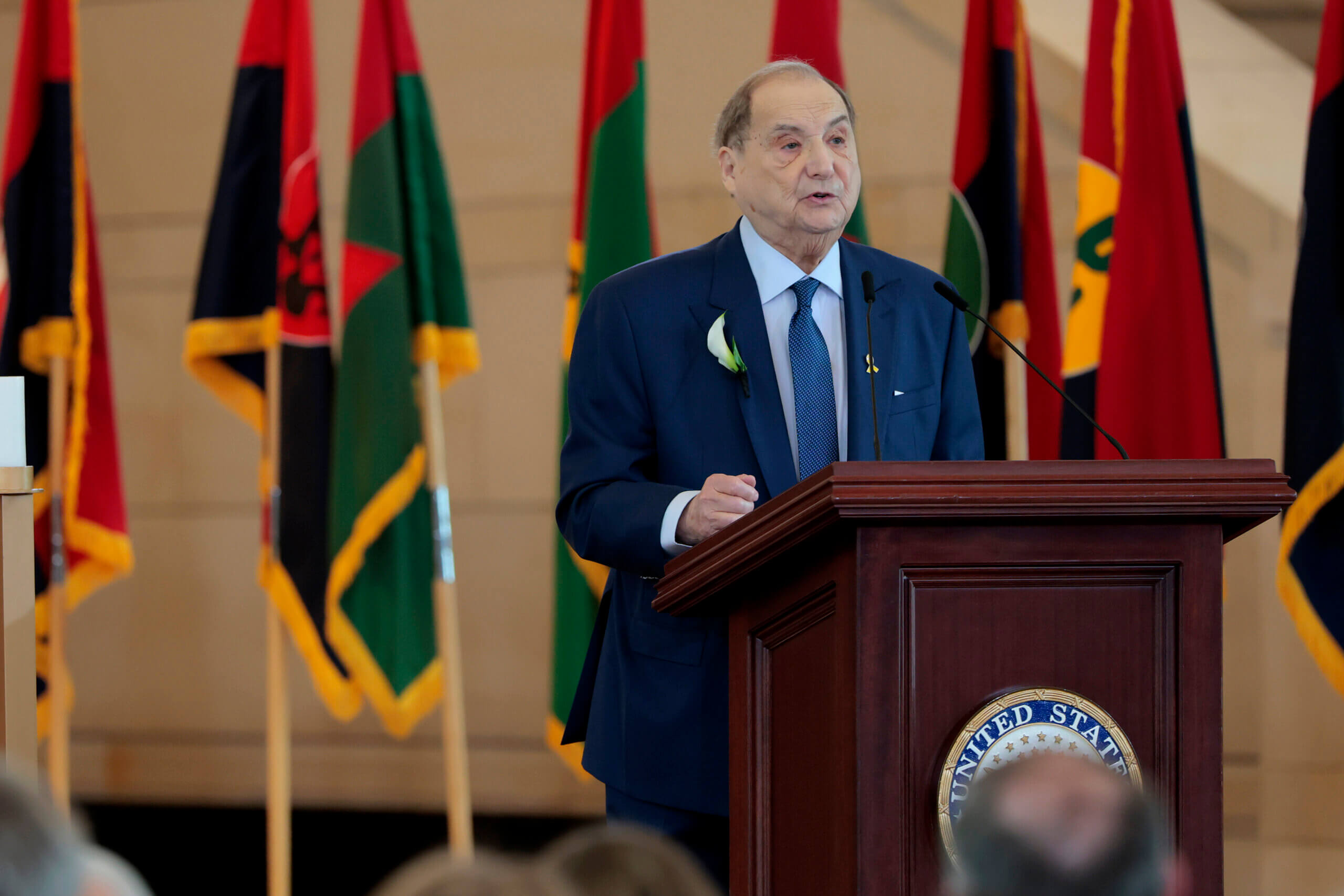
Abe Foxman never texted me Shabbat Shalom, and he didn’t always answer my calls. I couldn’t blame him, because I was often looking for something more from Foxman than his comment on current events.
Foxman, who died on Sunday, was a consummate insider who had become troubled by what he viewed as the cowardice of the very Jewish establishment he helped create during his five decades at the Anti-Defamation League. This dynamic fascinated me, and I sometimes pressed him articulate these concerns more candidly. But Foxman didn’t want to become a gadfly following his retirement in 2015 and picked his words carefully.
Occasionally, though, his frustration slipped through.
When I asked him a few years ago about the boom in new organizations created to fight antisemitism — more than 75 nonprofits with that mission have been created since he left the ADL in 2015— he lamented that it had become much more difficult for legacy organizations to say no to donors with political agendas because they could now take their dollars elsewhere.
“I had rules,” Foxman said. “Maybe that’s why they’re able to raise more money than I could.”
The erosion of rules that had once governed American society alarmed Foxman because he recognized that it was those norms — political correctness, trust in the mainstream media, bipartisanship — that had protected Jews.
“Antisemitism has always been here,” Foxman said on Israel’s Army Radio in 2018, during Donald Trump’s first term as president and after the Charlottesville “Unite the Right” rally had opened the nation’s eyes to an emboldened antisemitic movement. “What has changed is a new permissiveness, a new legitimacy, a new emboldenment, as if it’s OK — or more OK — today to be an antisemite.”
Unlike many of the leaders who succeeded him atop the country’s most powerful Jewish organizations, Foxman drew a direct line between the rise of Trump and skyrocketing hostility toward Jews.
“Trump’s presidency — in spirit and in deed — has given succor to bigots, supremacists, and those seeking to divide our society,” Foxman wrote in his endorsement of Joe Biden. “He and his administration dehumanize immigrants, demonize the most vulnerable, and undermine the civility and enlightened political culture that have allowed Jews to achieve what no diaspora community outside Israel can claim in two millennia.”
Foxman slammed Jonathan Greenblatt, his successor at the ADL, and other Jewish leaders for failing to follow his lead during the campaign.
But Foxman had, in some respects, paved the way for the state of affairs that he later bemoaned.
Take his relationship with Fox News owner Rupert Murdoch, who he met in the shvitz during one of Foxman’s biannual visits to a spa for billionaires, where each week-long stay cost nearly $9,000, paid for by an ADL donor. “I have come to know the man, not his image,” Foxman said after presenting Murdoch with a leadership award in 2010.
When I asked Foxman whether he regretted feting the founder of Fox News, which had almost certainly contributed to the erosion of political correctness and trust in the media that he later lamented, he cryptically brushed aside the concern: “Fox wasn’t Fox back then.”
And Foxman could claim impunity when it came to countering antisemitism in the way that he saw fit.
After the ADL found itself embroiled in a scandal over its close monitoring of political activists in the early 1990s, including activists against South African apartheid who were also critical of Israel, a Washington Post reporter wrote that Foxman “testily argued” to him that the ADL “has a right to do whatever it must within the law to combat antisemitism,” including receiving files the police said were stolen from the FBI.
Foxman also lobbied Congress not to recognize the Armenian genocide, worried that doing so would endanger Turkey’s Jewish community and damage the country’s relationship with Israel, before eventually reversing course. And, in what became the central allegation in longstanding complaints from the left that Foxman had stoked Islamophobia, he insisted that it was offensive to build a proposed mosque near Ground Zero in Manhattan.
Foxman also deeply believed that Israel’s security was connected to the safety of Jews in the United States, and that animus toward Israel was often a veiled expression of animosity toward Jews, something he remained concerned about until the very end.
This willingness to play ball with billionaires and stake out controversial political positions intended to protect Jews or Israel — often blurring the line between the two — would help shape how the Jewish community evolved in the decades after Foxman became ADL director in 1987.
Foxman achieved his towering status partly through his gravitas and charisma, what Nicole Mutchnik, chair of the ADL board, referred to as his ability to be a “warm friend, advisor, spirited antagonist and hugger — all over lunch.”
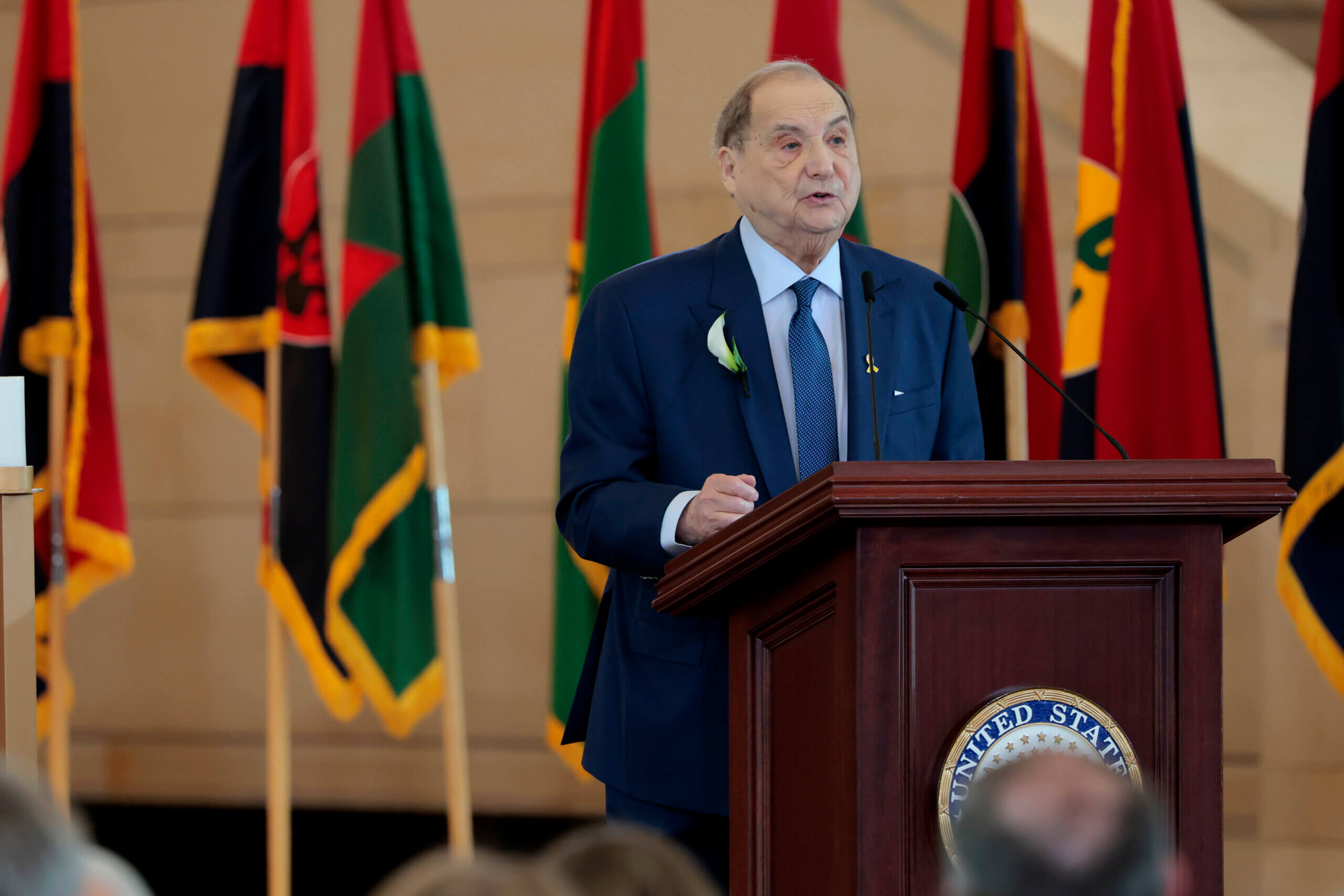
But I suspect it also had to do with his ability to maintain what has become an untenable political stance: a deep belief that Jews must fight for civil rights without giving up particular Jewish concerns around Israel and antisemitism.
This meant investing in the ADL’s civil rights portfolio — voting rights, immigration, racial justice, LGBTQ equality — even as he defended Israel in ways that rankled many liberals inside and outside of the organization.
And it meant becoming a forceful voice against both Trump and Israel’s far-right turn in recent years, even as he complained about what he viewed as unfair criticism of AIPAC by progressives and Democratic politicians drifting away from support for Israel in recent interviews.
Foxman shared this commitment to both liberalism, and a connection to Israel that at least sometimes conflicts with that liberalism, with a plurality of American Jews giving the ADL arguably the strongest claim of any legacy organization that it actually represented the American Jews it claimed to speak for.
But despite Foxman’s success — praise for his legacy came from wildly diverse corners of the Jewish community — the current crop of Jewish leaders have not adopted his politics.
The largest establishment organizations, including the current iteration of the Anti-Defamation League, seem to have determined that a wider-ranging commitment to civil rights advocacy and vocal opposition to Trump is a nonstarter if they intend to continue advocating for Israel, at a time when much of the Democratic Party has turned actively hostile to the Jewish state.
Meanwhile, the progressive Jewish groups who remain most committed to civil rights work have largely abandoned Zionism as part of their missions.
This may be a more honest form of Jewish politics than what came before. But it has also left many Jews feeling politically homeless and played into the erasure of a political center that Foxman, and no shortage of Jewish historians, have insisted is integral to Jewish safety.
“We do well when we’re in the center,” Foxman told me shortly after I started this job. “And there is no center today.”
The post Abe Foxman built the Jewish establishment. He died troubled by what it had become appeared first on The Forward.
Uncategorized
Orthodox Jewish man stabbed in midtown Manhattan
(New York Jewish Week) — An Orthodox Jewish man is in stable condition after being stabbed on Wednesday evening in the Diamond District of midtown Manhattan. Police are investigating the attack as a possible hate crime.
Police told the Jewish Telegraphic Agency that the NYPD’s Hate Crimes Task Force is investigating the incident as a possible antisemitic attack, and Manhattan Shomrim — the Jewish community watch group — has asked people to share footage as police search for the suspect. No arrests have been made.
The victim was identified by police as a 26-year-old man, and Orthodox Jewish outlet COLLive identified him as a resident of Crown Heights, the neighborhood that is home to the Chabad-Lubavitch Hasidic movement’s headquarters.
He was taken to Bellevue Hospital in stable condition. Police said they were called at about 5:50 p.m. on Wednesday after the man was stabbed in the back with “an unknown sharp object” on 47th Street near Fifth Avenue. ABC7 reported that the victim told investigators he believed he was stabbed with a needle or syringe.
According to the Chabad website, which published an interview with the victim, he is a recently ordained Hasidic rabbi named Joseph, who commutes to Midtown each day to wrap tefillin with Jewish merchants. The attacker, Joseph told the website, was a woman who seemed to be following him prior to the stabbing.
The attack comes as Jewish New Yorkers have been targeted in more than half of the hate crimes committed in New York City this year, despite making up about 12% of the city’s population.
In July, an assailant stabbed two men on the Upper West Side, including one who was leaving a synagogue, while yelling “Allahu akbar,” and was charged with committing hate crimes.
Louis Keene contributed reporting.
The post Orthodox Jewish man stabbed in midtown Manhattan appeared first on The Forward.
Uncategorized
VIDEO: A Hasid gives us a tour of Morocco in Yiddish
דער ירושלימער יוטוב־שטערן וועלוול קירשנבוים האָט לעצטנס אַרויסגעשטעלט אַ ווידעאָ אויף ייִדיש פֿון אַ פּרעכטיקן וויזיט, וואָס ער האָט געמאַכט אין מאַראָקאָ. עס באַגלייט אים זײַן חבֿר אַבֿרהם פּרץ.
אינעם ווידעאָ זעט מען ווי קירשנבוים דאַוונט שחרית מיט די אָרטיקע ייִדן און באַזוכט אַ גוט אָפּגעהיטענעם בית־עולם, וווּ עס ליגן באַערדיקט גרויסע צדיקים ווי למשל הרבֿ חיים בן עתר (1696–1743), באַקאַנט ווי דער „אור החיים“. „מענטשן מיינען, אַז נאָר אין אייראָפּע זענען דאָ קבֿרים פֿון צדיקים!“ זאָגט קירשנבוים.
מיר זעען אַ גרויסע, שיינע שיל מיט אַ פֿײַנער אַרכיטעקטור אין קאַזאַבלאַנקאַ; דעם גרויסן אַראַבישן שוק, וווּ קירשנבוים קויפֿט זיך אײַן מלבושים פּונקט ווי די מאַראָקאַנער גייען אָנגעטאָן. ער באַוווּנדערט אויך די שיינע טיי־גלעזער און טשײַניקן, וואָס מע פֿאַרקויפֿט דאָרט, און באַקענט זיך מיט אַ ייִדישן סוחר וואָס האַנדלט מיט זילבער און גאָלד, פּונקט אַזוי ווי זײַן טאַטע און זיידע האָבן געטאָן פֿאַר דור־דורות.
The post VIDEO: A Hasid gives us a tour of Morocco in Yiddish appeared first on The Forward.
Uncategorized
Conservative and Christian movies are coming for Hollywood
A star-studded new movie set in a Soviet prison is coming out in November. James Franco and Rob Lowe anchor the cast of Confession, playing a brutal prison guard and an imprisoned dissident professor, and a disheveled Nick Nolte appears as a fellow prisoner.
These actors were once huge gets, and their names could convey legitimacy to a project. Nolte and Franco both have received Academy Award nominations. Lowe was a member of the Brat Pack, and was a regular on The West Wing.
Confession, written by Ben Shapiro and produced by the rightwing tabloid-esque news site The Daily Wire, is not the expected fare for actors with that kind of name recognition; Shapiro’s screenwriting aspirations have been the target of ridicule for years.
Nevertheless, this isn’t the only Daily Wire production getting big names; Danny Trejo signed onto a pro-ICE movie about Minneapolis in the aftermath of the Renee Good shooting, and Jonathan Majors led Run, Fight, Hide: Infidels earlier this year.
Each one of these actors has been, in some way, canceled or in career doldrums so may have been more open to working with The Daily Wire. And some have claimed that they did not know who Shapiro was, or what his politics were; Trejo’s son, Gilbert, said his 82-year-old father did not endorse ICE and was misled about the movie before he signed his contract.
Movie studios have struggled through the pandemic and the streaming era, both of which have tanked box office receipts, leaving the field open for movies from offbeat production studios. In addition to The Daily Wire, there has been a whole ream of Christian movies attempting to shift the stereotype of bible movies — that they’re preachy, low-budget straight-to-TV affairs with cardboard acting — to something more prestigious, or at least profitable.
The Christian company Angel Studios has been placing screenings of the half philo-semitic, half-antisemitic Jesus TV series The Chosen in movie theaters across the country, produced the right-wing hit The Sound of Freedom and is pumping out faith-based movies like the animated King of Kings Christmas story and David, a kiddie movie about the biblical king. Recently, Pinnacle Peak Pictures, another faith-based production company, premiered Daniel and the Fiery Furnace, another bible movie that was notable enough to merit a review in The New York Times. (Though admittedly it wasn’t a particularly positive one.)
For decades, Hollywood, and the media industry at large, has been associated with liberalism, progressive politics and diversity. (This is part of why conservative conspiracy theorists often insist that Jews control the media.) Even when conservatives are in power, satirical movies have poked fun at the ruling class — Team America: World Police spoofed George W. Bush’s foreign policy, while M*A*S*H critiqued Richard Nixon. During the current Trump administration, we’ve seen One Battle After Another lambasting immigration policies and rising white nationalism, Eddington on misinformation and populism, and The Apprentice depicting Trump directly.
But a rising number of higher-budget, bigger releases from the right wing, whether The Daily Wire’s conservative political parables or the Christian fables, are bringing a new kind of messaging — about the importance of God and country, about gender roles, about about the centrality of Jesus to the U.S. — to the American movie-going public.
This is no accident. A group of powerful conservative Christians, many of whom worked on Project 2025, are proponents of the Seven Mountains Mandate, a blueprint for Christian nationalism that instructs Christians to gain influence and control over the “seven mountains” of society — which include media, entertainment and the arts. The Mandate is part of the New Apostolic Reformation, a decentralized evangelical movement embraced by millions of Americans.
Jeremy Boreing, the director of many Daily Wire movies — though he has since left the company — said on a podcast hosted by businessman Patrick Bet-David that “It had always been part of our strategy to move into making culture, not just criticizing culture” as a way of proving that “there is a future where conservatives aren’t losing. There’s a future where we have political power and cultural power.”
Cultural power, of course, requires more than just a lot of movies; they have to be well-done, or at least appear to be. Previous Daily Wire productions, as well as other right-wing, MAGA movie ventures, have been hacky. Lady Ballers, about an unsuccessful men’s basketball team pretending to be women so they can dominate the league, was an unsubtle, unfunny and ultimately unwatchable spoof of transgender athletes. And even plenty of higher-budget attempts, like Daniel and the Fiery Furnace, can still fall victim to wooden acting and writing.
But now, with the financial success of movies like The Sound of Freedom and biblical parables like The Chosen, bigger stars are being drawn to projects like the Daily Wire’s lineup of pro-ICE, anti-immigration and anti-LGBTQ movies. With those bigger stars may come new audiences who might not have watched a Christian movie or Daily Wire project otherwise. And where there is money and viewers, mainstream Hollywood will go, too, no matter how progressive people expect the industry to be. We’ve already gotten a biblical epic from Amazon Prime, with The House of David, and there are likely to be many more to come.
After all, it wasn’t so long ago, after all, that Cecil DeMille’s The Ten Commandments was the biggest movie in town.
The post Conservative and Christian movies are coming for Hollywood appeared first on The Forward.
