


Features
GambleOnline.ca Brings Greater Transparency to Online Casino Comparisons in Canada
Gambling Nerd readers researching online casinos in Canada face a familiar problem: the market is filled with large welcome bonuses, star ratings, promotional claims and promises of extensive game libraries. For readers coming from broader consumer-information communities such as Nerd Nook Hub, the challenge is determining what those headline claims actually mean before opening an account or depositing money.
GambleOnline.ca approaches online casino comparisons from a Canadian perspective, looking beyond promotional figures to examine licensing and ownership information, Canadian banking, bonus conditions, game selection, usability, customer support, player feedback and responsible gambling tools. Its current casino review framework evaluates operators across eight categories rather than ranking them solely by the size of their advertised promotions.
A transparent Canadian online casino comparison should explain who operates the casino, how deposits and withdrawals work, what conditions apply to bonuses, which games are available and what protections players can access. The objective is not simply to identify the biggest offer, but to give readers enough information to decide which features matter to them.
What Should Canadians Compare Before Choosing an Online Casino?
Different players have different priorities, but several factors can materially affect the casino experience.
| Comparison Factor | Why It Matters |
| Ownership and licensing | Identifies who operates the casino and the regulatory information provided |
| Canadian banking | Determines whether practical deposit and withdrawal methods are available |
| CAD support | Can simplify deposits, balances and withdrawals for Canadian players |
| Bonus wagering | Determines how much qualifying play may be required |
| Maximum cashout | Can restrict withdrawals associated with certain promotions |
| Game selection | Determines available slots, tables, live games and software providers |
| Withdrawal conditions | Affect how and when players can access funds |
| Customer support | Matters when banking, verification or account problems occur |
| Mobile usability | Determines how effectively the casino works on phones and tablets |
| Responsible gambling tools | Give players ways to control or stop their gambling |
These factors illustrate why identifying the “best online casino in Canada” is more complicated than sorting casinos by welcome bonus.
Why Transparency Matters When Comparing Online Casinos
Online casino promotions are designed to make their most attractive features immediately visible.
A C1,000welcomepackagenaturallylooksmoresubstantialthanaC300 promotion. But neither number tells the reader how much practical value the offer provides.
Wagering requirements can determine how much qualifying play is necessary before bonus-related funds can be withdrawn. Maximum cashout rules may restrict withdrawals associated with certain promotions. Game-contribution rules can determine whether slots, blackjack, roulette or other games count equally toward wagering.
Expiry periods, maximum bonus bets, minimum deposits and payment-method exclusions can introduce additional conditions.
GambleOnline.ca’s methodology specifically examines bonus value alongside minimum deposits, wagering requirements, wagering bases, game contribution rates, excluded games, maximum bets, expiry periods, withdrawal caps, payment restrictions and provincial eligibility.
That distinction is fundamental to transparent casino comparisons.
The question isn’t simply, “How much is the bonus?”
It is, “What would I actually have to do to use it?”
GambleOnline.ca Looks Beyond the Headline Bonus
GambleOnline.ca evaluates promotions according to their complete terms rather than assuming that the largest advertised figure represents the strongest offer. Its bonus methodology explicitly recognizes that a smaller promotion can potentially provide greater practical value when it has lower wagering, a longer expiry period, fewer game restrictions or less restrictive withdrawal conditions.
Consider a simplified example.
Suppose a player receives a C$100 bonus with a wagering requirement of 30x the bonus amount. That would represent C$3,000 in qualifying wagering.
Now imagine another C$100 bonus carrying 30x wagering on the deposit plus bonus. If the player deposited C100andreceivedanotherC100, the wagering base would be C200,resultinginC6,000 of required play.
Both promotions can advertise a C$100 bonus and “30x wagering.”
The practical conditions are substantially different.
This is also why different types of introductory promotions need to be evaluated individually. Canadians researching these offers can review information about no-deposit bonuses available to Canadian players to understand how these promotions differ from conventional deposit-match bonuses and what conditions can accompany them.
Bonus size should start the comparison, not end it.
Making Casino Bonus Terms Easier to Understand
One reason casino promotions can be difficult to compare is that several terms affect the actual offer.
Wagering Requirements
A wagering requirement establishes how much qualifying wagering may be necessary before funds associated with a promotion become withdrawable.
The number alone is insufficient.
Players should also determine what the multiplier applies to. Depending on the promotion, wagering can be calculated from the bonus, the deposit plus bonus or another defined amount.
That difference can substantially change the amount of play required.
Maximum Cashout
Some casino promotions place a ceiling on how much can be withdrawn from winnings associated with bonus funds.
This can be particularly relevant to no-deposit promotions.
A player could theoretically accumulate a balance above the cashout limit while still being restricted to the maximum withdrawal established by the promotional terms.
Eligible Games
Not every game necessarily contributes equally toward bonus wagering.
Slots may receive one contribution rate while blackjack, roulette or other table games receive another. Certain titles can also be excluded.
Players planning to use a promotion on a particular game should therefore check the contribution rules before accepting the offer.
Expiry Dates
Casino promotions can expire.
A short expiry period may be manageable for a frequent player but unsuitable for someone who only gambles occasionally.
The relevant question isn’t whether a longer or shorter period is universally better. It is whether the player can reasonably satisfy the conditions within the time available without changing their normal spending.
Deposit Requirements
A deposit-match bonus requires the player to fund an account according to the promotional conditions.
No-deposit promotions operate differently because the initial bonus does not require the same conventional qualifying deposit.
Neither structure is automatically better. The value depends on the complete terms.
How GambleOnline.ca Scores Canadian Online Casinos
One of the more concrete ways to make a casino comparison transparent is to disclose how ratings are calculated.
GambleOnline.ca currently scores casinos on a 100-point scale divided across eight categories. The categories are weighted according to their stated impact on the Canadian player experience.
| Evaluation Category | Weight |
| Operator Transparency and Regulatory Information | 20% |
| Banking for Canadian Players | 20% |
| Bonus Terms and Practicality | 15% |
| Game Selection | 15% |
| User Experience | 10% |
| Customer Support | 10% |
| Player Feedback | 5% |
| Responsible Gambling | 5% |
The weighting is significant because bonuses account for 15% rather than determining the entire score.
Operator transparency and Canadian banking each carry greater individual weight at 20%. Game selection receives another 15%, while usability and support account for 10% each. Player feedback and responsible gambling complete the framework at 5% apiece.
The site also notes that an overall score does not automatically determine every category ranking. A casino with particularly strong live-dealer tables, for example, could perform better in a live-casino comparison even if another operator has a higher overall score.
This helps answer an important question: What does a casino rating actually measure?
What Makes an Online Casino Review Trustworthy?
Readers should be able to determine how a review reached its conclusions.
A trustworthy online casino review should identify the operator and licensing information available, examine payment conditions, analyze bonuses beyond headline values and explain the strengths and drawbacks discovered during the evaluation.
It should also distinguish facts from opinions.
If a reviewer says a withdrawal was completed within a certain period, readers should know whether the reviewer actually made that withdrawal or whether the timing came from the casino’s published terms.
This distinction is part of GambleOnline.ca’s current methodology. The site states that it separates published information from direct testing. When its reviewers create an account, contact customer support, make a payment or test a withdrawal, that testing is identified. Otherwise, findings can come from public casino pages, cashier information and published terms.
That approach avoids turning information obtained from a terms page into an implied firsthand experience.
Direct Testing and Published Casino Information Are Not the Same Thing
This distinction deserves particular attention when reading online casino reviews.
Some information can be verified without depositing money. Ownership information, stated licensing details, bonus terms, listed payment methods and game libraries can generally be inspected directly.
Other claims require more caution.
A casino might advertise fast withdrawals, but confirming an actual withdrawal time requires completing the process. Likewise, evaluating customer support response times requires contacting support rather than simply noting that live chat exists.
GambleOnline.ca states that direct payment testing identifies the payment method, transaction stage, verification requirements and observed processing time. Support tests similarly record the channel, question, date, response time and substance of the answer.
Where direct testing isn’t available, the distinction should remain clear.
For readers comparing casino reviews, this creates a useful question to ask whenever they encounter a strong claim:
How does the reviewer know?
Comparing More Than Just Casino Bonuses
Bonuses may attract the first click, but they represent only one component of an online casino.
Game selection is one obvious consideration. A casino might have thousands of slots but limited live-dealer coverage. Another could have a smaller overall catalogue while providing stronger options for blackjack or roulette players.
Software providers matter because they influence which games are available.
Usability also deserves attention. A large game library provides limited benefit when navigation is poor, search functions are ineffective or the mobile experience makes games difficult to find.
GambleOnline.ca’s game evaluation considers slots, live dealer games, table limits, stream performance, table games, video poker, instant-win games, providers, search functionality, filters, RTP visibility, mobile performance and demo availability.
The best casino for a slots player therefore doesn’t necessarily have to be the best casino for someone primarily interested in live blackjack.
Canadian Banking Deserves More Attention in Casino Comparisons
Payment options are especially important when evaluating online casinos for Canadians.
A casino can offer an attractive bonus and excellent games but still be inconvenient if its payment options don’t suit the player.
GambleOnline.ca gives Canadian banking 20% of its overall casino score. Its methodology examines deposit and withdrawal methods, CAD support, Interac availability, limits, approval times, payment-provider delivery periods, pending periods, weekend processing, fees and identity-verification requirements.
Withdrawal conditions deserve particular attention.
A payment method available for depositing may not necessarily be available for withdrawing. Casino approval time can also differ from the time a payment provider takes to deliver funds after approval.
That is why “fast payments” is less useful as a comparison metric than specific information about how the cashier operates.
A Canadian Perspective on Online Casino Comparisons
Canada should not be treated as one uniform online gambling market.
Provincial eligibility and regulatory structures can differ, which means an operator relevant to one Canadian player may not necessarily be available under the same circumstances to another.
Ontario has its own regulated competitive iGaming market, while other provinces use different structures. GambleOnline.ca’s review process therefore includes provincial eligibility, Canadian-dollar support, Interac availability and Ontario-specific regulatory considerations among the factors relevant to Canadian readers.
The practical lesson is straightforward.
Canadian players should verify the requirements that apply where they are located rather than assuming that a general statement about availability in Canada applies identically in every province.
A Canadian casino comparison should reflect those differences instead of simply adding “Canada” to a generic international review.
Responsible Gambling Is Part of Transparency
Transparency should cover the risks of gambling as well as its promotional features.
Responsible gambling controls can include deposit limits, loss limits, wagering limits, session limits, reality checks, time-outs, self-exclusion and marketing controls.
GambleOnline.ca includes responsible gambling as a specific component of its casino scoring system and examines whether tools are visible, understandable and accessible. Its methodology also distinguishes between tools merely described on a responsible gambling page and account-level controls that can actually be inspected or directly tested.
That distinction matters.
A casino comparison shouldn’t treat responsible gambling as a disclaimer placed at the bottom of the page while spending the rest of the review exclusively discussing promotions.
For some players, the ability to set meaningful account limits or self-exclude may be considerably more important than receiving additional free spins.
Why Casino Comparisons Need Regular Updates
Online casino reviews can become outdated.
Bonus amounts change. Wagering requirements can be modified. Payment methods can disappear. Withdrawal limits can change. Games are added and removed. Ownership or licensing information can also change.
GambleOnline.ca describes its casino reviews as “living resources” rather than one-time summaries and identifies licensing, ownership, bonuses, payment methods, withdrawal limits, games, support and responsible gambling tools among the areas that may require updates.
This creates another useful transparency standard.
A casino review should tell readers when it was updated, and players should still verify current operator terms before depositing or claiming a promotion.
Freshness matters particularly for bonus comparisons because a review can remain indexed by a search engine long after the original promotion has changed.
Are the Highest-Rated Online Casinos Always the Best Choice?
Not necessarily.
A casino can score highly across a broad review framework without being the ideal choice for every individual player.
GambleOnline.ca makes this distinction in its own methodology. A player prioritizing Interac withdrawals may reach a different decision from someone looking for live dealer blackjack, cryptocurrency payments, sportsbook access or a straightforward bonus with fewer restrictions.
This is why “best online casino Canada” searches need context.
Instead of asking only which casino has the highest score, a player can ask which operator performs best in the areas that actually matter to them.
A slots player may prioritize game providers and RTP visibility.
A live-casino player may prioritize table selection, limits and stream quality.
Someone primarily concerned about banking may give much greater weight to CAD support, withdrawal options and processing conditions.
A transparent comparison makes those distinctions visible.
How GambleOnline.ca Fits Into the Canadian Online Casino Ecosystem
GambleOnline.ca operates as an information platform covering several parts of Canada’s online gambling market, including casino reviews, bonus information, game guides, banking considerations, sports betting resources and responsible gambling information.
The casino-review methodology provides a framework for connecting those subjects.
Instead of evaluating casinos solely through promotions, it considers who operates them, how Canadian payments work, whether bonus terms are practical, what games are available, how usable the platform is, what support is available, what players report and which responsible gambling controls are provided.
GambleOnline.ca aims to give Canadian readers a clearer starting point when researching online gaming platforms.
That doesn’t eliminate the need to check a casino’s current terms before registering. Rather, the comparison can help readers identify which terms deserve closer examination.
What Should Canadians Check Before Depositing at an Online Casino?
Before choosing an online casino, start with the operator.
Who runs it? What licensing or registration information is provided? Does the casino clearly explain account eligibility for your province?
Next, examine banking. Determine which deposit and withdrawal methods are available, whether CAD is supported and what verification or withdrawal conditions apply.
Then inspect the promotion.
What is the wagering requirement? What amount does that multiplier apply to? Which games contribute? Is there a maximum bet? Does the offer expire? Is there a maximum withdrawal? Are certain payment methods excluded?
Check the games and software providers to determine whether the casino actually offers the products you want.
Look at customer support and determine how assistance can be reached.
Finally, find the responsible gambling controls before you need them.
If important conditions are difficult to locate or understand, obtain clarification before depositing.
Frequently Asked Questions About Canadian Online Casino Comparisons
How Do You Compare Online Casinos in Canada?
Start with ownership and licensing information, provincial eligibility and Canadian banking. Then compare bonus terms, withdrawal rules, games, usability, customer support and responsible gambling tools.
A headline bonus or overall rating should be treated as one piece of the comparison rather than the complete answer.
What Makes an Online Casino Review Trustworthy?
A trustworthy review explains its evaluation criteria and provides evidence for its conclusions. It should distinguish between information obtained from casino terms and features that reviewers have directly tested.
Are Bigger Casino Bonuses Always Better?
No. The practical value of a casino bonus depends on wagering requirements, the wagering base, game restrictions, expiry periods, maximum bets, payment restrictions and withdrawal conditions.
A smaller bonus with less restrictive conditions may be more practical than a larger headline offer.
Why Do Casino Wagering Requirements Matter?
Wagering requirements determine how much qualifying play may be necessary before funds associated with a bonus can become withdrawable.
Players should check both the multiplier and the amount to which it applies.
What Should Canadians Check Before Depositing?
Check operator and licensing information, provincial eligibility, CAD support, available deposit and withdrawal methods, bonus conditions, verification requirements, game selection and responsible gambling tools.
Does GambleOnline.ca Test Casinos Directly?
GambleOnline.ca says its reviews distinguish direct testing from published information. When reviewers create accounts, contact support, make payments or test withdrawals, the review identifies that testing. Otherwise, information can be based on public pages, cashier details and terms.
How Often Should Casino Reviews Be Updated?
Casino reviews should be reviewed whenever material information changes, including licensing, ownership, bonuses, banking, withdrawal limits, game availability, customer support or responsible gambling tools. GambleOnline.ca describes its reviews as living resources for this reason.
The Future of Online Casino Comparisons Is Greater Transparency
Consumers already use comparison platforms to research flights, hotels, insurance, banking products, telecommunications services and online purchases.
In those industries, displaying the headline price is no longer enough. Consumers increasingly expect to understand the conditions behind it.
Online casino comparisons are moving toward a similar standard.
The size of a bonus may generate initial attention, but an informed comparison also needs to explain wagering requirements, withdrawal conditions, payment options, games, customer support, regulatory information and responsible gambling controls.
Clear methodologies can make those comparisons more useful because readers can see why one operator receives a particular score and decide whether the criteria match their own priorities.
For GambleOnline.ca, that means positioning casino comparison less as a search for a universally “best” operator and more as a research process built around Canadian players and measurable criteria.
Greater transparency cannot tell every player which casino they should choose.
It can give them better information with which to make that decision.
About GambleOnline.ca
GambleOnline.ca is an independent online gambling media website founded in 2008, publishing experience-based reviews, guides, and analysis of online casinos, sportsbooks, and poker platforms. Its editorial team conducts hands-on testing and research to provide factual, player-focused insights, alongside educational content on gambling strategy, legality, and responsible play.
Uncategorized
Four Seats or No Seats? Why Israel’s Final Polls Disagree Over Amcha Yisrael

Conflicting projections for Ofer Winter’s party illustrate the uncertainty of measuring public support near an electoral threshold.
A Channel 12 poll gives Ofer Winter’s Amcha Yisrael four parliamentary seats.
An i24NEWS survey reaches the same seat total.
Other final polls find that the party does not qualify for representation.
How can surveys conducted close to the same election produce such different results?
The answer lies partly in the difference between measuring a vote share and converting it into parliamentary seats.
A Statistical Boundary
Israel’s electoral threshold is 3.25 percent.
For a party receiving substantially more than that percentage, modest sampling fluctuations may change its expected number of seats without calling its parliamentary presence into question.
For a party whose support lies near 3.25 percent, the same type of fluctuation may change its projected representation from several seats to zero.
This does not necessarily mean the polls are measuring completely different political realities.
They may be producing estimates close to the same threshold but on opposite sides of it.
Sample Size Is Only One Factor
The i24NEWS survey conducted on October 22 included 5,124 adult respondents and reported a sampling error of plus or minus 1.4 percentage points at the 95 percent confidence level.
That is a substantial sample by conventional political polling standards.
But a larger sample does not eliminate every source of uncertainty.
Different pollsters may employ different recruitment methods, weighting systems and procedures for estimating turnout.
They may also differ in how they handle respondents who are undecided or reluctant to state their preferences.
These choices can matter particularly for smaller parties.
The Problem of Turnout
Opinion polls generally estimate voting preferences before actual voting takes place.
Election results reflect the ballots cast by people who participate.
Differences between intended and actual turnout can affect parties in different ways.
Analysts must therefore consider not only how many respondents express support for a party, but also whether the poll’s turnout model accurately reflects the eventual electorate.
Without transparent, comparable information about the methods used by each polling organization, it is difficult to identify which methodological difference is responsible for a particular disagreement.
Reading the Final Surveys
The appropriate interpretation of Amcha Yisrael’s polling is neither that its parliamentary representation is guaranteed nor that exclusion is certain.
The available surveys demonstrate uncertainty around a legally decisive boundary.
The four-seat projections reported by Channel 12 and i24NEWS are meaningful observations.
So are the below-threshold findings published by Channel 13, Maariv and Zman Yisrael.
Each survey is a measurement of electoral intentions under a particular methodology, not a count of actual votes.
For readers following Israel’s election, this makes Amcha Yisrael an instructive case study in how polling uncertainty interacts with electoral law.
The final result will provide the definitive seat allocation. The polls explain why the outcome was difficult to measure in advance.
Features
What Constitutes Genocide, and is Israel Guilty?
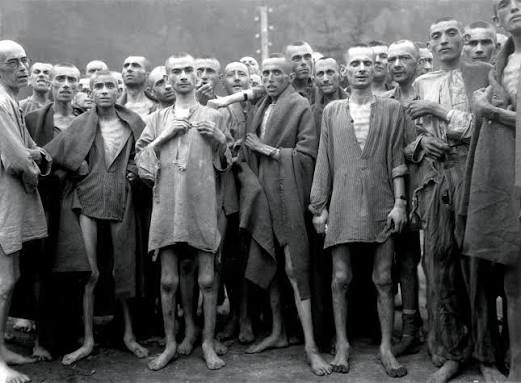
By HENRY SREBRNIK Genocide is a grave and exceptional violation of international law, defined and prohibited by the Genocide Convention of 1948. But maybe Raphael Lemkin did us no favour in coining the word during the Holocaust. It is now used by antisemites against Israel.
Raphael Lemkin was a Polish-Jewish jurist who escaped from Europe when the Nazis occupied Poland. He moved to Washington, DC, in the summer of 1942, and went on to document Nazi atrocities in his 1944 book, Axis Rule in Occupied Europe. In this text, he introduced the word “genocide,” the destruction of a nation or of an ethnic group. This new word is made from the ancient Greek word genos (race, ethnicity or tribe) and the Latin cide (killing).
But it’s not that cut and dried. Even before the antisemites accused Israel of genocide in Gaza, as a way of ridding themselves of any residual guilt about the destruction of European Jewry, the word had become little more than a term used by states and “human rights” groups who for one reason or another want to punish their adversaries.
Most of the time they really are talking about “ethnic cleansing,” pogroms, massacres and war crimes. By such criteria, every participant in World War II committed “genocide.” The mass killings of civilians in Hiroshima and Dresden in 1945 would today qualify. But these were acts against even far worse perpetrators of what we now call genocide, designed to speedily end the war.
What about the American war in Vietnam, and of course the almost numberless conflicts across Africa? The wars that dismembered Yugoslavia involved terrible massacres, particularly in Bosnia-Herzegovina and Kosovo, but did they really meet the criterion for genocide? The numbers killed needn’t be huge. About 8,000 Bosniak Muslims were murdered in Srebrenica by Bosnian Serb militias in 1995 during the Bosnian war. In the Western Hemisphere it would — and lately does — refer to the cultural and also physical extinction of pre-contact peoples from the Arctic down to Patagonia.
Are ideological attempts to kill groups of identifiable people within a state — the Holodomor in Ukraine, but also elsewhere in Stalin’s USSR — genocide? What about the Khmer Rouge in Cambodia? Should we call this an “auto-genocide,” since it was perpetrated by the nation’s own mad Maoist regime? Was China’s Cultural Revolution a genocide? Millions probably died. Rwanda is an interesting case — obviously a mass murder by one class-cum-ethnic group against another, a giant pogrom involving intertwined peoples, but where the victims have now turned the tables.
Actually, there have been very few ideologically intentional attempts to destroy a powerless and helpless people, in whole or in part. Only a few qualify by that definition, the Holocaust being an obvious one, as well as the Turkish mass murders of Armenians in World War I. The allegations that Israel committed this crime do not meet the established definition and standards of genocide, are unsupported by established facts, nor do they stand up to common sense scrutiny.
A finding of genocide requires evidence of acts that are intended to destroy a national, ethnic, racial, or religious group, in whole or in part. Israel has neither intended to, nor destroyed, Palestinians as a group in Gaza. Israel’s accusers allege genocide mostly because of the supposed number of civilians killed in Gaza. Such claims are rife with flaws. Genocide is not a quantitative crime; there is no specific number of civilian casualties that constitutes genocide.
Israel set a high bar for how to conduct urban warfare against an enemy who will stop at nothing, including the death of its own civilians. What kind of genocide is it when the population of Gaza is larger today than it was three years ago? And how could it be that Israel is trying to kill innocents when the ratio of civilian-to-combatant casualties is lower than that of other urban wars fought in even less-difficult conditions?
Dave Rich, an Associate Research Fellow at the Pears Institute for the Study of Anti-Semitism, writes extensively about the intersection of anti-Israel activism, far-left politics, and modern antisemitism. He observes that people respond to the genocide charge through facts and data: Israel’s supporters take the charge of genocide on its face, as an evidence-based allegation of a crime, and try to construct the case for the defence. But there is no defence, because the charge is not made on that basis, or for that purpose, he states.
The term “genocide,” he notes in “From Be’eri to Bondi: Global Antisemitism After October 7, published in Fathom, October 2026, has shed its legal meaning and become a political label, whose antithesis is “resistance.” These two terms represent two states of being: in a colonial setting, either you are engaging in genocide or you are resisting it. There is no middle ground. “Israel is condemned as genocidal, not by observation, but through logical deduction: Israel is colonial, therefore by definition it is genocidal. It cannot be otherwise. And Gaza represents resistance against the entire Western colonial and capitalist power structure.”
Maia Zelkha, editor-in-chief of Yad Mizrah, a Sephardi and Mizrahi cultural magazine, also contends that the left employs the word “genocide” as an ideological weapon. “Before Israel had even launched its ground invasion of Gaza, and before there was any evidentiary record of Israel’s military campaign,” she writes, in her article “Genocide and Its Jurors,” in Quillette, Sept. 24, 2026, many leftist groups “were already describing Israel’s response as genocide.”
On Oct. 8, just a day after Hamas’s massacre and kidnappings, thousands of demonstrators gathered in New York’s Times Square in an “All Out for Palestine” rally to support “Palestinian resistance.” Within days, other organizations were issuing statements describing Israel’s unfolding military response as genocide, situated within a pre-existing theory of Israel as a colonial project that had produced genocidal dehumanisation. Prominent academics, human-rights organisations, activists, journalists, and public intellectuals described Israel’s conduct as genocidal.
Although the conviction that Israel is committing genocide against the Palestinians is not new, it has garnered ever more strength since the beginning of this war. In March 2024, the UN special rapporteur on the Palestinian territories, Francesca Albanese, published a report alleging that the Israeli war in Gaza constituted a genocide. In December of the same year, both Amnesty International and Human Rights Watch did the same. Then in July 2025 came both Physicians for Human Rights and B’Tselem, followed almost immediately by the International Association of Genocide Scholars. A resolution from the latter organization requires a two-thirds vote of its members, academics in the field of genocide studies, to pass. One would be hard-pressed to find a more reputable source for the libel.
On Sept. 16, 2025, a UN Commission of Inquiry concluded that Israel was committing genocide in Gaza; other prominent left-wing organisations and scholars have reached the same conclusion. And finally, on Oct. 9, the Norwegian Nobel Committee announced that it awarded the Nobel Peace Prize for 2026 to South African judge Navanethem “Navi” Pillay, who led the 2025 UN commission that found Israel guilty of genocide against the Palestinians while completely ignoring many of the world’s worst human rights abusers, including, of course, Hamas. Pillay’s commission found that Hamas and other Palestinian armed groups committed war crimes. Yet it accused Israel of genocide. This is a staggering moral inversion. And now the award of the Nobel; this appears to be the greatest possible legitimization of the now-established consensus about Israel’s war in Gaza. The icing on the cake!
But remember this: When a jihadist terrorist organization like Hamas applauds a Nobel Peace Prize, the moral judgment of the Nobel Peace Prize Committee should rightly be called into question.
Henry Srebrnik is a professor emeritus of political science at the University of Prince Edward Island.
Features
Launch Black Friday Promo Spots Fast with an AI Video Generator

Black Friday campaigns often require rapid decision-making, consistent messaging, and promotional materials on multiple digital channels. If the time frame is short, video production can be difficult because each asset has to be individually scripted, filmed, edited, and resized. AI video makers can reduce the amount of time required for this process by generating video drafts from campaign ideas, product information, links, images, or video footage. Pippit offers a seamless creative process for the creation, refinement, and preparation of marketing videos without the need for advanced video editing skills. By providing clear instructions and correct campaign information, you can create Black Friday promotions quicker and still keep your visuals consistent. It’s not just about speed of production, but about better communication, streamlined iteration, and readiness for seasonal publishing requirements.
Why Black Friday Promo Videos Need a Faster Production Workflow

Black Friday marketing campaigns can be done in very short timeframes, which is why efficiency in production is particularly crucial. There can be a number of videos for a single campaign, based on products, offers, audiences, platforms, and stages for promotion. Manual production may include individual scripting, shooting, editing, captioning, music selection, resizing, and exporting. Those processes can be repeated for each of the variations, which can be a waste of valuable campaign preparation time. Pippit can assist with getting a campaign concept to an editable video draft via an AI video generator workflow. Creative inputs can be text, links, files, images, videos, or other media. Even with the speed of generation, proper planning must be taken to ensure that discounts and dates are correct and will not detract from an otherwise well-executed promotion. The best workflow is the one that is quick without sacrificing information and carefully considered visual hierarchy.
Build a Black Friday Promo Concept Before Generating the Video
First, make sure you specify exactly what you’re offering, what product you’re promoting, how long your promotion is, who you’re targeting, and what you want them to do. Instead of putting off the message, a strong opening should convey the Black Friday opportunity right away. Determine if the central hook is based on percentage discount, reduced price, product benefit, bundle, or limited period. Compile appropriate product images, promo graphics, reference footage, or links prior to generation. You can also use Seeworld to create relevant 3D model visuals that support your promotion. Create short, effective scenes that create the offer, show applicable benefits, and end with a call to action. Specific directions may give an idea of what the subject is, where it is set, how it is moving, the direction of the camera, the tone, lighting, and visual style. Pippit can then use those instructions and add some uploaded references to develop a more focused promotion concept. Ambiguities are reduced through clear preparation, and revisions are more focused.

Steps to Launch Black Friday Promo Spots Fast with an AI Video Generator
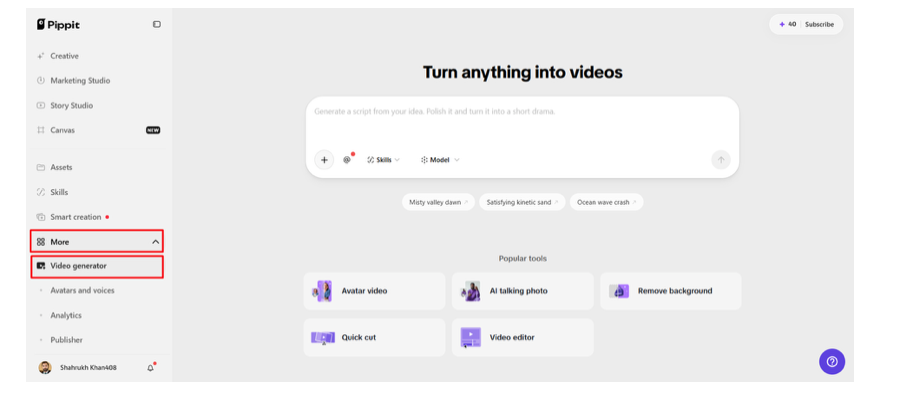
Step 1: Set Up Your Black Friday Workspace
• Sign in to Pippit using Google or social media before creating your Black Friday campaign.
• Open the “Video generator” from the left menu under the “More” tab to begin.
Step 2: Build Your Black Friday Promo
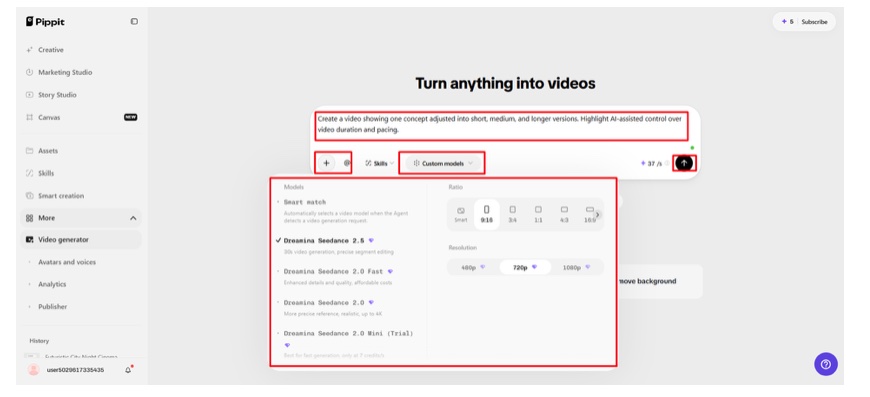
• Select Dreamina Seedance 2.5, Dreamina Seedance 2.0, or Dreamina Seedance 2.0 Fast.
• Choose Dreamina Seedance 2.0 Mini, Dreamina Seedance 1.0, or “Auto Route”for value.
• Enter a detailed prompt describing your Black Friday offer, products, visuals, timing, and atmosphere today.
• Click “+” to upload reference images or videos from your device, phone, Dropbox, or a link.
• Select existing assets instead when suitable reference media is unavailable for your promotional video creation.
• Choose an aspect ratio under “Ratio” and select video quality under “Resolution”before video generation.
• Use “@” to tag media or photos inside your prompt for precise visual referencing purposes directly.
• Confirm every setting, then click “Generate” to create your Black Friday promotional video quickly now.
Step 3: Polish and Publish Your Offer
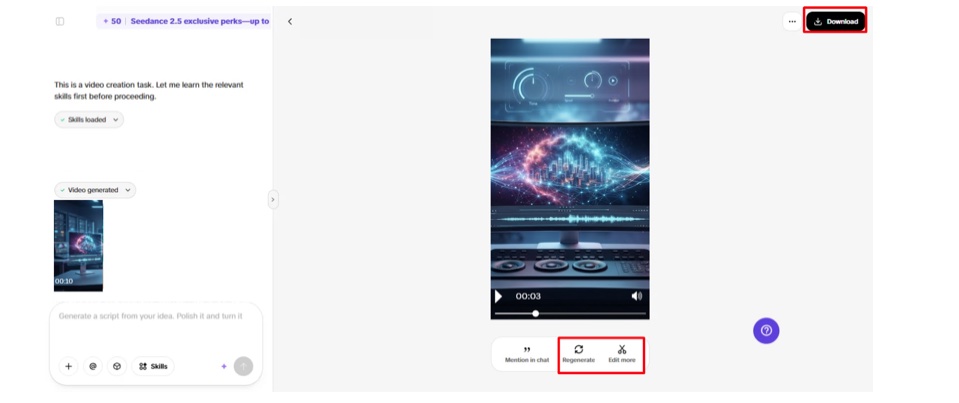
• Preview the generated video and adjust details
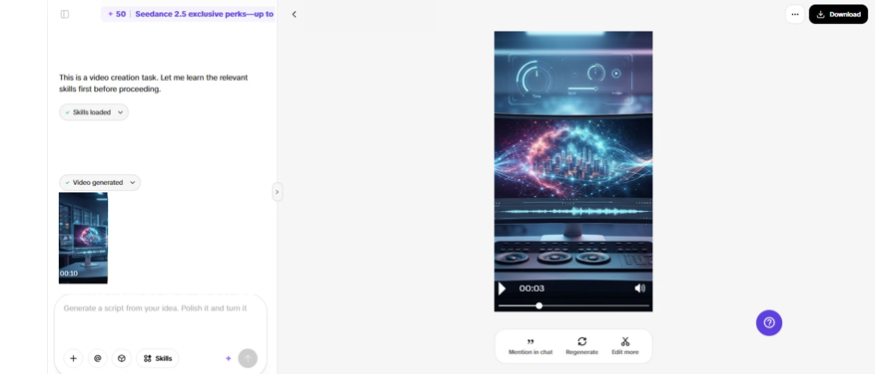
• Click “Regenerate” when results need further changes.
• Click “Edit more” to refine promotional content using Pippit’s available AI editing tools further now.
• Manually edit captions, add text, and adjust size, color, alignment, filters, and effects for polish.
• Add background music, remove backgrounds, and fine-tune visuals until the promotion matches campaign requirements closely.
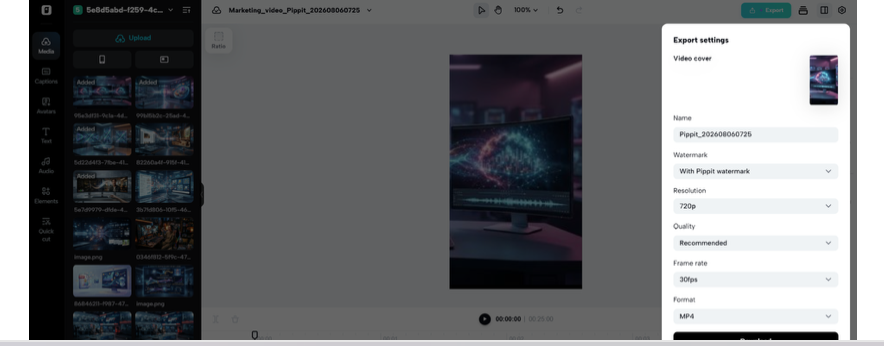
• Click “Download” to export the completed Black Friday video directly to your local device now.
• Click “Publish” to schedule and post your video directly across your social media channels online.
Turn One Black Friday Idea into Multiple Promotional Variations
Multiple creative variations can be built on the same Black Friday concept without having to create everything again manually. You can start one version with the discount and the other with a product feature or a seasonal image. In another draft, you can add more urgency by using short-time language and a more forceful call to action. Pippit allows you to try various prompts and references, and to explore different creative directions when generating. Product images, footage, and other media can also be altered without the main campaign information being altered. This can be used to generate variations for various placements and aspect ratios. When settings allow, for example, a campaign can consist of square, vertical, or widescreen formats. Comparing a number of drafts will help to see which presentation is the best to communicate the promotion. Ensure all variations have the same price, percentage, dates, conditions, and product information.
Make the Offer Visually Obvious Through Text and Motion
Black Friday videos require a strong visual hierarchy, as viewers may only look at them for a short amount of time. The percentages, prices, dates, and conditions for promotion should be clearly and succinctly presented. Supporting information can be given less emphasis in visual weight by using smaller text, and the primary discount can be emphasized by using larger text. Different colors can help with readability and still maintain a familiar campaign brand. Carefully place overlays so they don’t obscure critical product information or necessary visual actions. Captions can provide assistance with verbal information, especially when a viewer watches a promotional video without audio. Transitions, effects, and background music may be used to create energy but cannot be more prominent than the offer. Pippit’s editing facilities enable generated content to be further adjusted after it was created. Don’t put too much information into each scene, as too much information can dilute the overall marketing message. Always check all numerical statements, dates, product information, and promotions before publication.
Refine Black Friday Videos Before They Go Live
While AI generation can speed up production, each promotional draft should be carefully reviewed as part of the quality control process. Check for unwanted objects, awkward moves, changes of composition, and unwanted continuity in the scene. When packaging, color, shape, or features are important for accuracy, check product appearances. Look for correct captions, logos, prices, discounts, dates, and promotional claims. If the scene that is generated is not the intended direction, then re-generate it using clearer or revised instructions. Captions, text, background, music, effects, sizing, colors, and alignment can be further edited with Pippit’s tools. Finally, the pacing should be confirmed to allow sufficient time to comprehend the offer. Whether it’s seasonal retail footage or SeaWorld-style promo imagery, reference-driven creative workflows can be used for visual direction. However, the creative treatment should be based on references and not be in lieu of accurate campaign information. Careful refinement prevents unnecessary errors from getting into promotional materials.
Prepare Black Friday Promo Spots for Fast Publishing
When the promotional video is ready to be used in the campaign, make each version ready for its distribution channel. Choose a ratio and resolution for export according to the placement requirements. Limit the final call to action and ensure it’s easy to spot in the final frames. Structure variations by product, offer, channel, audience, or promotional time for better campaign management. Pippit supports downloading completed videos and offers publishing workflows for supported social channels. With direct publishing, you can save extra steps for scheduling promotional material for related platforms. Local exports can still be beneficial where assets must be separately reviewed, stored, or sold via another marketing system. Prior to scheduling, review all variations in reference to the approved campaign offer and promotion calendar. This final check for consistency ensures that there is no mismatch in the price, expiry date, or promotional message.
Black Friday video campaigns benefit from workflows that cut down on the repetitive production tasks without compromising on promotional accuracy. Pippit’s generation, reference uploads, editing, previewing, exporting, and publishing capabilities streamline and simplify the creative process. Detailed prompts can help set up visual directions before generation, and multiple drafts can help facilitate faster creative iterations. Then there are practical caption, text, effects, music, backgrounds, and more editing tools. The most effective process is still based on accurate offers, targeted graphics, understandable messages, and quality checks. Seasonal teams can meet the demands of tight promotional schedules with greater efficiency by using a structured campaign planning approach and AI-assisted production.
