


Features
Jonah Nepon Memorial Fund honours memory of lost brother through ongoing contributions to education, the arts, handicapped children

By MYRON LOVE In his short life, Jonah Nepon was an inspiration to many. A young man with a passion for film and music, he worked to promote as yet little known musicians by arranging performances for them and providing a platform for them to showcase their artistry.
His family remembers him as a very special person with “an extraordinary presence that was gentle yet powerful, a strong empathy towards others and the best sense of humour.”
Nepon, one of nine siblings, growing up in the north end, was a graduate of the Jewish school system – Talmud Torah, I.L. Pertez School and Gray Academy (class of 2002). He was also a Camp Massad alumnus.
In 2011, he was diagnosed with a grade four glioblastoma brain tumour. Sadly, he passed away on March 3, 2013, at the young age of 29.
While some of his siblings over the years have worked to raise money for cancer research through, for example, CancerCare Manitoba’s annual Challenge for Life, in 2020, Adam Nepon decided to up the ante and honour his brother’s memory through the establishment of the Jonah Nepon Memorial Fund at the Jewish Foundation of Manitoba in support of music production/sound engineering education, and programming for children with brain development and physical disabilities.
“The initial goal was $10,000,” reports Adam. “The money was raised in just a few months and supporters continued to contribute.”
As a result, Adam notes, the decision was made to aim higher. The new target is $100,000. “With an endowment fund of $100,000, we can offer financial assistance to many more projects that would have been near and dear to Jonah,” he says. The first project to receive funding, Adam reports, was the provision of ongoing financial support for music production and sound engineering programming at Camp Massad.
“Our next beneficiary,” Nepon says, “will be Gray Academy. After Jonah was diagnosed, I planned a trip to Florida with him and received a call before leaving. The teachers and staff from Gray had heard about this and raised almost $400 for him to use on the trip. After Jonah died, the teachers at the school donated $400 in his memory. To show our appreciation, we will be giving the school $400 each year to help support a family with medical issues.
Nepon reports that the Jonah Nepon Fund currently stands at about $15,425.
“We are looking at the long term here,” he notes. “For my 40th birthday, for example, I asked that friends and family make donations to the fund in lieu of presents.
“We welcome donations for all Jonah’s and our friends.”
Readers who may want to support this worthy effort in memory of Jonah can go online at www.jewishfoundation.org/jonahneponfund.
“This fund was started to show the appreciation our family has for the Jewish Foundation, the community, and all the programming that supported us as children to chase our dreams,” Adam Nepon notes. “The fact that as it grows it will also support causes that were important to Jonah just makes it that much more special.”
And Jonah’s good friend, Sheldon Berney, observed that for Jonah, “the dance ended far too soon, but throughout his short dance he taught us the importance of following our dreams. He left us with lessons how to love, laugh, and most importantly, how to be kind”.
Features
Musings from Dizengoff Street – by Bruce Brown (updated August 14)


(August 14, 2026) Despite three years of varying degrees of warfare. Moody’s biannual report of the Israeli economy was quite positive. Basically, the report saw no pressures on Israel’s credit rating. While the macro data remains strong, Israel still faces a complex geopolitical situation further complicated by upcoming elections (we pondered about how crazy that is in an earlier muse). And Israeli’s inflation rate for the first half of 2026 fell to a historic five year low of 1.2% (vs Canada’s 2.6%). As for my own pocketbook. Haven’t had an infamous Israeli bank overdraft in years. So all is fine.
If that’s not enough economic voodoo talk for one musing. According to one famous barometer. Israel moved to second place in the Economist’s Big Mac Index. Introduced in 1986, this tasty indicator compares the purchasing power parity across countries by measuring the price of a McDonald’s Big Mac -which most can relate to- against the benchmark U.S. burger. So while a Big Mac in the U.S. costs $6.22. In Israel it costs $7.67, the second most expensive place to buy the hamburger in the world, Switzerland being the most pricey at a whopping (no reference to Wendy’s) $9.04. While the cheapest Big Mac can be enjoyed in Indonesia at only $2.38. Canada ranked 22nd of the fifty-four countries considered, at $5.85. Parity. Smarity. I’m going for my Big Mac fix. Just after I finish writing this muse….

(August 11, 2026) Bravo Boy George. We certainly will dance again! And what better way than with his new reggae tune. Now Boy George is dealing with a hostile backlash against his just stand for Israel. Having to withdraw from London’s East End production of Jesus Christ Superstar where he was going to play – guess it. King Herod. Never a big Culture Club fan, but I am anyway -as a sign of support- going to download his greatest hits to my Spotify library. And hoping to have a chance to buy a concert ticket should Boy George perform in Israel. Kind of reminds me of Bob Dylan’s 1983 song Neighborhood Bully. Also in defense of Israel. I’m going to download that song as well. Although don’t think he was hounded the way Boy George is now. Sign of the times I guess.
+++++
Coming clean. I sometimes find myself chanting, to no one in particular, that snappy little ditty ‘from the river to the sea, Palestine will be free.’ Now why can’t we come up with something as catchy. With such an impressive gene pool of great Jewish songwriters. George Gershwin. Irving Berlin. Burt Bacharach. Carole King. Neil Diamond. Leanard Choen. Paul Simon. Gene Simmons, Amy Winehouse. Bob Dylan. And yes, even the Buddhist Boy George. And still… gurnish! No wonder we’re losing the global PR battle

(August 8, 2026) Outside Basimta Café in Central Jerusalem. Love the red shirt against a tiny sea of black. Not sure I am shrugging because of the ultra-orthodox uproar over a Jerusalem café operating on Shabbat or the lack of an ultra-orthodox uproar over a Jerusalem café operating on Shabbat. For the last six weeks Israeli headlines shouted about the cafe chaos. With the ultra-religious blocking entrances and storming the café. While shouting ‘Shabbos! Shabbos!’ Upsetting the secular amongst us just wanting to enjoy our Saturday iced matchas. So the wife and I thought we would check it out. And. Yes. Buy something to support the business. Uproar. Not. Blocked entrances. Not. Storming the café. Not. Albeit there were police barriers separating the devout protesters from the coffee drinkers. The protesters being just a few dozen black clad, pious Jews. Mostly teenagers. And yes. Shouting ‘Shabbos! Shabbos!’ Certainly underwhelming in its reported mayhem. Reminds me of the famous saying misattributed to Mark Twain – “If you don’t read the newspaper, you’re uninformed. If you do, you’re misinformed.” But I did enjoy my iced matcha.

(August 6, 2026) Here we go again. Another round of forever negotiations. As someone who negotiates for a living. The way things are going in the straits. If I had to recommend a book on the subject to a new hire. Between The Art of the Deal, A Presidential Edition by Donald J. Trump or The Real Art of the Deal by the Mullahs of Iran with a special forward by the IRGC. Well. I would choose the latter.
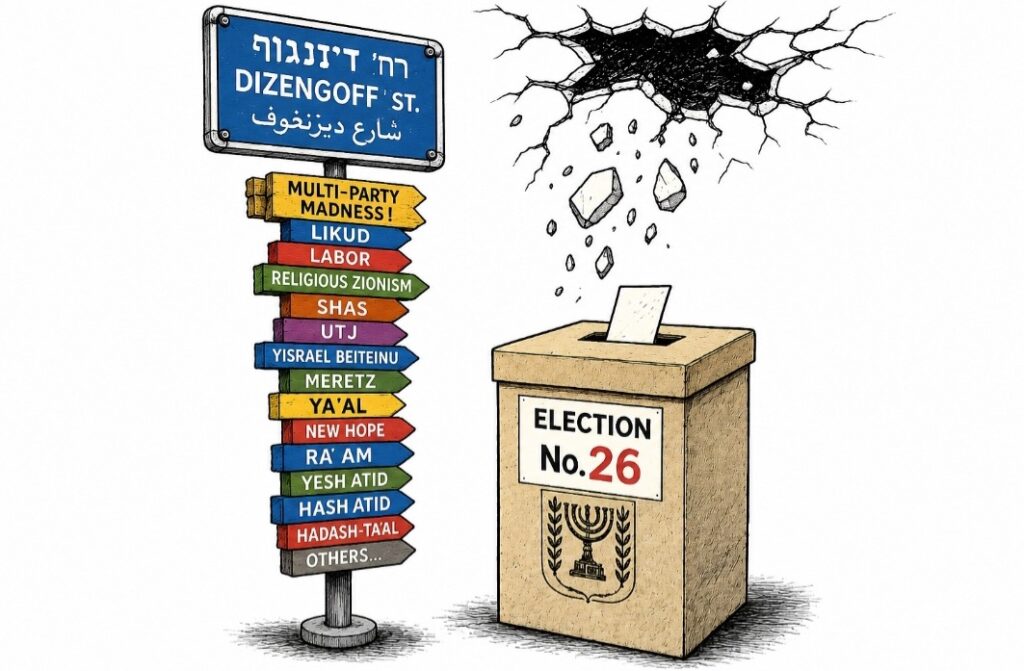
(August 3) Bravo Yoav Segalovitz, Liberal Yesh Atid MK and Monsour Abbas, United Arab Ra’am MK and party head. For breaking a glass ceiling where a Jewish lawmaker joins an Arab political party. No less a political earthquake in my little shtetl. Which can significantly impact coalition block arithmetic and posturing and strategy in the upcoming elections. Now Ra’am can be considered a legitimate ‘Zionist’ partner when forming coalition blocks and potentially pushing the ‘center left/right’ party over the 60 seat majority threshold. In our crazy parliamentary democracy defined by a multi-party (about fourteen!!), proportional representation system. To paraphrase Winston Churchill, Israel’s proportional representation model of governance is the best parliamentary democracy system except for all other forms of working democracies. Stay tuned for more amateurish political musings as we move towards Israel’s 26th national election – five of them held since 2019.

(August 1) Although both sides say they are open to diplomacy. Neither really trusts the other. And American military action, or its threat, continues. I read headlines in the middle of the night -it’s a nervous habit lately– that the Dynamic Duo of Trump and Netanyahu may again strike in unison. Possibly this weekend. Yikes! Prompting me, at 2:30 AM, to dash around the house stocking my safe room. Bottled water. Canned food. Medicines. Documents. The beat goes on….
If it’s crazy here. It’s insane in Italy. With a recent online ‘Jew Hunt’ in the Milan area. Before being removed, the digital forms urged reportings of Israelis and Italian Jews staying in local hotels. The infamous Global Sumud Movement -yes, the one coordinating ‘peace and humanitarian’ flotillas to Gaza- was somehow connected. Although they deny involvement?! This deranged decree was looking to identify Zionist tourism and Zionist neo-colonization in Italy. I’ll stick with stocking the saferoom.
Then there’s New York Mayor Mamdani, a Global Sumud Movement supporter, threatening to arrest Prime Minister Netanyahu if he comes to New York. But since discovered he has no legal right for such a grandstanding, antisemitic, anti-Israel, anti-Western, anti-democratic antic. Maybe Mandami should be arrested! Or at least impeached. For being a grandstanding, antisemitic, anti-Israel, anti-Western, anti-democratic mayor.
Here’s a post Bruce sent us Friday, July 31:
WARTIME MUSINGS
Should credible threats against FLOTUS and ‘FSOTUS’ (first son..) not be justification to attack first.
As for yesterday’s summit. Netanyahu really can’t win. Explainer. If Trump now attacks without victory its ’cause of Netanyahu. If Trump now attacks with victory its ’cause of Trump. And, in Israel, if Trump doesn’t attack -victory or not- Netanyahu failed in his eighth meeting with Trump. And if Trump does attack -victory or not- half the country will vilify Bibi anyway. Missing a permutation?
Ya. I know. Kinda’ need a definition of victory for that musing to work.
And here in my little shtetle. We go to sleep unsure if there will be a code red in the middle of the night. And if not. We wake up thinking it will be tonight. How do you define stress?

Seemed like an appropriate way to end this musing.
Bruce Brown is a former Winnipegger who made aliyah to Israel over 35 years ago. Bruce first began writing for us – in his own inimitable style, in 2012, during what was known as “Operation Pillar of Defense.” His occasional musings on aspects of life in Israel that were far from what you’d typically read in other reports from Israel were hugely popular – both in the print Jewish Post & News and on this website.
We’re now glad to report that Bruce is back writing for us – this time on a regular basis. We will post Bruce’s reports as they arrive – with the date of each post at the beginning of that post.
Here’s some information about Bruce – and awards he’s received for his writing:
Bruce Brown. Canadian born. Now living in Israel (for a long time). Bruce works in Israel’s hi-tech sector by day and, in spurts, is a somewhat inspired writer by night. He received the American Jewish Press Association’s award for writing excellence in 2019 and 2025. And wrote the 1998 satire, “An Israeli is….” Bruce’s musings are political, social, economic and personal. With lots of biting, contrarian, sardonic and irreverent insight.
Features
Alberta’s regulated online casino market hits one month: what changed for players

A month after private operators went live, Alberta has quietly become the country’s most closely watched gambling market. Here’s what the new rules mean for the people actually playing.
A year ago, playing at an online casino in Alberta meant using sites that operated in a legal grey zone, with no provincial oversight and little recourse if something went wrong. That ended on July 13, 2026, when the province’s regulated iGaming market officially launched, opening online casino and sportsbook play to licensed private operators for the first time. The market is overseen by Alberta Gaming, Liquor and Cannabis (AGLC) and run through a new Crown body, the Alberta iGaming Corporation.
Alberta is only the second province to open a competitive commercial market, following Ontario in April 2022. What set the launch apart was its scale on day one. Twenty-two operator sites went live at midnight, with more than 50 licensed by AGLC to follow. Brands plenty of Albertans already know, including DraftKings, FanDuel, Caesars and theScore Bet, now compete directly with the government’s own Play Alberta platform.
For players, the real change is less about new games and more about ground rules. Licensed sites must meet standards for identity verification, deposit and loss limits, data protection and dispute resolution. If a payout is disputed or an account frozen, there’s now a regulator behind it rather than an offshore support desk in another time zone.
That framework is also reshaping how sites compete. Speaking to Bookies.com, an independent authority on licensed online casinos in Alberta, one industry observer noted: “Twenty-two sites going live on the same day is unusual. It forces operators to compete on trust and payout speed from the first weekend, not just on marketing spend.”
That pressure shows up in the details players tend to overlook, like withdrawal times, the clarity of bonus terms, and how quickly identity checks clear before a first cash-out. In a crowded field, those are the things that decide whether someone stays with a site or moves on after a week.
The province has been candid about the point of all this. Officials say the regulated system is built to pull players away from unlicensed offshore sites, redirecting that activity to operators that answer to a regulator and pay into provincial revenue. Service Alberta minister Dale Nally, who oversees the AGLC, has framed boxing out that grey market as the core goal.
We’ll keep following how this develops across the country in our Local and Canadian News coverage, where provincial policy shifts like this one tend to land first.
One month in, the market is still finding its shape, and the operator lineup will keep changing as more of the 50-plus licensees come online. But the headline for players is simple. Albertans now have a legal, regulated way to play, with responsible-gambling tools and the recourse that a licensed market is supposed to guarantee. For a lot of people who were already online, that’s the part that actually changed.
Features
The Types Of Gaming That Are Popular Across North America
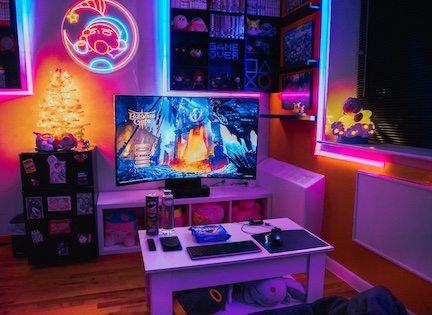
Gaming in North America covers almost every style imaginable. Consoles remain a huge part of the culture that changes all the time. Older gaming hobbies like board games still fill living rooms and hobby stores.
People can always find a way to play that suits their interests and preferences. That could be online or offline.
That variety is part of what makes the region so interesting from a gaming point of view. There is no single dominant style. A lot of people prefer quick mobile games that they can play on the go. There are also superfans that sink hundreds of hours into console adventures. It isn’t all about high tech; plenty still enjoy games that have been around for generations.
The common theme is choice. North American players now have more ways to play than ever before.
Classic Casino Games Have Found New Life Online
Casino games have been popular across North America for a long time. The way they are played has changed dramatically in recent decades and brought them to new audiences.
Traditional games such as blackjack and roulette are still easy to recognize. The rules remain familiar to a lot of the population. The technology surrounding them has moved forward at a breakneck speed.
Roulette shows this change. The experience once meant gathering around a physical wheel and watching the ball bounce between the numbered pockets. That same basic format now works online in several different ways.
Digital roulette recreates the wheel through software. Live dealer versions stream a real wheel from a studio using high-definition cameras. Players can follow the action on a laptop or smartphone without losing the simple appeal that made roulette popular in the first place. People who want to play roulette varieties online even have a lot of choice for how they do so.
Slot games have changed even more.
Modern online versions can include detailed animations and new mechanics that would be difficult to reproduce on an old mechanical machine. Newer styles such as crash games have also grown alongside more traditional casino titles.
Casino gaming has essentially become another branch of digital entertainment. People have so much choice that they may turn to ‘games of the week’ as recommendations for a new game to try out.
Please embed the link:
Board Games Are Still Going Strong
Board games remain extremely popular across North America. There are even festivals in the area celebrating the choice in board games.
Part of their appeal is social.
A board game creates a reason for people to gather around the same table for competition. They usually debate at least one rule before the night is over!
Classic games still have huge audiences. Chess and Monopoly are instantly familiar. The modern board game scene has become much broader.
Games such as Ticket to Ride and Wingspan helped introduce more people to strategy-heavy tabletop games without making them feel impossible to learn.
Hobby gaming has also become a culture of its own.
Dedicated stores host game nights and board game cafes have turned tabletop gaming into an evening out rather than something that only happens at home.
In an age of screens, cardboard is doing surprisingly well.
Console Gaming Remains A Giant
Console gaming is still one of the biggest parts of North American entertainment.
Living-room consoles have become far more than machines for playing one game at a time. They now act as entertainment hubs for multiplayer gaming and detailed worlds.
Sports games remain popular. Action games and open-world adventure games also draw huge numbers of players.
The appeal is easy to understand.
Console gaming offers impressive graphics and deep experiences without requiring the same level of setup that can come with a gaming PC.
Controllers have evolved too. They have added better feedback and more precise inputs. Online multiplayer has become standard and easier for most players.
PC Gaming Has Its Own Massive Audience
PC gaming occupies a slightly different space. It tends to attract players who like flexibility.
Hardware can be upgraded over time. Digital stores offer enormous libraries ranging from blockbuster releases to tiny experimental projects made by one person.
Strategy games and simulation titles have especially strong roots on PC.
MMORPGs also remain closely linked to the platform. Large communities spend years inside these imagined online worlds.
Competitive gaming has helped keep PC gaming at the center of esports too.
Genres such as tactical shooters and real-time strategy games continue to attract players who enjoy fast competition and highly skill-based play.
Social And Multiplayer Games Keep Growing
You might assume that the online world is isolating gamers. But it is actually fair to say that gaming has become much more social over the last decade in many ways.
People increasingly play with friends who may live hundreds or even thousands of miles away. Cross-platform technology has helped with being able to connect players reliably.
A group no longer always needs identical hardware to play the same title together. Console and PC communities can sometimes mix. Voice chat keeps everyone connected during a session.
The conversation happening during the game becomes just as important as the game itself.
There is no single type of gaming that defines North America. A serious mix is probably the clearest trend of all.
Gaming has stopped being tied to one device or even one kind of player. It now covers everything from a quick game on a smartphone to an all-night board game session or a huge online adventure with friends.
