


Features
Today’s “Anti-Zionist” Propaganda was Nurtured in the Soviet Union
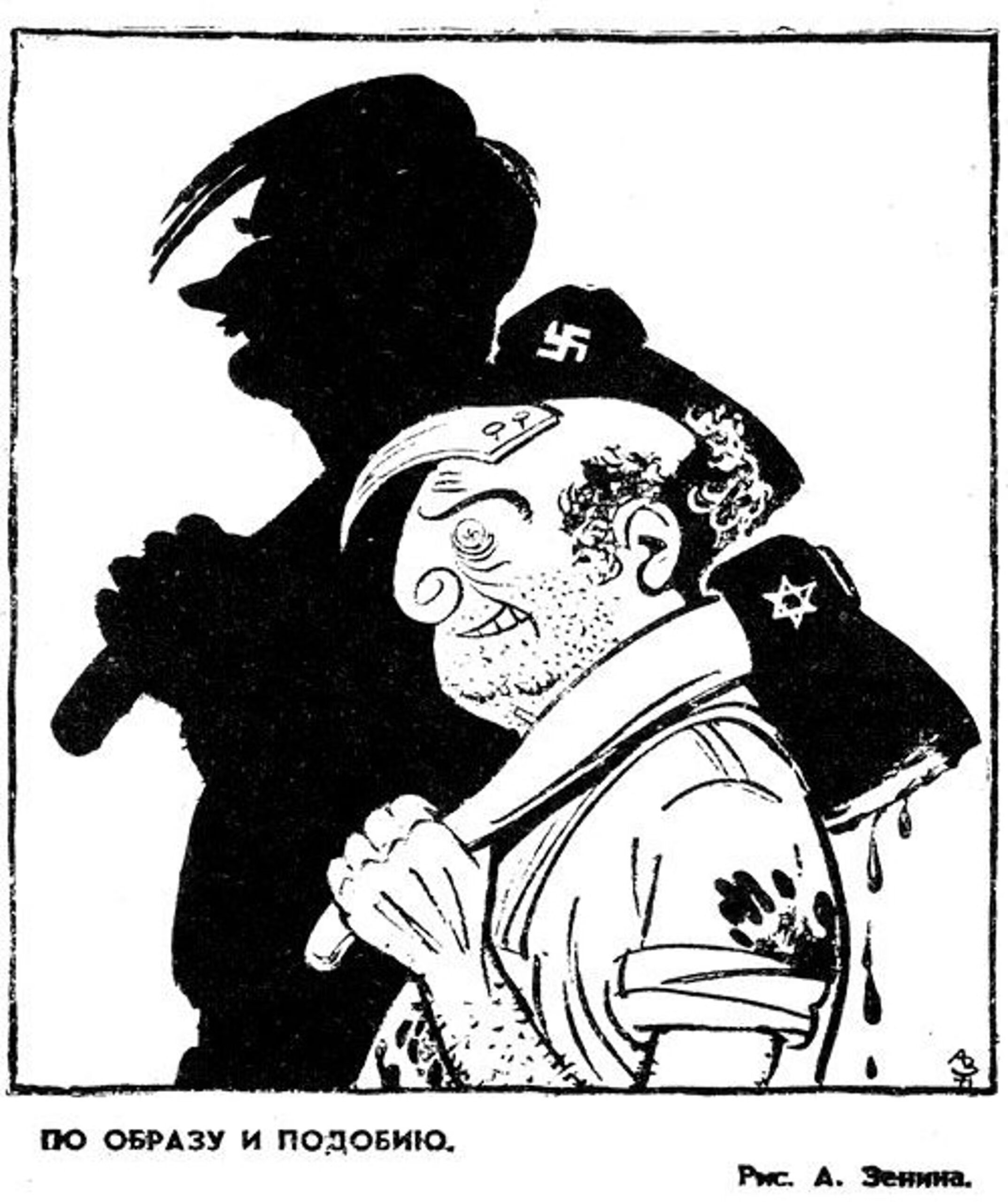
By HENRY SREBRNIK For centuries, Jews have been portrayed, by both religious and secular movements, as obstacles to universal order. Christian theology turned Judaism into the emblem of stubborn particularity. Modern ideologies secularized the script, making Jews stand for capitalism, communism, cosmopolitanism, or cultural decay. In the twentieth century, this logic reached its most lethal form in the fantasy of human renewal through the erasure of Jews, culminating in the Holocaust.
The twenty-first-century iteration recycles the same template in overlapping ways. Islamist movements merge “Jew,” “Zionist,” and “Israeli” into a demonic category whose elimination is a sacred duty. Parts of the Western left have reduced Israel to the very symbol of colonial domination.
What North American Jews are experiencing today, as the ideology of anti-Zionism spreads in left-of-centre spaces, looks eerily familiar to anyone who came of age in the 1970s Soviet Union. Just like antisemites battle against a fantasy of “the Jews” that exists in their own heads, the new anti-Zionists battle a “Zionism” that is conjured up by their own fevered imaginations.
Following the June 1967 war, with Israel’s victory over its Arab neighbours, who were intent on destroying the small Jewish state, anti-Zionism became a central tenet of Soviet propaganda, where “Zionism” was usually equated with self-conscious expressions of Jewishness. It was then that the antisemitic notion of Israel as an heir to Nazism and Fascism was popularized in the Soviet media.
It depicted Israel as the outpost of colonial oppression, Jews as betrayers of socialist internationalism. Soviet propagandists distorted the history of Zionism to underscore its supposedly inherent evil nature, ripping its founders and theorists out of historical context and, absurdly, presenting Zionists as the Jewish people’s greatest enemy. These “rootless cosmopolitans” were accused of corrupting socialism from within. By redefining Jews as racists, Zionism as colonialism, the Soviets handed progressives a vocabulary of virtue through which to disguise an old hatred.
In political cartoons and Soviet propaganda art, swastikas were routinely intertwined with Stars of David, and the Israeli military portrayed as resembling Nazi — and specifically SS — troops. If there is a Soviet propaganda subtext that highlights its ideological and propagandistic roots, it would be “Fascism Under a Blue Star,” the 1971 book by Evgeny Evseev, who had served as an Arabic interpreter for both Soviet leaders Nikita Khrushchev and Leonid Brezhnev. By the late 1970s, he had became one of the principal brains of the ultranationalist antisemitic movement in the USSR, know as the “Russian Party.”
Evseev’s book carried a subtitle redolent of Marxist clichés: “Truth about contemporary Zionism: Its ideology, practice, and the organizational system of major Jewish bourgeoisie.” On the illustration printed next to the title page, there was a black spider with both a swastika and a Star of David on top of its body; the spider’s web was spread over the West, from the United States to Britain, France and Italy.
Perhaps the vilest of all these tracts was “Caution: Zionism! Essays on the Ideology, Organisation and Practice of Zionism,” a 1970 attack by Yuri Ivanov. (By the way, it was republished by a left-wing group, The November 8th Publishing House, in Toronto in 2024.) The book’s singular achievement was to fit classic antisemitic conspiracy theory into the only philosophical framework permitted in the USSR — the Marxist-Leninist one — and rewrite it as anti-Zionist critique.
“Ivanov managed to supply a strong theoretical foundation for openly criticizing Zionism with the help of Marx’s and Lenin’s works, which no one could argue against,” Vladimir Bolshakov, another prominent “Zionologist,” recalled in his memoirs. I remember coming across it in the late 1970s while writing my PhD dissertation on Jews and Communists, and was shocked by its vituperative language and tone, not to mention falsehoods, worthy of the worst Nazi propaganda.
All of this bore terrible political fruit. On November 10, 1975, the United Nations passed General Assembly Resolution 3379, equating Zionism with racism. It remains the foundation stone of antisemitic anti-Zionism. It cast Israel, the collective Jew, as committing today’s ultimate crime. Despite being mass-murdered by Nazi racists, Jews became racists. And despite enduring history’s largest genocide, Jews are now accused of “genocide.”
Communist propagandists enjoyed manipulating words to trigger “Pavlovian” responses, the Princeton Kremlinologist Robert Tucker observed; their “ultimate weapon of political control would be the dictionary.”
Much has been written of late about the deep Soviet roots of today’s virulent anti-Zionism in the West. Some thirty-five years after the fall of the Soviet empire, the Soviet corpse continues to emit its infectious gases and poisons people’s minds and imaginations. After 7 October, parts of the Western Left responded not with horror but with slogans lifted from Soviet propaganda: Israel as colonial, Zionism as apartheid, Jews as global oppressors.
Today’s anti-Zionism is not actually concerned with the relationship Jews have with Israel. It is a project centered on producing villains. In this, it follows its predecessors: antisemitism and anti-Judaism. Antisemites were never concerned with the authenticity of Jewish identity, practice, or behaviour; they sought to construct “the Jew” as a monster.
Anti-Zionism repeats this mechanism, simply substituting “the Zionist” for “the Jew,” while inheriting the same foundational hatred. Failing to recognize that anti-Zionism, whose Soviet and Nazi genealogy reveals that it has nothing to do with Jews and their right to self-determination, is fundamentally a project of constructing fiends.
Antisemitism functions not merely as a prejudice but as a moral language, a grammar that shapes how societies explain disorder and assign blame. It provides simplicity where reality is complex and coherence where the world feels incoherent. For such people, it becomes a battle against a uniquely devious and implacable foe – something that cannot be resolved by elections or arguments, but only by confrontation. The logic points beyond persuasion to elimination.
The only way to be anti-Zionist without being an antisemite is to reject the legitimacy of all nation-states equally. The loudest supporters of Palestinian statehood are not doing that. No one should mistake it, or be taken in by those espousing it, for what it is. We should call it, along with antisemitism and anti-Judaism, as “Jew-hatred.” It is nothing more – or less.
Henry Srebrnik is a professor of political science at the University of Prince Edward Island.
Features
Mobile Casino Trends in 2026: Usage Statistics – What Casino Online Westace Says
Mobile technologies simplify everyday life. They are used for payments, regular conversations, photos, and even gambling. Sites like casino online Westace leverage modern trends and do everything possible to maximize engagement. Adapting familiar gambling games to smartphones makes them more convenient. Visitors can launch slot machines or other entertainment with just a few taps on the screen. Quick rounds let you instantly see the results and choose a different game type. Interactivity is the main approach to development in 2026.
Usage Statistics in 2026
Online casinos are using mobile development technologies to adapt gambling games to smartphones and tablets. Now, almost every user has the opportunity to launch games to test their features in a convenient format. Sites like casino online Westace are not far behind and adapt to various screen layouts. The latest industry news also indicates significant developments:
More than 75% of players use online casino services via mobile devices. Statistics show significant steady growth compared to the figure of 65% in 2023.
It is predicted that revenue from mobile casinos in 2026 will exceed the mark of $ 60 billion. The figure is two-thirds of the market. Thus, positive trends can be identified among gambling software developers.
The younger demographic aged 18 to 35 years old is the most active user of mobile devices. They have twice the level of involvement compared to other categories.
80% of new casino accounts were registered through mobile apps or mobile-optimized websites. This indicates their convenience and widespread use.
Mobile development is a priority for online casinos. Operators work closely with developers to adapt all games to the relevant requirements.
Features of Mobile Casino Growth
Mobile versions of sites like casino online Westace are dominating in 2026 for a reason. Players can enjoy games with real dealers even from small screens. At the same time, the broadcast quality remains at a high level without delays.
All games are designed for touch use. Players can easily use portrait mode and adaptive layouts to launch a comfortable gameplay format. Biometric login and two-factor authentication are essential tools that protect transactions and accounts from unauthorized access.
Mobile gaming encourages more frequent play in small sessions. For example, a player can play one or two games of baccarat, and then later return to play slot machines. All progress is saved on any device. Yes, a player can start playing on a smartphone, save the results, and return via a browser on a computer.
All Interesting Facts to Know
Recently, sites like casino online Westace have been paying more attention to mobility. For example, seasonal slots are launched first through mobile versions, and then move to desktop. Regulators have also introduced mandatory responsible elements for smartphone users for greater control. Mobile players spend 20% more time playing with real dealers. This emphasizes the close attention to interactive formats and communication.
Ultimately, mobile casino versions occupy their own niche in the industry. Most players use smartphones to play on the go and enjoy fast games. Developers adapt to these requirements and improve services, adding relevant options to games.
Features
Important Keno Rules: Explained by Casino Online Glorion
Keno is a lottery game that originated in China 2,000 years ago. At that time, it was called baige piao, which translates to “white pigeon ticket” in English. Keno rules on sites like Glorion Casino are similar to those of games like lotto. The game involves choosing numbers in the hopes that they will match randomly selected values. In this article, we will discuss the important rules of online keno.
Understanding Keno Rules at Online Casinos
Keno is a game of chance in which players select 1 to 10 numbers from a table of 1 to 80, similar to bingo. After this, the numbers are drawn. The player’s payout depends on how many figures they match.
In classic keno, the drawing is done using a ball machine. The same equipment is used in bingo and lotteries. The host randomly draws 20 numbered balls. Players win if at least one of their chosen numbers matches the dealer’s draw. The more matching numbers, the larger the payout.
Online keno is played using a random number generator (RNG). Keno payouts on sites like Casino Online Glorionare similar to those in the classic game. The differences are due to the drawing procedure and the properties of different versions.
After users select their 20 numbers, the gambling software publishes its 20 figures, which determine the winner. Payout amounts vary across platforms, so users should check them before playing.
Basic Keno Stages in Online Casinos
Users planning to play keno at sites like Casino Online Glorion should be familiar with the gameplay process. Typically, it includes the following stages.
- Select a keno card. The ticket displays numbers from 1 to 80.
- Choose your numbers. In different versions, users select 10, 15, or 20 numbers before each draw. Each number is called a ‘keno spot.’ You can set the same numbers for multiple draws.
- Check the payout table. In the online version of the game, the table appears after selecting the numbers. It displays information about the payout amount if you guess correctly. The more numbers you match, the larger the payout.
- Calculate your bet. Determine how much you want to bet on each draw. Remember that the bet size affects the final payout.
- Start the game. All the drawn numbers will appear somewhere on the screen. Users can also view the “cold” and “hot” keno numbers. Hot numbers have been drawn recently, while cold ones haven’t won for a long time.
- Match the numbers. Experienced players use the term “catching a spot” when their chosen number is drawn. The number of spots you catch affects your payout.
Keno at websites like Casino Online Glorion offers engaging gameplay. Players can get generous prizes. They should learn the rules, odds, and prize structures to make rational decisions and boost their chances of winning. Chase the thrill, but play it smart.
Features
Common Online Casino Mistakes To Avoid

Online casino games can be a brilliant way to bring excitement to life in your spare time. These games have become hugely popular in recent years, but you will find that people often make the same mistakes. These mistakes can lead to financial losses, cybercrime, and an inferior experience, so it is important to be aware of what these mistakes are so that they can be avoided. This post will outline a few of the most common mistakes people make when playing online casino games and explain how to avoid falling into the same trap. Interested? Keep reading to find out more.
Ignoring Terms & Conditions
One of the biggest mistakes players make with online casino games is ignoring the terms and conditions. You should always take the time to read through these, paying close attention to things like the conditions of bonuses and restrictions in withdrawals. This will help you avoid any nasty surprises when playing games.
Not Researching Casinos
Another common mistake people make is not researching casinos. There are endless options for online casinos, but not all are equal, and there are even many that are unlicensed. Therefore, you need to research casinos and find one that is fully licensed and has positive reviews. The best casinos will have a massive selection of games to choose from, including blackjack online. A wide selection of games means it is hard to get bored, and you can always find something to play.
If you’re a high roller you might want to look at Mejores Casinos Online para High Rollers
Chasing Losses
One of the most dangerous mistakes people make is chasing losses. This is where players will attempt to win back the money they have lost, which often means betting larger sums. This is a dangerous tactic and a slippery slope, so it is important to be aware of it and take measures to protect against it. The best way to avoid chasing losses is to set a budget before each session – if you spend that amount, you need to be able to walk away.
Not Understanding Games
It is always important to have a strong understanding of the game that you are playing. This will boost your chances of winning and your gaming experience. Therefore, you should always read the instructions when playing a game for the first time. For strategic games like poker, there is a lot of information online that will help you get to grips with the basics and learn strategies to use.
Weak Passwords
Cybersecurity needs to be a top priority when it comes to online casino games. The top casinos will have strong cybersecurity measures in place, but you also have a role to play. It is important to use strong passwords and multi-factor authentication to prevent hackers. It is also smart to avoid having large sums held in your online account in case someone hacks your account.
These are the most common mistakes that you will want to avoid when it comes to online casino games. By avoiding these mistakes, you can improve your experience and enjoy the excitement that these games can bring.