


Uncategorized
DL removes ‘Protect Civil Rights’ from website as it narrows its mission amid right-wing attacks
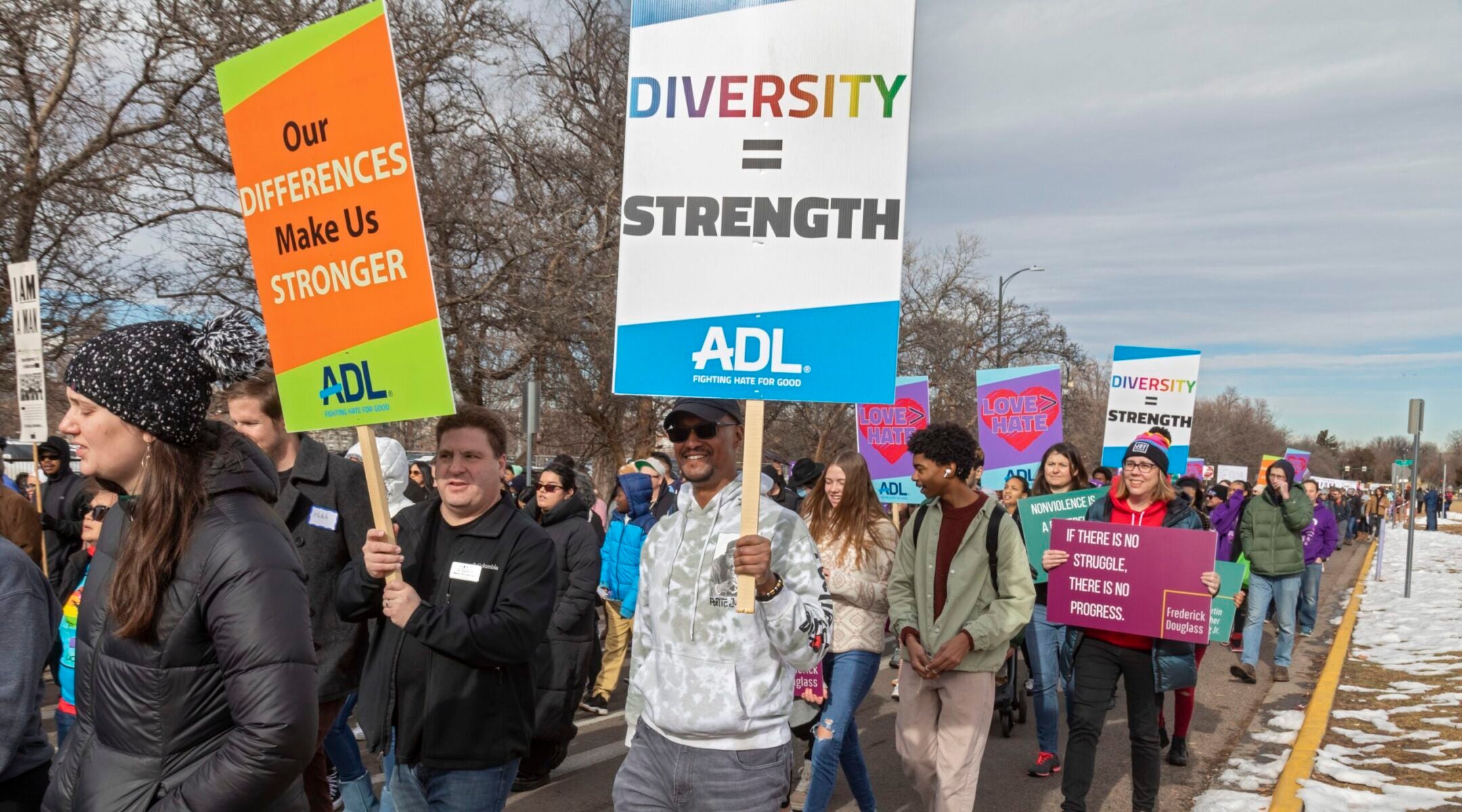
The Anti-Defamation League has removed entirely from the “What We Do” page of its website a section called “Protect Civil Rights.”
The removal eliminated a passage that read, “Our founders established ADL with the clear understanding that the fight against any one form of prejudice or hate cannot succeed without countering hate of all forms.”
The change to the website, which has not been previously reported, was made amid other website edits following a flurry of right-wing criticism and an unprecedented attack on the organization earlier this month by FBI Director Kash Patel.
On Oct. 1, just hours before Jews on the East Coast would start fasting on Yom Kippur, the holiest day of the Jewish year, President Donald Trump’s handpicked top cop said the law enforcement agency was cutting ties with the ADL. The Jewish group was “functioning like a terrorist organization” because of how it tracks and reports extremism on the right, Patel told Fox News.
Patel’s announcement came days after Elon Musk mischaracterized a section of the ADL website to accuse the group of anti-Christian hatred. His post on X triggered a pile-on of condemnation. The ADL removed the section from its website as part of a purge of more than 1,000 other entries making up its Glossary of Extremism and Hate.
An ADL spokesperson told the Jewish Telegraphic Agency that the passage committing the ADL to the protection of civil rights was removed as part of an “ongoing review” of its website and its contents.
“This month, ADL has conducted deferred maintenance on the website, which had grown in recent years to more than 25,000 pieces of content — some even dating back to more than 30 years ago and clearly no longer relevant or reflective of ADL’s work today,” the spokesperson said.
A recent article by ADL CEO Jonathan Greenblatt makes clear how the ADL’s focus has changed: He outlined a withdrawal from the group’s commitment to the protection of all vulnerable minorities in favor of a mission centered more exclusively on anti-Jewish hatred.
The ADL is not commenting on its relationship with the FBI or Patel’s attack beyond the statement praising the agency it issued in the immediate aftermath.
“ADL has deep respect for the Federal Bureau of Investigation and law enforcement officers at all levels across the country who work tirelessly every single day to protect all Americans regardless of their ancestry, religion, ethnicity, faith, political affiliation or any other point of difference,” the statement said.
It’s still not yet clear what impact Patel’s announcement will have — in part because the ADL didn’t receive an official notice that might have offered details.
“ADL has not yet received any formal communication from the Administration, and we are working to learn more,” Greenblatt said in a note to Jewish groups that arrived in inboxes just hours after Fox News published its exclusive interview with Patel and minutes before Yom Kippur started.
A longstanding partnership that provided FBI agents training on topics such as hate crimes, violent extremism and antisemitism through a workshop at the U.S. Holocaust Memorial Museum is thought to be terminated.
Meanwhile, however, the ADL’s extremism trackers continue to exchange tips with the FBI, JTA has learned.
The ADL’s initial reaction may have been shaped by the shock of Patel’s decision, but the group’s ongoing silence on the issue appears to be part of a strategy.
The group never sought to rally a communal outcry from Jewish organizations. In fact, it did the opposite, pleading behind the scenes for them to shut up, an extraordinary move for an organization — and a community — that has in the post World War II era prided itself in speaking out against injustice.
“We’re really following ADL’s lead here,” said a senior official of a major Jewish group that has refrained from commenting on the FBI letter, and who asked for anonymity to speak candidly. “They’re determining how to navigate it in the way that makes sense for them.”
The muted reaction by Jewish legacy organizations can be read, their critics say, as acquiescence to an administration accused of leveraging government power to silence and destroy civil society critics.
Another factor is a community profoundly roiled by the hostility to Israel and Jewish attachment to the country that has emerged among the left and Democrats, the community of American thought where most Jews have thrived for more than a century.
But not everyone is willing to go along with the approach.
Amy Spitalnick, the CEO of the Jewish Council for Public Affairs, said Patel’s attack was evidence that it was futile to hope that the trumpeting of common ground with the Trump administration, as the ADL and others have done on Israel policy, would lead to comity.
“This is a reminder that they’re coming for everyone that doesn’t 100% align with their agenda and their approach,” Spitalnick said. “This is about a far more systemic abuse and weaponization of the federal government to advance a political agenda. And that should frighten all of us.”
Appeals by Spitalnick and others for a united Jewish front against the Trump administration’s assault on civil liberties have not just fallen on deaf ears among legacy Jewish groups, they have encountered active resistance. The Jewish Federations of North America, the goliath umbrella body for 150 or so local federations, in April urged constituent groups not to sign onto a JCPA-led statement decrying the Trump crackdown on speech under the pretext of stemming antisemitism.
Six months later, Jewish officials are wondering whether traditional Jewish advocacy on issues such as civil rights will survive the onslaught.
Officials are closely reading a Sept. 25 National Security Presidential Memorandum, purportedly spurred by the killing of Charlie Kirk, that sets up a task force that includes nonprofits among the entities it will investigate for “support” of “political violence, terrorism, or conspiracy against rights; or the violent deprivation of any citizen’s rights.” It also identifies “common threads” of such movements as including “anti-Christianity” bias or “hostility toward those who hold traditional American views on family, religion, and morality.”
These catchall phrases are so broad that they may place numerous NGOs in the government’s crosshairs, said Halie Soifer, the CEO of the Jewish Democratic Council of America.
“When the White House erroneously accuses the ADL of ‘anti-Christian’ bias and ‘functioning like a terrorist organization,’ it creates fear of who is next, and honestly, that fear is justified,” Soifer said. “It’s clear the Trump administration is aiming to expand the definition of terrorism, to weaponize it against Americans with whom they disagree.”
Close to 4,000 nonprofits, including dozens of liberal Jewish groups, signed an open letter last month expressing alarm at the presidential directive.
“This attack on nonprofits is not happening in a vacuum, but as a part of a wholesale offensive against organizations and individuals that advocate for ideas or serve communities that the president finds objectionable, and that seek to enforce the rule of law against the federal government,” said the letter.
Jonathan Jacoby, the president of the Nexus project, which seeks to combat antisemitism while mitigating its weaponization, said Trump had the Jewish community in his sights.
“The Trump administration’s actions are not just challenging liberals or progressives or Democrats, they’re challenging Jews to respond. They’re challenging every Jewish organization,” he said. “It’s a clear example of why every Jewish organization, or every organization that represents Jewish interests, should be calling this out loud and clear.”
One of the ironies of Patel’s attack is that it has brought out groups that have clashed with the ADL over whether the group has blurred the differences between antisemitism and legitimate criticism of Israel to the group’s defense, while the ADL and its allies remain silent.
“While we have had our differences with the ADL over the years, the organization has played a central role in combating antisemitism and extremism in the United States for more than a century,” J Street, the liberal Jewish Middle East policy group said in a statement. “Ending the FBI’s long-term partnership with the ADL, while smearing the organization in this manner, will only embolden extremists and make American Jews less safe.”
The organizations that have lobbied hardest for further protections of synagogues and other institutions have been silent on the FBI-ADL breach; the JFNA, the Orthodox Union and the Secure Community Network declined or did not respond to requests for comment.
Leaders of the Reform and Conservative movements released statements for this story emphasizing the necessity of the ADL’s work with law enforcement — but without criticizing or even mentioning Patel’s attack.
“For decades, the ADL has worked with our movement’s network of congregations and also with law enforcement at every level, whose commitment we deeply respect,” said Rabbi Jacob Blumenthal, the CEO of the United Synagogue of Conservative Judaism. “These partnerships protect our communities and must continue, and we are expressing our support for the ADL’s collaboration with law enforcement through the most appropriate and effective channels.”
Rabbi Rick Jacobs, the president of the Union for Reform Judaism said his movement was “aligned with the ADL’s commitment to fighting antisemitism and advancing Jewish communal safety … We hope the FBI will continue to join in that effort as it has over many decades to the benefit of the nation overall.”
The ADL has endeavored since Jan. 20 to accommodate Trump 2.0, praising some of its actions targeting universities where pro-Palestinian activism has at times created a hostile environment for Jewish students. Greenblatt, in comments first reported by the Forward, in June praised the Trump administration’s crackdown on universities in an address to a conference of Republican state attorneys general.
“I don’t agree with everything the Trump administration is doing, I don’t want to shut down these schools altogether,” he said. “But you know what? God bless [Education] Secretary [Linda] McMahon.”
Such statements have spurred claims that Greenblatt is steering the organization right, perhaps at the behest of donors the ADL shares with Trump or to avoid clashing with an administration that has sought to punish its critics. A New York Magazine deep dive in August into Greenblatt’s apparent shifts laid out what it said was evidence of a rightward drift.
Greenblatt in a subsequent interview with The New York Times said the group remained steadfastly nonpartisan. “We’ve worked with presidential administrations over generations, right and left,” Greenblatt said. “We don’t agree with them on everything, but where we can find common ground, we try. And where we have a point of disagreement, we make that known.”
Attempting to assign to Greenblatt a place on the left-to-right continuum may not make sense. His trajectory is more outside to inside, expansive to insular. He is emblematic of the many American Jews who until Oct. 7, 2023, felt comfortably ensconced in the precincts of liberalism, and who have since felt politically homeless.
Multiple sources pointed to Greenblatt’s Oct. 16 op-ed in eJewish Philanthropy as representative of this sentiment.
“It is a sad truth that so many of our self-described allies simply disappeared or deeply disappointed us when we needed them,” he wrote. “In this environment, we have no choice but to concentrate our energies like a laser beam on our core purpose, the reason why the ADL actually was founded so many generations ago — to protect the Jewish People.”
—
The post DL removes ‘Protect Civil Rights’ from website as it narrows its mission amid right-wing attacks appeared first on Jewish Telegraphic Agency.
Uncategorized
VIDEO: A Hasid gives us a tour of Morocco in Yiddish
דער ירושלימער יוטוב־שטערן וועלוול קירשנבוים האָט לעצטנס אַרויסגעשטעלט אַ ווידעאָ אויף ייִדיש פֿון אַ פּרעכטיקן וויזיט, וואָס ער האָט געמאַכט אין מאַראָקאָ. עס באַגלייט אים זײַן חבֿר אַבֿרהם פּרץ.
אינעם ווידעאָ זעט מען ווי קירשנבוים דאַוונט שחרית מיט די אָרטיקע ייִדן און באַזוכט אַ גוט אָפּגעהיטענעם בית־עולם, וווּ עס ליגן באַערדיקט גרויסע צדיקים ווי למשל הרבֿ חיים בן עתר (1696–1743), באַקאַנט ווי דער „אור החיים“. „מענטשן מיינען, אַז נאָר אין אייראָפּע זענען דאָ קבֿרים פֿון צדיקים!“ זאָגט קירשנבוים.
מיר זעען אַ גרויסע, שיינע שיל מיט אַ פֿײַנער אַרכיטעקטור אין קאַזאַבלאַנקאַ; דעם גרויסן אַראַבישן שוק, וווּ קירשנבוים קויפֿט זיך אײַן מלבושים פּונקט ווי די מאַראָקאַנער גייען אָנגעטאָן. ער באַוווּנדערט אויך די שיינע טיי־גלעזער און טשײַניקן, וואָס מע פֿאַרקויפֿט דאָרט, און באַקענט זיך מיט אַ ייִדישן סוחר וואָס האַנדלט מיט זילבער און גאָלד, פּונקט אַזוי ווי זײַן טאַטע און זיידע האָבן געטאָן פֿאַר דור־דורות.
The post VIDEO: A Hasid gives us a tour of Morocco in Yiddish appeared first on The Forward.
Uncategorized
Conservative and Christian movies are coming for Hollywood
A star-studded new movie set in a Soviet prison is coming out in November. James Franco and Rob Lowe anchor the cast of Confession, playing a brutal prison guard and an imprisoned dissident professor, and a disheveled Nick Nolte appears as a fellow prisoner.
These actors were once huge gets, and their names could convey legitimacy to a project. Nolte and Franco both have received Academy Award nominations. Lowe was a member of the Brat Pack, and was a regular on The West Wing.
Confession, written by Ben Shapiro and produced by the rightwing tabloid-esque news site The Daily Wire, is not the expected fare for actors with that kind of name recognition; Shapiro’s screenwriting aspirations have been the target of ridicule for years.
Nevertheless, this isn’t the only Daily Wire production getting big names; Danny Trejo signed onto a pro-ICE movie about Minneapolis in the aftermath of the Renee Good shooting, and Jonathan Majors led Run, Fight, Hide: Infidels earlier this year.
Each one of these actors has been, in some way, canceled or in career doldrums so may have been more open to working with The Daily Wire. And some have claimed that they did not know who Shapiro was, or what his politics were; Trejo’s son, Gilbert, said his 82-year-old father did not endorse ICE and was misled about the movie before he signed his contract.
Movie studios have struggled through the pandemic and the streaming era, both of which have tanked box office receipts, leaving the field open for movies from offbeat production studios. In addition to The Daily Wire, there has been a whole ream of Christian movies attempting to shift the stereotype of bible movies — that they’re preachy, low-budget straight-to-TV affairs with cardboard acting — to something more prestigious, or at least profitable.
The Christian company Angel Studios has been placing screenings of the half philo-semitic, half-antisemitic Jesus TV series The Chosen in movie theaters across the country, produced the right-wing hit The Sound of Freedom and is pumping out faith-based movies like the animated King of Kings Christmas story and David, a kiddie movie about the biblical king. Recently, Pinnacle Peak Pictures, another faith-based production company, premiered Daniel and the Fiery Furnace, another bible movie that was notable enough to merit a review in The New York Times. (Though admittedly it wasn’t a particularly positive one.)
For decades, Hollywood, and the media industry at large, has been associated with liberalism, progressive politics and diversity. (This is part of why conservative conspiracy theorists often insist that Jews control the media.) Even when conservatives are in power, satirical movies have poked fun at the ruling class — Team America: World Police spoofed George W. Bush’s foreign policy, while M*A*S*H critiqued Richard Nixon. During the current Trump administration, we’ve seen One Battle After Another lambasting immigration policies and rising white nationalism, Eddington on misinformation and populism, and The Apprentice depicting Trump directly.
But a rising number of higher-budget, bigger releases from the right wing, whether The Daily Wire’s conservative political parables or the Christian fables, are bringing a new kind of messaging — about the importance of God and country, about gender roles, about about the centrality of Jesus to the U.S. — to the American movie-going public.
This is no accident. A group of powerful conservative Christians, many of whom worked on Project 2025, are proponents of the Seven Mountains Mandate, a blueprint for Christian nationalism that instructs Christians to gain influence and control over the “seven mountains” of society — which include media, entertainment and the arts. The Mandate is part of the New Apostolic Reformation, a decentralized evangelical movement embraced by millions of Americans.
Jeremy Boreing, the director of many Daily Wire movies — though he has since left the company — said on a podcast hosted by businessman Patrick Bet-David that “It had always been part of our strategy to move into making culture, not just criticizing culture” as a way of proving that “there is a future where conservatives aren’t losing. There’s a future where we have political power and cultural power.”
Cultural power, of course, requires more than just a lot of movies; they have to be well-done, or at least appear to be. Previous Daily Wire productions, as well as other right-wing, MAGA movie ventures, have been hacky. Lady Ballers, about an unsuccessful men’s basketball team pretending to be women so they can dominate the league, was an unsubtle, unfunny and ultimately unwatchable spoof of transgender athletes. And even plenty of higher-budget attempts, like Daniel and the Fiery Furnace, can still fall victim to wooden acting and writing.
But now, with the financial success of movies like The Sound of Freedom and biblical parables like The Chosen, bigger stars are being drawn to projects like the Daily Wire’s lineup of pro-ICE, anti-immigration and anti-LGBTQ movies. With those bigger stars may come new audiences who might not have watched a Christian movie or Daily Wire project otherwise. And where there is money and viewers, mainstream Hollywood will go, too, no matter how progressive people expect the industry to be. We’ve already gotten a biblical epic from Amazon Prime, with The House of David, and there are likely to be many more to come.
After all, it wasn’t so long ago, after all, that Cecil DeMille’s The Ten Commandments was the biggest movie in town.
The post Conservative and Christian movies are coming for Hollywood appeared first on The Forward.
Uncategorized
‘Heil’ Mary? New Atlanta Falcons logo inspires Nazi comparisons
If there was something off about the logo the Atlanta Falcons unveiled on social media Wednesday, whoever runs their accounts did, uh, not see it.
Behind the black falcon graphic that began appearing on the football team’s helmets in the 1960s was a new background — a flag of red, tan, black and white vertical stripes. To thousands of people who responded to the logo, it looked distinctly German — in a 1930s kind of way.
“The Atlanta Falcons are preparing to invade Poland,” one fan wrote.
A day after its posting, the new profile picture had unleashed a deluge of Nazi memes in the 4,000-plus replies on X. One picture swapped in the logo for Nazi flags in the background of a historical photo of a Hitler rally. Another edited the Falcon claw to look like a Nazi salute.
Others depicted Hitler in a Falcons cap, references to Inglourious Basterds and the Battle of the Bulge and a World War II joke invoking a blown lead in Super Bowl LI.
“Falcons were up 28-3 at Dunkirk,” that tweet read.
The Falcons’ snafu enters a small but growing catalogue of Reich-coded brand mixups. Who can forget the German national soccer team’s ‘44’ soccer jerseys? There was also the swastika-emblazoned Hallmark gift wrap; the accidental Hitler mugs; and (for my money) the worst of the bunch, Zara’s concentration camp uniform shirt.
All of those have been addressed; so far, the Falcons’ has not. We’ve reached out to them for comment.
The post ‘Heil’ Mary? New Atlanta Falcons logo inspires Nazi comparisons appeared first on The Forward.
