


Uncategorized
For fleeing Jews, Venezuela was a golden land — now in exile, they watch their homeland’s unrest with trepidation
After their overcrowded motorboat ran aground and took on water, the 15 migrants swam up to a Tampa beach. The men they paid back in Havana had promised they’d be in Miami within five hours; instead they were at sea for five days, running out of food and water.
Two of the migrants had to be carried ashore, where they were swiftly detained by the police. Years prior, their entry would have been easy with a pathway to citizenship, but now with an anti-immigrant backlash they were sentenced to a year in jail.
After a week, a sympathetic Cuban-born prison guard smuggled out a letter asking for help. “They hold us,” it read, “as if we were criminals, murderers, in stifling dark rooms. We are given only black coffee in the morning and fed once a day, and very limited at that.”
The letter writer worried that he and his fellow refugees might spend months in the dark cell without air or light. But what he feared most was being deported.
Amazingly, the letter got them out.
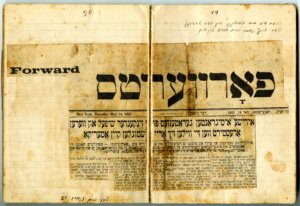
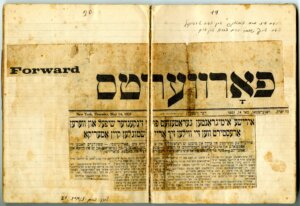
The letter’s author was Mordechai Freilich, a 26-year-old Polish Jew who had run into trouble as a socialist organizer in a shoe factory in Cuba then ruled by General Gerardo Machado. Written in Yiddish, the letter was mailed to Freilich’s uncle in New York who was instructed to share it with this newspaper, the Forward, which published it on May 14, 1931 under the headline: “Jewish immigrants rescued from sinking boat and arrested when they try to smuggle themselves into America.”
Mordechai, known as Máximo, had written articles for the Forward before he’d left Poland two years earlier. At the time, it was the most widely read ethnic publication in the United States. The newspaper’s general manager, the influential New York politician Baruch Charney Vladeck, persuaded the future governor of New York Herbert H. Lehman to intervene. Freilich and the others were released on condition they find a country to accept them within two weeks.
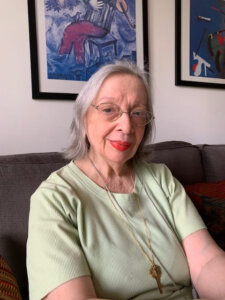
“The United States was the goldene medine; it was the salvation, but it was closed,” Máximo’s daughter Alicia Freilich told me by phone from her home in Delray Beach, Florida, “Venezuela became our goldene medine.”
Alicia was born in Caracas in 1939, and for the past 57 years, she has been a columnist for El Nacional, the leading Venezuelan newspaper, which itself has become an exile. In 2018, the government seized its headquarters. Today, the web-only publication is blocked by the nation’s internet providers, limiting its readership to the Venezuelan diaspora and those within the country determined enough to digitally bypass the censorship.
In 2012, Freilich suspected her phone was tapped by the government and fled to Florida. If it wasn’t for her advanced age, she’s sure she would have been jailed for her criticism of then-President Hugo Chavez.
“I became an immigrant at the age of 73,” Alicia told me in Spanish the week after President Nicolás Maduro and his wife were arrested by American forces. “I never thought I’d leave.”
Since 2012, a quarter of Venezuela’s population, nearly 8 million people, have left, fleeing food insecurity, political oppression and spiraling gang violence. Though Venezuela was once home to a community of 25,000 Jews, its Jewish population has fallen to 5,000. Alicia Freilich remembers full synagogues, and generous charities that allowed for even the poor to attend Jewish day schools and take advantage of the busy community center, and Jewish retirement home. Now the first thing visitors to the website of the nation’s leading Sephardic organization see is detailed information on how to apply for Spanish citizenship,
While there was a small Sephardic Jewish community in Venezuela in the 19th century, the country’s Sephardic families came mainly from Morocco during the country’s post-war oil boom. Most Venezuelan Jews, however, are Ashkenazi, the children or grandchildren of Eastern European Jews who left Europe before the Holocaust, like Alicia’s parents Máximo and Rifka, or survivors who came after the war, like Alicia’s ex-husband Jaime Segal.
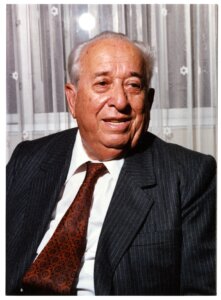
In 1938, Máximo made a return trip back to Poland. “I begged them [my extended family] to leave, that there was going to be a war,” Máximo told Alicia in an interview published in her 1976 book Interviewees in the Flesh, “but they laughed at me.” After the war, his in-laws, Alicia’s aunt and uncle Gutka and Abraham, who survived Auschwitz, joined the family in Caracas.
Officially, Venezuela had restrictive immigrant policies, but made exceptions. In 1939, the government of Eleazar López Contreras gave refuge to 250 German Jews onboard the Caribia and Köningstein ships which had been denied entry at all other ports. Máximo Freilich was one of the representatives of the Jewish community who welcomed the new arrivals at the port in La Guaira.
“Venezuelans are magnificent, generous,” Alicia told me, “like my father used to say, ‘the people are so generous that even a beggar would offer some of his coffee.’”
Máximo, like most Jewish immigrants at the time, was a “claper,” the Yiddish term for an itinerant salesmen. After years of “claping” on doors, peddling rags, he graduated to a Caracas storefront. Among Jews, the self-educated Máximo was a respected figure, a contributor to Yiddish newspapers like the Forward, a settler of disputes, a man consulted over beet soup and gefilte fish. But he never mastered Spanish, and to Venezuelans he remained a “musiu,” slang for a foreigner.
In 1987, Alicia wrote her first novel, Cláper, adapting Máximo’s Yiddish diary from his early years in America, which she intertwines with her own story. Máximo’s journey is from his shtetl, fictionalized as “Lendov,” Alicia’s is from her sheltered Jewish day school childhood into the wider Venezuelan society, attending college and starting her career. She mixes in literary circles, rubs shoulders with leading intellectuals and leftwing dissidents, yet she’s never fully at ease, discovering she is not so different from the “Polish peasant” parents she wished to escape.
“Half a century ago, a bunch of musiús began arriving. They knocked on doors in order to sell rags. They knocked: clap, clap, clap,” she writes reflecting on her success in journalism. “So daughter of a cláper, I too am a caller. When I knock and knock from the pressroom, what I wish to sell for free is what we might call ethical anxiety.”
Alicia’s part of the narrative comes in the form of a monologue to her psychoanalyst, like in Philip Roth’s novel Portnoy’s Complaint, which she references in her book. But Caracas is not Newark. Beyond the middle class of the cities is vast poverty. Venezuelan Jews helped build the democracy that emerged in 1958 after the Pérez Jiménez dictatorship, and for four decades Venezuela was considered one of Latin America’s most stable and affluent countries. But oil wealth bred corruption, inequality fueled unrest and by the 1990s the system was fracturing.
In 1999, the socialist Hugo Chavez, who had led a failed coup attempt seven years earlier, was elected president. Initially popular for promising to redistribute oil wealth to the poor, Chavez chipped away at democratic norms leading many professionals to exit the country in the early 2000s.
“They never directly target the [Jewish] community,” said Alicia, but Chavista anti-Israel rhetoric created a hostile atmosphere. In 2009, armed men overran the nation’s largest synagogue Tiféret Israel in Caracas, desecrated the sanctuary, stole objects and spray painted antisemitic and anti-zionist messages demanding the government expel Jews. That’s when she first thought about leaving.
Soon, she said, her younger sister Miriam Freilich, a culture writer for El Nacional and host of a radio program, decided it was impossible to be an independent female journalist in Caracas. She moved to Colombia before joining her daughter in Israel, and passed away in Spain last year. Alicia’s two sons had left years earlier. They did post-graduate studies abroad in the 1990s and decided not to return.
Ernesto Segal is a physician in Florida and Ariel Segal, who has lived in both the U.S. and Israel, is a communications professor in Lima. “’I prefer Venezuela as a people, as a climate, as the landscape,’ Ariel, 61, told me over Zoom from Lima. “I haven’t returned because of the Chavismo.”
“‘We lived in paradise, but we didn’t realize it,’ Ariel said. He particularly remembers Club Hebraica, the Jewish community center in Caracas, not just a sports center but a hub for youth groups, singles mixers, and holiday celebrations. It’s where he went to school. “After Chavez, we realized, ’wow, that was wonderful. We had freedom. We could change the president every five years. Politicians never threatened each other.’”
For years after he’d left, Ariel returned for weeks at a time each year to lecture at Venezuelan universities on authoritarianism and the Middle East. Then, in 2016, he was accused by name on a government television program of being an agent of the Mossad. He hasn’t been back since.
It was after Chavez’s death in 2013 that most Venezuelans migrants left. With a fall in oil prices and Nicolas Maduro in power came inflation, shortages and increased corruption. Increases in U.S. sanctions further strained the economy making it difficult for the average person to access food and medicine. Early waves of middle-class immigrants left the country on planes with visas. Jewish Venezuelans headed to Florida, Spain, Panama, and Israel.
More recent migrants are poorer without passports or visas. Many fled initially to countries within the region with over 2 million residing in Colombia, but others were forced to head north to the United States. Their treacherous and unauthorized immigration was not so different from Máximo’s journey in 1931.
At the end of his first term, President Trump deferred deportation for Venezuelans. More recently, he has turned hostile claiming “hundreds of thousands” of Venezuelan migrants are members of what he calls “savage” and “bloodthirsty gangs” like the Tren de Aragua, which he says President Maduro sent to “terrorize Americans.” Last year, he stripped the protective immigration status of more than half of the nation’s 1.2 million Venezuelan immigrants, targeting them for deportation. Now, his administration has suggested that with Maduro in prison, Venezuelans can return home.
“They took the clown out of the circus, but they left the rest of the troupe,” Alicia told me. Maduro’s arrest has been celebrated by Venezuelan exiles, but she doesn’t feel it’s enough. The current acting president Delcy Rodriguez and her brother, Jorge, the National Assembly president, long allies of Maduro, are extremely dangerous, she says.
She’s hopeful that slowly things will improve, but she says that Trump’s unpredictable personality and disregard for the rule of law worry her, as both a Venezuelan and as a Jew living in the United States. While he has been friendly to Jews, she says she fears he could easily turn on them, and, she added, his focus with Venezuela is oil, not human rights. “They are not acting with solid democratic principles in the country,” she said, “but the United States [democracy] itself is also at risk.”
Even if Venezuela gets on the path to democracy, it will take time. Alicia doesn’t believe exiles will return home anytime soon. She herself doesn’t seem to be going anywhere. At 86, her energy goes into her weekly column for El Nacional. On the 80th anniversary of the liberation of Auschwitz, she wrote about her survivor aunt and uncle. Mostly, though, she focuses on current Venezuelan politics.
Her father had written from Caracas for Yiddish speakers thousands of miles away. Now, Alicia speaks to a Venezuelan diaspora.
In a recent column, she stressed the only people with the legitimate authority to run Venezuela and restore freedom to the masses are those who were fairly elected in 2024 “There is no other correct way to rescue the imperfect and perfectible democracy,” she concluded.
Florida, Alicia Freilich told me, is not her home; her community, her focus, her heart remain in Caracas. It reminds me of something she quoted her father as saying: “I stayed back in Lendov, just my feet left.”
The post For fleeing Jews, Venezuela was a golden land — now in exile, they watch their homeland’s unrest with trepidation appeared first on The Forward.
Uncategorized
Why is the biggest soccer team in the world talking about Joseph Goebbels?
The biggest rivalry in international soccer — between Real Madrid and FC Barcelona — has erupted in recent months, as Madrid pushes the Spanish soccer federation to punish Barca for alleged referee bribery.
But the ugly sparring between the clubs took an unexpected turn last week when Spanish league president Javier Tebas entered the fray with a shocking comparison.
“Real Madrid’s management directs an orchestra of mouthpieces and Real Madrid TV leads the singing,” Tebas wrote Oct. 15 on X. “Their score is always the same: select the plays that suit them, repeat the grievance, feed the suspicion, and point fingers at the enemies.
“That method recalls propaganda mechanisms exploited by Goebbels, Nazi Germany’s minister of propaganda: systematic repetition, construction of an enemy, and subordination of facts to the narrative.”
Real Madrid, which has employed such stars as Cristiano Ronaldo and David Beckham, condemned the remark with a statement calling for Tebas’ resignation both from the Spanish league, La Liga, and the Royal Spanish Football Federation, where Tebas serves as vice president.
“Real Madrid C. F. considers it absolutely intolerable and extraordinarily serious that someone holding two positions of utmost responsibility in Spanish football resorts to a comparison with the propaganda methods of the Nazi regime to discredit our club, its management, and its television,” the club wrote Oct. 16.Tebas has thus far refused to resign or even take down the post, and has defended his critique by pointing to other Spanish leaders who have made similar comparisons in the past.
The Goebbels controversy comes amid growing concerns about antisemitism in Spain, including in sports, where thousands of protesters blocked an Israeli-branded cycling team from competing in the Vuelta race last year.
The bribery accusations against Barcelona first surfaced in 2023, when it was revealed the club had paid millions of dollars to companies linked to the former vice president of the Spanish refereeing body, José María Enríquez Negreira. A Spanish court dismissed the bribery charges in 2024, but the investigation continued, and earlier this month Madrid submitted a tranche of documents it said proved the bribery claims.
The conflict between the club and Tebas dates back at least to 2021, when Madrid club president Florentino Perez spearheaded a breakaway international league that would have threatened Spanish competition. Barcelona had also agreed to join the so-called Super League, but the plan was scuttled after enormous backlash from fans across the continent.
Joseph Goebbels, one of Hitler’s most devoted followers, led the German Propaganda Ministry after the Nazi party came to power in 1933. He and his wife died by suicide in 1945 after killing their six children with cyanide.
The post Why is the biggest soccer team in the world talking about Joseph Goebbels? appeared first on The Forward.
Uncategorized
Israel’s election may hinge on whether Netanyahu’s opposition will accept Arab support
Israel’s approaching election is developing into an extraordinary paradox: Prime Minister Benjamin Netanyahu, whose government presided over the catastrophe of Oct. 7 and whose record since has been a succession of security failures, assaults on democracy, capitulations to Haredi interests and international embarrassments, may yet survive politically because his opponents cannot bring themselves to accept the parliamentary support of Israel’s Arab citizens.
The polls have tightened, the opposition has conducted a strangely timid campaign, and U.S. President Donald Trump’s endorsement of Netanyahu over the weekend introduces an unpredictable element into a contest that should by any reasonable accounting be a referendum on utter failure. Yet given the picture emerging in the polls, the decisive question is whether the opposition’s leaders possess the courage to reach out to the one-fifth of Israelis who are Arabs – who are expected to vote in very high numbers on Oct. 27.
Since 1973, Israel’s classic center-left has never secured an election-day parliamentary majority without the seats of Arab parties. Yitzhak Rabin’s victory in 1992, for example, depended on a parliamentary balance that included Arab representatives, whose support later became essential to his government’s survival. By most credible polls, that is the picture that emerges now, and with that support, the opposition could become a comfortable majority of close to 70 of the 120 Knesset seats.
But things are not so simple. In 2020, most of the Joint Arab List – an alliance of Arab parties in Israel – recommended opposition leader Benny Gantz for prime minister, producing a numerical majority that collapsed because several opposition lawmakers simply could not stomach the prospect. But the Naftali Bennett-Yair Lapid government that removed Netanyahu in 2021 included the Arab party Ra’am, demonstrating that cooperation across this divide was possible even among politicians with profound disagreements about national identity and the question of a Palestinian state.
Throughout these episodes, the challenge was the elementary democratic principle that the votes of Arab citizens should carry precisely the same weight as those of Jewish citizens. And yet there are complications with these political alliances: the Arab parties are not “Zionist” – and more relevantly, they have real difficulty in a situation that involves conflict with the Palestinians, who are their non-citizen brothers and sisters.
Netanyahu has spent years exploiting the discomfort of his opponents with this reality, transforming the prospect of Arab political influence into a weapon against anyone seeking to replace him. During this election, his campaign has placed particular pressure on Gadi Eisenkot, the former IDF chief of staff, portraying any government of his, if it’s dependent on Arab parties, as compromised from the outset.
Eisenkot, Naftali Bennett and other opposition leaders are trying to win over former right wing voters who may have tired of Netanyahu’s endless scandals and failures – but those voters also have serious reservations about the Arab parties. So their prevarications are not hard to understand.
There is, of course, a double standard: Netanyahu routinely counts on the ultra-Orthodox parties, whose demands for military exemptions, public subsidies and educational autonomy have profound consequences for Israel’s security, economic resilience and civic solidarity. Their representatives are treated as legitimate negotiating partners whose seats belong automatically in the right-wing bloc, even when, indeed, they call themselves non-Zionist.
Arab political leaders are now offering the opposition passive support in parliament for free, meaning they do not even demand a seat at the government table. According to all credible polls, the opposition plus the Arab parties should have a comfortable majority after the Oct. 27 vote.
Mostly Muslim, with Christian communities and the distinct Druze population, these citizens share aspects of the language, culture and historical grievances of the surrounding Arab world while participating in the institutions, economy and daily life of the Jewish state. Two stories convey this complexity.
The first: A wounded Jewish reservist, a new immigrant and Technion engineer, was driving toward a hospital for treatment of a hand injured during service in Lebanon when police stopped him for speeding last year. As the Maariv newspaper’s columnist Ben Caspit reported, the reservist presented documentation of his medical circumstances, yet the officers, who were Jewish, issued a fine and delayed him despite the potential danger to his injured finger, behaving at times with an astonishing lack of consideration.
The case eventually reached a court, where the fine was canceled in a ruling that criticized the enforcement as falling short of reasonable, proportionate and fair administrative discretion. The judge was Rasha Saadi Atamna, an Arab woman whose decision recognized the wounded soldier’s service and circumstances while holding an institution of the Israeli state accountable to its own standards. It was a recognition denied by fellow Jews.
The second: On the morning of Oct. 7, 2023, Youssef Ziadna, a Bedouin minibus driver from Rahat who had dropped off a group of young people at the Nova music festival, showed extraordinary courage.
When Hamas launched its massacre, one of his passengers called desperately for help, and Ziadna drove toward the festival, entering an area where gunmen were murdering civilians and vehicles were fleeing in panic. Near the Gaza border communities, a man running from the slaughter warned him to proceed no further, and moments later gunfire sent Ziadna and others diving into a roadside ditch.
The danger was clear, the route home was available, and every ordinary instinct of self-preservation pointed toward escape. Ziadna instead continued toward the festival, found the people who had summoned him, collected other terrified and wounded Israelis and eventually squeezed roughly 30 passengers into a minibus designed for 14. Drawing on his knowledge of the terrain, he drove across fields and away from the gunmen, with other fleeing Israelis following behind him.
The people Ziadna carried to safety were Jewish Israelis, while his own Bedouin community was suffering murder and abduction in the same assault. Speaking to Israel Radio during Oct. 7 commemorations, he explained his decision in words that deserve to resonate far beyond the immediate story of his heroism: “I could have turned around and did a U-turn, but my conscience wouldn’t let me. I am a human being first. We have to live together in this very fine country of ours.”
The election, of course, will be decided by parliamentary arithmetic rather than inspiring anecdotes, and the stakes extend well beyond the composition of the next coalition.
Consider the government’s continuing failure to confront Jewish terrorism in the West Bank, where extremist settlers have now assaulted an American journalist and European diplomats in successive days. Heidi Levine, a Washington Post photographer whom I have known for decades, was brutally beaten while covering the Palestinian olive harvest, suffering injuries requiring surgery.
The following day, settlers attacked European diplomats and a French mayor near the Christian village of Taybeh. Netanyahu’s response was to question the evidence, emphasize the diplomats’ failure to coordinate with the army and suggest a campaign to smear settlers. Such indulgence of violent extremists disgraces Israel and accelerates its international isolation.
Trump’s endorsement this weekend of Netanyahu may influence some voters, but the fundamental choices belong to Israelis.
Let’s hope they are more thoughtful than to listen to the U.S. president and reelect a leader who would endanger lives by continuing to block an Oct. 7 inquiry, redouble efforts to instill an elected dictatorship, continue to absolve the Haredim of military duty, do nothing to stem the disgrace of Jewish terrorism, and hasten the onset of global economic sanctions upon the Jewish state.
The post Israel’s election may hinge on whether Netanyahu’s opposition will accept Arab support appeared first on The Forward.
Uncategorized
Bob Dylan is changing his lyrics and his set list; what is he trying to tell us?
Nobel Prize-winning rock poet Bob Dylan once famously wrote, “You don’t need a weatherman to know which way the wind blows” (in his 1965 song “Subterranean Homesick Blues”). That may have formerly been the case, but it didn’t stop Dylan from kicking off his “Lights of Autumn Tour” in Oslo on Saturday, Oct. 17, with a setlist chock full of warnings about floods and extreme weather — a veritable apocalypse of natural disasters. He even rewrote some lines in one of his most famous and beloved songs, “Tangled Up in Blue,” to make the weather a new character in the song.
Playing “Tangled Up in Blue” in concert for the first time since 2018, Dylan revised a few verses. Where he originally sang “I had a job in the great north woods working as a cook for a spell” to kick off the third verse, Dylan instead sang “Way up in the frozen woods, teardrops touch the sky / The leaves are falling one by one, and the moments passing by,” in keeping with the “Lights of Autumn” theme. (It should be noted that Dylan has been rewriting and changing the lyrics to “Tangled” at least since 1984, when he also included the song on his opening concert of a European tour.) “Way up in the frozen woods” may also refer to Dylan’s hometown of Hibbing, Minnesota, which is so far north that you can practically see Canada from there.
On Saturday, Dylan continued to rewrite that third verse with the line “Sometimes I get so tired, sometimes I’m getting away / Lucky you found another, tomorrow’s another day.” In a clever twist, Dylan inserts the new word “lucky” into the number, which recalls the phrase “I can’t help it if I’m lucky” from the song “Idiot Wind,” also found on the 1975 album Blood on the Tracks where “Tangled Up in Blue” originated. “Lucky” also resurfaced as a cryptic moniker for Dylan himself when, in the superstar group the Traveling Wilburys that included George Harrison, Tom Petty, and Roy Orbison — all of whom took new names ending in “Wilbury” — Dylan opted for “Lucky Wilbury.” He can’t help it, indeed!
Dylan kicked off another rewritten verse with the phrase, “Things were gettin’ to cost too much,” leaving one to wonder if this was a pre-midterm election reference to the state of the U.S. economy and therefore an implicit criticism of the MAGA leader and his acolytes. Dylan also revised the music somewhat, slowing the tempo of what was once a mid-tempo rocker to a rubato ballad; he also inserted a minor chord that doesn’t exist in the original.
As noted, Dylan’s 19-song setlist included copious references to weather disasters. “The Man in the Long Black Coast” opens with the line “Crickets are chirpin’, the water is high,” and refers to trees that are “bent over backwards from a hurricane breeze.” The aptly titled “Crash on the Levee (Down in the Flood),” which he performed for the first time in over two decades, includes the lines:
Crash on the levee, mama
Water’s gonna overflow
Swamp’s gonna rise
No boat’s gonna row….
If you go down in the flood
It’s gonna be your own fault…”
Even Dylan’s choice of cover tunes seemed oriented toward the apocalyptic theme. For the first time ever, Dylan sang a Randy Newman song in concert. Keeping with the flood theme, he chose Newman’s “Louisiana 1927,” which recounts one of the worst floods ever to strike the U.S.
What’s happened down here is that the wind have changed
Clouds roll in from the north, and it starts to rain
Rained real hard, it rained for a real long time
Six feet of water in the streets of Evangeline
River rose all day, the river rose all night
Some people got lost in the flood, some people got away all right
Dylan also covered “Share Your Love” — originally recorded by Bobby “Blue” Bland in 1963 but also recorded and performed by Dylan’s former backup group, The Band — which kicks off with the line “Well, it’s an ill wind that blows no good.”
But Dylan didn’t have to go far from his own catalog to rack up mentions of climate insanity. He performed “Tryin’ to Get to Heaven,” which includes the lines “The air is getting hotter, there’s a rumbling in the skies / I’ve been wading through the high muddy water, with the heat rising in my eyes.” In “You Ain’t Goin’ Nowhere,” Dylan sang, “Clouds so swift, rain won’t lift / Gate won’t close, railings froze / Get your mind off wintertime, you ain’t goin’ nowhere.” And on “I’ve Made Up My Mind to Give Myself to You,” the seasonally appropriate narrator says, “I saw the first fall of snow, I saw the flowers come and go.”
Dylan’s tour continues tonight (Oct. 19) in Gothenburg, Sweden, before making its way through Denmark, Germany, Belgium, Switzerland, Italy, Slovenia, and Austria, and concluding in the UK in November and early December. The forecast for Sweden tonight is clear, but later in the week, the weather report says there’s a chance of a hard rain.
The post Bob Dylan is changing his lyrics and his set list; what is he trying to tell us? appeared first on The Forward.
