


Uncategorized
For the ‘Jazz Rabbi’ of Connecticut, music and Judaism are both about tradition and improvisation
Greg Wall, who has juggled a career as a professional jazz musician while holding down a day job as a pulpit rabbi, has long been known as The Jazz Rabbi. Though he has retired from his job at the Beit Chaverim Synagogue in Westport, Conn., where he served as full-time rabbi for 10 years, he’s still at the synagogue seven days a week.
“Jazz is really a model of how to put your own spin on an inherited tradition,” Wall told me. “And that’s what the practice of Judaism has been for me. I’m part of the tradition, yet I’m trying to come to my own understanding and make certain connections myself, rather than just dial it in by rote.”
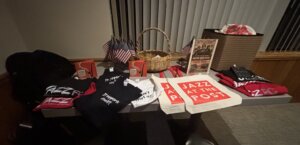
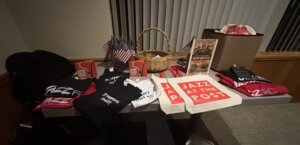
The Jazz Rabbi prays three times a day and studies Talmud study daily. But Wall is also devoted to another congregation: Every Thursday night the jazz faithful gathers at a VFW Post in Westport. The shows, known as Jazz at the Post, are organized by the Jazz Society of Fairfield County, a non-profit organization Wall co-founded. He’s the organization’s artistic director.
“This is a really nice chapter of my life,” Wall told me just he as he was getting ready to perform at a sold-out show in late February. “I have people calling me all the time to come play here. A lot of them are Grammy Award-winning jazz artists.”
The venue, which has a capacity of about 80, is usually sold out. Admission is $20 and there is no drink minimum, making it much more affordable than the typical night out at a commercial jazz venue, where admission is often $50 with a two-drink minimum. Because the Jazz at the Post shows take place at a VFW hall, veterans are admitted for $15, as are students.
Wall said that the fact that there’s no adversarial relationship with a restaurant trying to sell food and drink makes for a much better listening experience for jazz lovers.
“People come here to listen to the music,” he told me. “The people that I would go out and listen to in New York now come to Westport. I feel a little guilty that this place is two minutes from my house, but so be it.”
Back in 2009 when Wall got his first pulpit, a part-time gig at the Sixth Street Community Synagogue in Manhattan’s East Village, his group Later Prophets was touring regularly. During his time at the Sixth Street shul, Wall created the Center for Jewish Arts and Literacy, which brought klezmer, jazz and big-band music to the synagogue’s basement social hall, along with Yiddish language and Torah classes. The music series lives on at the Hudson Yards Synagogue in Manhattan, thanks to the efforts of the percussionist Aaron Alexander.
Later Prophets has been inactive in recent years but Wall still plays freelance gigs with various artists and occasionally performs with the guitarist Jon Madoff’s horn-heavy Afrobeat ensemble Zion 80, as well as The Elders, a jazz group led by Frank London, his friend and collaborator of nearly 50 years.
At the VFW hall in Westport, The Jazz Rabbi joins the visiting artists on the bandstand every week. Wall said the experience of playing with different acts, many of whom perform original compositions, has been good for his musical chops. One of the regulars at the Westport shows remarked that when Wall really gets into a groove, he rocks back and forth like he’s davening.
The Jazz at the Post shows have been happening since April 2022 but Wall has been performing locally since 2015. He started playing in the back room of a local eatery known as Restaurant 323. That gig came about after Wall’s impromptu performance at a fundraiser for the Bridgeport community radio station WPKN-FM.
“After he played a couple of bars of music at the WPKN benefit, I was just blown away by his talent,” recalled Richard Epstein, a Bridgeport dentist who serves as vice-president of the Jazz Society. Epstein’s wife Ina Chadwick, a former Forward editor, was running a spoken word performance series at Restaurant 323 and suggested Wall start a jazz night there.

Eric Bilber, a co-founder of the Jazz Society and a board member, said he discovered the Restaurant 323 scene when his wife went to pick up their daughter one night at the Metro-North station in Westport and didn’t come home right away. Their daughter Zina noticed someone playing a stand-up bass and decided they should check it out. They had such a great time that they stayed until the last set.
“And that was it,” Bilber told me. “I went back with them the following week and we’ve been going ever since. We started bringing our friends and everybody that we could think of to try to support this.”
Bilber realized there was a need to start a non-profit after the Westport jazz lovers had collected thousands of dollars by passing around a cigar box at performances to purchase a piano.
“One day he asked Wall, “Who owns the piano?’” Bilber recalled. “And we decided maybe we should start a non-profit.”
The newly created Jazz Society paid $11,000 for a Steinway Model M that was built in 1937. It had served as one of the house pianos at the Village Gate, the iconic Greenwich Village nightclub that closed in 1988.
If a piano can be said to have yichus, the Gate’s Steinway would certainly fit the bill. Thelonius Monk and Nina Simone are among several jazz greats who played it on live albums recorded at the Gate. Mose Allison, Count Basie, Bill Evans, Eddie Palmieri, Sun Ra and McCoy Tyner have banged on its keys too.
Wall had been tipped off to the Model M’s availability by his piano tuner. But all that wear and wear had taken its toll on the instrument, so in 2018 the Jazz Society came up with $15,000 to refurbish it.
Paul Haller, a Stanford-based piano restorer, recalled with a chuckle that Wall brought down a few local pianists to his shop when the repairs were completed. They put the piano through its paces for a couple of hours before declaring they were pleased with the restoration.
Ted Rosenthal, a pianist who teaches at Juilliard and the Manhattan School of Music, performed at the Post with a quintet that included Wall in late February. During the intermission, he reminded me that being a jazz musician means that one night you could be playing at Carnegie Hall and the next night your gig might be at the Carnegie Deli.
“They’ve created a jazz club in a place that wasn’t designed to be a jazz club,” he said. “I think that’s what we need to do because obviously rents in New York are so high that some clubs don’t succeed because of the expenses involved. If you can find a place and build an audience, I think that’s a perfect way to go.”.
“This place is like being in Greenwich Village,” said Alan Phillips, a Westport resident who comes to the Jazz at the Post performances almost every week. “The world-class jazz that we get right here — it’s the best kept secret.”
The post For the ‘Jazz Rabbi’ of Connecticut, music and Judaism are both about tradition and improvisation appeared first on The Forward.
Uncategorized
Mamdani to attend Passover Seder as he navigates ties with Jewish groups amid rising antisemitism
New York City Mayor Zohran Mamdani is set to attend a Passover Seder on Monday night at the City Winery in Manhattan, stepping into a decades-old cultural tradition that doubles as a symbolic test of his relationship with the city’s Jewish community.
Mamdani is slated to appear alongside a liberal rabbi, an Israeli musician and an observant comedian at the annual Downtown Seder hosted by nightlife impresario and entrepreneur Michael Dorf. All net proceeds from the event will be donated to Seeds of Peace, a New York-based nonprofit founded in 1993 that helps young people from conflict regions build leadership skills and engage in dialogue.
Founded in 1991 and held at the East Village’s Knitting Factory and later at the Museum of Jewish Heritage, the Downtown Seder brings together artists, activists and public figures for a contemporary retelling of the Exodus story. Dorf, who is Jewish and launched City Winery in 2008, has described the gathering as a “supplement” to traditional seders. Passover begins Wednesday evening at sundown.
“The Seder is about asking urgent questions — about freedom, responsibility, and how we care for one another,” Dorf said in a statement. “Each year, we bring together voices who challenge, inspire, and reflect the world as it is — and as it could be.”
Featured guests this year include former CNN anchor Don Lemon, Israeli musician David Broza, and comedian Modi Rosenfeld. Former Mayor Eric Adams was the featured guest at the Seder in 2023.
A City Hall spokesperson said Mamdani will also host a private Passover dinner with city workers.
Mamdani’s participation at the Seder on Monday comes at a delicate political moment. A vocal critic of Israel who supports the boycott movement and has declined to recognize Israel specifically as a Jewish state, Mamdani has faced backlash from Zionist Jewish organizations, particularly after revoking executive orders tied to antisemitism and campus protests on his first day in office and his recent refusal to back legislation aimed at curbing disruptive protests outside synagogues and schools.
Reflecting his outreach efforts since taking office, his appearance at the Seder signals an ongoing effort to engage Jewish audiences drawn to themes of justice and coexistence and who are willing to be part of the conversation.
The event that Mamdani will speak at will also feature remarks from Rabbi Amichai Lau-Lavie, a rabbi and human rights activist, who will appear via video from Israel, according to the organizers.
Last week, Mamdani helped load cars with Passover food for Orthodox families at the annual Chasdei Lev distribution event in Brooklyn. He also met with Orthodox businessman Dov Bleich at his office, who showed him a Haggadah dating to the Civil War era in New York.
In his interview with the Forward last April, Mamdani framed the Exodus story as a call for collective liberation struggles. He invoked the biblical story of Moses confronting Pharaoh as a metaphor for present political challenges. “This moment with so many Pharaohs around us — whether they be Donald Trump, ICE or this troubling rise of antisemitism — we must take a lesson from those words of the necessity of not only having our lips not tremble or falter, but that the power in doing this comes in a shared belief in the possible,” Mamdani said. As a candidate, Mamdani attended a Seder hosted by Jews for Racial and Economic Justice.
Jewish politicians mark Passover amid rising antisemitism
Other politicians have also sought to mark Passover in ways that resonate with Jews grappling with rising antisemitism.
New York City Council Speaker Julie Menin co-hosted an interfaith Seder with the Jewish Community Relations Council on Thursday at Tsion Cafe, an Ethiopian Jewish restaurant in Harlem that closed earlier this year, after the owner faced ongoing harassment and vandalism since the Oct. 7 Hamas attack on Israel. “The story of Passover is a story of hope, perseverance, grit and determination for the Jewish community,” Menin said in her remarks. She added that it is symbolic that this year all the major religious holidays — Ramadan, Lent, Easter and Passover — have converged around the same time. “This is what our city needs more of — focused on unity and inclusion,” she said.
Some see Menin’s role as the Council’s first Jewish speaker as a counterweight to Mamdani on Jewish communal issues. On Thursday, the Council passed two bills that direct the NYPD to craft a plan within 45 days for managing protests around houses of worship and schools.
Illinois Gov. JB Pritzker hosted a Seder with Jewish leaders last week at his official residence. Last year, Pritzker, among a handful of Jewish politicians in leadership roles offering the Democratic Party a path forward ahead of the midterm elections, invoked his family’s history and his role in building the Illinois Holocaust Museum & Education Center to criticize President Donald Trump’s policies, comparing them to authoritarian tactics.
Pennsylvania Gov. Josh Shapiro is set to hold a family Seder at his official residence and will mark the first anniversary of the arson attack on the first night of Passover last year by an intruder, who said he wanted to beat the governor with a sledgehammer over what he claimed was a lack of empathy toward Palestinians. Shapiro has since leaned into his Jewish identity and has spoken out on bipartisan platforms about rising hate-fueled violence.
The post Mamdani to attend Passover Seder as he navigates ties with Jewish groups amid rising antisemitism appeared first on The Forward.
Uncategorized
IDF Soldier from Connecticut Killed in Southern Lebanon Combat

Sgt. Moshe Yitzhak Hacohen Katz. Photo: courtesy.
i24 News – The Israel Defense Forces announced on Sunday morning the death of Sgt. Moshe Yitzhak Hacohen Katz, 22, originally from New Haven, Connecticut, who was killed during combat operations in southern Lebanon on Saturday.
According to the military, Katz was killed in a rocket attack targeting Israeli forces operating during efforts to expand a security zone in southern Lebanon. The IDF said the strike occurred overnight between Friday and Saturday, during a large-scale barrage aimed at units deployed in the area.
An initial military investigation found that one rocket directly hit an infantry unit from the 890th Battalion of the Paratroopers Brigade, killing Katz instantly. Three additional soldiers were wounded and are listed in moderate condition.
The IDF said the announcement of Katz’s death was delayed to ensure that all family members, including those in the United States, were properly notified.
The army also said that recent attacks have largely focused on the four IDF divisions operating in Lebanon. In the past 24 hours alone, approximately 250 rockets were launched toward Israeli positions, with 23 crossing into Israeli territory, according to military figures.
Uncategorized
AI-Generated Antisemitic Rabbi Racks Up Millions of Followers with Questionable Financial Advice

i24 News – An AI-generated character known as Rabbi Goldman has attracted millions of followers online by combining old antisemitic tropes with digital-age conspiracy theories. The avatar, presented as a caricature of a New York rabbi, plays off stereotypes of Jewish power and wealth while dispensing unsolicited “financial advice” and conspiracy-laden commentary about global elites.
In his videos, Rabbi Goldman claims that Jews have “known every secret for thousands of years,” weaving age-old prejudice into modern misinformation. Among his assertions: that the moon landing was faked, the US government will soon exert total control over its citizens, and billionaires stage yacht sinkings for insurance fraud—all allegedly foreknown by “the Jews.”
Before being removed on Sunday night, his Instagram account had racked up over 1.5 million followers. Yet the same page remains active on Facebook, which shares an owner with Instagram, with roughly 180,000 followers and thousands of interactions per post. The comments reveal an audience that is genuinely engaged with, and emboldened by, his vitriolic rhetoric.
Rabbi Goldman’s videos follow a simple formula designed to thrive in algorithm-driven ecosystems. They begin with a cryptic slogan implying secret knowledge or hidden wealth — invoking Jews as the keepers of these secrets — to draw viewers in and extend watch time, thus being featured on more people’s feeds. What follows is a cascade of AI-generated, factually dubious monologues, all culminating in a pitch: he can show you how to acquire the same “Jewish wisdom.”
That pitch leads to his website, where a manual titled How to Make and Invest Money sells for $9, and he claims it has been purchased by over 4,000 people. The real product, however, carries a fuller title — How to Make and Invest Money Like the Jews. The 62-page PDF amounts to generic, AI-spun financial advice labeled as “the Jewish method,” occasionally interspersed with random references to the Talmud. Just like the videos, it references how Jews have managed to be successful for thousands of years but offers little backup as to how that can translate to a real-world scenario.
Most of it plays off the stereotype of Jews being financially astute. But some lines, such as “Jews do not day trade… We buy the market — the entire market — and we hold it indefinitely,” remove the mask entirely.
Whether we like it or not, antisemitism thrives online—and platforms’ recent loosening of content restrictions under the banner of “free speech” has only amplified it. Social media has become an ideal environment for grifters to blend prejudice with profit. And that is, to their credit, what the creators of Rabbi Goldman have done.
They have clearly borrowed from the “manosphere” playbook—a cluster of influencers promoting hyper-masculine, materialistic lifestyles infused with misogyny and antisemitism. Like Andrew Tate and similar figures, Rabbi Goldman appeals to disaffected young men who feel alienated by the economy and society in which they live, eager to locate a scapegoat.
In Goldman’s case, the scapegoats are the elites and billionaires. But the framing of the Jews alongside the elites has, by proxy, made them the scapegoat too. By merging coded hatred with generic Instagram-style self-help language, the character transforms antisemitism into a marketable aesthetic.
So essentially, the creator of Rabbi Goldman has found a niche in an emerging market, playing off of antisemitism to sell cheaply produced slop to teenagers. Which is both entrepreneurial and morally awful. But the issue is that social media has bred the ground for this by rewarding shock content and letting antisemitism often go untouched. Even when they deleted his Instagram account, dozens of copycats popped up, including an absurdly ironic German-language version that uses the likeness of British politician Jeremy Corbyn.
And this is what happens when social media companies are reactive rather than proactive. They were chasing shadows after the account became so big. Instead, they need to cut it out at its source, be tougher on antisemitism, and be more vigilant with AI content.
And for social media users, it is hard to tell what’s real and what isn’t anymore. Just try not to get financial advice from an AI rabbi who thinks the moon landing was fake.