
Uncategorized
Funds for Tel Aviv apartment given to Putin’s former teacher came from Roman Abramovich, records reveal
(JTA) — After Russian President Vladimir Putin reunited with his Jewish high school teacher on an official visit to Israel in 2005, he bought the elderly widow an apartment in Tel Aviv.
That’s according to a widely circulated story based on an interview that the former teacher, Mina Yuditskaya-Berliner, gave to an Israeli news outlet in 2014. At the time, Putin was facing international rebuke over his invasion of Crimea, but Yuditskaya-Berliner had nothing but praise for him.
“When I got the apartment, I cried,” she said. “Putin is a very grateful and decent person.”
Newly uncovered financial records, however, reveal that the funds for the $208,000 apartment came from a bank account in Cypress belonging to Russian Jewish billionaire Roman Abramovich, according to reports published Sunday as part of a collaboration between Israeli investigative outlet Shomrim, the Washington Post and the International Consortium of Investigative Journalists.
A company controlled by Abramovich transferred $245,000 to Yuditskaya-Berliner on the same day she purchased the apartment, documents show.
The discovery of the transaction is notable because it undermines denials by both Abramovich and Putin that the two are financially linked and is likely to bolster suspicions that Abramovich’s ascent to the top of Russia’s business world indebted him to the country’s ruler.
Abramovich is currently under United Kingdom and European Union sanctions targeting Russian oligarchs, enacted in the wake of Putin’s invasion of Ukraine last February to target his wealth abroad and penalize his associates.
“The Israeli apartment story perfectly encapsulates how unwritten understandings and winks and nods lie at the heart of the Putin-era system,” Andrew Weiss, a Russia expert at the Carnegie Endowment for International Peace who previously held positions at the White House and State Department, told the Washington Post. “Tycoons like Roman Abramovich don’t need to be strong-armed into taking care of small-time stuff at Putin’s behest. They know precisely what’s expected of them and all too happily play along.”
Records of the transaction are part of a trove obtained by the nonprofit group Distributed Denial of Secrets and shared with journalists at several outlets, including Shomrim’s Uri Blau, Greg Miller with the Washington Post, and Spencer Woodman of ICIJ.
Asked to respond to questions, a spokesperson for Putin referred reporters to the Federation of Jewish Communities of Russia and said the organization would have been responsible for “any charitable work in Israel.”
Through his own spokesperson, Abramovich said he donated the funds for the apartment but not at Putin’s request. The gift was made in response to “a request received from the Jewish community,” the spokesperson said. Abramovich amassed his wealth by buying state assets on the cheap after the fall of the Soviet Union and has used his fortune, estimated at as much as $13 billion, to become a major philanthropist. He says he has donated more than half a billion dollars to Jewish causes, including to Yad Vashem, Israel’s Holocaust memorial.
Rabbi Alexander Boroda, president of the Federation of Jewish Communities of Russia, was quoted in the Jerusalem Post Sunday saying that it was he who had asked Abramovich for a donation for a new apartment after learning that Yuditskaya-Berliner was living in a fourth-floor public housing unit with no elevator and a leaky ceiling.
Putin was a student in Yuditskaya-Berliner’s German class at High School 281 in Leningrad, now St. Petersburg in the 1960s. She left for Israel in 1973 during a wave of Jewish emigration from the Soviet Union, which Yuditskaya-Berliner said was characterized at the time by “suspicion, terror and fear.” Putin went on to become a KGB officer in East Germany.
She shared the story of her reunion with Putin and credited him with buying her an apartment in an article published by Ynet in 2014 under the headline, “I was Vladmir Putin’s teacher.”
She said she had lost track of Putin for decades until seeing his face on television next to that of Russian President Boris Yeltsin in the late 1990s. Putin was in charge of Russia’s internal security agency but soon succeeded Yeltsin as president.
Ahead of an announced state visit by Putin to Israel in 2005, Yuditskaya-Berliner decided she’d like a chance to see Putin in person and reached out to the Russian consulate. She was eventually invited to an event honoring World War II veterans at the King David Hotel and seated across the table from Putin. Afterward, the Russian president invited her to have tea with him in a private room.
The two reminisced about their shared history and before the meeting ended, Putin had his former teacher write down her address. Gifts started arriving, including a commemorative watch and an autographed copy of Putin’s book. Soon someone showed up and arranged to move her into a new apartment.
Yuditskaya-Berliner died in 2017 at 96. In her will, she instructed that her apartment be given to the Russian government.
—
The post Funds for Tel Aviv apartment given to Putin’s former teacher came from Roman Abramovich, records reveal appeared first on Jewish Telegraphic Agency.
Uncategorized
Women Wage Peace to hold Toronto event in memory of Vivian Silver

By BERNIE BELLAN (Posted MAY 11) In December 2023 we reported on a new fund that was being established in the name of the late Vivian Silver, who was a victim of the Hamas massacre on October 7, 2023.
The announcement of that fund came at a memorial event that was held here in Winnipeg on December 14, 2023. Among those in attendance were Vivian’s two sons: Yonatan and Chen Zeigen.
Vivian Silver was also one of the founders of “Women Wage Peace,” which has recently opened a Winnipeg chapter. Here is how Vivian’s role is described in information provided by Women Wage Peace: “A Canadian-born peace activist, Vivian dedicated her life to pursuing gender equality and fostering dialogue and partnership between Israelis and Palestinian communities. In 2014 she co-founded Women Wage Peace — Israel’s largest grassroots peace movement with recently developed chapters in Australia, Europe, South America, and here in Canada.”
At that December 14, 2023 event in Winnipeg, both of Vivian’s sons spoke of their mother. Here are some excerpts from their remarks:
Chen Zeigen said: We have seen our mother transformed into a symbol, but for us she will always remain a loving mother and grandmother.”
Chen noted that no matter what his mother was doing to help others, family was always important to her. “We’ll keep remembering her for the person she was, in all of her political activities and achievements.… They were part of it. But to me they were kind of secondary,” Chen said.
“She would march for her causes at noon and tuck us into bed at night,” he said. “She would orchestrate international peace rallies during the week and bake elaborate cakes for her grandchildren’s birthdays.”
“Winnipeg was a home away from home for our mother,” he added. “We would come here summers to be with our bobe and zaide” (the late Roslyn and Meyer Silver).
“To us, her sons, it didn’t matter what path we chose in life so long as it was meaningful to us. No matter what we did, she always had a hug for us.”
Yonatan Zeigen added: “It is said that the older you get the harder it is to make meaningful friends. That was not the case with our mother….She served as an unending source of energy and enthusiasm…She saw a mission in remaining involved in kibbutz responsibility.
“Her memory reminds us to keep hoping for a peaceful future,” Yonatan said.
In her name, he added, he and his brother were establishing a fund to recognize those working towards a shared society between Jews and Arabss.The Vivian Silver Memorial Fund. The proceeds will go towards recipients in Israel selected by her sons that exemplify her activism.
On Wednesday, June 4 in Toronto, Women Wage Peace Canada East, sponsored by the New Israel Fund Canada, will be presenting “In her Voice – the Vivian Silver Legacy Event.” The event will be raising funds for the Vivian Silver Impact Award.
We spoke with one of the organizers of the event, Lynne Mitchell, who grew up in Winnipeg with Vivian, having attended Peretz School with her and later, when they were both teens, were involved as president (Vivian) and vice president of Red River Region BBYO.
Lynne was at that December 2023 memorial event in Winnipeg and she recalls discussing – after the event, with Chen and Yonatan, what might be the most appropriate way they could honour Vivian’s legacy
Eventually, as Lynne describes it, the people organizing the Toronto event are sort of a “hodge podge…of Women Wage Peace Canada East, my family, and some grass roots people who wanted to be involved in it, including a Palestinian women – who remembers Vivian.”
“Our lead sponsor is the New Israel Fund of Canada,” Lynne explained, “because Vivian was on their board years ago and their executive director (whose name is Ben Murane) was captivated by her message also.”
“In Her Voice” will feature a variety of different media, including “music and art to create opportunities for reflection, inspiration, and hope.”
There will also be presentations by Vivian’s sons and a number of other speakers, including from a Palestinian woman who worked with Vivian in Israel for many years in NISPED-AJEEC Negev Institute for Peace and Economic Development)
The first recipients of the Vivian Silver Impact Award will also speak on video – one a Palestinian and the other an Israeli Jew.
Lynne Mitchell added that there are two things that the organizers of the event are hoping attendees will take from the event: “What makes a peacemaker and what can I do?”
One of the speakers,, recently arrived from Ramallah, has also long been dedicated to finding a peaceful path forward between Palestinian and Jewish Israelis. Lynne said that he was quite “astonished at how polarized our respective societies are here in Toronto.”
I asked her whether she thought it was any different in any other city and she admitted that it isn’t
But, just to put a more hopeful tinge to the ongoing tension between Canadian Jews and Palestinians, Lynne mentioned something else that is reflective of the willingness of at least some members of both communities to engage in a more meaningful dialogue.
“There are going to be two MCs for the evening,” Lynne noted. One will be her daughter, while the other will be a Palestinian Canadian woman .
There will be at least two members of the Winnipeg chapter of Women Wage Peace coming from Winnipeg to the event: Chana Thau and Esther Blum. In addition, Vivian’s sister Rachelle, along with her husband and one of her grandsons will be coming, along with Vivian’s brother Neil (who lives in Calgary), as well as many cousins of Vivian’s who live in Toronto.
Toward the end of my conversation with Lynne I referred to the terrible rift that had developed within our own Winnipeg Jewish community over BB Camp and said that there are many who have said we should remain silent about everything that’s gone on – to which Lynne responded: “No, we need to learn from it and not condemn each other and silence each other. That was Vivian’s perspective.”
If you are interested in attending or “donating to In Her Voice,” tickets can be purchased online at nifcan.org/inhervoice.
Uncategorized
JACQUELINE HOCHMAN JUNE 7, 1938 – APRIL 1, 2025
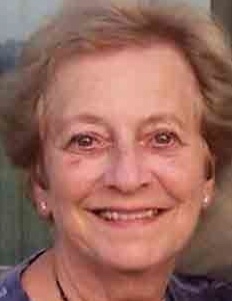
Jacqueline “Jackie” Hochman passed away peacefully on April 1, 2025 at the Simkin Centre in Winnipeg at the age of 86.
Jackie was born on June 7, 1938. She is predeceased by her husband Sam, daughter Robyn, parents Samuel and Bertha “Birdie” Niznick, and brother Allyn.
Jackie will be deeply missed by her remaining children, Marshall and Shawn (Karen), her grandchildren, Hannah, Daniel (Jodi), and Freya (and her partner, Spencer), and her great-granddaughter, Haisley.
Her children and grandchildren were her world. Jackie will be remembered for her fierce love and unwavering devotion to family. Sam, her husband of 65 years, loved her with every fibre of his being. May her memory be a blessing. In lieu of flowers, the family kindly requests that donations be made to the Saul and Claribel Simkin Centre.
Features
Samsung Washing Machine Repair: Frequent Issues and Professional Fixes
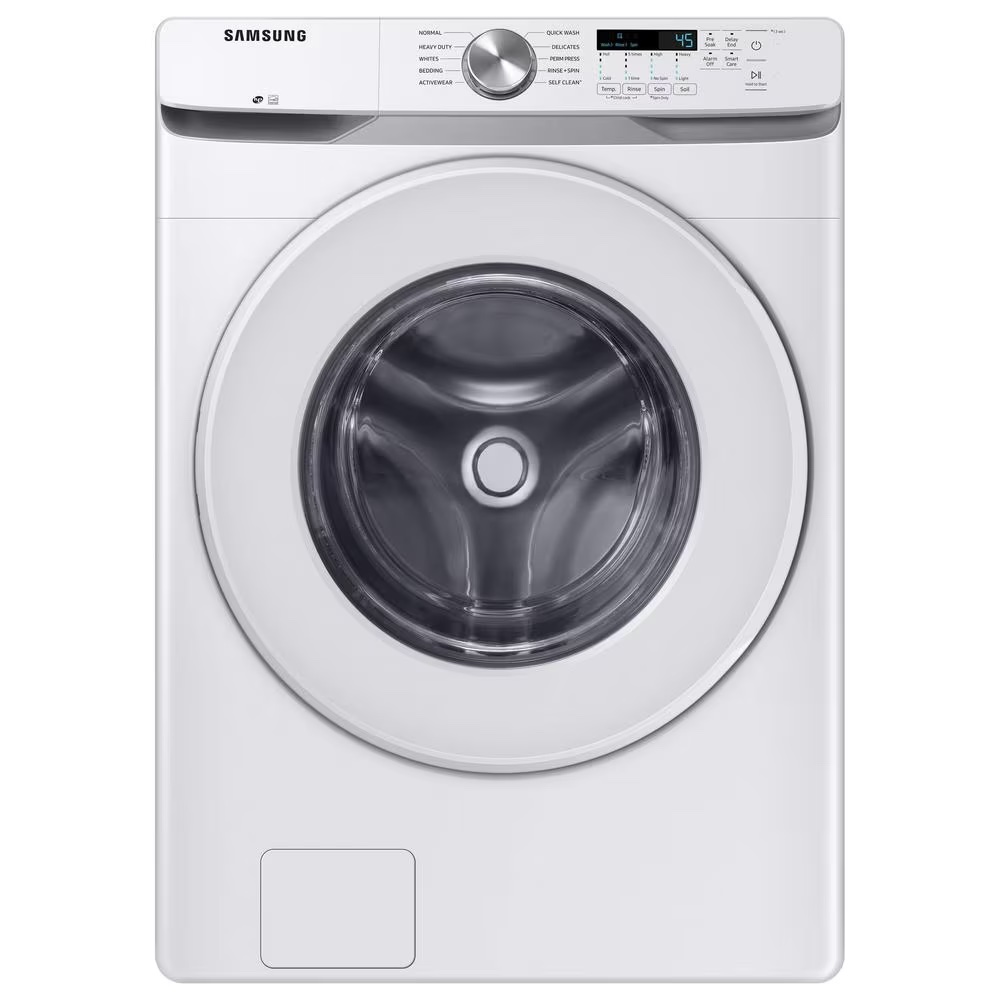
When your Samsung washing machine begins acting up, it can throw your entire laundry routine into chaos. Even with cutting-edge technology and sleek designs, these appliances can develop issues that range from minor glitches to major malfunctions. This comprehensive guide will take you through the most common problems encountered with Samsung washers, walk you through initial diagnostic steps, and explain when and why professional repairs become essential. For more detailed repair insights, Discover more here.
Understanding the Challenges
Samsung washing machines are celebrated for their innovative features, energy efficiency, and robust performance. Yet, like all complex machinery, they are susceptible to wear and tear. Users often report issues such as:
- Error Codes: Cryptic digital messages indicating malfunctioning sensors or control board errors.
- Water Drainage Problems: Incomplete draining leading to wet clothes or water pooling in the drum.
- Excessive Vibration or Noise: Unusual sounds during spin cycles, often a sign of imbalance or mechanical wear.
- Leaking Water: Water escaping from the machine, which can damage floors and other nearby surfaces.
- Door Lock or Latch Failures: Problems with door sensors or locking mechanisms that prevent the machine from starting.
- Motor or Pump Issues: Malfunctions that affect the washer’s ability to agitate, drain, or complete cycles properly.
Each of these issues may have different root causes, and understanding them is the first step to determining whether you can fix it yourself or need professional assistance.
Step-by-Step Diagnostic Process
Before jumping into repairs, it is wise to perform a systematic diagnostic check. Begin by noting any error codes displayed on your machine’s control panel. Samsung models typically provide codes such as “4E” (water inlet issues) or “5E” (drainage errors), which can guide your troubleshooting efforts.
Initial Checks:
- Power and Settings: Ensure the washer is properly plugged in and that the selected cycle includes the drain phase.
- Water Supply: Verify that the water inlet is unobstructed and that water pressure is sufficient. Low water pressure can sometimes trigger fill errors.
- Drainage System: Inspect the drain hose for kinks or blockages. Remove any debris that may hinder the water flow.
Advanced Checks: For more persistent issues, consider:
- Cleaning filters and pump components to remove lint or foreign objects.
- Checking sensor contacts and wiring for signs of corrosion or loose connections.
- Observing the machine during a test cycle to listen for unusual noises that might indicate a failing motor or pump.
These steps can help determine if the problem is a simple fix you can handle on your own, such as clearing a clogged hose, or if it indicates a more severe fault.
When Professional Repairs Are Necessary
While basic troubleshooting can resolve many issues, there are cases when professional repair is the safer and more effective route:
- Complex Electronic Failures: If your washer is displaying persistent error codes or the control board seems unresponsive, professional diagnostics are crucial to avoid further damage.
- Mechanical Breakdowns: Problems with the motor, pump, or internal transmission often require specialized tools and expertise to repair correctly.
- Warranty Considerations: If your Samsung washer is still under warranty, attempting a DIY repair could void it. Authorized technicians use approved parts and methods to maintain your warranty’s validity.
- Safety Risks: Any repairs involving electrical components or high-voltage parts should be handled by professionals to prevent injury.
When in doubt, it’s best to consult a certified repair service. Professionals have access to manufacturer-specific repair manuals and diagnostic tools that increase the likelihood of a lasting fix.
Professional Fixes: What to Expect
A reputable service technician will start by running a complete diagnostic test on your Samsung washing machine. Once the issue is identified, they may take actions such as:
- Replacing faulty sensors or electronic control boards that trigger error codes.
- Cleaning or replacing clogged filters, drain hoses, and pump components to restore proper drainage.
- Rebalancing or repairing motor assemblies to reduce excessive vibration and noise.
- Fixing or replacing door locks and latches to ensure safety and proper operation.
The goal of a professional repair is not only to fix the immediate issue but also to provide preventive advice to reduce the likelihood of future malfunctions. Technicians often inspect related components that might soon wear out, recommending part replacements as needed to avoid recurring problems.
Preventive Maintenance: Tips for Longevity
Keeping your Samsung washing machine in peak condition requires a blend of regular maintenance and occasional professional check-ups. Here are some effective strategies:
- Regular Cleaning: Clean the filter, drain hose, and pump area at least once a month to remove lint and debris.
- Descaling: In areas with hard water, mineral deposits can affect performance. Use a descaling agent as recommended by the manufacturer.
- Proper Loading: Avoid overloading the washer, which can strain the motor and pump, and always use the appropriate amount of detergent.
- Periodic Professional Inspections: Schedule an annual service call to ensure that all components are functioning correctly and to replace any parts showing signs of wear.
- Follow the Manual: Always refer to the user manual for specific maintenance recommendations tailored to your model.
By adopting these habits, you not only prevent common issues but also extend the overall lifespan of your appliance.
Case Studies: Real-World Success Stories
Consider the experience of Emily, who noticed her Samsung washer repeatedly displaying a “5E” error—indicative of a drainage problem. After a thorough DIY inspection revealed a partially blocked drain hose, she still encountered intermittent issues. Emily then called a professional repair service, which discovered a worn-out pump impeller. Replacing this part not only resolved the error but also improved the machine’s overall efficiency.
In another instance, James’s Samsung washer started to vibrate excessively during spin cycles. What began as a minor annoyance quickly escalated into a concern about potential damage. Professional technicians found that the machine’s suspension system was compromised, and they rebalanced the unit while replacing worn-out shock absorbers. The result was a quieter, more stable machine that James could rely on for years to come.
Samsung washing machines are built to offer convenience and efficiency, but even the best appliances need proper care and occasional expert attention. Whether you’re a DIY enthusiast or prefer to call in the professionals, understanding the common issues and their solutions is key to keeping your machine in top shape. With proactive maintenance and timely repairs, you can ensure that your washer not only lasts longer but also continues to perform at its best.
Embrace preventive practices, know when to take matters into your own hands, and don’t hesitate to seek professional help when needed. In doing so, you safeguard your investment and enjoy the seamless, stress-free operation of your Samsung washing machine for years to come.