


Uncategorized
How can Yiddish fans in Israel benefit from the growing Yiddish scene abroad?
דער הינטערגרונט
די באַציִונגען צווישן ייִדיש-אינסטיטוציעס אין ישׂראל און אין אַמעריקע איז אַ בכּבֿודיקע, אַקטועלע טעמע וואָס דאַרף הײַנט באַהאַנדלט ווערן מיט אַ פֿרישן צוגאַנג. אויף אַלע אַנדערע געביטן ווי זיכערקייט, ווירטשאַפֿט, געזונט און אַקאַדעמיע קאָן מען פֿעסטשטעלן אַז די אָ באַציִונגען זענען ברייט פֿאַרנעמיקע און מ׳קאָן אַפֿילו צוגעבן אַז די שטיצע פֿון אַמעריקאַנער ייִדנטום לטובֿת ישׂראל איז אין אַזאַ מאָס, אַז מ׳וואָלט זיך נישט געקאָנט פֿאָרשטעלן ווי אַ סך פֿון די אינסטיטוציעס וואָלטן פֿונקציאָנירט אָן דעם ריזיקן פֿינאַנציעלן אָנשפּאָר אויפֿן אַמעריקאַנעם ייִדנטום.
און ווי אַזוי זעט עס אויס אויפֿן געביט פֿון ייִדישע קולטור-באַציִונגען? וואָס שייך אַקאַדעמישע אויסטוישן און צוזאַמענאַרבעט אויף וויכטיקע אונטערנעמונגען אין אַמעריקע און אין ישׂראל איז דער מצבֿ אַ נישקשהדיקער. מע קאָן צוגעבן אַז דער תּחום נעמט אַריין אין פֿאַרלויף פֿון די יאָרן אַ פּאָר הונדערטער אַקטיווע אַקאַדעמיקער און אַוואַנסירטע סטודענטן.
ווען מיר טראַכטן זיך אָבער אַרײַן אין דער פֿראַגע, וואָס געשעט מיט דער ברייטערער געזעלשאַפֿט, איז דער מצבֿ אַ גאָר סטאַטישער. דאָס איז אַן אויסדרוק פֿון אַ גאָר באַגרענעצטער, לאָקאַליסטישער באַציִונג צו דעם פֿענאָמען פֿון ייִדישער קולטור אין אירע פֿאַרשידענע אויסדרוקן. אָט די פֿעסטשטעלונג איז גילטיק נישט נאָר לגבי אַמעריקע און ישׂראל, נאָר אויך לגבי אַ סך אַנדערע ייִשובֿים איבער דער וועלט. אין ישׂראל, אויסער דעם אָרטאָדאָקסישן סעקטאָר, זענען מסתּמא כּמעט אַ מיליאָן תּושבֿים אין די לעצטע פּאָר יאָר אַרײַן אינעם קרײַז פֿון ייִדיש-טעטיקייט אַ דאַנק דער אַקטיווער מעדיאַ, פֿייסבוק, פֿילמען און ייִדיש-קרײַזן. אַ ביסל אונטער דעם ראַדאָר, געניסט מען פֿון קונסט, הומאָר, כּלי־זמר-מוזיק. און די צאָל וואַקסט פֿון יאָר צו יאָר. קיין אַנקעטעס האָט מען ביז איצט, צום באַדויערן, נישט געפֿירט — דער עסטאַבלישמענט האָט קיין אינטערעס נישט אין אָט דער דערשײַנונג — און ס׳איז אַ שאָד, ווײַל אויב מ׳וואָלט געקאָנט באַקומען אָביעקטיווע באַווײַזן דערפֿון וואָלט מען געקאָנט נאָכפֿאָלגן די אָ פּראָצעסן און פּרוּוון ווירקן אויף זיי.
דער ברייטער, שוואַך אָרגאַניזירטער ציבור וואָס איז גענייגט צו ייִדיש, ווייסט אַפֿילו נישט, אַז אין 1996 איז אין לאַנד אָנגענומען געוואָרן דאָס געזעץ אויפֿצושטעלן „די נאַציאָנאַלע אינסטאַנץ פֿאַר ייִדישער קולטור“ וואָס איז גאָר טעטיק הײַנטצוטאָג, כאָטש, צום באַדויערן, מיט אַ מינימאַלן בודזשעט. דער דאָזיקער ציבור איז גלײַכגילטיק און כּמעט אין גאַנצן אומבאַוווּסטזיניק פֿון וואָס עס קומט פֿאָר אויפֿן געביט פֿון ייִדיש אין אַמעריקע און אַנדערע לענדער. ספּאָראַדיש, ווען די מעדיאַ גיט איבער וועגן אַ פֿעסטיוואַל, אָדער וועגן אַ קינסטלער וואָס האָט אַרויסגעגעבן אַ קאָמפּאַקטל, הערט מען עפּעס. אָבער דאָס איז אַ טראָפּן אין ים און מען ווייסט גאָרנישט פֿון דער וואַקסנדיקער, קוואַליטאַטיווער ייִדיש-טעטיקייט אין אויסלאַנד. ס׳איז לײַכט זיך פֿאָרשטעלן אַז אַזוינס געשעט אויך אין אַמעריקע און איבער אַנדערע קהילות. גאָר אַנדער איז דער מצבֿ לגבי דער טעמע פֿון חורבן, אָבער דאָס דאַרף נישט גערעכנט ווערן, ווײַל מיטן לערנען די געשיכטע פֿונעם חורבן באַנוצט מען זיך מיט אַ צאָל שפּראַכן ווי ענגליש, רוסיש, שפּאַניש, דײַטש וכדומה אָן זיך אָפּשצוטעלן און אַרײַנקלערן אין דער ראָלע פֿון ייִדיש, ייִדישער קולטור און אַשכּנזישן באַוווּסטזיין.
וואָס טוט מען כּדי צו פֿאַרבעסערן די לאַגע?
היות ווי כ׳בין אַ תּל-אָבֿיבער איז מיר לײַכטער אָנצוהייבן פֿון מײַנע אייגענע קאַנטן און פֿאָרלייגן אַן אַרבעטס-פּלאַן כּדי משפּיע זײַן אויפֿן ענגן, היגן לאָקאַליסטישן ייִדישיזם און פּרוּוון עס אויפֿלעבן. און די לייזונג איז אַ פּשוטע. וואָס מער די אינסטיטוציעס אין וועלכע כ׳בין טעטיק וועלן פֿאַרשפּרייטן ידיעות פֿון וואָס ס׳קומט פֿאָר אין דער ייִדיש-וועלט אין אַמעריקע און אַנדערע לענדער דורך אַלע קאָמוניקיר-מיטלען וואָס מיר האָבן, וועט דער עולם אין ישׂראל, דווקא דער טייל וואָס איז שוין נאָענט צו ייִדיש, אַנטפּלעקן פּלוצעם אַז מיר זענען אַ טייל פֿון אַ ברייטער און רײַכער ווירקלעכקייט. עס וועט אָפּשאַפֿן ס׳געפֿיל פֿון איזאָלאַציע און פֿאַרשטאַרקן ס׳געפֿיל פֿון אָנגעהעריקייט צו אַנדערע קהילות מיט טיפֿע אַשכּנזישע וואָרצלען (נישט נאָר דורכן חורבן.) תּכלית הייסט עס, מיר זאָלן אין ישׂראל פֿאַרשפּרייטן דעם פֿאָרווערטס, ווי אויך די פֿילצאָליקע פּראָגראַמען פֿון ייִוואָ, אַרבעטער-רינג, ייִדיש-בוך-צענטער אאַז״וו, נישט ווי עפּעס וואָס איז ערגעץ-וווּ ווײַט פֿון אונדז, נאָר ווי אַ ווירקלעכקייט וואָס געהערט צו אונדז. מיר נעמען אויף אַלע ייִדישע איבערלעבונגען פֿון אויסלאַנד און מיר ווילן אַז דער ישׂראלדיקער ציבור זאָל אויך געניסן דערפֿון.
שטעלט זיך די פֿראַגע, אין וועלכער מאָס וועט אָט דער צוגאַנג נישט זײַן אויפֿן חשבון פֿון אונדזערע אייגענע טעטיקייטן און ידיעות וואָס מיר מוזן כּסדר פֿאַרשפּרייטן כּדי צוציִען אַן עולם? מע דאַרף געפֿינען דעם גלײַכגעוויכט און לייזונגען כּדי דעם ים פֿון ידיעות זאָל זײַן אויסגעסדרט און דינען די אינטערעסן פֿון יעדן איינעם. צומאָל דאַרף מען זײַן אויסקלײַבעריש און געפֿינען די ריכטיקע מאָס און דעם ריכטיקן ווינקל פֿאַר יעדן תּוכן. דער פּועל-יוצא פֿון אַזאַ שפּאָגל־נײַער סטראַטעגיע וועט העכערן די נײַגעריקייט, די בילדונג און אַקטיוויזם פֿון אונדזערע אָרטיקע מענטשן. זיי וועלן וואַקסן אין צאָל און זיך אַנטוויקלען אויף אַ מער שעפֿערישן אופֿן. ס׳איז אַ סך עפֿעקטיוועער ווי זאָגן „ישׂראלים, זײַט נישט קיין פּראָווינציעלע ייִדישיסטן. ווערט גלאָבאַלע ייִדישיסטן.“ נאָר דאָס קאָן נישט זײַן. ס’קאָן נישט זײַן געצוווּנגען. מען דאַרף ברענגען אין מויל אַרײַן פֿון פּובליקום די אַלע צוציִענדיקע דערשײַנונגען וואָס קומען פֿאָר אין אַמעריקע און איבעראַל. אַזוי אַרום וועלן די ישׂראלים ביסלעכווײַז לאַנדן אויפֿן באָדן פֿון רעאַלן, לעבעדיקן ייִדישיזם פֿון אונדזערע טעג.
פֿון אַ שלל ידיעות ביז אַ בשותּפֿותדיקן הויפּט-באַגריף
אינפֿאָרמאַציעס און פּראָגראַמען זײַנען נישט גענוג. מע מוז אײַנפֿירן פֿרישע באַגריפֿן וועלכע סדרן אויס די אַלע דערשײַנונגען און גיבן זיי אַ ווערט פֿאַרן יחיד. ווען די אָפּנעמערס פֿון אַזוי פֿיל אינפֿאָרמאַציעס אין אייגן לאַנד און אויך פֿון אויסלאַנד וועלן באַגרײַפֿן די ברייטע דימענסיע אין וועלכער זיי טרעטן אַרײַן, וועלן די באַגריפֿן אַשכּנז, איר געשיכטע און ווערטן, פֿאַרוואַנדלט ווערן אין אַ ממשותדיקן יש וואָס יעדער איינער, וווּ נאָר ער געפֿינט זיך, קאָן פֿאַרקערפּערן אין דער טאָג־טעגלעכקייט. ס׳דאַרף פֿאָרקומען אַן אידענטיטעט-מעטאַמאָרפֿאָזע; אַנדערש וועט דער רעזולטאַט בלײַבן גאַנץ כאַאָטיש, אַפֿילו קאַרנאַוואַליש.
למשל, ס׳איז שיין וואָס דער ייִוואָ און אפֿשר אַ געוויסער אוניווערסיטעט לייגן פֿאָר דעם סטודענט און דעם אַלגעמיינעם ציבור פּרטימדיקע פּראָגראַמען וועגן דער אַשכּנזישער ציוויליזאַציע. פּרעכטיק! נאָר וואָס? די אָ פּראָגראַמען באַנוגעגען זיך דערמיט און ציִען נישט צו צו דער עיקר־פֿראַגע, וואָס טוט מען הײַנט מיט אָט דער ציוויליזאַציע? וואָס איז די אַחריות פֿונעם יחיד, פֿון דער משפּחה? ווי אַזוי גיט מען איבער דעם ייִדישן לשון צוזאַמען מיט אַ ברייט-פֿאַרנעמיקן געדאַנק וואָס ענטפֿערט אויף אַ סך פֿראַגעס, גיט אַ געפֿיל פֿון אָנגעהעריקייט און אינספּירירט צו נײַע, שעפֿערישע מעשׂים.
נאָך אַ ביישפּיל. דער אַרבעטער-רינג אין ניו-יאָרק, מיט אַלע זײַנע פֿיליעס אין פֿאַרשידענע שטעט, פֿירט דורך ערנסטע פּראָגראַמען זיך צו לערנען מאַמע-לשון, פֿײַערן יום-טובֿים און אויך, לויט זייער וועלט-אָנשויונג, אַנטוויקלט אַ געזעלשאַפֿטלעכן אַקטיוויזם וואָס שפּיגלט אָפּ די ווערטן און בירגערלעכע התחייבֿות כּלפּי דעם לאַנד וווּ ייִדן געפֿינען זיך. די דאָזיקע שטעלונג ווערט ליידער נישט דערגאַנצט מיט אַן ערנסטן אַקטיוויזם לטובֿת דער אייגענער ייִדיש-אַשכּנזישער אידענטיטעט. דעריבער איז זײַן השפּעה אויפֿן אַלגעמיינעם אַמעריקאַנער ייִדנטום זייער אַ באַשיידענער. אויך דער פֿאָרווערטס, וואָס שפּילט אַ צענטראַלע שליחות אין צונויפֿברענגען ענגלישע און ייִדישע לייענערס פֿון אומעטום, טוט עס אָן דעם ציל צו אַקטיווירן די רײַכע קוואַלן פֿון דער אַשכּנזישער אידענטיטעט. עס באַקומט זיך, ווי אַ האַלבע אַרבעט און מען מוז טראַכטן וואָס דאַרף דרינגענדיק געטאָן ווערן כּדי איר השפּעה זאָל וואַקסן און ווערן מער רעלעוואַנט.
אַ לעצטער בײַשפּיל. וואָס קאָן זײַן שלעכט, אויב דער YBC אין אַמהערסט וועט זיך פֿון צײַט צו צײַט דערלויבן איבערזעצן אויף ענגליש אויסגעקליבענע ווערק פֿון הײַנטיקע ייִדישע פּּאָעטן און שרײַבער פֿוֿן פֿאַרשידענע לענדער? פֿאַראַן אַ חשש צוליב די האָנאָראַרן וואָס מ׳וועט די מחברים דאַרפן צאָלן? כ’מיין אַז דער YBC איז שוין גובֿר געווען אויף מער ערנסטע, פֿינאַניעלע פֿאַרמעסטן. ס׳וועט אויך זײַן יושרדיק כּלפּי די מחברים וואָס זייערע ווערק ן זענען נישט זוכה צו קיין סטימול אָדער וועלכע-עס-איז סטיפּענדיע.
אויסווירקונג אויפֿן אַמעריקאַנער ייִדישיזם
אין מאָמענט ווען ייִדיש-אינסטיטוציעס אין אַמעריקע וועלן עפֿענען אַ פֿענצטער צו דאָס וואָס געשעט אויפֿן געביט פֿון ייִדיש אין ישׂראל און אין אַנדערע לענדער, וועט עס בהדרגהדיק פֿאַרבעסערן דעם מצבֿ און באַרײַכערן זייער אייגענע טעטיקייט. ס׳רעדט זיך נישט וועגן פֿאַרקלענערן איין פֿאָקוס אויפֿן חשבון פֿון צווייטן, נאָר גיכער וועגן שאַפֿן אַ נײַעם פֿאָקוס וואָס וועט נערן דעם נײַגער פֿון די אַמעריקאַנער ייִדישיסטן. דאָס וועט עפֿענען אַ ריזיקן פּראָצעס פֿון קעגנזייטיקייט. אַנדערש באַקומט זיך, אַז די הײַנטיקע ייִדיש-טעטיקייט באַקומט אַן עליטיסטישן פּראָפֿיל, און ווען מ׳ווענדט זיך שוין יאָ צו ברייטערע קרייזן פֿון דער באַפֿעלקערונג איז עס על-פּי-רובֿ מיטן פּנים צו דער פֿאַרגאַנגענהייט. הײַנט רעדט מען אָפֿט אין אַלגעמיינע, כּוללדיקע באַגריפֿן, נאָר ס׳איז נישט פֿאַראַן אַ קלאָרער אַדרעסאַנט, דאָס הייסט די אַשכּנזישע-אַמעריקאַנער ייִדן און וואָס דערוואַרט מען פֿון זיי.
די וואָרצלען פֿון אָט דער פּראָבלעמאַטיק ליגן אין דער טראַדיציאָנעלער אידעאָלאָגיע פֿון ייִדישיזם. היסטאָריש האָט זיך די אָ אידעאָלאָגיע אַנטוויקלט צוזאַמען מיטן באַגריף פֿון וועלטלעכקייט. די פֿירנדיקע כּוחות פֿון ייִדישיזם — בכלל, נישט נאָר אין אַמעריקע — האָבן זיך דערווײַטערט פֿון דער אָרטאָדאָקסיע און אויסקריסטאַליזירט אַן אידעאָלאָגיע וואָס שפּיגלט אָפּ ס׳ייִדישע לעבן זינט דער השׂכּלה ביזן סעקולערן ייִדישיזם וואָס הערשט הײַנט. און דאָס איז זײַן שוואַכקייט. דער כּוח פֿון דער אַשכּנזישער וויזיע שטעקט אין דעם, וואָס עס ברענגט צוזאַמען רעליגיע און וועלטלעכקייט, און שטיצט זיך נישט נאָר אויף מאָדערנאַ. דאָ ליגט דער הויפּט-מכשול וואָס באַשווערט די ייִדישיסטן זיך באַוועגן אויף די גאָר ברייטע שליאַכן פֿון אַשכּנז. אמת איז, אַז עס הערשט נישט הײַנט צווישן די ייִדישיסטן די אַקטיווע אַנטי-רעליגיעזקייט ווי אַ מאָל. אָבער דאָס מיינט נאָך נישט אַז ער האָט דערגרייכט די רײַפֿקייט צו אַקצעפּטירן אַלע טיילן פֿון ייִדישן קיום ווי זייער אייגענע קולטור־ירושה. אַ ייִד קאָן דערקלערן אַז ער איז אַ סעקולערער און דערצו אויך אונטערשטרײַכן די וואָגיקייט פֿון רעליגיע אין דער ייִדישער געשיכטע און אין זײַן הײַנטיקן באַוווּסטזיין.
דער ייִדישיזם אין אַמעריקע פֿאַרמאָגט שטאַרק אײַנגעפֿונדעוועטע אינסטיטוציעס. דאָך פֿעלט אים אַ ברייטער געוועב מיט פֿעדערלעך וואָס זאָל אים פֿאַרבינדן מיט ברייטע ייִדישע קהילות, סײַ אין אַמעריקע און סײַ איבער דער וועלט. ווען דער ייִוואָ איז אין ווילנע געשאַפֿן געוואָרן אין 1925 האָט ער פֿאַרמאָגט די העכסטע אינטעלעקטועלע כּוחות פֿון ייִדישיזם און גלײַכצײַטיק איז ער געווען געקניפּט און פֿאַרבונדן מיט הונדערטער קהילות איבער אייראָפּע. כּדי עפּעס ענלעכס זאָל איצט אויפֿקומען, מוז דער ניו-יאָרקער ייִוואָ אָנהייבן באַטראַכטן דעם מצבֿ אַנדערש, און צו דעם וואָס ווערט שוין געטאָן אויף די געביטן פֿון פֿאָרשונג, לימוד, השׂכּלה און קונסט, אַנטוויקלען אויך אַ סענסיטיווקייט צו אַלע געזעלשאַפֿטלעכע- און קולטור-דערשײַנונגען וואָס קומען פֿאָר אויפֿן געביט פֿון ייִדיש אין ישׂראל און איבעראַל.
לאָמיר האָפֿן אַז אַ נײַע דינאַמיק וועט זיך אין דער נאָענטער צוקונפֿט אַנטוויקלען און פֿון אַלע מעגלעכע ריכטונגען וועלן מיר זײַן עדות צו אַ גרויסן צונויפֿגאָס פֿון שטרעמונגען, און אַ מער אָנזעעוודיקער שעפֿערישקייט פֿון דער ייִדיש-קולטור אין אַ וועלט-מאָסשטאַב.
The post How can Yiddish fans in Israel benefit from the growing Yiddish scene abroad? appeared first on The Forward.
Uncategorized
CAIR Connecticut urges Greenwich schools to stop using Eisner Camp over Israel ties
(JTA) — GREAT BARRINGTON, Mass. – Greenwich Public Schools in Connecticut said it would proceed with a planned fall trip for sixth graders at a Jewish camp in Massachusetts as planned this week, despite pressure from a Muslim advocacy organization over the camp’s Israeli symbols and Israel-related programming.
CAIR Connecticut, the state chapter of the Council on American-Islamic Relations, objected to the trip, saying that programming at Eisner Camp in Great Barrington “incorporates connections to Israel,” the chapter’s board chair Farhan Memon wrote in a letter to Greenwich Superintendent of Schools Toni Jones dated Oct. 13.
The four-day Greenwich Schools field trip was organized by the Outdoor Classroom project, which works with seven locations in New England, including Eisner. Four of the camps are affiliated with Christian organizations, and two have no religious affiliation. With its clients, Outdoor Classroom coordinates nature-related learning programs for kids.
Memon wrote that some parents in Greenwich had viewed a video and photos of previous school events at Eisner and “identified Israeli flags and yellow ribbons prominently displayed in spaces used during school visits.”
“At the very least, spaces used by Greenwich students on any school trip should be free of national and political displays,” Memon wrote.
Eisner director Paul Isserles said in a statement shared with the Jewish Telegraphic Agency: “We welcome Outdoor Classroom to use our camp facilities. Throughout the year many outside organizations rent our facilities for various programs. URJ Eisner Camp is proud to have an Israeli flag displayed for our camp programs.”
When it comes to visiting groups, “Frankly, we are not regularly asked to do anything to remove those symbols or to cover them,” said Union for Reform Judaism president Rabbi Rick Jacobs in a telephone interview with JTA. “Because to be honest, we wouldn’t.”
Answering Memon’s letter on Oct. 14, Jones wrote in an email that her school district “acknowledges that individuals and families have vastly different views regarding global events” and that it intends to “provide an inclusive and safe educational environment for all Greenwich Public School students, including when they are on field trips under our care.”
She added that she had “made it clear to a few families that we will not take a political or religious stand.” JTA has seen both the CAIR letter and the email response.
CAIR Connecticut did not respond to JTA’s query.
CAIR’s national website says the organization promotes interfaith dialogue and “condemns all acts of violence against civilians by any individual, group or state.”
The Reform movement founded the 600-acre camp in 1958 as the Joseph Eisner Camp Institute for Living Judaism. It is located in the Berkshire Hills south of the town center of Great Barrington.
It is one of more than a dozen of the movement’s overnight camps in the North America. Many of those camps are rented throughout the year by groups that have nothing to do with Judaism, URJ’s Rabbi Jacobs said. “If a group rents the camp, they come up with their own agenda,” he said.
He added, “There are flags and other symbols of Judaism and of Israel in our camps, and we’re proud of that.”
Some parents had raised concerns about the venue as early as March. CAIR urged the district to stop using the camp in the Oct. 14 letter.
Removing decorations from the camp would not be enough, he said, noting that parents were upset after seeing promotional material about Eisner bringing Jewish campers to visit Israeli army bases under the Gadna, an Israeli military youth program.
A July 2019 post on Eisner Camp’s website says a group of participants in its Israel trip chose Gadna, stayed at an army base, practiced drills and learned to shoot at a target.
“URJ Eisner Camp participants who go to Israel have not participated in Gadna since 2023,” camp director Isserles said in a statement provided to JTA. “Our Israel programming at camp and in Israel is focused on Jewish identity, community, education, and connection to Israel.”
What CAIR is saying is that “A Jewish institution can be an unfit place for public-school children because it is visibly Jewish and identifies openly with Israel,” wrote blogger and Eisner alumnus Rabbi Jeff Salkin in his “Unfiltered” Substack on Oct. 19.
“A Jewish institution should not have to hide its Jewish identity to count as a fit place for other people’s children. You would not ask a church camp to remove a cross, or a Muslim camp to take down a crescent. A standard that demands such hiding makes Jewish identity itself the problem,” Salkin wrote.
This article originally appeared on JTA.org.
The post CAIR Connecticut urges Greenwich schools to stop using Eisner Camp over Israel ties appeared first on The Forward.
Uncategorized
Who are the first time voters who could sway Israel’s election?
(JTA) — JERUSALEM — On Oct. 27, Yael Chernyvsky, 18, from Ramat Hasharon in central Israel, plans to cast her ballot for the first time.
“I’m voting so we can change the future of this country,” the teen told Jewish Telegraphic Agency earlier this month. She was entering a Tel Aviv auditorium where some of Israel’s top politicians were about to address more than 1,000 first-time voters, including many in pre-military programs.
Chernyvsky, who is studying in an army preparation program in the Negev, blames the current right-wing government led by Prime Minister Benjamin Netanyahu for the country’s problems.
So she said she will vote for one of the opposition parties in the “change bloc,” which seeks to oust Netanyahu, who has been in office since 2009 except for a brief period in 2021-2022.
Chernyvsky had not decided which party she will vote for, but she said it will “probably” be either the Democrats led by Yair Golan or Yashar led by Gadi Eisenkot.
“We’ve basically had the same government for 20 years, and I genuinely think it’s corrupt. Why has this war been going on for three years? Why did it take two years to return the hostages? Why does the government give so much money to Haredi Jews who don’t work and don’t serve in the army?”
Chernyvsky is one of the estimated 640,000 Israelis aged 18 to 22 eligible to vote in Tuesday’s election, according to the Israel Democracy Institute (IDI). Comprising nearly 10% of the electorate, their votes could determine as many as 12 seats in the 120-member Knesset.
“Israel is a young country with a high birth rate,” said Tammy Hoffman, head of the education policy program at the IDI, which co-sponsored the young voter event with the Yigal Allon Center. “If their turnout is high, as our research suggests, first-time voters will make a difference.”
In May, Hoffman and her colleagues surveyed potential young first-time Jewish and Arab voters about their attitudes and political engagement. Across Israel’s population groups, 80% to 95% said they would “definitely” or be likely to vote. Secular Jewish youth expressed the highest level of certainty regarding participation, while 87% of Arabs said they intend to vote.
It’s a higher percentage than in the U.S., where the youth turnout in the 2024 presidential election was only 47%, according to the Center for Information and Research on Civic Learning and Engagement.
More than four-fifths of respondents to the IDI survey described the opportunity to vote as either “fairly meaningful” or “very meaningful,” with particularly strong responses among traditional and religious Jewish youth.
A separate poll of 18-year-old to 22-year-old potential first-time voters for the Ynet and Yedioth Ahronoth news outlets also revealed high motivation: 67% of respondents said they were certain they would vote, while another 19% thought they would.
In both polls, national security and the cost of living were top priorities for both Jews and Arabs. Hoffman wasn’t surprised.
“For the past several years, they’ve lived in an unstable environment during their adolescence. They were in junior high during COVID, they witnessed the judicial reform protests, and of course Oct. 7. They are worried about their future.”
While the Hamas attack affected every Israeli, the fact that so many first-time voters are either serving in the Israel Defense Forces or will do so in the near future could influence how they vote.
Jewish Israeli voters of all ages have moved rightward politically over the past couple of decades, Hoffman noted.
“But military service doesn’t necessarily lead you to a nationalist stance,” Hoffman emphasized. “It can do the opposite: It can bring up questions about the war and its goals.”
Arab Israelis, meanwhile, haven’t shifted rightward, but they are more eager to vote in this election than previous elections, reflecting their growing engagement in Israeli society, Hoffman said.
In a Sept. 23 N12 poll, 74% of young people described their political views as right-wing or center-right, while 23% identified as left-wing or center-left. If the election were held at the time the poll was taken, 16% of respondents would vote for Eisenkot’s Yashar party and 14% would vote for Netanyahu’s Likud party.
Despite the assumption that the majority of Jewish youth will vote for right-wing and far-right parties, Hoffman said, mock elections at high schools around the country show a different picture.
She said the majority of students voted for Eisenkot’s Yashar party and Beyachad, led by former prime ministers Naftali Bennett and Yair Lapid from the opposition Change bloc, and “some for Netanyahu’s [right-wing] Likud, but not a lot for [Itamar] Ben-Gvir,” who heads a far-right party.
Omer Gross from Jerusalem, who graduated from high school in June and is now in an army-prep program in the Golan, plans to vote for the Religious Zionist party led by far-right politicians Finance Minister Bezalel Smotrich and Moshe Feiglin.
“I don’t really agree with what Smotrich has been doing in Gaza,” he said, referring to Smotrich’s objective to reestablish the uprooted Jewish settlements in Gaza and incentivize Palestinian emigration from the strip, “but I support what he does in the territories” – the West Bank. “We need a strong, secure Israel.”
Tomer Shiloh from Herziliyah, who attends the same Golan Heights program as his friend Omer, has different plans.
“I’m voting for the ‘Change’ bloc, for Gadi Eisenkot or Naftali Bennett,” the 18-year-old said.
If it were up to Shiloh, the next government would require Haredi, or ultra-Orthodox, young men to serve in the IDF, as he will do next year. He wants the next government to lower Israel’s high cost of living.
“I want the people who run this country to have good values and to do what’s best for the country and not for themselves,” the teen said.
Sgt. M is a 22-year-old office worker doing his first stint of reserve duty following the conclusion of his mandatory army service. He says ensuring that all Israelis serve the country either in the IDF or through National Service is at the top of his election priority list. But he will be voting for the left-of-center Democrats party mostly for economic reasons.
“Did you know that most university students have to work while they study to pay for tuition, books, food and housing?” the reservist, who requested anonymity due to IDF regulations, said as he traveled home by train from his army base. “I wanted to start studying right after finishing the army, but between the cost and reserve duty, that’s impossible,” he said.
Speaking from his home in the northern Israeli city of Shef-Amra, Khalel Alaa Sabeh, 18, said he plans to vote for an Arab party that will prioritize addressing resource gaps in the Arab community.
“I want to see more money allocated to the Arab community,” he said, noting that historically, Arab municipalities have received less government funding than Jewish municipalities. “But most of all, I want our families to be safe. There’s a lot of crime in the Arab sector and the Netanyahu government isn’t doing enough to stop it.”
Sabeh, who plans to start university next year, said he is urging his friends to show up to vote on Oct. 27.
“I want to see change in this country, and if Netanyahu wins we’ll have four more bad years.” Yet whatever the outcome on Election Day, he said, “I won’t leave the country. This is my land, this is my home.”
This article originally appeared on JTA.org.
The post Who are the first time voters who could sway Israel’s election? appeared first on The Forward.
Uncategorized
Israeli-Arab influencer behind ‘Nas Daily’: Anti-Zionism is antisemitism
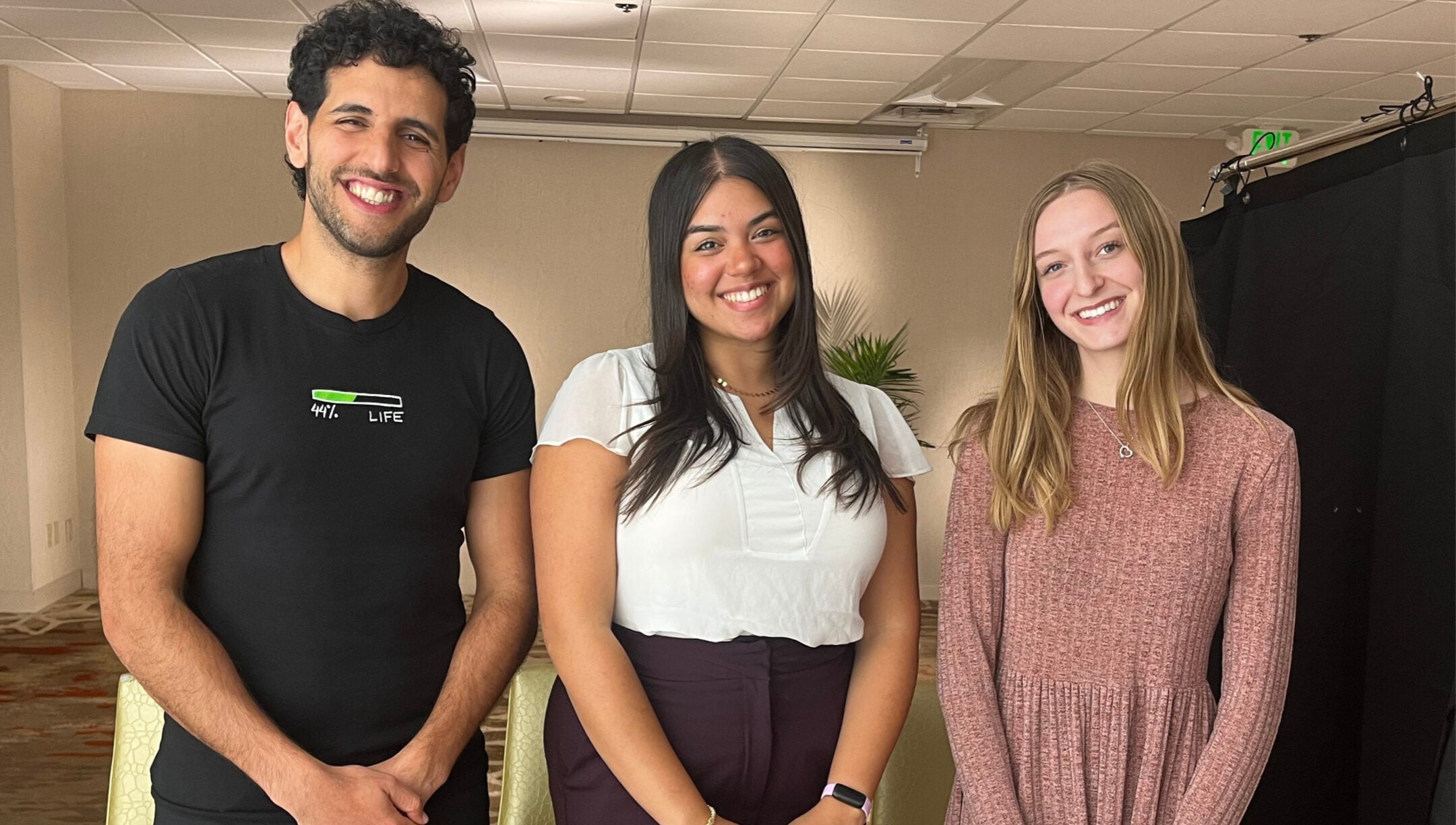
(JTA) — DENVER – Israeli-Arab social media entrepreneur Nuseir Yassin, of the viral vlog “Nas Daily,” said he believes “anti-Zionism is a form of antisemitism” and stressed his commitment to overturning “misguided hate” against Jews, at a conference devoted to the subject this week.
Yassin, 34, was speaking with the Jewish Telegraphic Agency on the sidelines of the conference, hosted by the David Merage Foundation for Confronting Antisemitism. A self-described “village boy” from the Lower Galilee town of Arraba in Israel, he achieved massive success through viral short-form videos that attracted viewers from all over the world. Today he boasts more than 68 million followers across numerous social networks.
Yassin is a Muslim of Palestinian origin, although he said he is not religious. Asked why it was important for a non-Jewish person to participate in a conference about combatting antisemitism, Yassin equated this battle to fighting for his family, noting that “the success of Israel and the Jewish people is also my success as an Israeli citizen.”
“I’m not a fan of the Israeli government, and I’m not here to defend it, just like I’m not a fan of many governments,” Yassin noted, but he asserted that the reaction to the government “is absolutely fueled by antisemitism.”
“I do believe anti-Zionism is a form of antisemitism,” he added.
He said he views Zionism as “the most vanilla thing in the world – a group of people wanting a place to live,” and has therefore concluded that Israel’s detractors “just really don’t like Jews.”
Yassin, who first broke through in 2016, has become increasingly outspoken in recent years about his combined Israeli and Palestinian identity. During the conference, he recalled that he grew up labeling himself Arab-Israeli. After the Hamas attacks of Oct. 7, 2023, he started listing Israeli first and Palestinian second.
“I could not relate to the extremism that I saw, and I wanted to distance myself from it without erasing my identity connected to it,” Yassin said. “I’m not just Israeli because I think it removes a little bit of spice, but I’m also not just Palestinian anymore.”
“A lot of Israeli culture is inside me,” he continued. “I never agree with people. I’m always disagreeable. That’s Israeli. I speak up.”
Yassin noted that he was “the first guy to go study in the United States out of my entire lineage,” graduating from Harvard University in 2014 with a degree in economics and a minor in computer science. Despite having grown up in Israel, Yassin said that Harvard was the place where he made his first Jewish friend.
After working as a software developer for Venmo in New York, Yassin left his job in 2016 to travel and document his journeys. Ultimately, he launched a Facebook page called Nas Daily – using the word for “people” in Arabic – where he posted one-minute videos for 1,000 days, telling the stories of communities around the world.
What was once a personal brand has since expanded into the parent Nas Company, which offers platforms for solo entrepreneurs to build and monetize their online businesses.
Yassin earned an honorary degree from Ben-Gurion University of the Negev in 2025 in recognition of his advocacy work for Israeli and Palestinian coexistence. This past August, he also joined the advisory board for the Genesis Prize Foundation, which each year celebrates inspiring Jewish individuals for their achievements.
“I do not relate to hundreds of men on the street shouting ‘Allahu Akbar,’” Yassin told JTA, adding that there needed to be more women and fewer religious fanatics participating in the Israeli-Palestinian conversation.
Yassin argued that he’s “not a weird Arab for saying this” and that “the entire country of the UAE says the same thing,” referring to one of the Gulf countries that signed onto the Abraham Accords normalizing relations with Israel. He also challenged “Free Palestine” activists to envision a concrete future for Palestinians rather than fixating on Israel’s transgressions.
“We should all be ‘Free Palestine’ – but from what?” Yassin asked. “We disagree on the solution, not on the problem. We don’t want suffering. Nobody wants suffering.”
“I’m a free-Palestine-from-Hamas guy,” he continued. “Just free Palestine,” he said, ”is not an answer. I’m free-Palestine-from-extremism.”
Yassin affirmed that there is room for criticism of Israel’s government, noting, for example, that he would like to see an Israeli-Arab presence in the government.
But he marveled at the notion that an alien visiting Earth would likely guess that the most hated country in the United Nations is North Korea, when in fact “It’s not – It’s Israel.”
That struck him as absurd because “the Israel-Palestine conflict is not a big deal when you compare it to everything else that’s happening on planet Earth. The only thing that makes it a big deal is that we, as Palestinians, have the perfect enemy.”
That enemy, he continued, is “the most hated type of enemy, which is the Jews.”

As part of his appearance at the conference, Yassin presented a recap of a fellowship he launched this past spring in partnership with the David Merage Foundation to help 50 content creators – 25 Jewish and 25 Muslim – produce meaningful material.
Participants received $1,000 and spent a month learning from the Nas Daily team about viral and impactful storytelling during the fellowship, named for Yassin’s first Jewish friend, Zaki Djemal, who recently died of a sudden heart attack.
To Laura Merage, the Iranian-born Jewish co-founder of the foundation, Yassin was a natural partner for this bridge-building effort. Given his social media following and “infectious personality,” Merage said she felt “that’s what we need more of in the world.”
At the conference on Tuesday, Yassin announced two winners of the fellowship’s influencer competition: recent McGill University graduate Raihaana Adira, a Canadian Muslim, and Grace, a Jewish-American digital content creator who preferred to use only her first name for privacy reasons. Grace tells stories about unique public figures, such as the first Arab “Miss Israel.” Adira, meanwhile, began posting about antisemitism and Muslim-Jewish relations after witnessing anti-Zionist protests at McGill.
“When I see a Jewish person being attacked on campus or online, it feels like I’m watching someone from my own community hurt,” Adira told JTA, noting that she started posting because no one believed her when she talked about incidents on campus.
“I wanted the protests and the graffiti on the walls that said ‘Death to the IDF’ to be seen,” she continued. “I am a Canadian, I am a Muslim, and when people at school on the streets say, ‘Death to Canada, We are Hamas, Hamas is heroic’ – that is not me.”
Adira said she received many death threats when she first started posting. While acknowledging how difficult that was, she also emphasized an influx of support that has helped “drown out the hate.”
Yassin offered a similar perspective, noting that at the beginning of his career, he “used to amplify the blowback and talk a lot about it,” referring to the criticisms he’d receive for promoting coexistence and calling out antisemitism. But after realizing that this deterred others from speaking out, he deemed the threats insignificant, calling them “the smallest price to pay for the largest outcome you can possibly imagine.”
During his travels around the world, Yassin said he has witnessed how flawed people’s perceptions of Jews can be and that he feels “a responsibility to set the record straight.” He also noted that he is dating a Jewish woman, author and influencer Aija Mayrock, whom he is marrying next year and with whom he expects to have children.
“They’re going to be Jewish, so that’s my family – literally, my family,” Yassin said.
This article originally appeared on JTA.org.
The post Israeli-Arab influencer behind ‘Nas Daily’: Anti-Zionism is antisemitism appeared first on The Forward.
