


Uncategorized
I had a shot and rock ‘n’ roll fame — I chose a lifetime of Shabbat instead
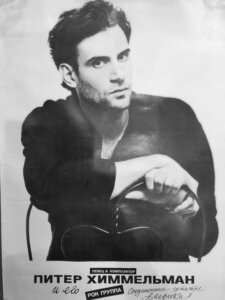
In 1986, saying no was not part of the plan. I was 26, newly signed to Island Records, and for the first time in my life, the machinery of the music business had begun to move in my favor. My songs “Waning Moon,” “I Feel Young Today,” and “1000 Years,” from my second album Gematria, were on the radio and MTV. There was talk of tours, of opening slots with artists like Sting, Joe Cocker and Greg Allman. My job, as everyone understood it, was simple: Say yes. Yes to every opportunity, yes to every kind of exposure, yes to everything that could possibly give my career momentum.
Lou Maglia, the president of Island Records, was an old-school Italian record guy — street-smart, direct and deeply invested in the artists he believed in. I was among his first signings. He had taken me on largely because of an independent record I had made called This Father’s Day, written and recorded as tribute to my dad, who died at 54, just a day after I’d turned 24. He was my mentor and my hero. Those who say his death had much to do with my sudden turn toward observant Judaism are partly right.
The other part is that in seeking a record deal since I was 13, and then finally getting one, I discovered it wasn’t the answer to what I’d actually been searching for, which was a loving family, a clearer understanding of what my life’s purpose might be, and a deeper sense of belonging in my tribe — the Jewish people.
That’s why, one afternoon, when I walked into Lou’s office and closed the door behind me, what I said to him must have sounded incomprehensible.
“Lou, I’m starting to keep this Jewish thing called Shabbos, and I won’t be available to perform on Friday nights anymore.”
He stared at me for a moment, then burst out laughing.
“Ha! Fucking Shabbos. Ok, that’s a good one, I get it. But can we talk about these opening slots?”
It wasn’t a cruel laugh. It was the laugh of a man encountering something he had no category for. In Lou’s world, artists did all kinds of self-destructive things and made radically poor decisions. But remove themselves from the single most important performance night of the week? Never. Ever.
I was, in effect, telling him I had decided to become unavailable for my own ascent.
At the time, I couldn’t have explained my decision in any coherent way. I didn’t have the vocabulary or even the conceptual framework. All I knew was that after my dad’s death something had begun to feel hollow. Not the music. The music was real. It was everything around it. The sense that if I just kept moving forward fast enough, saying yes often enough, I’d arrive at some point where things would finally make sense. They didn’t. (I can state for the record, 40 years later, they still don’t.)
But around that same time, through a chain of introductions, I met the record producer and singer Kenny Vance, of Jay and the Americans fame. Kenny, now my dear friend, had worked with everyone, and he wasn’t shy about mentioning it.
“I used to date Diane Keaton,” he told me. “I know Woody Allen. I was the music director for Saturday Night Live. But tonight, I’m gonna take you to my main connection, a religious Jew in Brooklyn.”
I suspect he thought I’d roll my eyes at the prospect. I did nothing of the sort. I was excited.
Before long, we were crossing the Brooklyn Bridge, the lights of lower Manhattan burning behind us. We arrived at an apartment in Crown Heights where Rabbi Simon Jacobson greeted us. I connected with Simon right off the bat. His eyes reflected a paradox, an awareness that being alive was both a source of great humor and great sadness. Simon told me about his work reconstructing the Lubavitcher Rebbe’s talks from memory, highly complex talks that lasted for hours and drew on thousands of Jewish sources. The scale of it was incomprehensible to me. It belonged to a world governed by entirely different assumptions than my own.
Later that night, after Kenny, who seemed very old — I think he was 40 — got tired and left for his home in Far Rockaway, I asked Simon about the paintings of the Lubavitcher Rebbe hanging on the wall.
“What’s the deal with those pictures?” I said. “They seem sort of cultish to me.”
Simon wasn’t offended. “I enjoy them,” he said. “To me, the Rebbe is like a very inspiring grandfather.”
Makes sense, I thought.
He grew quiet, then continued. “There are people called tzadikim,” he said. “They have no sense of self. They live only to serve others. And they can do anything they wish.”
I knew enough to know he wasn’t using the colloquial tzadik, as in “What a tzadik, that Herb Shapiro. Got me such a deal on my new Firestones.”
“Really?” I asked. “Can they fly?”
Simon looked at me. He became serious.
“I’ve never seen anyone fly. But for a tzadik, flying is no greater miracle than walking.”
The remark just about toppled me. Not because it sounded weird and mystical, but because it cohered with something I had always felt, but had never heard expressed so simply: that walking itself was a miracle. That breathing, eating pancakes, taking a piss, that just being alive, was a miracle.
One could accurately say that I was the fastest person ever to join the “cult.” I went out and bought tzitzit the next day. I began keeping kosher. “One less shrimp,” was how I thought of it. Then came Shabbat observance in my dumpy railroad apartment on 47th and Eighth Avenue in Hell’s Kitchen.
Shabbat, like music, was the space between notes. A kind of purposeful interruption. For one day each week, I stopped. I stopped producing. I stopped striving. Most importantly, I stopped trying to turn success into proof of my worth. It wasn’t only about stopping work. That’s too simple. It was about remembering that I was more than my work. It felt like an authentic subversion of shallow cultural norms, something that instinctively appealed to me. It was the more truthful version of the so-called subversion that rock and roll had always only imitated.
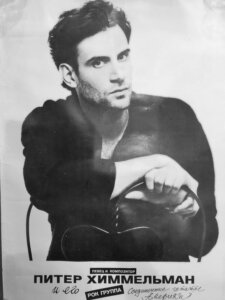
This is why I told Lou Maglia no.
Not because I was certain, but because I had begun to understand that if I lost this, I might lose something far more essential than a career.
My friend, the late Lou Maglia, lapsed Catholic, soulful man that he was, stopped laughing. He saw that I was serious. He didn’t drop me. Far from it. He became my biggest champion. When it would have been only logical for us to play cities like Cleveland and Chicago in support of one of my recordings, Lou even helped finance my tour of the Caucasus in what was then the USSR. (Another story for another time.) He knew that my music wasn’t a posture, but a reflection of my deeply held values.
Hey Lou, if you’re up there listening, thank you. You were a beautiful man with a beautiful spirit.
People sometimes ask me if the cost to my career was worth it. There are two issues I have with the question. First, it assumes the career was the central measure of my life. Second, few ask what I received in return. I have, thank God, been blessed with a beautiful marriage, a tight-knit, loving family, grandchildren, a body of work that I could never have imagined at age 26, and time. I have been able to see the value of time and secure it as my own.
As for music, Shabbat didn’t take any of it away from me. It taught me to hear it better, write it better, and perform it better.
I have never struck a better bargain.
The post I had a shot and rock ‘n’ roll fame — I chose a lifetime of Shabbat instead appeared first on The Forward.
Uncategorized
UK adopts sweeping measures against antisemitism in schools
(JTA) — The U.K. has adopted sweeping measures to combat antisemitism in English schools, prompting pushback from the country’s largest teachers’ union.
The move came after a new government-commissioned review found that three in five Jewish students reported experiencing antisemitism in English schools. The most common incidents were jokes, stereotypes and comments about Jewish people. About half of respondents who witnessed or experienced antisemitism said the incidents were not reported, most often because they did not think they would be taken seriously.
The government on Wednesday accepted 27 recommendations from the report, including dedicated antisemitism training for leaders and staff, improved recording of antisemitic incidents and moves to build a better understanding of Jewish life, identity and contemporary antisemitism.
The government commissioned the report following a spate of high-profile attacks on Jews in Britain, including an attack on a synagogue in Manchester last year that left two men dead.
The report’s author, Sir David Bell, the vice chancellor of the University of Sunderland and former chief inspector of schools in England, recommended addressing antisemitism distinctly from other forms of racism. He argued that antisemitism was a “uniquely complex” problem because of intertwined racial and religious dimensions, since Jewish identity can encompass both an ethnicity and a religion, along with expressions of prejudice that hold all Jews responsible for the actions of Israel.
The government will also encourage English schools to adopt the International Holocaust Remembrance Alliance (IHRA) working definition of antisemitism. The definition is supported by many mainstream Jewish organizations and has been adopted by 47 countries, including the U.K., but critics say that it conflates some forms of antisemitism with criticism of Israel.
British Education Secretary Lucy Powell called Bell’s review a “generational moment” and said that “implementation is now my priority.”
However, the National Education Union, the largest union representing teachers, lecturers, teaching assistants and support staff in the United Kingdom and Europe, raised concerns on Wednesday about recommending the IHRA definition for schools. NEU general secretary Daniel Kebede said in a statement that the definition “risks deepening the problem rather than tackling it, and actively undermining efforts to confront antisemitism.”
“The IHRA’s contested framing risks blurring the line between antisemitism and legitimate criticism of the Israeli government and the genocide in Gaza, leaving teachers with uncertainty when they need clarity,” said Kebede. He cited a risk that “children who cannot critically explore issues through classroom discussion will instead seek their answers in online and unsafe groups.”
Kebede also encouraged Britain’s Department for Education to strengthen guidance on all forms of racism, not only antisemitism, saying that 65% of teachers report they have not received any antiracism training in the past year.
The Board of Deputies of British Jews, an umbrella organization for British Jewish communities, celebrated the antisemitism report and the government’s adoption of its proposed measures. The group specifically praised the report’s “clear recommendations that schools and local authorities follow government guidelines by adopting the IHRA Working Definition of Antisemitism as a tool to deepen understanding of contemporary antisemitism.”
“We remain concerned about undue external influence on schools driven by narrow political agendas, and tendentious materials seeping into schools and increasing disharmony, and we will continue to press for vigilance against this,” said the Board of Deputies.
The post UK adopts sweeping measures against antisemitism in schools appeared first on The Forward.
Uncategorized
Orthodox Jewish man stabbed in midtown Manhattan
(New York Jewish Week) — An Orthodox Jewish man is in stable condition after being stabbed on Wednesday evening in the Diamond District of midtown Manhattan. Police are investigating the attack as a possible hate crime.
Police told the Jewish Telegraphic Agency that the NYPD’s Hate Crimes Task Force is investigating the incident as a possible antisemitic attack, and Manhattan Shomrim — the Jewish community watch group — has asked people to share footage as police search for the suspect. No arrests have been made.
The victim was identified by police as a 26-year-old man, and Orthodox Jewish outlet COLLive identified him as a resident of Crown Heights, the neighborhood that is home to the Chabad-Lubavitch Hasidic movement’s headquarters.
He was taken to Bellevue Hospital in stable condition. Police said they were called at about 5:50 p.m. on Wednesday after the man was stabbed in the back with “an unknown sharp object” on 47th Street near Fifth Avenue. ABC7 reported that the victim told investigators he believed he was stabbed with a needle or syringe.
According to the Chabad website, which published an interview with the victim, he is a recently ordained Hasidic rabbi named Joseph, who commutes to Midtown each day to wrap tefillin with Jewish merchants. The attacker, Joseph told the website, was a woman who seemed to be following him prior to the stabbing.
The attack comes as Jewish New Yorkers have been targeted in more than half of the hate crimes committed in New York City this year, despite making up about 12% of the city’s population.
In July, an assailant stabbed two men on the Upper West Side, including one who was leaving a synagogue, while yelling “Allahu akbar,” and was charged with committing hate crimes.
Louis Keene contributed reporting.
The post Orthodox Jewish man stabbed in midtown Manhattan appeared first on The Forward.
Uncategorized
VIDEO: A Hasid gives us a tour of Morocco in Yiddish
דער ירושלימער יוטוב־שטערן וועלוול קירשנבוים האָט לעצטנס אַרויסגעשטעלט אַ ווידעאָ אויף ייִדיש פֿון אַ פּרעכטיקן וויזיט, וואָס ער האָט געמאַכט אין מאַראָקאָ. עס באַגלייט אים זײַן חבֿר אַבֿרהם פּרץ.
אינעם ווידעאָ זעט מען ווי קירשנבוים דאַוונט שחרית מיט די אָרטיקע ייִדן און באַזוכט אַ גוט אָפּגעהיטענעם בית־עולם, וווּ עס ליגן באַערדיקט גרויסע צדיקים ווי למשל הרבֿ חיים בן עתר (1696–1743), באַקאַנט ווי דער „אור החיים“. „מענטשן מיינען, אַז נאָר אין אייראָפּע זענען דאָ קבֿרים פֿון צדיקים!“ זאָגט קירשנבוים.
מיר זעען אַ גרויסע, שיינע שיל מיט אַ פֿײַנער אַרכיטעקטור אין קאַזאַבלאַנקאַ; דעם גרויסן אַראַבישן שוק, וווּ קירשנבוים קויפֿט זיך אײַן מלבושים פּונקט ווי די מאַראָקאַנער גייען אָנגעטאָן. ער באַוווּנדערט אויך די שיינע טיי־גלעזער און טשײַניקן, וואָס מע פֿאַרקויפֿט דאָרט, און באַקענט זיך מיט אַ ייִדישן סוחר וואָס האַנדלט מיט זילבער און גאָלד, פּונקט אַזוי ווי זײַן טאַטע און זיידע האָבן געטאָן פֿאַר דור־דורות.
The post VIDEO: A Hasid gives us a tour of Morocco in Yiddish appeared first on The Forward.
