


Uncategorized
Like Trump, Hitler also wanted to build monuments to himself — so did Franco, Gaddafi and Alexander the Great
As the leader of Nazi Germany, Adolf Hitler laid out plans for structures that would serve as monuments to himself. His grandest scheme was predicated on his absolute certainty Germany would conquer the world: rebuilding Berlin into a Wagnerian monument to Teutonic superiority and renaming the city World Capital Germania.
Just as Hitler sought to inscribe himself onto Berlin’s skyline, Donald Trump has been pursuing his own form of self-mythologizing — having his name added to the Kennedy Center façade; proposing an arch larger than the Arc de Triomphe; floating other grandiose ideas meant to ensure the world doesn’t forget him.
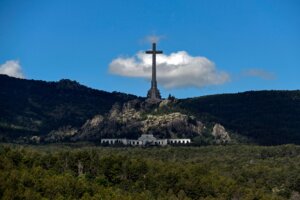
All around the globe, wherever you find megalomaniacs you will find monuments to their egos. Among them are Francisco Franco’s “Valley Of The Fallen,” a colossal bust of Ferdinand E. Marcos on a hillside in the Philippines, Joseph Stalin’s Stalingrad, streets in Syria named after the Assads, a Libyan square named after Muammar Gaddafi, North Korean streets and institutional buildings named after the Kim dynasty, and a Turin stadium that bore Mussolini’s name.
It is clear that Donald Trump envisions himself as a member of this rogue’s gallery.
Alexander the Great is among the best-known world figures to immortalize himself in this way, by founding a city in Egypt and naming it Alexandria. He was followed six centuries later by Constantine the Great, who founded a new Roman capital on the Bosporus Strait and named it Constantinople. A 100-foot column topped with a gold-encrusted statue of the emperor dominated the city’s forum.
European wars in the 18th and 19th centuries sprouted multitudes of monuments to victorious leaders — glorious and otherwise. After Kaiser Wilhelm I’s armies defeated Denmark, Austria and France, the Germans raised gargantuan memorials that blended modern triumph with mythic antiquity. Many are still standing: towering figures of Germania, medieval emperors and legendary warriors.
“Herman the German,” an 82-foot-tall tribal chieftain in a winged helmet, and mounted atop an 88-foot temple-like pedestal, looms over the north German countryside with his sword raised as if daring anyone to challenge him. The figure is actually Hermann — the Germanized name of Arminius, as the Romans called the Cheruscan leader who annihilated three legions in the Teutoburg Forest in 9 A.D.
At the Deutsches Eck in Koblenz, an enormous bronze statue of Kaiser Wilhelm I astride his horse rises above the confluence of the Rhine and Moselle, announcing Germany’s arrival as a great power. Forty miles upstream, on the east bank of the Rhine, stands the Niederwalddenkmal, a 125-foot colossus celebrating Germany’s victory over France and the founding of the Reich in 1871.
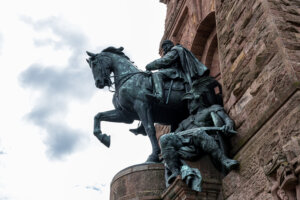
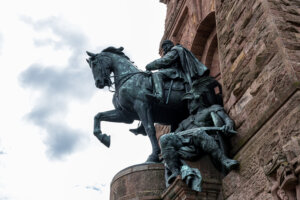
On the other side of Germany, perched on a mountain in Thuringia is the Kyffhäuserdenkmal — 266 feet of terraces, arches and towers built to celebrate Kaiser Wilhelm I and the new German Empire he presided over. At its base sits a massive stone figure of Emperor Frederick Barbarossa, the 12th-century ruler who, according to legend, never died but sleeps inside the mountain, waiting to return when Germany needs him.
All of these monuments, bespeaking the glory of Germans and their ancestors, were repurposed by the Nazis to project a sense of historical inevitability — as if Hitler’s regime were the next chapter in a lineage stretching from Arminius to Barbarossa to Wilhelm I.
Long before Hitler became chancellor, Berlin already possessed grandiose monuments to Teutonic greatness: the Siegessäule (Victory Column) and the Brandenburg Gate, crowned by a bronze quadriga driven by Victoria, the Roman goddess of victory. Hitler and his architect, Albert Speer, envisioned even grander transformations. The centerpiece of World Capital Germania was to be a structure called the Volkshalle (People’s Hall), a domed monstrosity that would be able to hold 180,000 people. Also on the drawing board was a Triumphal Arch, so large that the Arc de Triomphe would have fit within its opening.
After France’s defeat in 1940, Hitler signed a decree asserting: “In the shortest possible time Berlin must be redeveloped and acquire the form that is its due through the greatness of our victory as the capital of a powerful new empire.”
Hitler added: “I expect that it will be completed by the year 1950.”
Obviously, Hitler didn’t last that long. Neither did work on “World Capital Germania.” And all across defeated Germany, the thousands of street signs bearing Hitler’s name came down and were replaced.
Donald Trump, perhaps glimpsing his own mortality, seems to be in a hurry to leave an indelible and grandiose imprint on the nation’s capital and beyond. Much of the country watched in disbelief as heavy equipment tore into the White House East Wing to clear ground for a super-sized new ballroom designed in the gilded idiom of America’s 47th president. His name newly affixed beside JFK’s on the façade of the Kennedy Center only amplified the sense that Trump is racing to secure the permanence he has long craved.
And he is far from finished.
His most extravagant project is one reminiscent of Hitler’s ideas for World Capital Germania — that “triumphal arch” that the White House has cast as a defining pillar of Trump’s legacy.
“The arch is going to be one of the most iconic landmarks not only in Washington, D.C., but throughout the world,” White House spokesman Davis Ingle declared.
But even as Trump pursues these monumental ambitions, he keeps running into the limits of democratic resistance. In one of the more brazen episodes, he told Senate Majority Leader Chuck Schumer that he would release long-delayed federal funds for a critical rail tunnel between New Jersey and New York if Dulles International Airport and Penn Station were renamed for him. Schumer refused, and the gambit collapsed.
The only way Trump managed to get his name onto the Kennedy Center was by replacing multiple board members with loyalists and then having himself appointed board chair. His newly installed board approved adding his name to the building’s façade — a move that cannot legally alter the institution’s official name, which only Congress can change. This particular gambit backfired, prompting a long list of prominent performers to cancel appearances in protest.
Trump’s plans for a grand arch could also face some obstacles, because of laws designed to protect the capital’s commemorative landscape.
Who knows how much of Trump’s ambitions to remake Washington, D.C. in his own image will come to fruition. But even if a Trumpian analog of Germania never arises, with the way he has disrupted this country and the world, he’s already molded himself into something like a menacing monument in human form.
The post Like Trump, Hitler also wanted to build monuments to himself — so did Franco, Gaddafi and Alexander the Great appeared first on The Forward.
Uncategorized
UK adopts sweeping measures against antisemitism in schools
(JTA) — The U.K. has adopted sweeping measures to combat antisemitism in English schools, prompting pushback from the country’s largest teachers’ union.
The move came after a new government-commissioned review found that three in five Jewish students reported experiencing antisemitism in English schools. The most common incidents were jokes, stereotypes and comments about Jewish people. About half of respondents who witnessed or experienced antisemitism said the incidents were not reported, most often because they did not think they would be taken seriously.
The government on Wednesday accepted 27 recommendations from the report, including dedicated antisemitism training for leaders and staff, improved recording of antisemitic incidents and moves to build a better understanding of Jewish life, identity and contemporary antisemitism.
The government commissioned the report following a spate of high-profile attacks on Jews in Britain, including an attack on a synagogue in Manchester last year that left two men dead.
The report’s author, Sir David Bell, the vice chancellor of the University of Sunderland and former chief inspector of schools in England, recommended addressing antisemitism distinctly from other forms of racism. He argued that antisemitism was a “uniquely complex” problem because of intertwined racial and religious dimensions, since Jewish identity can encompass both an ethnicity and a religion, along with expressions of prejudice that hold all Jews responsible for the actions of Israel.
The government will also encourage English schools to adopt the International Holocaust Remembrance Alliance (IHRA) working definition of antisemitism. The definition is supported by many mainstream Jewish organizations and has been adopted by 47 countries, including the U.K., but critics say that it conflates some forms of antisemitism with criticism of Israel.
British Education Secretary Lucy Powell called Bell’s review a “generational moment” and said that “implementation is now my priority.”
However, the National Education Union, the largest union representing teachers, lecturers, teaching assistants and support staff in the United Kingdom and Europe, raised concerns on Wednesday about recommending the IHRA definition for schools. NEU general secretary Daniel Kebede said in a statement that the definition “risks deepening the problem rather than tackling it, and actively undermining efforts to confront antisemitism.”
“The IHRA’s contested framing risks blurring the line between antisemitism and legitimate criticism of the Israeli government and the genocide in Gaza, leaving teachers with uncertainty when they need clarity,” said Kebede. He cited a risk that “children who cannot critically explore issues through classroom discussion will instead seek their answers in online and unsafe groups.”
Kebede also encouraged Britain’s Department for Education to strengthen guidance on all forms of racism, not only antisemitism, saying that 65% of teachers report they have not received any antiracism training in the past year.
The Board of Deputies of British Jews, an umbrella organization for British Jewish communities, celebrated the antisemitism report and the government’s adoption of its proposed measures. The group specifically praised the report’s “clear recommendations that schools and local authorities follow government guidelines by adopting the IHRA Working Definition of Antisemitism as a tool to deepen understanding of contemporary antisemitism.”
“We remain concerned about undue external influence on schools driven by narrow political agendas, and tendentious materials seeping into schools and increasing disharmony, and we will continue to press for vigilance against this,” said the Board of Deputies.
The post UK adopts sweeping measures against antisemitism in schools appeared first on The Forward.
Uncategorized
Orthodox Jewish man stabbed in midtown Manhattan
(New York Jewish Week) — An Orthodox Jewish man is in stable condition after being stabbed on Wednesday evening in the Diamond District of midtown Manhattan. Police are investigating the attack as a possible hate crime.
Police told the Jewish Telegraphic Agency that the NYPD’s Hate Crimes Task Force is investigating the incident as a possible antisemitic attack, and Manhattan Shomrim — the Jewish community watch group — has asked people to share footage as police search for the suspect. No arrests have been made.
The victim was identified by police as a 26-year-old man, and Orthodox Jewish outlet COLLive identified him as a resident of Crown Heights, the neighborhood that is home to the Chabad-Lubavitch Hasidic movement’s headquarters.
He was taken to Bellevue Hospital in stable condition. Police said they were called at about 5:50 p.m. on Wednesday after the man was stabbed in the back with “an unknown sharp object” on 47th Street near Fifth Avenue. ABC7 reported that the victim told investigators he believed he was stabbed with a needle or syringe.
According to the Chabad website, which published an interview with the victim, he is a recently ordained Hasidic rabbi named Joseph, who commutes to Midtown each day to wrap tefillin with Jewish merchants. The attacker, Joseph told the website, was a woman who seemed to be following him prior to the stabbing.
The attack comes as Jewish New Yorkers have been targeted in more than half of the hate crimes committed in New York City this year, despite making up about 12% of the city’s population.
In July, an assailant stabbed two men on the Upper West Side, including one who was leaving a synagogue, while yelling “Allahu akbar,” and was charged with committing hate crimes.
Louis Keene contributed reporting.
The post Orthodox Jewish man stabbed in midtown Manhattan appeared first on The Forward.
Uncategorized
VIDEO: A Hasid gives us a tour of Morocco in Yiddish
דער ירושלימער יוטוב־שטערן וועלוול קירשנבוים האָט לעצטנס אַרויסגעשטעלט אַ ווידעאָ אויף ייִדיש פֿון אַ פּרעכטיקן וויזיט, וואָס ער האָט געמאַכט אין מאַראָקאָ. עס באַגלייט אים זײַן חבֿר אַבֿרהם פּרץ.
אינעם ווידעאָ זעט מען ווי קירשנבוים דאַוונט שחרית מיט די אָרטיקע ייִדן און באַזוכט אַ גוט אָפּגעהיטענעם בית־עולם, וווּ עס ליגן באַערדיקט גרויסע צדיקים ווי למשל הרבֿ חיים בן עתר (1696–1743), באַקאַנט ווי דער „אור החיים“. „מענטשן מיינען, אַז נאָר אין אייראָפּע זענען דאָ קבֿרים פֿון צדיקים!“ זאָגט קירשנבוים.
מיר זעען אַ גרויסע, שיינע שיל מיט אַ פֿײַנער אַרכיטעקטור אין קאַזאַבלאַנקאַ; דעם גרויסן אַראַבישן שוק, וווּ קירשנבוים קויפֿט זיך אײַן מלבושים פּונקט ווי די מאַראָקאַנער גייען אָנגעטאָן. ער באַוווּנדערט אויך די שיינע טיי־גלעזער און טשײַניקן, וואָס מע פֿאַרקויפֿט דאָרט, און באַקענט זיך מיט אַ ייִדישן סוחר וואָס האַנדלט מיט זילבער און גאָלד, פּונקט אַזוי ווי זײַן טאַטע און זיידע האָבן געטאָן פֿאַר דור־דורות.
The post VIDEO: A Hasid gives us a tour of Morocco in Yiddish appeared first on The Forward.
