


Uncategorized
Pro-Palestinian LA Times Heiress Seizes Left-Wing Outlet to Push Agenda

May 1, 2024; Los Angeles, California, USA; A flag is waved during a sit-in outside of a pro-Palestinian encampment at the campus of UCLA. Violence broke out early in the morning at the encampment, hours after the university declared that the camp “is unlawful and violates university policy.” Photo: USA TODAY Network via Reuters Connect.
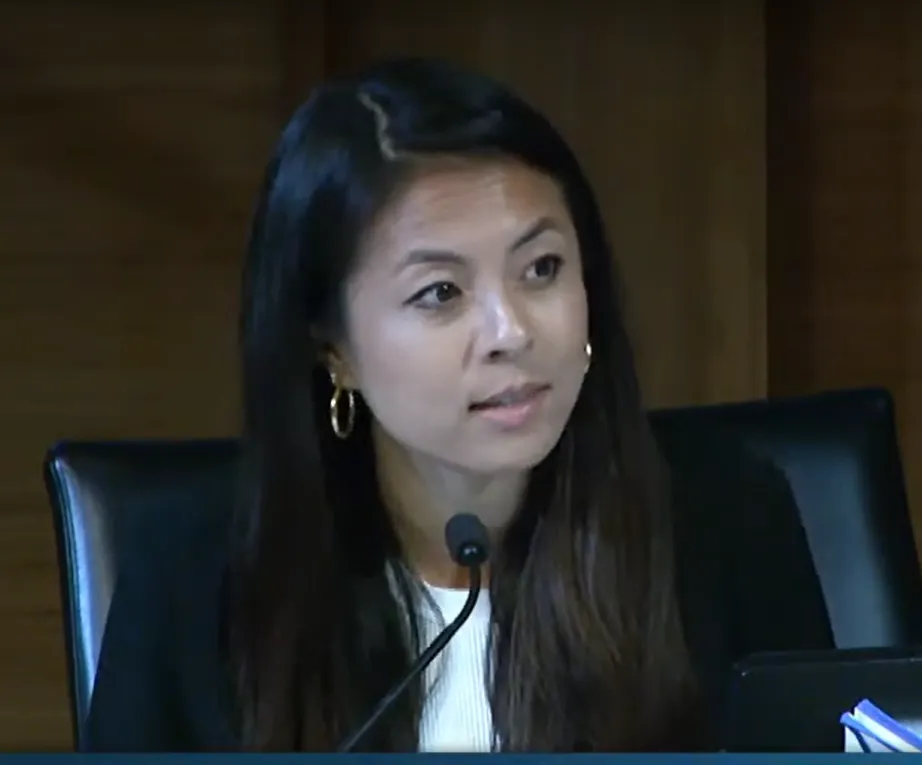
The pro-Palestinian daughter of the Los Angeles Times owner has recently been appointed publisher of the left-leaning outlet Drop Site News— a new platform for her to espouse her hateful views about Israel.
Nika Soon-Shiong, 32, daughter of billionaire Patrick Soon-Shiong, is no stranger to newsrooms. She has allegedly interfered behind the scenes at her father’s newspaper to influence coverage, meddling with headlines and clashing with editors who didn’t align with her activist agenda.
Soon-Shiong’s own public statements reveal a consistent hostility toward Israel and Zionism. On social media, she has displayed a Palestinian flag in her bio, dismissed the IHRA working definition of antisemitism, described Israel as an “apartheid state” that is engaged in “genocide” — and even alleged that the Los Angeles City Council was funding a “Zionist militia.”
It’s not journalistic malpractice to describe the state of Israel as an Apartheid state. This is well-established in international law. It’s the legal term for unlawful “killing, torture, forcible transfer, and denial of basic rights.” pic.twitter.com/hIoi3FiuSB
— Nika Soon-Shiong
(@nikasoonshiong) November 1, 2023
Despite this pattern of rhetoric aligning with fringe, hardline narratives rather than journalistic neutrality, Soon-Shiong has, since 2021, sat on the board of the Committee to Protect Journalists (CPJ) — an organization that redefines international law to designate terrorists as journalists.
How much influence has Soon-Shiong exerted on the CPJ? Even before the October 7 massacre and the resulting war, the CPJ published a report accusing the Israeli military of acting with “impunity” and severely undermining freedom of the press. This, even while according to the organization’s own data, Israel did not even feature in its so-called “Global Impunity Index,” which charts the countries in which press freedom is curtailed and where there is a lack of accountability when journalists are killed.
The double standards were glaring.
The CPJ has also been at the forefront of eulogizing so-called “journalists” who were killed in Gaza while working for outlets like Al-Aqsa TV and Quds News Network, which are affiliated with Hamas.
As we will see below, Soon-Shiong isn’t overly concerned when it comes to distinguishing between journalists and terrorists. One can only assume that this has played an active role in the CPJ’s willful blindness on this issue.
A New Platform for Anti-Israel Hate
So what happens if someone who brings both money and an extreme pro-Palestinian agenda is given her own media outlet?
We’re about to find out. Soon-Shiong has been appointed publisher of Drop Site News, a proudly left-wing outlet positioning itself as a corrective to what it calls mainstream media’s failure to cover “genocide” and “apartheid.”
It’s a media outlet devoted to delegitimizing Israel and promoting terrorist agendas. Alarmingly, its audience keeps growing.
The move provides Soon-Shiong’s ideological agenda a direct platform with more than 400,000 followers, which is most likely now set to receive a significant injection of cash.
Funding Gaza Journalists or Terrorists?
For starters, just before Soon-Shiong’s new role was announced, she launched a fund to support an undisclosed list of Gaza “journalists” whose vetting process raises questions about possible terror ties.
The fundraising initiative is run in partnership with Unmute Humanity, which describes itself as “a grassroots collective to disrupt media complicity and call for accurate reporting of the U.S.-funded genocide by Israel against Palestinians.”
The so-called “Gaza Journalist Fund” has already raised more than $200,000, but no list of beneficiaries has been published. Instead, the group says it supports “journalists who have appeared on Unmute Humanity’s Voices of Palestine webcast or weekly TikTok Lives, or individuals with whom Unmute Humanity maintains ongoing direct communication.”
In partnership with @unmutehumanity, @DropSiteNews launched the Gaza Journalist Fund. As Israel’s invasion of Gaza City escalates, the steep costs for evacuation and shelter are the line between life and death.
Donate at: https://t.co/AGAOXpIf7Q pic.twitter.com/xFVQSBIRYM
— Nika Soon-Shiong
That vague “vetting process” has already spotlighted troubling figures. One is Bisan Owda, an Al Jazeera reporter exposed as a longtime member of the Popular Front for the Liberation of Palestine (PFLP) — a terror group responsible for suicide bombings, shootings, rocket fire, and the 2014 massacre of five Jewish worshipers in a Jerusalem synagogue. Unmute Humanity repeatedly promoted Owda across its platforms throughout 2024.
Another example is Anas al-Sharif, a Hamas operative who masqueraded as an Al Jazeera journalist until being killed by the IDF. Unmute Humanity openly eulogized him in posts and collaborations with other pro-Palestinian groups. Had he survived, it appears he would have been eligible for Soon-Shiong’s Gaza Journalist Fund.
Another “journalist” whose material was promoted is Mohammed Salama, a Hamas terrorist who posed as an Al Jazeera journalist and was targeted by the IDF together with al-Sharif.
If these examples are the norm rather than the exception, Soon-Shiong may effectively be financing terrorists under the guise of supporting Gaza reporting, through partnerships with groups that present them as journalists.
And she does not even try to hide her agenda.
Soon-Shiong also proudly announced her plans to turn her new media toy into an instrument of propaganda, for the sake of “the verdict of history”:
As I shared with @maxwelltani for @semafor, for media institutions that downplay genocide, ignore apartheid, and fail to cover America’s (profitable) role in foreign wars—the verdict of history will be merciless.https://t.co/sbeuvJCBb2
— Nika Soon-Shiong
And Drop Site News’ Middle East editor recently explained — in an agenda-driven panel with CPJ’s CEO and former head of Human Rights Watch — that journalists should join the Gaza-bound flotilla (and thus take part in a blatant breach of international maritime law) because avoiding it is a “political” decision.
At a Columbia Journalism School panel on press freedom in Gaza, moderator Azmat Khan revealed CNN editors barred one of their reporters from joining the Gaza-bound Global Sumud Flotilla. Drop Site’s @SharifKouddous explained the risks and reasoning behind sending our editor Alex… pic.twitter.com/9jbNCTYK92
— Drop Site (@DropSiteNews) September 28, 2025
Many questions arise: How much cash is Soon-Shiong funnelling into Drop Site News? Is she planning to tighten her grip on her father’s newsroom, too? And who are the so-called “journalists” in Gaza now poised to receive US dollars?
The American public is owed absolute transparency — because when media power and US money are funneled into agendas that imperil Jewish lives — silence is complicity.
HonestReporting is a Jerusalem-based media watchdog with a focus on antisemitism and anti-Israel bias — where a version of this article first appeared.
Uncategorized
Trump endorses Netanyahu for reelection, warning Israelis against choosing another leader
President Donald Trump endorsed Israeli Prime Minister Benjamin Netanyahu for reelection, giving his longtime ally a major boost just nine days before Israel’s Oct. 27 election, which polls indicate could end without a clear winner.
“Please let this letter serve to represent my complete and total endorsement of Bibi Netanyahu in his upcoming race for re-election as Prime Minister of Israel,” Trump wrote Sunday in a lengthy post on Truth Social, praising Netanyahu as a strong leader and trusted partner in confronting Iran.
Netanyahu, Israel’s longest-serving prime minister, is seeking a seventh term after surviving political crises that repeatedly appeared likely to end his career — most significantly after the Oct. 7, 2023, Hamas attack. Recent polls suggest neither Netanyahu’s right-wing coalition nor the opposition is sure to win the 61 seats needed to form a government in the 120-member Knesset.
In his endorsement, echoing the sentiment of Netanyahu’s campaign, Trump warned Israeli voters that choosing anyone else as prime minister could put more pressure on the United States to deal with threats in the Middle East alone. “If Israel has the wrong leader, which would be anyone other than Bibi, America will have to do this work ourselves, and I am not inclined to do so,” Trump wrote. “Bibi Netanyahu has been strong, brave, and brilliant in the face of tremendous opposition, including that coming from even Israel, itself.”
Gadi Eisenkot, a former IDF chief of staff whose son was killed in the Gaza war, has emerged as Netanyahu’s chief rival. Eisenkot has floated a path to a government that does not require a majority in the Knesset. However, one of his partners in the anti-Netanyahu bloc, Avigdor Lieberman, has said in recent days he would oppose such a move. Recent polling puts Lieberman’s party at an average of eight or nine seats — enough to give Lieberman leverage in who leads the government.
Trump’s endorsement came hours after Netanyahu appeared on another program, the Fox News show Life, Liberty & Levin hosted by journalist and commentator Mark Levin. Netanyahu spoke glowingly of Trump and the importance of his battle to destroy the Iranian threat, as the American public prepares to head to the polls for midterm elections on Nov. 3. In that race, Republicans are fighting to maintain control of the House and Senate.
The U.S. war with Iran, which has slowed the flow of oil through the Strait of Hormuz causing gasoline prices to rise, has been unpopular with American voters and is often cited as one of the reasons Republican politicians could lose their races to Democrats.
Netanyahu made the case on Fox that the defeat of the Islamic Republic and the elimination of its nuclear program was critical to ensuring a safe American future. In the U.S., some lawmakers have insisted that the war was unnecessary.
If Iran can destroy Israel, it will conquer the Middle East, control world waterways and oil supplies and proceed to Europe and proceed “to the next target, which is you,” Netanyahu said, addressing a U.S. audience in his Fox News appearance.
A boost for Netanyahu in the final stretch
Trump has taken a personal interest in Israel’s election, but he held off on endorsing Netanyahu for months, raising questions about whether he was keeping his options open in case the longtime Israeli leader lost. “I’m not involved in [Israeli] politics anymore,” Trump told Time magazine in September. In an interview with Newsmax on Thursday, when asked whether he trusted Netanyahu, Trump said he did not trust anybody.
Sunday’s endorsement comes as Netanyahu steps up his campaign to rally his base and convince undecided voters that his close relationship with Trump is essential to Israel’s security. Trump remains popular in Israel, though his approval has declined in recent months following the ceasefire agreement with Iran. But the move could also complicate the president’s ability to influence what happens after the election, if neither political bloc wins a majority.
Trump has previously shown a willingness to pressure Israeli political leaders, including his public campaign last year for President Isaac Herzog to pardon Netanyahu of corruption charges.
Nonetheless, by declaring that Netanyahu is the only acceptable leader for the U.S. administration, Trump may have made it harder to persuade opposition parties to join a unity government led by Netanyahu if the election produces a political stalemate. It also gives Netanyahu another reason to resist stepping aside in post-election negotiations, knowing that the American president has publicly declared him the only alternative.
Netanyahu has already begun sharpening that message, arguing that he and Trump have unfinished business and only two more years to accomplish their shared goals before Trump’s term ends in January 2029. The messaging carries an implicit warning about Israel’s relationship with Washington after Trump leaves office. Whether the next president is Republican or Democrat, any Israeli leader may find it harder to maintain the same level of personal access and cooperation.
The election also carries broader consequences for American Jewry. Netanyahu has become increasingly unpopular among American Jews and Democrats, many of whom oppose his alliance with far-right and religious parties. A change in leadership could allow Israel to rebuild ties with Democrats and reconnect with parts of the American Jewish community — even without bringing nearly as much change in Israeli policy as some might hope.
Rep. Dan Goldman, a Jewish Democrat from New York who was defeated earlier this year in a primary that focused on his support for Israel, posted on X that the U.S.-Israel alliance “will suffer permanent damage if this Israeli government continues to hold power after the election on October 27.”
Polls point to another deadlock
The latest polls show that Netanyahu faces a difficult path to reelection.
Surveys published over the weekend show Eisenkot’s Yashar party ahead of Netanyahu’s Likud, with the opposition parties holding a combined 55 seats. The two Arab lists — the United List, a coalition of three Arab Israeli parties, and Ra’am led by Mansour Abbas — are generally counted outside either bloc.
Those numbers help explain why Trump’s endorsement matters.
A few additional seats could change the balance of power and determine who gets the first opportunity to form a government. And even if Netanyahu fails to secure a majority, he could still benefit from a political deadlock if his bloc wins enough seats to prevent the opposition from forming a government.
In that scenario, Netanyahu would remain prime minister until a new government is sworn in, potentially setting the stage for another election.
JTA contributed to this report.
The post Trump endorses Netanyahu for reelection, warning Israelis against choosing another leader appeared first on The Forward.
Uncategorized
The Supreme Court considers ‘chutzpah’ case as rabbinical and civil courts collide
Can courts instruct a rabbinical court to withdraw accusations of chutzpah? This unlikely question was posed to the U.S. Supreme Court this month when a nursing home dispute offered a rare window into how American courts and rabbinical courts operate in parallel. The case illustrates how law – and life – get messy when one encroaches on the other’s authority.
The case centers on an ownership dispute over a New York nursing home, with millions of dollars at stake.
To resolve the dispute, one of the parties — Samuel Strulovitch — turned to a beit din, or rabbinical court, in Monsey, New York. Rabbinical courts across the United States regularly resolve a wide range of business disputes like this one. Beit dins have been growing across the U.S., with more locations, increasing caseloads, and a growing number of rulings popping up in civil courts.
Their popularity reflects two legal systems working together. First, Jewish law generally requires disputes between Jews to be resolved before rabbinical courts rather than civil courts — a rule that, like any good Jewish law rule, comes with plenty of exceptions and caveats. Second, American law treats rabbinical arbitration like other forms of commercial arbitration. When parties voluntarily agree to arbitration, a civil court will generally confirm the resulting “award,” giving it the force of a legal judgment. Going to a beit din thus serves two purposes simultaneously: satisfying a religious obligation and resolving a commercial dispute.
In this case, overlapping interests of multiple investors complicated matters. Strulovitch obtained an award from the Monsey beit din granting him an ownership stake in the nursing home. But the proceeding included Strulovitch and one co-owner, while other owners never agreed to submit the dispute to that beit din. That agreement matters to American courts because arbitration rests on consent, and a beit din’s award cannot bind parties who never agreed to its authority.
The result was more than two years of litigation in two civil courts and three rabbinical courts. That litigation ultimately wound its way before Judge Linda Jamieson of Westchester County, New York. Initially, she barred Strulovitch from confirming or enforcing the original rabbinical award while the court considered whether it affected the rights of investors who had never agreed to arbitration. The bar on civil enforcement was largely uncontroversial: deciding whether a religious ruling should carry the force of an American legal judgment is the civil court’s job.
A second injunction, however, transformed this commercial dispute into a constitutional controversy worthy of the Supreme Court’s attention. After Strulovitch summoned another investor, Moshe Bain, before a Brooklyn beit din, Bain asked Jamieson to bar proceedings in any other forum, “including any beis din,” which she did. In Jamieson’s view, the new beit din proceeding could encompass the same ownership disputes already before her court.
The beit din, however, viewed the order as a form of judicial overreach into religious matters. It thus issued a seruv — a religious contempt order that can expose its target to communal shunning — against Bain, citing the “chutzpah of enjoining [Strulovitch] from pursuing his Halachic rights.” The rabbis emphasized that the beit din had acted “of its own volition,” without any request from Strulovitch or his agents following Jamieson’s injunction.
Such a contempt order, of course, carries no civil legal force, but can have reputational consequences — and trigger social sanctions — within the Jewish community. Judge Jamieson nevertheless viewed the beit din’s actions as an attempt to circumvent her injunction and draw the dispute away from her court. She therefore ordered Strulovitch to “take all steps necessary” to have the beit din withdraw it, “including withdrawing the entire proceeding.” And while Strulovitch argued that intervening in internal rabbinical court matters violated the First Amendment, Jamieson concluded that the matters before the beit din were “not religious,” but commercial disputes that her court had authority to resolve under secular law.
It is here that the judge began to veer from her lane, causing Strulovitch to seek emergency relief from the Supreme Court. By requiring Strulovitch to seek reversal of a religious contempt order that has no civil consequences, the court moved beyond determining civil legal rights and into matters of religious practice. Participation in a beit din is both a means of resolving a commercial dispute and a religious requirement, which under Jewish law is no different than observing Shabbat or keeping kosher. Its commercial subject does not erase its religious significance. And under the First Amendment, it is the believer, not the state, who defines what his faith requires.
The key constitutional question is which authority gets to decide. Courts should decide legal questions, such as whether to enforce an agreement to arbitrate before a beit din or give its award the force of a legal judgment.
But questions of whether to pursue a case in beit din or religiously sanction a party for refusing to participate generally stand beyond the court’s authority so long as those decisions do not violate an independent civil legal right.
The same holds for a religious obligation to pay: A civil court can decline to enforce a beit din’s award, but whether Jewish law nevertheless requires payment remains a matter for the beit din. By demanding Strulovitch work to withdraw the seruv, however, Jamieson crossed into determining religious matters — precisely the sphere the First Amendment protects from judicial interference. That boundary makes this case worthy of Supreme Court inquiry: a judge can decide whether a religious ruling has legal force, but deciding what Jewish law counts as chutzpah is another matter.
For now, the Supreme Court has left those questions unresolved. Justice Sonia Sotomayor required Bain to formally respond to Strulovitch’s request — a sign that it warranted closer consideration. And while she ultimately declined to intervene, she left the door open for him to return once the case played out in the New York courts.
No doubt, as the beit din system grows, harder questions will emerge. But a good rule of thumb is this: Matters of religious doctrine, or of a party’s standing in a religious community, generally lie beyond a civil court’s reach, so long as they leave the party’s rights under American law untouched. Matters that affect those rights belong to the civil courts, even if they also implicate matters that Judaism considers religious. That is how these parallel legal systems can operate alongside one another — each staying in its lane.
(Both of us are affiliated with the Beth Din of America, which is not involved in this case.)
The post The Supreme Court considers ‘chutzpah’ case as rabbinical and civil courts collide appeared first on The Forward.
Uncategorized
Huckabee calls settler attack on Washington Post photographer a ‘despicable act of terror’
(JTA) — U.S. Ambassador to Israel Mike Huckabee on Saturday condemned an attack in the West Bank by masked settlers on a Washington Post photographer. The attack, which also targeted Palestinians harvesting their olives, occurred Friday and comes amid a sharp rise in settler violence.
Heidi Levine, the Washington Post photographer who holds U.S. citizenship, described the attack to reporters from her hospital bed.
“I got jumped and I saw in the very beginning at least 25, maybe 50 of them, and I was on the ground and they were kicking me for like 10 minutes,” she said.
“We have called for a full investigation, arrest, and prosecution to the fullest extent of the law to whoever participated in this,” Huckabee wrote on X. “Attacking a female photographer is a despicable act of terror carried out by masked cowards. Dishonorable act of senseless violence.”
Israeli President Isaac Herzog also condemned the “shocking violence” and said he had called Levine to apologize. “I expressed my deepest sorrow to Heidi and apologized for what she went through. The despicable behavior of the perpetrators of this attack does not represent the citizens or the values of the State of Israel.”
Video footage from the scene shows masked settlers surrounding and attacking Levine. Some settlers at the scene were masked and carrying weapons. Palestinians can also be seen throwing stones toward the settlers.
A Palestinian was reportedly shot in additional clashes in the area. The Israel Defense Forces alleged in an official statement that soldiers “fired toward a suspect who ran toward them, carrying a sharp object and posed a threat.” Several vehicles were set on fire by the settlers.
Prime Minister Benjamin Netanyahu was equivocal in addressing the attack, stopping short of directly condemning the assailants.
He said that the circumstances in which Levine was allegedly assaulted “remain unclear,” while adding that “Israel unequivocally condemns violence against anyone.”
According to Netanyahu’s statement, “200 Arabs and far-left activists confronted approximately 40 Israeli youths.”
“We will not allow disputed incidents to be exploited to demonize the hundreds of thousands of law-abiding Jewish residents of Judea and Samaria,” the statement said, using the biblical names for the West Bank.
Netanyahu faces elections in less than two weeks and can ill afford to alienate his far-right coalition partners who are aligned with extreme settler factions.
Israeli opposition leader Yair Lapid, by contrast, issued a forceful condemnation of the attack and linked it to the policies of Netanyahu’s government.
“Jewish terror attacks, this time targeting a Washington Post photographer as well, are not a failure of the government — they are the government’s policy,” Lapid said.
“We will put an end to this. It is a disgrace to the State of Israel, a disgrace to the Jewish people, and a disaster on the international stage,” he added. Settler violence against Palestinians in the West Bank has surged since the Oct. 7, 2023, Hamas-led attack on Israel. Netanyahu’s government has sought to downplay the phenomenon, often portraying the perpetrators as a small group of violent youths. But numerous figures in Israel’s political and security establishments have warned that the violence is a broader and dangerous phenomenon.
Levine told reporters the settlers forcibly took her equipment. “All I remember afterwards is that Palestinians managed to come and rescue me and try to carry me, and then an ambulance came,” she said.
The IDF acknowledged the incident in an official statement, saying that “a female journalist was injured” during a “confrontation.” The military said troops dispersed those involved and that “details of the incident will be examined.”
“Violence against innocent civilians is a grave and intolerable phenomenon that requires a coordinated, multi-agency response. The IDF will work together with the relevant authorities to eradicate this phenomenon,” the military said.
The IDF did not announce any arrests in connection with the attack. Settler violence against Palestinians in the West Bank has frequently gone unpunished, with many such incidents resulting in no arrests.
The Foreign Press Association, which represents international media in Israel and the Palestinian territories, condemned the attack, saying Levine was “badly beaten by Israeli settlers” and had sustained moderate injuries.
“This is the latest in a long line of violent attacks by Israeli settlers against journalists and other civilians in the occupied West Bank. Yet our repeated calls for action to confront this lawlessness have been ignored by Israeli authorities,” the association said.
Matt Murray, executive editor of the Post, issued a statement calling for an investigation. “While we are relieved that Heidi has received medical care and is safe, we are outraged by this unwarranted attack on a journalist doing her job and urge a thorough investigation and follow-through from authorities,” Murray said.
The post Huckabee calls settler attack on Washington Post photographer a ‘despicable act of terror’ appeared first on The Forward.
