


Uncategorized
‘The Pitt’ tackled the trauma of the Tree of Life attack. Here’s how survivors of the synagogue shooting reacted to the episode.
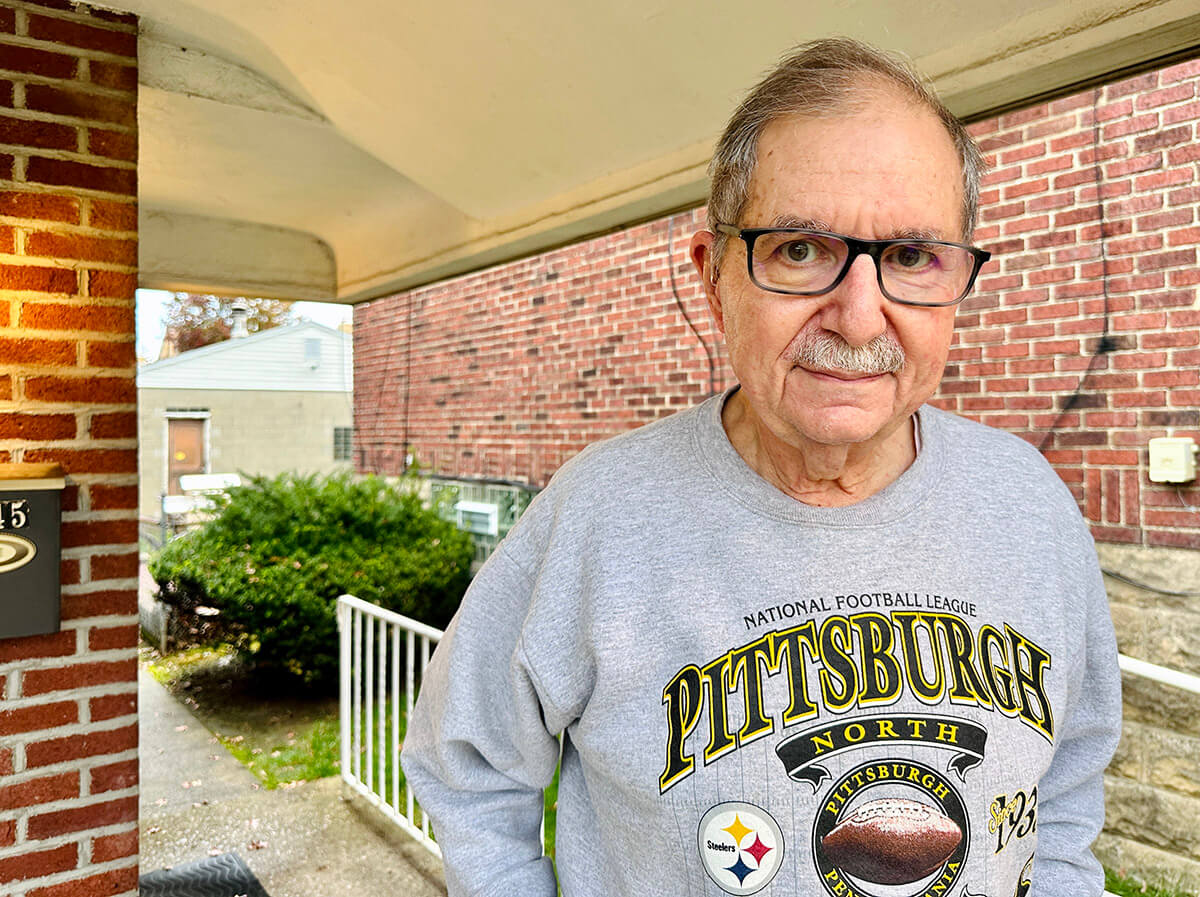
When Audrey Glickman, a lifelong Pittsburgher and a survivor of the Tree of Life massacre, sat down to watch The Pitt Friday morning, she knew exactly what was coming. And still she found herself moved by it.
On Thursday’s episode of the HBO Max medical drama, which is set in Pittsburgh, a patient arrives at the emergency room with a burn. It’s the Fourth of July. Fireworks crackle outside. In her kitchen, the woman had been using a samovar — a traditional metal urn often used in Jewish homes to heat water — when the sudden noise startled her and she dropped it.
The scalding water spilled onto her leg.
When her doctor asks what happened, she offers an explanation that reaches further back than the holiday. “I was on my way inside,” she says. “October 27, 2018.”
She doesn’t need to say more.
The episode never recreates the Tree of Life synagogue shooting, the deadliest antisemitic attack in American history. There are no gunshots, no flashbacks, no swelling score. Instead, the trauma surfaces the way it often does in real life: indirectly, years later, triggered by noise, memory, or the body’s refusal to forget. The scene assumes the audience already carries the weight of that day. That restraint reflects how the show has handled Jewish moments.
In its first season, The Pitt established – not through backstory but through behavior – that its protagonist, Dr. Michael “Robby” Rabinovich (played by Noah Wyle), is Jewish. In one episode, after a brutal shift, he sits on the floor of a makeshift morgue, clutching a Star of David and reciting the Shema prayer. The moment is brief and unresolved; he later admits he isn’t even sure he believes the words he’s saying. It’s not a declaration of faith so much as a reflex — what surfaces when language runs out.
In the new episode, the survivor, named Yana Kovalenko and portrayed by actress Irina Dubova, asks Dr. Robby where he goes to synagogue.
“Rodef Shalom,” he replies, naming an actual Reform shul in Pittsburgh.
Kovalenko says she is a Tree of Life member and was at the synagogue on the day of the attack.
“They’re rebuilding,” Dr. Robby says.
“Yes, something new,” she says, adding, “Remember, rebuild, renew,” echoing the same phrase Tree of Life uses on its website.
That exchange gains more meaning if you know that Tree of Life is, in fact, rebuilding on its original site — and that, for now, its congregation meets in Rodef Shalom’s building. That insistence on local specificity extends beyond the script. Wyle, who is Jewish and whose parents met while attending college in Pittsburgh, has said authenticity is key to the series, which was inspired by the city’s Allegheny General Hospital.
Glickman said friends texted her about the episode Friday morning, so she was prepared for the reference but was still affected by how it unfolded.
“It’s really delightful,” she told the Forward. Not because every detail was perfect — she laughed about the accents, and the samovar struck her as more inherited than typical — but because the episode captured something truer than procedural accuracy.
“They do a lot of calling out of Pittsburgh,” Glickman said. “They treat it the way other shows treat New York or San Francisco. It lends authenticity, and it’s kind of exciting.”
Television often treats trauma as singular and spectacular, something that happens once and violently to one person at a time. The Pitt depicts it instead as communal and environmental, something that hums in the background long after the event itself has passed. “There is no clock on how long it takes,” Dr. Robby tells his patient.
Barry Werber, another Tree of Life survivor, knows that trauma personally. Werber was in the basement with his fellow congregants when they heard gunfire. He escaped into a storage room with two others, Carol Black and Melvin Wax. “We couldn’t find the light switch,” he later recalled. “It was pitch black.”
After a few moments, Wax, who was hard of hearing, thought the shooting had ended, so he took a fateful step outside the storage room and was instantly shot dead. His body fell back into the storage room, and the shooter, Robert Gregory Bowers, stepped inside. Through the darkness, Werber said, Bowers could not see Black hiding behind the door or himself toward the back of the room.
“To this day, I can’t go into a room and sit with my back facing the door,” he told the Forward.
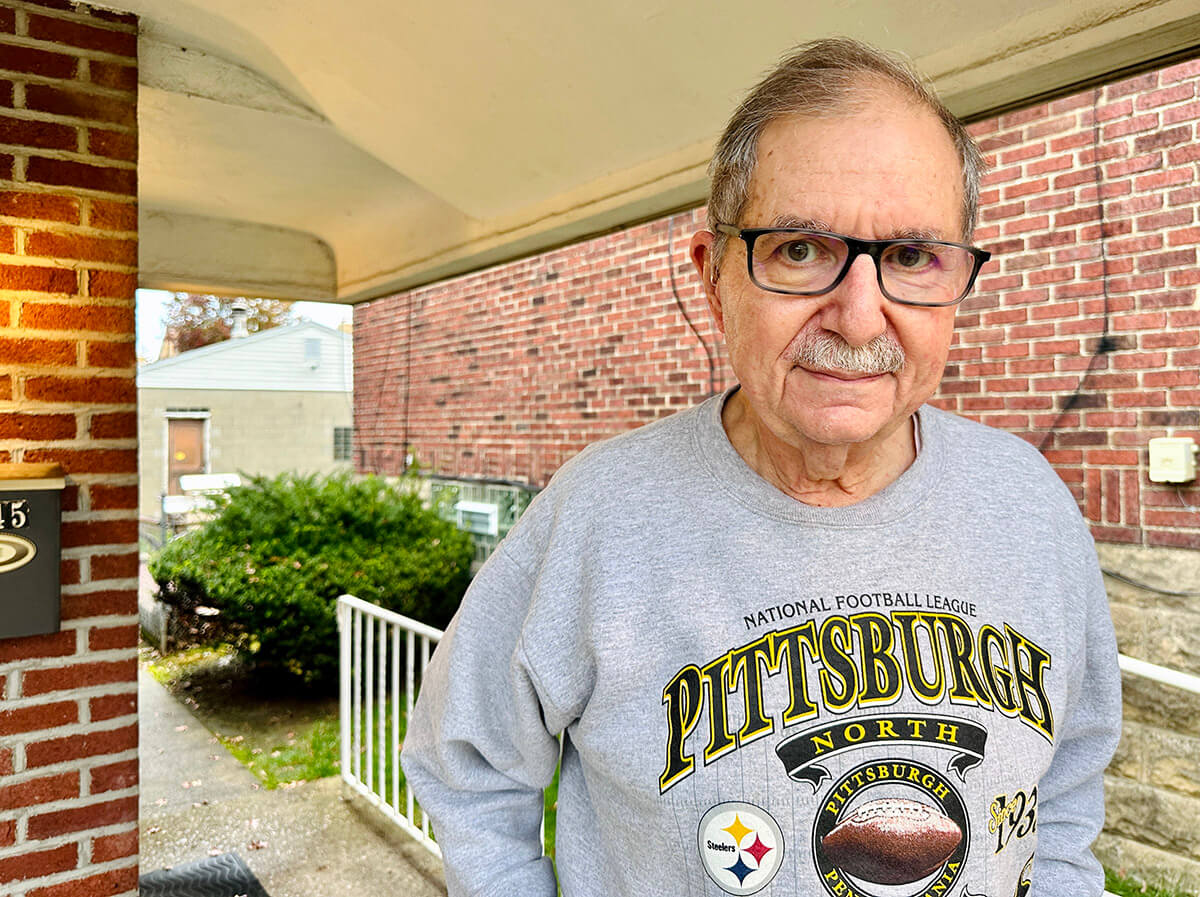
Years later, that vigilance remains. Werber is still in therapy. He avoids crowds. He instinctively scans buildings for security. He attends synagogue services now via Zoom — partly because his wife is ill, and partly because being in a room full of people still doesn’t feel safe. “It took a lot out of me,” he said.
Werber, who worked for nearly 40 decades for the healthcare company that inspired the show, has yet to see the episode. He doesn’t subscribe to Max. “I spend enough on cable,” he said. “I don’t think we’ll get HBO. I’ll see if any of my friends have watched it.”
Carol Black, who was hiding in the same basement storage area as Werber during the attack, said the episode’s portrayal of flinching felt immediately familiar. “Every little unexpected sound still makes me jump,” she told the Forward. “If somebody sneezes and I’m not expecting it, I jump.” She said she has learned to live with the reflex. “You’re never going to get over it,” she said. “You just get used to it.”
Black, whose brother Richard Gottfried was among the 11 people killed in the shooting, said she was grateful to see the story reach a wider audience. “I don’t want the story of what we experienced to go cold,” she said. “This is a very popular show. People need to know about this.”
One of the episode’s most quietly revealing moments comes when the patient asks the nurse tending to her burns if she is Muslim. When the nurse says yes, the patient thanks her — not for the care she’s receiving in the room, but for what came years earlier. After the shooting, she recalls, it was the Muslim community that showed up, raised money, and paid for funerals.
Wyle, who also co-wrote this episode, told Variety that the interfaith solidarity “was the most underreported aspect of the story, and perhaps the most hopeful moving forward.” R. Scott Gemmill, an executive producer, added: “You can’t do a medical show, set in Pittsburgh, with a Jewish doctor without addressing that.”
The exchange in the episode is brief, almost awkward. The nurse doesn’t know what to say. The patient waves it off. “Anyway,” she says. “Thank you.” The show doesn’t pause to turn the moment into a lesson. It lets it pass, the way lived history often does.
That restraint resonated deeply with Glickman, who remembers the support across religious lines that followed the attack, and the ache of realizing how rare that feeling now seems. “I hope it means we’re going to get past the divisions we’re having right now,” she said. “We were there before. We can be there again.”
She also laughed at a detail few critics would think to note: Before arriving at the hospital, the patient treats her burns with honey. “That is so us,” Glickman said with a laugh. “That is so Jewish.”
#ThePitt’s Noah Wyle, who wrote Episode 3, talks with @TVLine Senior Editor Ryan Schwartz about revisiting the Tree of Life shooting and the Muslim community’s support and solidarity in the aftermath. https://t.co/KEHiBVeuUu pic.twitter.com/WTDSeL2Gkg
— TVLine.com (@TVLine) January 23, 2026
The post ‘The Pitt’ tackled the trauma of the Tree of Life attack. Here’s how survivors of the synagogue shooting reacted to the episode. appeared first on The Forward.
Uncategorized
50 years after the Dirty War, Argentinians remember the Jews who ‘disappeared’
(JTA) — BUENOS AIRES — As Argentina marks the 50th anniversary of the 1976 military coup, a lesser-known aspect of the dictatorship is gaining attention: the disproportionate number of Jews among the disappeared.
Estimates suggest that as many as 1,900 Jews were abducted, tortured and murdered by the military junta during the six-year Dirty War, when many sources say 30,000 people were disappeared. Depending on the source, Jews represented 5% to 8% of the total, even though Jews made up less than 1% of Argentina’s population at the time.
That grim history is being explored in educational initiatives by Argentina’s Jewish community, aimed at younger generations and focused on understanding how the dictatorship operated and the disproportionate suffering it inflicted on Jews.
“The Jews were subjected to a particular form of treatment that resulted in greater brutality on the part of the repressive forces,” according to a new curriculum released by the education department of AMIA, the Jewish community center in Buenos Aires. “The experience of Jewish Argentines who were victims of state terrorism was marked by a strong antisemitic imprint among many members of the task forces.”
The AMIA project includes meetings between Jewish youth and relatives of the Jewish “disappeared,” as well as visits to memorial sites. Some 1,000 students are expected to take part this month.
A parallel digital project, Eduiot (“Testimonies”), documents the stories of Jewish victims of the military dictatorship and includes meetings between relatives of the disappeared and high school students.
The materials rely on personal testimonies to explain the human impact of the dictatorship and to put individual stories in the broader historical context.
Eduiot includes the story of Fernando Ruben Brodsky, a 22-year-old student who disappeared in 1979, including accounts from relatives who continue to seek answers. His mother, Sarah Brodsky, shares accounts of her son, a psychology student and kindergarten teacher who was abducted from his home on Aug. 8 and never seen again.
The testimonials relate how security forces subjected Jews to antisemitic abuse when they were kidnapped or detained, including Nazi language and symbols and “special” interrogations reserved for Jews.
The anniversary comes amid renewed debate over how Argentina interprets the dictatorship. President Javier Milei’s government has called for a broader account that also includes victims of left-wing guerrilla violence, which some suggest is a way to minimize the crimes of the dictatorship. Milei and other voices close to the government have also questioned the 30,000-victim figure, promoting a lower number (often 9,000).
Under the junta, the military and state security forces targeted suspected left-wing sympathizers, including students, unionists, journalists and activists.
In 1979, Jewish advocacy groups such as the Anti‑Defamation League expressed grave concern over the disappearances, focusing on the Jewish victims, and Jewish families in Argentina and abroad helped compile lists of the missing. According to an ADL official at the time, “Jews are not specifically targeted as Jews. However, the security agents tend to be suspicious of Jews.”
The best-known Jewish target of the state was journalist Jacobo Timerman, who published a left-leaning newspaper, La Opinion. In 1977, the generals who ruled Argentina shut down the paper and imprisoned Timerman. Among other things, Timerman was accused of masterminding a plot to establish a Jewish homeland in the remote Patagonia region of southern Argentina.
He survived, and in his 1981 memoir, “Prisoner Without a Name, Cell Without a Number,” he recounted how he was subjected to torture during his 2 1/2 years in confinement.
According to Eduiot, Jewish advocacy for the disappeared “proved effective in bringing early attention to human rights violations.” The U.S. Congress launched investigations, and in a 1978 article in Le Monde, novelist and Holocaust survivor Marek Halter compared the persecution of Argentine Jews to Nazi-era atrocities.
The Eduiot site includes photographs and audiovisual material, and features the accounts of parents, siblings, cousins, nephews and nieces of Jews persecuted and disappeared under the dictatorship.
“Because every testimony matters and holds great value,” according to its website. “Because these dark episodes of our history must never be repeated, and because we want each of the disappeared to have a space of remembrance on this site, helping families sustain their memory and uphold the call for justice.”
The post 50 years after the Dirty War, Argentinians remember the Jews who ‘disappeared’ appeared first on The Forward.
Uncategorized
Fortnite tops ADL’s new ‘leaderboard’ ranking video games on antisemitism safeguards
(JTA) — The online video game Fortnite tops the Anti-Defamation League’s “leaderboard” ranking online video game companies on their efforts to curb antisemitism and extremism on their platforms.
The Online Gaming Leaderboard, which the antisemitism watchdog billed as the “first comprehensive public evaluation” of how online multiplayer games address antisemitism, ranked 10 popular online games based on safety features, moderation, player protections and written policies meant to address antisemitism and hate.
Fortnite was followed at the top of the rankings by Grand Theft Auto Online, Call of Duty and Minecraft. Games labeled as having “limited protection” by the ADL included Counter-Strike 2 and PUBG: Battlegrounds.
Madden NFL, Valorant, Clash Royale and Roblox, a collaborative computer gaming platform for children as young as 7, were ranked as having “moderate protection.”
“Without strong safeguards, these platforms can become breeding grounds for harassment and hateful activity that harms players directly, normalizes hateful ideologies and damages trust,” Jonathan Greenblatt, the CEO of the ADL, said in a statement Wednesday. “This leaderboard provides the transparency that parents, gamers and the industry need to understand where companies are succeeding and where urgent improvements are necessary.”
The leaderboard’s release coincided with a landmark Los Angeles jury verdict finding Meta and YouTube liable for harming a young user through addictive design features.
In the virtual worlds of online gaming, players have posted abusive messages in chats, created antisemitic imagery and even given themselves bigoted usernames.
While Fortnite ranked first, the popular online game has also previously faced scrutiny over allegations that it enabled antisemitic content. Last September, it disabled a character dance feature after users said its gestures resembled a swastika.
Roblox, which has long faced criticism over content moderation, has also been the subject of controversy, including in 2022 when it removed a user-created simulation of a Nazi gas chamber. In the wake of the Oct. 7 attacks in 2023, the Israeli government also urged users to report pro-Palestinian activity in the game that it said included antisemitic content.
The post Fortnite tops ADL’s new ‘leaderboard’ ranking video games on antisemitism safeguards appeared first on The Forward.
Uncategorized
Iran Posts AI Video Showing Missile Striking Statue of Liberty

An Israeli air defense system intercepts a ballistic missile barrage launched from Iran to central Israel during the missile attack, February 27, 2026. Photo: Eli Basri / SOPA Images via Reuters Connect
Iran on Tuesday released an AI-generated video depicting a missile striking the Statue of Liberty in New York Harbor, a global symbol of American freedom and democracy, in one of the regime’s latest propaganda efforts to influence public perception abroad.
Shared by Iranian state broadcaster IRIB as well as a Telegram channel affiliated with the Islamic Revolutionary Guard Corps (IRGC), the minute-long video ends with the slogan “One vengeance for all.”
IRGC Official Telegram Channel Releases AI Video Depicting Iranian Ballistic Missile Strike on United States, Hitting New York City and Toppling Statue of Liberty Shown as Idol of Baal Holding Babylonian Talmud pic.twitter.com/JhgNgHW2Zz
— MEMRI (@MEMRIReports) March 25, 2026
The video was also circulated by Russian state outlet RT, in what appears to be a stark and symbolic threat against the United States.
‘ONE VENGEANCE FOR ALL’ — Iran ‘bombs’ the Statue of Liberty WITH THE HEAD OF BAAL pic.twitter.com/6tPH15fqkZ
— RT (@RT_com) March 25, 2026
Since the start of the US-Israel war with Iran, which began on Feb. 28, Iranian officials have ramped up their propaganda and disinformation efforts, trying to portray Washington and Jerusalem as responsible for decades of regional conflict while seeking to influence left-leaning Americans to mobilize domestic opposition to the war.
This latest widely circulated video presents a striking sequence portraying the United States as the world’s enemy, drawing on imagery from the dispossession of Native Americans and the atomic bombings of Japan to the Vietnam War and more recent Middle Eastern conflicts to craft a sweeping narrative of American aggression.
The clip also features footage alluding to a child on Jeffrey Epstein’s private island — a recurring theme in Iran’s messaging used to suggest that US President Donald Trump launched the current war to distract the public from the Epstein scandal, in which the late financier was convicted of running a sex-trafficking ring involving underage girls and, allegedly, various influential figures.
Later in the video, AI-generated figures of Iran’s former Supreme Leader Ayatollah Ali Khamenei and the late Iranian Major General Qassem Soleimani are shown gazing skyward. Khamenei was killed in an Israeli airstrike on Feb. 28, and Soleimani was killed in a US drone strike in 2020.
The final sequence of the video depicts a missile in Iranian colors striking the Statue of Liberty in New York Harbor, whose head has been replaced with that of Baal, a false god from the Bible, while the statue holds the Talmud, a key collection of Jewish religious teachings and laws.
This video is the latest example of AI-generated propaganda released since the start of the war with Iran.
Last week, Chinese state television CCTV released a separate AI-generated clip illustrating Beijing’s perspective on the Strait of Hormuz crisis, featuring Persian cats in martial arts combat and an eagle-headed human representing the United States.
Experts note that Russian dissemination of Tehran’s video reflects a broader coordinated effort to use visual propaganda to challenge US foreign policy and influence global perceptions amid rising regional tensions.
The latest video came as the US and Iran began engaging in diplomacy over a possible resolution to the war, although Tehran has reportedly responded negatively to Washington’s proposal.