


Uncategorized
As Slovenia takes a hard line against Israel, its tiny Jewish community feels increasingly isolated

(JTA) — LJUBLJANA, Slovenia — In June 2024, Slovenia’s parliament voted to recognize a Palestinian state only one week after Spain, Ireland and Norway had taken that dramatic step.
Half a year later, Slovenian public broadcaster RTV — citing the ongoing war in Gaza—became the first in Europe to demand Israel’s exclusion from the 2025 Eurovision Song Contest. This past May, RTV warned it might boycott future editions of Eurovision if Israel isn’t expelled.
Over the summer, Slovenia banned imports from Jewish settlements in the West Bank, only a week after prohibiting all weapons trade with Israel — the first EU member to do so. That ruling followed on the heels of another one declaring two right-wing Israeli officials persona non grata. Last week, it became the first EU country to impose a travel ban on Israeli Prime Minister Benjamin Netanyahu.
“People are dying in Gaza because they are systematically denied humanitarian aid,” the government said in announcing the arms embargo. “In such circumstances, it is the duty of every responsible country to act, even if that means taking a step before others do.”
Some analysts have pegged the aggressive anti-Israel stance as a gambit ahead of the country’s upcoming elections, when the country’s pro-Israel right will try to retake control after losing power in 2022.
But for Slovenia’s roughly 100 Jews, the campaign against Israel is part of a pattern of hostility that transcends the vagaries of politics. Barely five years ago under a right-wing government, a Slovene court voided the 1946 treason conviction of executed Nazi collaborator Leon Rupnik, who nearly liquidated the country’s Jewish population.
“Slovenes always want to be on the side of the underdog, and the media perception over the last 40 years is of poor Palestinians and big, imperialist Israel who took their land,” said Robert Waltl, president of the Liberal Jewish Community of Slovenia. “But now, because of the war, it’s worse here than any other former Yugoslav republic.”
Waltl spoke to JTA from his office at the Mini Theater, which since 2013 has also housed the Jewish Cultural Center and Slovenia’s only active synagogue. The 500-year-old building, which Waltl renovated with $1.6 million in donations, fronts Krizevniska Street in Ljubljana’s old city.
Its 6,500 square feet — crammed with prayer books, menorahs, historic photographs and an entire exhibit on the Holocaust — has become the focus of Jewish culture in Slovenia, with 2.1 million people the smallest and most prosperous of the six republics that once comprised Yugoslavia.
Unlike neighboring Croatia — whose center-right government has pursued a stridently pro-Israel policy despite a rising, homegrown fascist movement — Slovenia has veered sharply to the left in recent years.
“Christian antisemitism was very visible here before World War II,” Waltl, 60, explained as his dog, Umbra, repeatedly barked at passersby. “At the beginning of the 20th century, there was no university here, so people studied in Vienna — and the mayor of Vienna was very antisemitic. Students learned it there and brought it back home with them.”
The presence of Jews in Slovenia dates back to Roman times, with the first synagogue in Ljubljana built around 1213. During the Middle Ages, the most important community was in Maribor, though Jews were expelled from that town in 1496, and then from Ljubljana in 1515.
By the early 20th century, Slovenia’s Prekmurje region had become home to two-thirds of the country’s 1,400 Jews, mostly in the towns of Murska Sobota and Lendava. Yet antisemitism was pervasive; an outbreak of Jew-hatred during the 1929 economic crisis followed accusations that Jewish moneylenders were profiting from exorbitant interest rates. By the end of World War II, the Nazis and their collaborators had killed all but a handful of the country’s Jewish inhabitants.
During Israel’s 1948 War of Independence, Yugoslavia under Tito helped the fledgling Jewish state, but later, as head of the Non-Aligned Movement, he befriended Yasser Arafat and switched his allegiance. After Yugoslavia disintegrated in the early 1990s, the region was plunged into years of ethnic warfare that left an estimated 130,000 dead and millions homeless.
Only Slovenia escaped serious bloodshed, with only 62 deaths reported during its 10-day war of independence against the dominant republic, Serbia. Nevertheless, the Alpine republic — the same one that has just declared an arms embargo against Israel — became embroiled in a massive scandal involving weapons sales to Croatia and Bosnia & Herzegovina, both of which were fighting Serbia, despite a 1991 United Nations arms embargo.
Waltl said his country’s policy toward Israel, as well as domestic media, is riddled with hypocrisy and misinformation.
“In Croatia, the government strongly criticized what Hamas did on Oct. 7 and they stand with Israel. In Slovenia, it was the same for the first few days, but then all attention shifted to the plight of the Palestinians,” he said. “Today in Slovenia, 99% of the media isn’t just pro-Palestinian but anti-Israel. You will never hear that Israel was attacked by Hamas or Hezbollah, only that Israelis kill women and children.”
He added: “It’s also true, however, that the right-wing government in Israel has crossed all acceptable lines and limits of humanity, triggering a wave of hatred towards Jews worldwide.”
It doesn’t help that Israel has never established an embassy in Ljubljana — even though Slovenia has maintained one in Tel Aviv for the past 30 years.
Polona Vetrih, a prominent stage actress whose father survived World War II as a partisan, said she’s had several unpleasant encounters with local antisemites. Recently, she sang at a peace concert where she performed the Ladino song “Adios Querida.”
“One girl from Palestine was very loud. She was screaming, and they threatened me. I was scared to death,” she said. “I went to the police afterwards.”
Frequently, she hears Slovenes complain that Jews are mean and think only of themselves.
“They don’t have a clue. Even during the Middle Ages, they blamed Jews for the plague,” she said. “I think it’s up to us to show them it’s not true.”
During communism, Slovenia had virtually no organized Jewish life. In 1991, the Liberal Jewish Community was established, and in 2002, local Jews contracted with a Chabad rabbi from Trieste, Italy, to conduct High Holiday services. The following year, said Waltl, the community received a Torah scroll from a British donor, and turned a nearby cigarette factory into a small synagogue with the help of the American Joint Jewish Distribution Committee.
Ten years ago, with the help of Lustig Branko — producer of the film “Schindler’s List” — the museum established a Festival of Tolerance. Last year, some 6,000 elementary school students came to see performances of “The Diary of Anne Frank.” Currently, liberal rabbis Alexander Grodensky of Luxembourg and Tobias Moss of Vienna visit Slovenia for special occasions.
In April 2024, a 10-member delegation from the World Jewish Congress traveled to Slovenia to meet with government officials, but they were ignored, Waltl said. And when swastikas were discovered scrawled on the walls of the Jewish Cultural Center one night, he said, “no one from the government came, and no one called me — not even the mayor of the city.”
Maya Samakovlija, the organization’s executive director of community relations, went even further.
“We were not merely ignored. What happened to us is something no other government in the world has done ever in the long history of the WJC,” said Samakovlija, who is based in Zagreb, Croatia. “Neither the prime minister, the president, the speaker of parliament, nor the minister of foreign affairs made any effort to meet with us. Instead, they sent only deputies and lower-ranking officials.”
At that meeting, Blanka Jamnišek, deputy head of Slovenia’s delegation to the International Holocaust Remembrance Alliance, asked the visitors what they were doing “to promote a ceasefire and stop the killing of children, and the famine in Gaza,” according to Samakovlija and a statement that the AJC released at the time. The IHRA definition of antisemitism cites holding Jews collectively responsible for Israel’s actions as an example of antisemitism.
“Her colleagues were visibly shocked,” the WJC official said. “Once she had finished, I made the decision that we’d leave as a delegation. We stood up, ended the meeting and walked out.”
Ernest Herzog, the WJC’s executive director of operations, was also part of that delegation. He said Slovenia’s Jews “face an alarming rise in antisemitism, evident in acts of vandalism, threats and hostile rhetoric.”
“It is deeply troubling that certain officials have sought to justify this climate of intolerance through a distorted interpretation of the Middle East conflict — an excuse that is wholly unacceptable,” he added.
Politicians on the right more often support Israel. This past April, the Slovenia-Israel Allies Caucus was established by lawmaker Žan Mahnič of the Slovenian Democratic Party. Former Slovene Prime Minister Janez Janša, who supports the caucus, has said that if he returns to power, he will relocate his country’s embassy from Tel Aviv to Jerusalem and rescind Ljubljana’s recognition of Palestine.
Steve Oberman, an attorney in Knoxville, Tennessee, and past president of that city’s Arnstein Jewish Community Center, visited Slovenia in 2024 to teach a law class at the University of Ljubljana. He has since become a passionate defender of Waltl’s efforts.
“I’m disappointed that the Slovenian government isn’t doing a better job of supporting the Jewish community of Slovenia, given the country’s history,” Oberman told JTA in a phone interview. “Poor Robert has carried this task, almost singlehandedly, to revive Jewish life there and create a synagogue. I’m trying to work through our local Jewish community here in Knoxville to raise awareness, and hopefully some money.”
Meanwhile, the situation for the few Jews remaining in Slovenia isn’t getting easier.
Sophia Huzbasic, a native of Kyrgyzstan who lived for a time in Israel but settled in Slovenia nine years ago, said she was born with Soviet citizenship but chose to retain her Israeli passport.
A graphic designer, she lives in Ljubljana with her husband Igor, who’s from Sarajevo, Bosnia.
“For local Jews, I truly believe the antisemitism is really terrible,” she said. “I was raised in Moscow in the 1990s, so for me this is nothing. I’m not scared but I’m angry.”
Huzbasic, 43, said her bank refused to approve a car lease when officials learned she was an Israeli citizen — just one example, she said, of the insidious antisemitism that seems to be prevalent.
“We feel very angry because of the official position of the Slovenian government. What they’re doing is propaganda from a very poorly educated point of view, and they don’t want to widen their knowledge about the conflict,” Huzbasic said. “I totally disagree with the Israeli political situation, and I chose to keep my Israeli citizenship and live here. But now I’m very close to changing my mind. I cannot stop being a Jew.”
The post As Slovenia takes a hard line against Israel, its tiny Jewish community feels increasingly isolated appeared first on The Forward.
Uncategorized
After outcry, Texas lieutenant governor says schools should teach Holocaust books ‘Night,’ ‘Anne Frank’
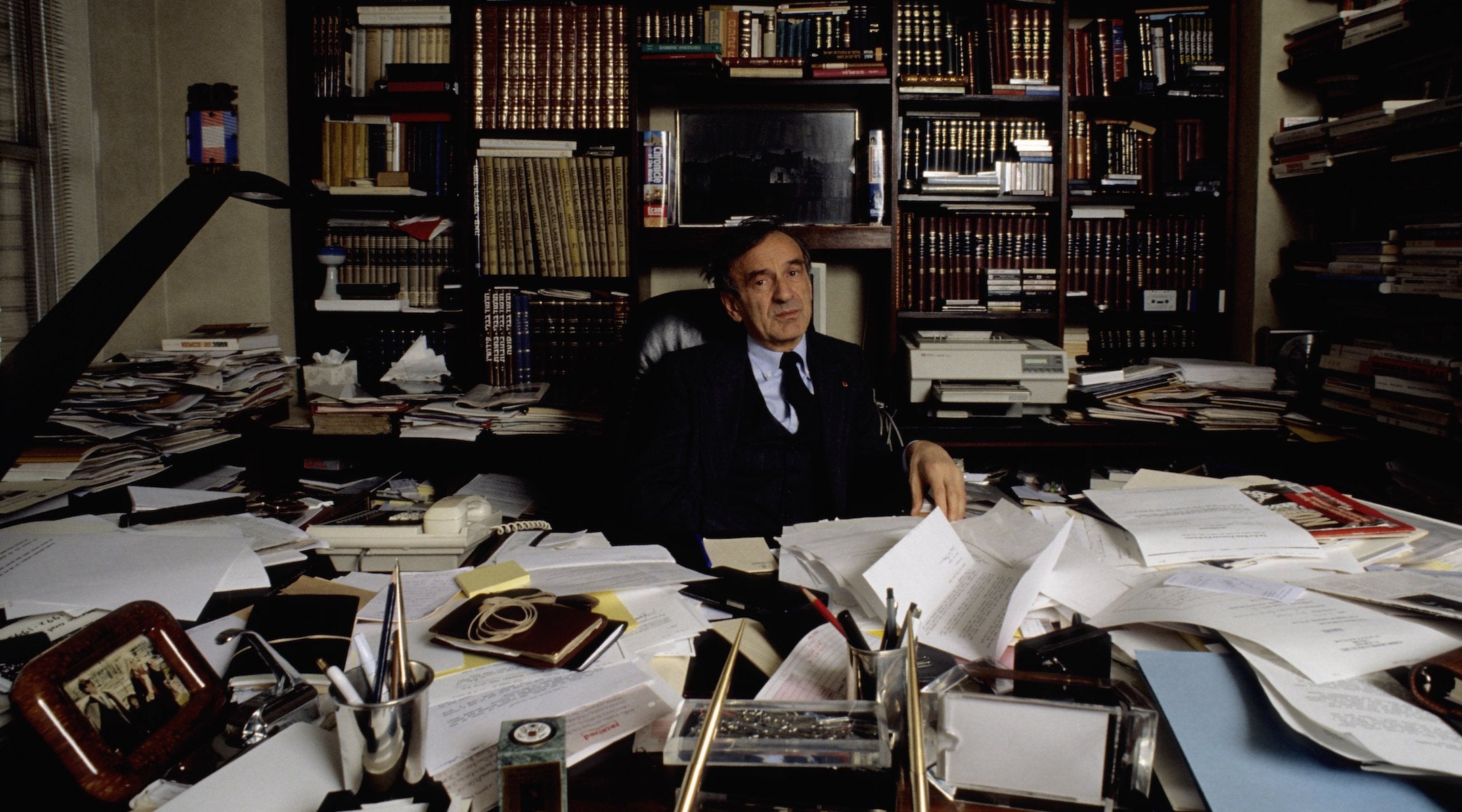
(JTA) — The lieutenant governor of Texas says his recent call for the state’s public schools to remove “over 2,000 titles” of “dirty, filthy and vulgar books” was not meant to include books about the Holocaust.
Dan Patrick’s statement, provided exclusively to the Jewish Telegraphic Agency on Friday, comes after a month of confusion following a press conference in which he and a conservative Christian activist threatened schools with potential loss of state funding if they did not comply with his directive to purge their libraries.
“I believe Texas students must learn about the Holocaust, and that includes reading books such as ‘Night’ by Elie Wiesel, ‘The Diary of Anne Frank,’ and other books about the Holocaust,” Patrick told JTA, singling out two books on the removal list he had promoted – one of which, “Night,” that he previously explicitly called for removal from middle schools.
Patrick added that his initiative was “focused on age-inappropriate, sexually explicit books in public school libraries across Texas.” At his earlier press conference, he had directed viewers to an online list compiled by an activist group that features several books about the Holocaust and Jewish identity.
Patrick’s threats have teeth. In Texas, lieutenant governors are more powerful than in many other states, playing central roles in shaping the budget and determining the legislative agenda.
Patrick also appeared to walk back some of the harsher proclamations from his Aug. 19 press conference, at which the Republican had stated, “We’re coming for the books.”
“As the law states, local communities have the right to make their own decisions about their public school libraries,” he told JTA Friday.
The lieutenant governor, who is up for reelection this fall, appeared at the conference with Bonnie Wallace, the head of the activist group Recover America, and told viewers to “go to RecoverAmerica.com.” That group has circulated a list of more than 2,100 “Harmful Books in Libraries.” Its list, which it describes as “books with harmful, sexually explicit, and vulgar content,” includes more than a dozen titles of particular import to Jewish readers.
Recover America’s flagged books include both volumes of Art Spiegelman’s “Maus,” a comic-book adaptation of Frank’s diary and Bernard Malamud’s novel of a blood libel “The Fixer” — all books that have been removed from school districts in Texas and other states in the past amid broader conservative-led library culture wars. In some cases those books were restored to the districts following public outcry, but spurred deeper dialogue about the state of Holocaust education and antisemitism awareness in public schools.
Patrick’s latest push would go much further than a handful of districts, affecting the more than 5.5 million students in public schools across the state.
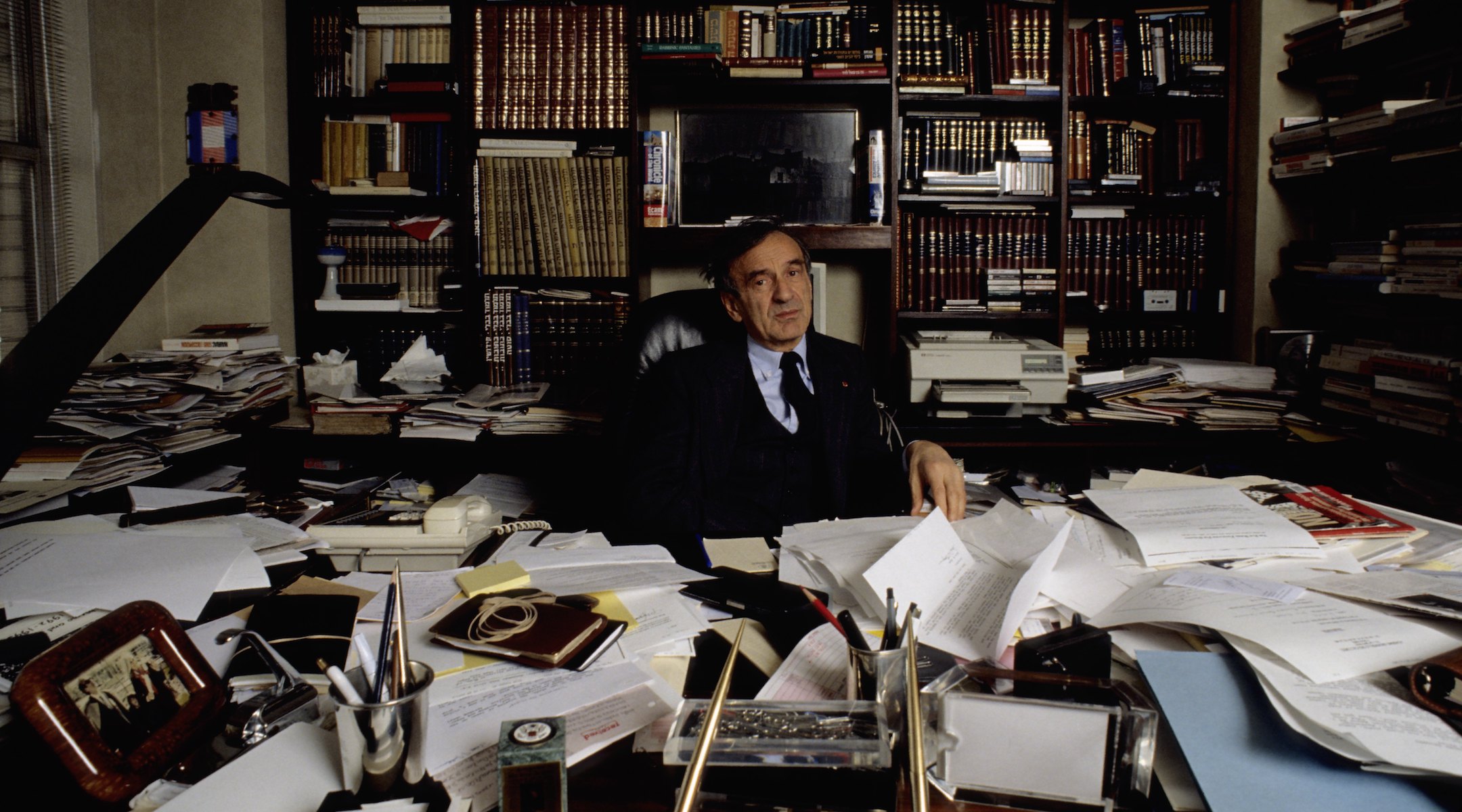
One book of particular contention on Recover America’s list was “Night,” Elie Wiesel’s bestselling memoir of surviving Auschwitz and Buchenwald, which has been taught in schools for decades. After a Houston Chronicle story noted the book’s inclusion on the Recover America “harmful” list, Patrick initially doubled down on “Night,” saying that it was not appropriate for middle schools owing to its “violence.”
“If ‘Night,’ by Elie Wiesel, were made into a movie, it would likely be rated R,” Patrick wrote on the social network X on Aug. 26. “‘Night,’ which includes depictions of graphic violence and the machine-gunning of babies, should not be available to sixth graders in middle-school libraries. High school is more age-appropriate.”
His tweet appeared to contradict the state’s own K-12 required reading list, passed this summer, which mandates that “Night” be taught in the eighth grade beginning in 2030.
Now, in response to questions from JTA, the lieutenant governor said he would defer to the Texas State Board of Education on the appropriate grade to teach “Night.”
“The State Board of Education decides the appropriate grade level for books and will determine whether ‘Night,’ by Elie Wiesel, is at the appropriate grade level,” Patrick told JTA in his statement.
He continued to insist that books in schools should be held to “FCC standards,” referring to the Federal Communications Commission, an agency that governs broadcasting content and does not regulate publishing.
The head of the Texas Holocaust, Genocide and Antisemitism Advisory Commission, a governor-appointed panel which advised the state on the inclusion of “Night” and other Holocaust texts on its required reading list, did not return a JTA request for comment.
In a statement, the Texas Educational Authority, which drafted the required-reading list, told JTA, “When Texas students learn about the Holocaust, they will be exposed to the horrors of the Holocaust. That is why the SBOE placed the book in 8th Grade to ensure age appropriateness for students.”

At the Emmys this week, when “The Librarians,” a documentary about librarians facing book removal threats, won an award, retired Texas librarian Carolyn Foote joined the producers on the stage and held up a copy of “Night” in protest.
“I felt like it was very symbolic to bring ‘Night,’” Foote, a subject of the film and a co-founder of the librarian activist group FReadom Fighters, told JTA. “Having read it, I just know the importance of not forgetting our past. And that’s part of Elie Wiesel’s whole legacy, is remembrance, and so it just felt very important for me to carry that book, coming from Texas.” Another librarian onstage for the win held up “Anne Frank’s Diary: The Graphic Adaptation.”
Elisha Wiesel, Elie’s son and chair of the Elie Wiesel Foundation, told JTA that “Texas deserves credit for recognizing that Holocaust education belongs in the eighth-grade curriculum.” Yet, the younger Wiesel suggested, Patrick’s concerns about the book’s violence were misplaced.
“‘Night’ contains violence because the Holocaust was violent; its purpose is not to shock young people, but to help them understand where hatred and indifference can lead,” he wrote in an email. “With context and guidance, students should not be shielded from this history. They should be equipped to confront it.”
Despite having directed viewers to Recover America’s book list during his press conference, Patrick’s new statement to JTA said, “I do not have a book list.” He pointed instead to a law passed in the state legislature in 2025 regulating school books that he said districts were required to follow.
Yet some districts in the state have removed every book on Recover America’s list from their own libraries out of fear of losing funding, Foote told JTA. While the list nominally contains a ratings system, many of the books do not have a rating.

Besides “Night,” “Maus,” “Anne Frank’s Diary” and “The Fixer,” other books about Judaism and the Holocaust on Recover America’s list of “Harmful Books” include:
- “Annexed,” a young-adult novel about Peter van Pels, who hid in the Amsterdam annex with Anne Frank
- “The Berlin Boxing Club,” a young-adult historical novel based on German boxer Max Schmeling, who helped young Jews during Hitler’s rise to power
- “Black, White and Jewish,” a memoir by Rebecca Walker, the mixed-race Jewish daughter of author Alice Walker
- “Caste: The Origins of our Discontents,” a nonfiction book analyzing the “caste systems” of Nazi Germany. “Caste” had been included on an earlier, Wallace-spearheaded list of books for removal from a Texas public library in a case that the U.S. Supreme Court declined to hear in 2025, allowing the removals to proceed.
- “Kasher in the Rye,” a memoir by Jewish comedian Moshe Kasher
- “Pride: the story of Harvey Milk and the Rainbow Flag,” a children’s picture-book biography of the pioneering Jewish LGBTQ legislator
- “Sophie’s Choice,” the bestselling Holocaust novel for adults
- “The Violin Maker’s Daughter,” a historical novel about a Jewish family of musicians during the Holocaust
- “White Bird,” a young-reader graphic novel about a Jewish girl in Nazi-occupied France
In response to JTA sharing a list of the above books, Patrick’s statement mentioned only “Night” and Anne Frank by name. The Recover America list is largely made up of romance and fantasy novels, many with an LGBTQ element, while also including classics such as “The Glass Menagerie” and “Cat’s Cradle” and some picture books for children.
Recover America did not immediately return a JTA request for comment Friday on Patrick’s new statement. Wallace, the group’s leader who has also appeared on Patrick’s podcast, previously told the Houston Chronicle that she had “thought long and hard” about including “Night” on her list.
She ultimately did so, she said, because “an eighth-grade student is 13 years old. Do they need to read about soldiers massacring, throwing up babies, and killing them with machine guns?”
She added, “It’s not to say this doesn’t happen in life. And the Holocaust was maybe the worst tragedy in the history of the world.”
For Cameron Samuels, a Jewish alum of Texas public schools and founder of the activist group Students Engaged in Advancing Texas, such efforts do not help Jewish students.
“Non-Jewish people are deciding for us what’s best, and making this public policy,” Samuels said. “We can’t readily access these books and stories. And that makes students feel alone. It also means that our classroom peers are not learning authentic Jewish narratives.”
This article originally appeared on JTA.org.
The post After outcry, Texas lieutenant governor says schools should teach Holocaust books ‘Night,’ ‘Anne Frank’ appeared first on The Forward.
Uncategorized
‘Checkout’ and ‘Fauda’ test the appetite for Israeli spy stories after Oct. 7

(JTA) — Is there still an appetite for Israeli spy stories?
That is one question being tested by two different productions arriving in the United States this month: “Checkout,” a dark Israeli comedy about an aging Mossad operative, and the fifth season of “Fauda,” the Israeli action thriller about undercover counterterrorism agents.
One is an indie film that spent years getting to the screen; the other is a global Netflix hit whose new season plunges directly into the trauma of Oct. 7.
The two projects are seeking audiences in a challenging climate. A Pew Research Center survey conducted in March found that 60% of Americans had an unfavorable view of Israel, compared with 37% who viewed the country favorably. And Israeli cultural exports have faced increasing scrutiny abroad over the country’s conduct since Oct. 7.
Yet “Fauda” has returned to Netflix with considerable international attention, while “Checkout” opened in Manhattan to a sold-out audience.
“It’s hard for Israeli movies right now to find an audience because everything translates to, you know, the ‘P’ [Palestinian] problem,” Jonathan Dekel, the writer, director and executive producer of “Checkout,” said in an interview. “It’s problematic.”
“Checkout” opened Sept. 17 to a sold-out audience at the Quad Cinema in Greenwich Village, which Dekel described as a “stalwart of indie cinema.”
Dekel has said the film’s six-year production was almost as difficult as the journey of its protagonist. They shot in Ukraine in November 2020, at the height of the pandemic, and barely escaped with the film’s hard drive after the set was bombed when Russia invaded. They had just finished editing when Oct. 7, 2023, arrived, and Dekel was called up for military service.
Dekel knew that the movie would debut in a world transformed by the war and its aftermath.
“Trying to find a good time to put out a movie, a satire — a dark comedy about the Israeli special forces — was very, very touch and go until we finally decided to go for it,” he told the Jewish Telegraphic Agency.
“Checkout” is not a conventional spy thriller. Its protagonist, Dov, is an American-born New Yorker who moved to Israel and is now about to retire from the Mossad.
“The day he checks out of his hotel to retire, someone else checks in and it turns out it’s Mossad’s number one target — an arch terrorist [code-]named Gilgamesh,” Dekel said. “The entire movie is this weird weekend in a hotel where these two middle-aged men, spy-versus-spy, try to figure out who they are. They’re trying to find out about each other, but they find themselves.”
Josh Pais, who plays Dov, said his character is a man searching for meaning in his life — and comes to believe he can find it by tracking down and stopping a terrorist.
“He is possibly stepping into delusion,” said Pais. “What was appealing to me was that this is a story of what really happens to spies. So many movies tap into, you know, the James Bond of being a spy. Those movies are awesome, but this movie is about what it’s really like to be sent to a distant land, to be on location and to pretend that you’re someone else. Over a certain amount of time these guys start to lose touch with reality because, in truth, the vast majority of time as a spy nothing happens.”
Shai Satran, the movie’s co-writer, said he believes this is the “perfect moment for a movie about the Israeli intelligence community and an operation gone bad.”
“His driving force is not really to catch that guy — he doesn’t care about that guy. The driving force is to be accepted by his peers, the people who sent him — that’s at the core,” said Satran. “I don’t want to be crude about this, but there was something pre-Oct. 7 about the Israeli security forces, maybe the special forces: There’s a certain arrogance in being only worried about your peers and not being aware of” the wider mission. In the lead-up to the Hamas attacks of Oct. 7, “Israel, in a sense, thought that they were more in control of the situation than they were,” he said
That idea — of intelligence work as something more complicated than heroic missions and exotic adventures — also runs through “Fauda,” though in a much more conventional action-thriller format.
The Israeli series has been an international success since its Netflix debut in 2016, and its fifth season, which arrived on Netflix Sept. 8, is now testing whether audiences will follow its characters into a story shaped directly by and set two years after Oct. 7.

Lior Raz, the show’s creator, co-writer and star, said last month at a fundraiser in Lenox, Massachusetts for Israel’s Magen David Adom emergency service that he was genuinely surprised by the show’s reception in unlikely places: Previous seasons of the show hit No. 1 in popularity in Lebanon and the United Arab Emirates and it was No. 2 in Qatar.
Season four ran in 2022 in Israel and early the next year on Netflix. The show’s creators had originally begun writing a different fifth season. But after the Oct. 7 Hamas attack, Raz said, those scripts were discarded. The new season deals directly with the aftermath of the attack and what Raz described as the nature of revenge. One reviewer called it “gripping, emotionally exhausting and often deeply difficult to watch,” particularly because of its depiction, in flashbacks, of Oct. 7.
Raz, in his MDA talk, said the backlash against Israel was a campaign orchestrated by radical activists and Israel’s enemies. The latest season of “Fauda” is in part an attempt to depict the Israeli perspective for those open to nuance. “I want them to look in my character’s eyes, and to see what we felt on those days,” he told the New York Times. “If it would happen in their countries, they would feel exactly like we felt and how we feel about the world. So I hope it would open people’s eyes to see what happened on Oct. 7.”
Although its reception abroad is hard to gauge, the latest season was a hit in Israel: The Times reported that it had already been the most-watched season of any show in the history of Israel’s Yes network.
Lacking the backing of a streaming giant, Checkout will have to work harder to find an audience. The Sundance Screenwriters Lab supported the “Checkout” script, Dekel said, but that was before Oct. 7. Since then, “finding a distributor, finding a Netflix, Amazon or Hulu was pretty much crickets [silence] all over. It might be our movie, but looking around [at] movies from my colleagues — Israelis — I think it’s pretty much a broad phenomenon.”
Asked if he believed the difficulty he faced was because it is an Israeli movie or because it involved Jews, Dekel replied, “Is there a difference?”
This article originally appeared on JTA.org.
The post ‘Checkout’ and ‘Fauda’ test the appetite for Israeli spy stories after Oct. 7 appeared first on The Forward.
Uncategorized
Netanyahu backs legislation that would strip ‘NAZA’ makers of citizenship
(JTA) — TEL AVIV — Prime Minister Benjamin Netanyahu said he would advance legislation allowing Israel to revoke the citizenship of people who defame soldiers or the state abroad, citing “NAZA,” the prize-winning documentary accusing the military of knowingly killing large numbers of civilians in Gaza.
Netanyahu said Wednesday he also planned to advance a separate bill raising damages in defamation cases involving the IDF or the state to as much as NIS 1 million, equivalent to $329,000.
In addition to the documentary, Netanyahu cited a 2025 remark by Democrats party leader Yair Golan, a former IDF deputy chief of staff, that “a sane country does not kill children as a hobby.” Netanyahu also cited the 2024 leak by then-IDF Military Advocate General Yifat Tomer-Yerushalmi of surveillance footage, which he called “fake,” from the Sde Teiman detention facility that appeared to show reservists abusing a Palestinian detainee.
Netanyahu said the government would target those responsible “both in their pockets and in their citizenship.”
He added, “Their place is not with us.”
Culture Minister Miki Zohar, who had earlier called for the filmmakers’ citizenship to be revoked, thanked Netanyahu for backing the proposal, saying it was “time to put an end to this disgrace.”
But President Isaac Herzog rejected the idea of stripping the filmmakers’ citizenship, telling Channel 12 that it was “completely irrelevant” and had “no chance” of happening. Herzog nevertheless called “NAZA” “a shame and disgrace” and accused those involved in its making of “tarnishing” Israel’s name abroad.
Under current Israeli law, citizenship can be revoked only in narrowly defined cases involving a “breach of loyalty,” such as terrorism, treason or serious espionage, and the process requires court involvement.
The measure has been used only exceptionally, including in 2002 against Nihad Abu Kishak, a senior Hamas operative, and Qais Obeid, who was associated with Hezbollah, and more recently sought against Israelis convicted of assisting Hamas. There is no precedent for revoking citizenship over speech or a work of art.
In 1996, the Supreme Court rejected a petition seeking to force the interior minister to revoke the citizenship of Yigal Amir after he assassinated Prime Minister Yitzhak Rabin the previous year. The court said Israeli society had ample other ways to express its revulsion and that further condemnation did not justify stripping Amir of a fundamental right, writing that the decision was made “not because of the dignity of the murderer … but because of the dignity of the right.”
“NAZA,” directed by Israeli filmmakers Yuval Abraham and Rachel Szor, is based on three years of interviews with 24 anonymous Israeli soldiers, most of them intelligence personnel, who describe their roles in surveillance, target selection and strikes in Gaza. The film argues that expected civilian deaths were routinely calculated in advance and, in some cases, accepted as part of the targeting process, allegations the IDF has rejected.
Lt. Col. (res.) Sarit Zehavi, a former military intelligence officer who was involved in issues of civilian warnings and target approval, disputed the film’s interpretation of “NAZA.” The acronym is Hebrew military term for “collateral damage,” or the civilian casualties that are likely to come in attacking a military target.
Zehavi, who said she had not seen the full film and was responding to its promotional material, told the Jewish Telegraphic Agency the estimate of civilian deaths is used in the planning process as a warning about the number of civilians who could be harmed in a strike.
The IDF has “no intention whatsoever of killing civilians. Quite the opposite,” she told JTA. “The reason a NAZA estimate is put on a target in the first place is to serve as a red flag, so planners can work out how to avoid that high level of collateral damage.”
The IDF initially issued a detailed public rebuttal after the film’s reception in Venice. Chief of Staff Eyal Zamir convened senior commanders and the military advocate general, called the film’s allegations “blood libels” and a “deliberate distortion of reality.” He also ordered an examination of whether classified material had been disclosed and whether legal action could be taken against those involved.
The military separately rejected the film’s account of its targeting practices, saying strike decisions were not made by AI but by human personnel, expected civilian harm was weighed against military advantage, and attacks were not approved when the anticipated harm was disproportionate.
The military later appeared to change course. According to Israel’s Channel 12 news, IDF and Foreign Ministry officials had concluded that the film had generated relatively little attention abroad but that Israel’s aggressive public response to its creators was drawing more scrutiny and prompting claims that the country was trying to silence them. Officials recommended lowering the temperature and focusing instead on rebutting the documentary’s allegations.
“Right now, the aggressive responses coming from the State of Israel are moving the discussion away from the film itself and toward accusations that Israel does not allow freedom of expression,” an IDF official coordinating the response wrote in an internal message obtained by Channel 12. “In light of that, we are lowering our media profile.”
Channel 12 also reported that Israeli diplomats believed the Prime Minister’s Office was “fueling the internal debate around the film for political reasons and as part of an election campaign,” arguing that the government’s attacks were working against Israel’s interests abroad.
The Association for Civil Rights in Israel also criticized the proposed measures, saying the government was entitled to challenge the film’s claims but using state power to threaten its creators or sources was “illegitimate and violated freedom of expression and freedom of the press.” The Committee to Protect Journalists called the citizenship proposal a “dangerous escalation” in efforts to intimidate journalists and filmmakers.
More than 2,000 Israeli film professionals signed a petition supporting Abraham and Szor, warning that the campaign against them was nearing the legitimization of violence. Forty-three Israeli human rights, equality and peace organizations — including B’Tselem, Peace Now, Adalah, Physicians for Human Rights Israel and Breaking the Silence — also urged authorities to avoid prosecuting the filmmakers or their sources. Prominent international filmmakers and festival leaders joined their defense.
This article originally appeared on JTA.org.
The post Netanyahu backs legislation that would strip ‘NAZA’ makers of citizenship appeared first on The Forward.
