


Uncategorized
Many smaller NYC congregations rent their space. As real estate prices soar, how do they find a home?
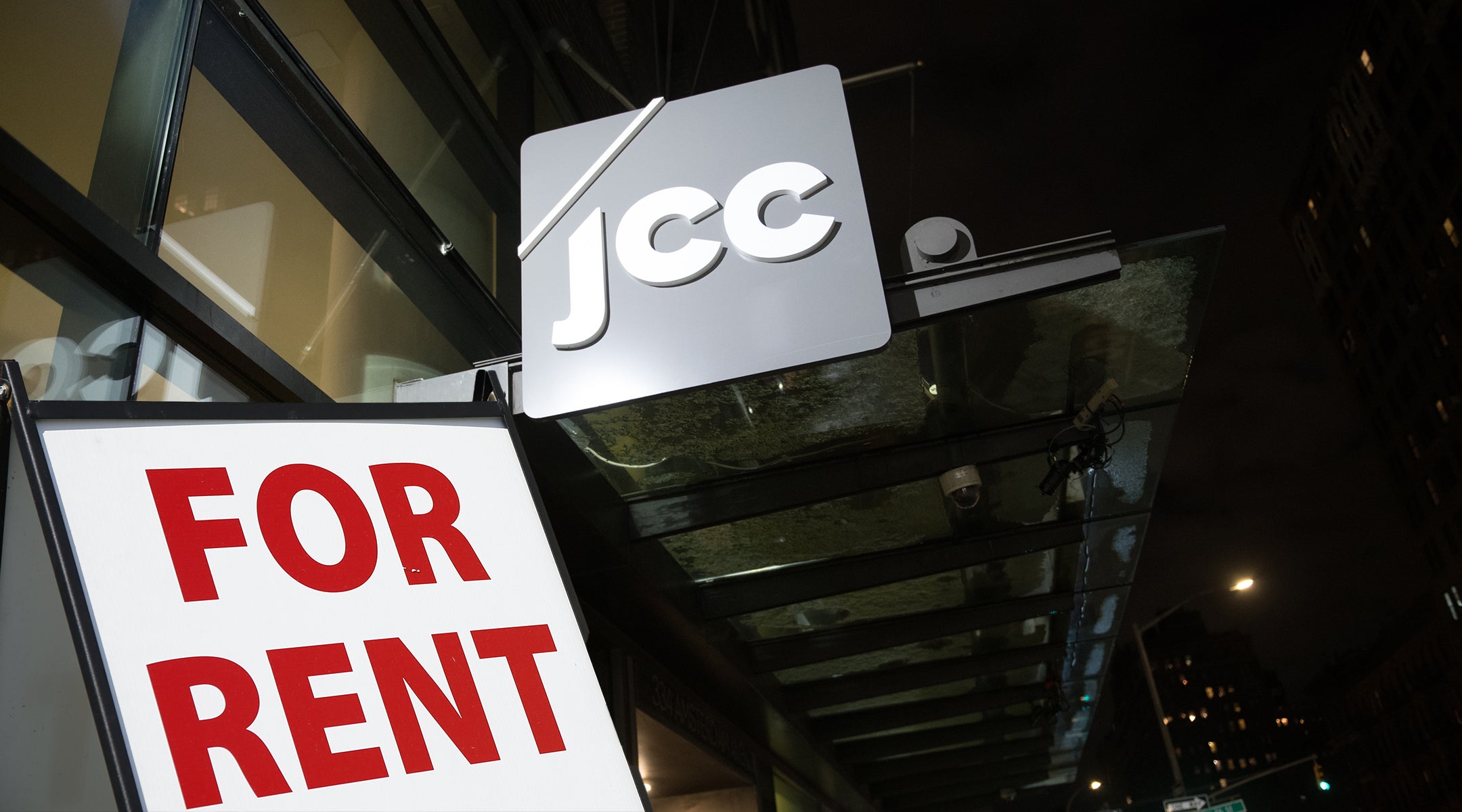
(JTA) — When Rabbi Adam Mintz’s Modern Orthodox congregation was first looking for a space on the Upper West Side, finding one that worked was no simple task.
Kehilat Rayim Ahuvim, the fledgling congregation, didn’t have the resources — i.e. tens of millions of dollars — to buy a property and develop their own building, so the plan was to rent.
But renting space for a congregation comes with very specific needs.
They needed a room that could fit the entire congregation, which would typically draw 50 to 80 people for services. There had to be a second space for kiddush lunch after Saturday mornings. The building needed to be on the Upper West Side, where its congregants, who’d broken off from Lincoln Square Synagogue following a lay leadership dispute, lived and could walk to synagogue. Perhaps most importantly, the space needed to be available for them on Friday nights and Saturdays, plus the major Jewish holidays.
And all this in the Manhattan real estate market.
Finally, after a months-long search, Mintz, on the advice of a congregant, found a spot that checked all those boxes, housed inside the National Council of Jewish Women’s building on West 72nd Street.
“God was smiling at us one day,” Mintz said in an interview.
“You can’t go on StreetEasy and find a synagogue space exactly as you want it,” Mintz said. “And that space on 72nd Street, I guess we walked past it every day. But it took somebody — one of our members had this amazing idea.”
Mintz said the arrangement was a win-win. For Mintz, his congregation had a place to meet while paying below market rate. Meanwhile, the NCJW was now benefiting from a new stream of income while housing a Jewish group, a partnership which Mintz said “strengthened the Jewish community.”
That search was just one example of the effort — and creativity — required to secure a space to congregate in New York City and solve the “edifice complex,” as Mintz refers to it.
“As real estate prices have gone sky high, New York City — and especially Manhattan — congregations have had to get creative,” said David Kaufman, author of “Shul with a Pool.”
Kaufman has written extensively on the history of American synagogues, including the entry for synagogues in Kenneth Jackson’s “Encyclopedia of New York City.” In that entry, Kaufman segmented the history of the city’s synagogues into four phases — the latest of which, starting around 2000, details the challenge of finding space as rents have skyrocketed.
“In my early years, the ‘70s and ‘80s, New York was not like that,” Kaufman said. “Rent was not astronomical and you could find premises for various purposes. Nowadays it’s nearly impossible.”
Congregations have indeed gotten creative, leasing from a variety of properties that moonlight as synagogues. A “shul community” called Kehillat Harlem rents out a storefront property on Harlem’s Adam Clayton Powell Boulevard. Modern Orthodox synagogue Prospect Heights Shul is housed in Luria Academy, a Jewish school in Brooklyn.
But even after a congregation secures a space, it is not necessarily out of the woods.
Independent minyan Darkhei Noam had been renting from Manhattan Country School on the Upper West Side since 2017. Its lease at MCS was set to expire in 2034 — but when the school went bankrupt this summer, the congregation was left scrambling for a new home.
Similarly, the Fort Tryon Jewish Center has been renting from the Fort Washington Collegiate Church in Upper Manhattan, but the church’s closure is forcing them out at the end of December, according to an email sent to their mailing list.
Paul Wachtel, the former co-chair of Darkhei Noam’s board who was involved in their building search, said it was “very difficult to find a place.” The cost of renting property can be prohibitive for a congregation that only uses the space a few times per week, he said.
“We need a space for all the Jewish occasions and events, but it would be impossible to buy and difficult to rent unless we have a partner who would make use of it at other times during the week, like an educational institution,” Wachtel said in an interview during the search. That search recently concluded — for now — when Darkhei Noam came to a one-year lease agreement with the Trevor Day School.
Mintz said he believes the optimal model is to rent space from a large Jewish organization’s building. He stuck to that model earlier in September when his congregation moved, after 21 years at NCJW, into the Marlene Meyerson JCC Manhattan, rebranding as the Shtiebel @ JCC.
Mintz said he was excited by the move, for starters, because the congregation would be moving into “probably the busiest Jewish building in Manhattan.” (Mintz had long wanted to move into the JCC; things were finally set in motion after KRA held a service there last year, which served as something of a trial run, while its own air conditioning was broken.)
About a month into the relocation, Mintz said the Shtiebel @ JCC has been successful, with new people “from the community and people connected through JCC” joining services every week. His congregation is also planning to use the JCC’s rooftop sukkah.
But Mintz said this model — renting space from a Jewish organization — goes beyond just the JCC, and that he’d like to see it “replicated everywhere.” He added that big synagogues often rent out their spaces to non-Jewish organizations between services, and could do so with smaller Jewish nonprofits in mind.
“Whether it’s synagogues looking to find space in Jewish buildings, or big synagogues looking to rent [out] space to Jewish things — and nothing wrong with the non-Jewish things — but I think within the community, it only strengthens the community,” he said.
Kaufman said he hadn’t seen much precedent for the concept of a congregation leasing space from a Jewish community hub.
There are examples, Kaufman said, of congregations that were formed within organizations, such as at the Educational Alliance (originally called the Hebrew Institute) and the former Young Women’s Hebrew Association building on 110th Street.
“But in none of these cases is it another congregation that moves into and takes over space in one of those buildings,” Kaufman said. “So that is new to me.”
UJA-Federation of New York, the city’s largest Jewish organization, “regularly gives space to community organizations — including synagogues — for a wide variety of events and activities in our building,” public relations director Emily Kutner said by email. But she said that until now, “We have not been approached by a congregation to hold services in our building.”
Other Jewish organizations have been approached, and have rented out their space.
Temple Emanu-El’s downtown campus moved last year into the Center for Jewish History’s building. Executive director Dina Mann said the search involved looking at “dozens” of commercial spaces and reaching out to other “mission-aligned” nonprofits and museums that “could have had spaces.”
“I think having a similar sensibility about how to approach different aspects of Jewish community and life in New York is helpful. Specifically around security,” she said.
Another perk of being in the building, Mann added, is that “our religious school kids get exposed to different aspects of Jewish history.”
Rabbi Jonathan Leener, who leads Prospect Heights Shul, said the synagogue’s partnership with Luria Academy has opened up new opportunities in jointly applying for grants.
“It made sense to be like, ‘Wow, we could split this,’ and working really together to take advantage of what’s out there,” Leener said. “We’re hoping that some of the larger foundations and philanthropists are attracted by this model of Jewish community, of working together.”
As congregations like the Fort Tryon Jewish Center continue searching for a home, Mintz said he’d love to see a fund that incentivizes Jewish partnerships by kicking money to both the hosting and renting organizations. Some congregations face more obstacles with this model than others; FTJC, for example, serves the community of Washington Heights, which lacks Jewish organizations that could house tenants.
Still, for congregations that are walking distance from those organizations, Mintz said he believes these partnerships could be fruitful for all.
“It’s such an important real estate model, and we don’t utilize our real estate properly,” Mintz said.
The post Many smaller NYC congregations rent their space. As real estate prices soar, how do they find a home? appeared first on The Forward.
Uncategorized
VIDEO: A Hasid gives us a tour of Morocco in Yiddish
דער ירושלימער יוטוב־שטערן וועלוול קירשנבוים האָט לעצטנס אַרויסגעשטעלט אַ ווידעאָ אויף ייִדיש פֿון אַ פּרעכטיקן וויזיט, וואָס ער האָט געמאַכט אין מאַראָקאָ. עס באַגלייט אים זײַן חבֿר אַבֿרהם פּרץ.
אינעם ווידעאָ זעט מען ווי קירשנבוים דאַוונט שחרית מיט די אָרטיקע ייִדן און באַזוכט אַ גוט אָפּגעהיטענעם בית־עולם, וווּ עס ליגן באַערדיקט גרויסע צדיקים ווי למשל הרבֿ חיים בן עתר (1696–1743), באַקאַנט ווי דער „אור החיים“. „מענטשן מיינען, אַז נאָר אין אייראָפּע זענען דאָ קבֿרים פֿון צדיקים!“ זאָגט קירשנבוים.
מיר זעען אַ גרויסע, שיינע שיל מיט אַ פֿײַנער אַרכיטעקטור אין קאַזאַבלאַנקאַ; דעם גרויסן אַראַבישן שוק, וווּ קירשנבוים קויפֿט זיך אײַן מלבושים פּונקט ווי די מאַראָקאַנער גייען אָנגעטאָן. ער באַוווּנדערט אויך די שיינע טיי־גלעזער און טשײַניקן, וואָס מע פֿאַרקויפֿט דאָרט, און באַקענט זיך מיט אַ ייִדישן סוחר וואָס האַנדלט מיט זילבער און גאָלד, פּונקט אַזוי ווי זײַן טאַטע און זיידע האָבן געטאָן פֿאַר דור־דורות.
The post VIDEO: A Hasid gives us a tour of Morocco in Yiddish appeared first on The Forward.
Uncategorized
Conservative and Christian movies are coming for Hollywood
A star-studded new movie set in a Soviet prison is coming out in November. James Franco and Rob Lowe anchor the cast of Confession, playing a brutal prison guard and an imprisoned dissident professor, and a disheveled Nick Nolte appears as a fellow prisoner.
These actors were once huge gets, and their names could convey legitimacy to a project. Nolte and Franco both have received Academy Award nominations. Lowe was a member of the Brat Pack, and was a regular on The West Wing.
Confession, written by Ben Shapiro and produced by the rightwing tabloid-esque news site The Daily Wire, is not the expected fare for actors with that kind of name recognition; Shapiro’s screenwriting aspirations have been the target of ridicule for years.
Nevertheless, this isn’t the only Daily Wire production getting big names; Danny Trejo signed onto a pro-ICE movie about Minneapolis in the aftermath of the Renee Good shooting, and Jonathan Majors led Run, Fight, Hide: Infidels earlier this year.
Each one of these actors has been, in some way, canceled or in career doldrums so may have been more open to working with The Daily Wire. And some have claimed that they did not know who Shapiro was, or what his politics were; Trejo’s son, Gilbert, said his 82-year-old father did not endorse ICE and was misled about the movie before he signed his contract.
Movie studios have struggled through the pandemic and the streaming era, both of which have tanked box office receipts, leaving the field open for movies from offbeat production studios. In addition to The Daily Wire, there has been a whole ream of Christian movies attempting to shift the stereotype of bible movies — that they’re preachy, low-budget straight-to-TV affairs with cardboard acting — to something more prestigious, or at least profitable.
The Christian company Angel Studios has been placing screenings of the half philo-semitic, half-antisemitic Jesus TV series The Chosen in movie theaters across the country, produced the right-wing hit The Sound of Freedom and is pumping out faith-based movies like the animated King of Kings Christmas story and David, a kiddie movie about the biblical king. Recently, Pinnacle Peak Pictures, another faith-based production company, premiered Daniel and the Fiery Furnace, another bible movie that was notable enough to merit a review in The New York Times. (Though admittedly it wasn’t a particularly positive one.)
For decades, Hollywood, and the media industry at large, has been associated with liberalism, progressive politics and diversity. (This is part of why conservative conspiracy theorists often insist that Jews control the media.) Even when conservatives are in power, satirical movies have poked fun at the ruling class — Team America: World Police spoofed George W. Bush’s foreign policy, while M*A*S*H critiqued Richard Nixon. During the current Trump administration, we’ve seen One Battle After Another lambasting immigration policies and rising white nationalism, Eddington on misinformation and populism, and The Apprentice depicting Trump directly.
But a rising number of higher-budget, bigger releases from the right wing, whether The Daily Wire’s conservative political parables or the Christian fables, are bringing a new kind of messaging — about the importance of God and country, about gender roles, about about the centrality of Jesus to the U.S. — to the American movie-going public.
This is no accident. A group of powerful conservative Christians, many of whom worked on Project 2025, are proponents of the Seven Mountains Mandate, a blueprint for Christian nationalism that instructs Christians to gain influence and control over the “seven mountains” of society — which include media, entertainment and the arts. The Mandate is part of the New Apostolic Reformation, a decentralized evangelical movement embraced by millions of Americans.
Jeremy Boreing, the director of many Daily Wire movies — though he has since left the company — said on a podcast hosted by businessman Patrick Bet-David that “It had always been part of our strategy to move into making culture, not just criticizing culture” as a way of proving that “there is a future where conservatives aren’t losing. There’s a future where we have political power and cultural power.”
Cultural power, of course, requires more than just a lot of movies; they have to be well-done, or at least appear to be. Previous Daily Wire productions, as well as other right-wing, MAGA movie ventures, have been hacky. Lady Ballers, about an unsuccessful men’s basketball team pretending to be women so they can dominate the league, was an unsubtle, unfunny and ultimately unwatchable spoof of transgender athletes. And even plenty of higher-budget attempts, like Daniel and the Fiery Furnace, can still fall victim to wooden acting and writing.
But now, with the financial success of movies like The Sound of Freedom and biblical parables like The Chosen, bigger stars are being drawn to projects like the Daily Wire’s lineup of pro-ICE, anti-immigration and anti-LGBTQ movies. With those bigger stars may come new audiences who might not have watched a Christian movie or Daily Wire project otherwise. And where there is money and viewers, mainstream Hollywood will go, too, no matter how progressive people expect the industry to be. We’ve already gotten a biblical epic from Amazon Prime, with The House of David, and there are likely to be many more to come.
After all, it wasn’t so long ago, after all, that Cecil DeMille’s The Ten Commandments was the biggest movie in town.
The post Conservative and Christian movies are coming for Hollywood appeared first on The Forward.
Uncategorized
‘Heil’ Mary? New Atlanta Falcons logo inspires Nazi comparisons
If there was something off about the logo the Atlanta Falcons unveiled on social media Wednesday, whoever runs their accounts did, uh, not see it.
Behind the black falcon graphic that began appearing on the football team’s helmets in the 1960s was a new background — a flag of red, tan, black and white vertical stripes. To thousands of people who responded to the logo, it looked distinctly German — in a 1930s kind of way.
“The Atlanta Falcons are preparing to invade Poland,” one fan wrote.
A day after its posting, the new profile picture had unleashed a deluge of Nazi memes in the 4,000-plus replies on X. One picture swapped in the logo for Nazi flags in the background of a historical photo of a Hitler rally. Another edited the Falcon claw to look like a Nazi salute.
Others depicted Hitler in a Falcons cap, references to Inglourious Basterds and the Battle of the Bulge and a World War II joke invoking a blown lead in Super Bowl LI.
“Falcons were up 28-3 at Dunkirk,” that tweet read.
The Falcons’ snafu enters a small but growing catalogue of Reich-coded brand mixups. Who can forget the German national soccer team’s ‘44’ soccer jerseys? There was also the swastika-emblazoned Hallmark gift wrap; the accidental Hitler mugs; and (for my money) the worst of the bunch, Zara’s concentration camp uniform shirt.
All of those have been addressed; so far, the Falcons’ has not. We’ve reached out to them for comment.
The post ‘Heil’ Mary? New Atlanta Falcons logo inspires Nazi comparisons appeared first on The Forward.
