


Features
4000 Quarters for my Uncle Lew – a new story by David Topper

Introduction: David Topper has been featured on this website many times. His stories about Albert Einstein have drawn huge audiences, but David’s interests range far beyond writing about science. Most recently, we have featured stories about “Jews in strange places.”
If you want to find all of David Topper’s stories that have appeared on this site, just enter his name in our search engine (the magnifying glass). Here’s David’s latest story – but be warned: As David told me, it’s a “story”:
I adored my Uncle Lew. He was one of many uncles in the large extended family on my mother’s side. Of course, this means that there were many aunts too. But there were not many cousins – at least, none my age. And I was an only child; so I guess you could call me an “only cousin” too. At least when I was very young – say, from ages 6 through 12 or so – until many cousins were eventually born. In all, it seems that I was alone, in those early years.
But I’m digressing already, and I just want to tell you about my grandmother’s brother, my Uncle Lew. You see, he lived in the same city when I was very young, and he came to visit a lot – especially on Sundays, when there was a large gathering of the extended family at my grandmother’s home, with lots of food. He came with his wife, Aunt Lil. But it was Lew who was especially nice to me. He always came with jokes; jokes that the adults laughed at – and I did too, but often not really knowing what was funny.
Most importantly, for me, sometime during the visit, Uncle Lew would sneak up behind me and put his hand in the right side-pocket of my trousers. I knew what was happening, and so I’d just walk away to a quiet part of the house, reach inside my pocket, and pull out a shiny quarter. Rubbing it in my hands, thinking about what I might buy, and putting it back in my pocket – I was happy, and set for the week to come. You must realize that this was sometime in the late 1940s and into the 1950s – and a quarter was worth a lot to a kid. These were the days when a penny could buy a nice treat at the candy store nearby where I lived. And, well you do the math: a quarter was worth 25 pennies. Yes, I adored Uncle Lew, although I’m not sure I would have used that word at the time.
Speaking of money. I remember that the family, especially the men, talked a lot about money. I’m not sure that many of them had a lot of it, since most were of the working class. Maybe that’s why they talked about it. Although I suspect that rich people spend a lot of time talking about money too. Yet, what do I know?
I mention this because, at some point – I don’t remember the date or my age – but Uncle Lew and Aunt Lil moved to another city. Thus: no more shiny quarters in my pocket at the Sunday dinners. Instead, I listened to the talk, mainly among the men, about Uncle Lew. And as best I could surmise: Uncle Lew owed people money that he didn’t have, and so he had to skedaddle to save his skin. It made me think about my quarters, and if I had put them in the bank, maybe I could have helped Uncle Lew pay back his debts. But now it was too late. Uncle Lew was gone and I spent all the quarters on myself – my selfish self, I thought sadly.
But Uncle Lew was not completely out of my life. A few years later he came to town for a short visit. He came for a weekend; and had Sunday dinner with the family. I guess he thought it was safe enough. And nothing happened. So, he did it again, a few months later. And so it went. Thus, Uncle Lew was not out of my life completely. And yes, a quarter was deposited in my pocket on the Sunday dinners. As well, by now, I had a bank account; and I occasionally put Uncle Lew’s quarters in the bank – just in case he might need a loan someday, I thought.
Oh, I forgot to mention: he now came alone. From the talk of the adults, I figured out that he and Aunt Lil were divorced – something my mother later explained to me, because in those days it was not a common occurrence. And people were often embarrassed to talk about it.
Now fast forward several years to the late 1950s, when I was in High School. One day Uncle Lew appeared out of nowhere, carrying all that he owned in a few suitcases. I don’t know why, but he stayed with us. Being an only child, I had a room of my own and so the family got a cot from the basement and they put it in my room. I was okay with this, since I always liked Uncle Lew and was glad to know that he was safe with us.
Our first night together – I in my bed and he a few feet away in the cot – was memorable. Because, in the middle of the night, I woke up and saw a spark of light moving around the room near Uncle Lew’s cot. I guess I forgot to tell you that Uncle Lew was a smoker. Of course, smoking was common in those days, so it was no big thing that he smoked. In fact, if you watch any movie from that period, every time people walk into a room and sit down to talk, someone takes out a pack of cigarettes and they all light up. But I digress, again. Anyway, as you may have surmised, the spark of light moving around in the dead of night was Uncle Lew having a smoke. He was so addicted to cigarettes that he couldn’t get through a night’s sleep without one. And so it went: night after night.
Also, at the time he moved in with me, I was working on building a model airplane out of balsa wood. I usually worked on this in the evenings, after I did all my homework. The parts were strewn across a table in my room, and Uncle Lew often watched me assemble the plane – saying he hoped to see the plane actually fly someday. He said he enjoyed watching me put the thing together (since he seemed to have nothing else to do), and I enjoyed the conversations. I glued pieces of balsa wood together and he smoked cigarettes, depositing the ashes in a tray on my table.
In a short time, I came to understand why Uncle Lew was here. When I was at school during the day, my relatives were taking turns driving Uncle Lew to the hospital for treatments. In those days, people didn’t talk about some things directly. Especially cancer, which was a word that was often spoken in a hushed voice. So that was it; he had lung cancer.
At the same time, Uncle Lew was seeing a dentist for the pain he was having with a tooth in the right side of his mouth. He showed it to me one day, while I was working on my airplane. He was sure that the dentist knew what he was doing, and Uncle Lew was looking forward to getting it removed and replaced with a new tooth. We didn’t talk about the cancer, but looking back on this I can only surmise that Uncle Lew was in denial – or he was overly optimistic about the cancer treatments.
In a short time, the tooth was removed and replaced by the false one. Uncle Lew was elated, and told me that it was the best $1000 he ever spent. Yes, $1000 for the tooth. I don’t know where he got the money. And I’m afraid to ask, for obvious reasons. But I now also question the ethics of that dentist, allowing a patient undergoing cancer treatments to spend so much money. But maybe the dentist didn’t know. Then again, where were my relatives in all this? I am only thinking of this now. As for all things in life while growing up: what is, is reality for that time, and you just go with the flow. Only later, looking back, do you see the quirks and foibles of the past.
Indeed, did I think of helping Uncle Lew with his dental bill? I had a bank account. And some of that money was from deposits of Uncle Lew’s quarters. I don’t know. What I do remember is that not long after the new tooth was planted in his mouth, relieving him of that pain, the cancer got worse – and he spent the rest of his days in the hospital. And that’s where he died.
At the funeral I wanted to mourn. To grieve at the loss of this beloved uncle, who lived with me in the last stage of his life.
But I kept thinking about that tooth – that damned $1000 tooth. While saying the prayer for the dead, the Kaddish, I wanted to concentrate on the meaning of the prayer – even though I couldn’t read Hebrew. But that costly tooth kept flashing in front of me – like the spark of Uncle Lew’s cigarette in the middle of the night.
Even when the body was lowered into the grave, and I took my turn throwing several shovels of dirt over Uncle Lew’s plain wooden coffin – in my mind, I was doing the math: how many quarters are there in $1000?
In a way, on that day, and in my mind, I really buried a tooth – and it just so happened that a body came along with it.
My one consolation in all this is that about a few weeks after the funeral, I finished building my airplane; and I took it out to an empty ball-field near where I lived. Just me and my airplane.
The propeller was attached to a rubber band, and so I wound it up and gave it a push. It took off, rising up, almost as high as the trees beyond the outfield. Then it banked a bit toward the left; and, after heading back towards me, it moved in a circle – almost overhead. It continued circling – rather as if it were caught in a tornado – moving down and down.
When it crashed into a heap of shards of balsa wood right next to me standing on the pitcher’s mound … I laughed, a deep laugh – a laugh that turned into crying. A deep cry – a cry I sorely needed.
Sitting in that empty field next to my shattered airplane – looking up and beyond the trees – I screamed to the sky. “There are 4000 quarters in $1000.”
I walked home, and went to my room. Sitting at my empty table, I said to myself out loud. “I guess I should build another airplane. What do you think Uncle Lew? Let’s go to the store and use some of those quarters to buy another model airplane. Maybe this one won’t be jinxed. What do you think?”
But before leaving the house – and for the first time since Uncle Lew died – I was able to fold up that cot and put it back in the basement.
Features
THE RED INHERITANCE – Part 3:
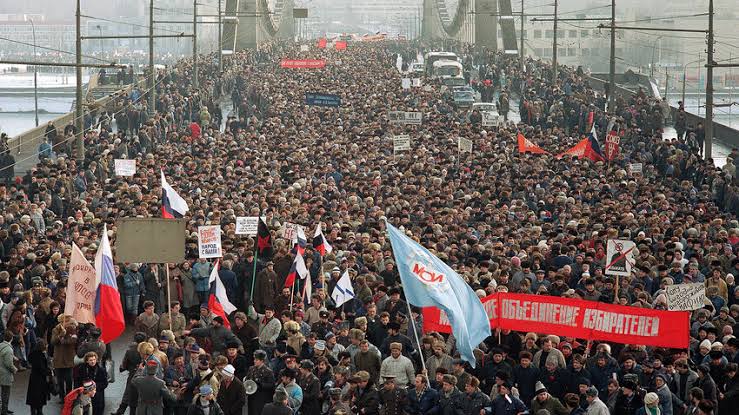
The Circle Interprets Itself – Understanding, Reckoning, and the Collapse of Old Certainties
(Ed. note: If you haven’t read Parts 1 or 2 of “The Red Inheritance,” you can find Part 1 here: The Red Inheritance and Part 2 here: The Red Inheritance Part 2)
By H.C. Piloski
Foreword
Part Three is about understanding.
Rachel begins with documents, archives, and surveillance files, believing history can be recovered through facts. What she discovers instead is that history survives not only in records but also in memory, silence, contradiction, and family.
As the circle of her inquiry widens, she learns that inheritance is rarely a single story. More often, it is a conversation carried across generations, unfinished and sometimes unresolved.
Rachel had intended to read only a few pages before bed.
Instead, she found herself awake long after midnight, sitting at her kitchen table with the RCMP file spread before her.
A date caught her attention.
December 26, 1991.
The day the Soviet Union officially ceased to exist.
She imagined her grandfather reading the news.
For David, the collapse was not simply political. It was personal. An entire worldview had fractured before his eyes.
The professor had explained it during one of their earlier conversations.
“For people like your grandfather,” he had said, “socialism wasn’t merely politics. It was a moral framework. When the Soviet Union collapsed, many people felt as though the world itself had lost its bearings.”
Rachel understood that better now.
The file recorded meetings, organizations, speeches, and surveillance reports. It documented where David went and whom he spoke to.
It documented what he did.
It revealed almost nothing about who he was.
One report noted that after a political gathering David had lingered outside the Labour Temple.
The officer’s assessment was brief:
Subject appears contemplative.
Rachel laughed despite herself.
Contemplative.
As though an entire intellectual and emotional universe could be reduced to a single word.
Yet perhaps it was not entirely wrong.
The deeper she read, the more complicated her grandfather became.
He was neither hero nor villain. Not a symbol. Not a stereotype.
He was a man trying to understand history while living through it.
Rachel opened her notebook.
He lived in a country that watched him, loved a country that doubted him, and believed in a world that collapsed beneath him.
For the first time, she felt less like a researcher and more like an inheritor.
The next morning she called the professor.
“You’ve reached the collapse,” he said.
“It feels like an earthquake.”
“It was.”
They spoke about the aftermath of 1991.
Old friendships strained.
Organizations fractured.
Arguments that had once seemed theoretical became deeply personal.
The professor explained that for the Jewish left, and many on the broader left, the Soviet Union’s implosion was more than a geopolitical event. It was a profound ideological shock.
“And my grandfather?”
“He was right in the middle of it.”
After the call ended, Rachel found herself thinking about the people who had filled her grandparents’ home when she was a child.
The endless conversations.
The arguments.
The laughter.
The crowded rooms full of people whose names she barely remembered.
Most of them were gone now.
What she was uncovering was larger than a single life.
She was recovering fragments of an entire vanished community.
The surprise arrived in the file almost by accident.
Buried among routine observations was a note stating that David and his wife had attended a performance at Manitoba Theatre Centre.
The entry was insignificant as intelligence.
For Rachel, it opened an entirely different door.
Politics had dominated every family story about David.
His meetings.
His causes.
His convictions.
But what about her grandmother?
Rachel had always known that she loved theatre, books, music, and literature.
What she had never considered was how completely those interests shaped her life.
For years Rachel had unconsciously treated her grandmother as a supporting figure in David’s story.
Now she began seeing her differently.
As a person.
As someone with her own passions, friendships, and intellectual world.
The deeper Rachel looked, the more similarities emerged between them.
Both believed ideas mattered.
Both loved books.
Both loved theatre.
The difference lay only in where they searched for meaning.
David sought it in politics and public life.
Her grandmother often found it in art, culture, and relationships.
Rachel wrote:
She walked beside his convictions, but she carried a world of her own.
This time she left the sentence untouched.
A few days later Olga came to visit.
Instead of speaking about David, she spoke about her own family.
Her grandparents had survived the Holodomor.
They carried memories of hunger, fear, and state violence.
“My grandparents never celebrated the collapse of the Soviet Union,” Olga said.
Rachel looked surprised.
“They didn’t?”
“No.”
“What did they do?”
Olga smiled sadly.
“They stared.”
Rachel thought immediately of David.
“Like my grandfather.”
“Yes,” Olga said. “But from the other side.”
The words settled heavily between them.
For years Rachel had viewed history through the lens of her own family.
Now she understood something new.
Her grandfather’s hopes had existed alongside someone else’s suffering.
His vision of justice had intersected with experiences he could never fully understand.
Neither reality cancelled the other.
History was not a single inheritance.
It was a collision of inheritances.
Before leaving, Olga reached across the table.
“You aren’t responsible for your grandfather’s beliefs.”
Rachel nodded.
“But you are responsible for understanding them.”
After Olga left, Rachel wrote down those words.
They remained with her for days.
The professor helped her understand another contradiction.
David had been a passionate supporter of Israel’s existence.
At the same time, he had consistently defended Palestinian rights.
“Both?” Rachel asked.
“Both.”
The professor smiled.
“Your grandfather spent much of his life living with contradictions.”
To many people such positions appeared incompatible.
To David they represented a single principle.
Justice could not be divided.
Rachel left the meeting with another realization.
David had spent much of his life refusing easy answers.
Perhaps that was part of what she had inherited.
As she prepared to leave, the professor stopped her.
“This isn’t really about your grandfather anymore.”
Rachel looked up.
“It’s about what his children inherited.”
After a moment he added:
“And what you inherited.”
Rachel did not expect Daniel to become part of the story.
Her younger brother rarely discussed family history.
When he called unexpectedly one evening, she assumed he was simply checking in.
Instead, he surprised her.
“Mom says you’re digging into Grandpa’s past.”
Rachel laughed.
“Word travels fast.”
“It always does.”
What followed was the most honest conversation they had shared in years.
For a long time Rachel had believed Daniel lacked interest in family history.
Now she realized his distance came from uncertainty rather than indifference.
“I remember Grandpa differently,” he told her.
“How?”
“He laughed.”
The answer caught her off guard.
Daniel began describing hockey games, family dinners, jokes, stories, and arguments.
Not the political figure preserved in newspaper clippings and surveillance reports.
A grandfather.
A human being.
“He loved asking questions,” Daniel said.
“And he loved telling stories.”
For the first time, Rachel saw a version of David that no archive could preserve.
Before ending the call, Daniel added something else.
“Grandpa wasn’t nearly as certain as everyone thinks.”
Rachel remained silent.
“He believed things strongly,” Daniel continued. “But he never stopped questioning them.”
The observation changed everything.
The file preserved David’s convictions.
His family preserved his doubts.
Neither version was complete by itself.
Before hanging up, Daniel made a promise.
“When you’re ready, I’ll tell you everything I remember.”
Rachel thanked him.
For the first time, she no longer felt alone in the search.
The following weekend Rachel drove to her parents’ house.
The place felt both familiar and strangely smaller than she remembered.
Photographs lined shelves.
Books crowded every room.
Pieces of family history sat quietly in plain sight.
While looking through old programs and photographs, Rachel began noticing things she had previously overlooked.
Her grandparents had attended theatre performances together.
Commented on books together.
Shared interests she had unconsciously assigned to only one of them.
Their lives overlapped far more than family mythology suggested.
Then her father mentioned something almost casually.
“There might still be some of your grandparents’ papers downstairs.”
A few minutes later Rachel stood in the basement.
The box sat on a shelf.
Its label contained a single word:
DAVID
She lifted the lid.
Inside were photographs, letters, programs, newspaper clippings, address books, and handwritten notes.
Nothing dramatic.
Nothing obviously historical.
Simply the fragments of an ordinary life.
Exactly the sort of material institutional history often overlooked.
Her father watched quietly as she examined the contents.
“Did you know all this was here?”
“Mostly.”
“Why didn’t you tell anyone?”
He thought for a moment.
Then answered honestly.
“I never thought anyone would ask.”
The response hurt because it was true.
For years nobody had.
Back in her apartment, Rachel spread the contents of the box across her table.
One item stood out immediately.
A sealed envelope.
The handwriting was unmistakably David’s.
The envelope was addressed to Sarah.
Her aunt.
The daughter who had drifted away from the family.
Carefully Rachel opened it.
Inside she found an unsent letter.
At first it read like ordinary correspondence.
Then gradually it became more personal.
More vulnerable.
More uncertain.
One passage stopped her completely.
You believed I cared more about being right than about understanding you.
Perhaps there were times when that was true.
If so, I regret them.
Rachel read the lines again.
This was not the David preserved in family legend.
Nor the David described in surveillance files.
This was a father struggling to understand his own mistakes.
Further down she found another passage.
History can become a dangerous thing inside a family.
People begin arguing with symbols instead of people.
Before long, nobody remembers how to listen.
Rachel lowered the page.
The words felt painfully honest.
Not political.
Human.
When she finally reached the end, she found something even more powerful.
The final paragraph was unfinished.
It ended with a single incomplete sentence.
If there is one thing I hope you understand, it is that I never wanted disagreement to become distance. A family should be large enough to contain different truths. If I failed you, it was not because I loved my ideas more than my daughter. It was because…
Nothing followed.
No explanation.
No signature.
Only blank space.
Rachel stared at the unfinished sentence for a long time.
At first she felt disappointed.
Then she realized its incompleteness carried its own truth.
Life rarely supplied neat endings.
Letters remained unsent.
Conversations stopped.
Questions survived.
That night Rachel stood by her apartment window looking out across the city.
She thought about the RCMP file.
The professor.
Olga.
Daniel.
Her grandmother.
The box.
The letter.
Government archives had preserved David the activist.
Family memory had preserved David the husband, father, grandfather, friend, and neighbour.
Neither archive was complete.
Together they came closer to truth.
Rachel opened her notebook one final time.
She wrote:
Every archive contains missing pages. Every family does too.
Then she closed the notebook.
For months she had searched for her grandfather.
Now she understood something new.
The story no longer belonged solely to David.
It belonged to the people who inherited him.
Her father.
Daniel.
Sarah.
And perhaps herself.
The next answers would not be found in government files.
They would be found inside the family.
Rachel switched off the light.
The letter remained on the table.
Waiting.
So did the rest of the story.
To Be Concluded in Part Four: The Red Inheritance
About the Author
H.C. Piloski lives among unfinished sentences.
Features
Do we treat our Arabs better or worse than the Tsars treated us?
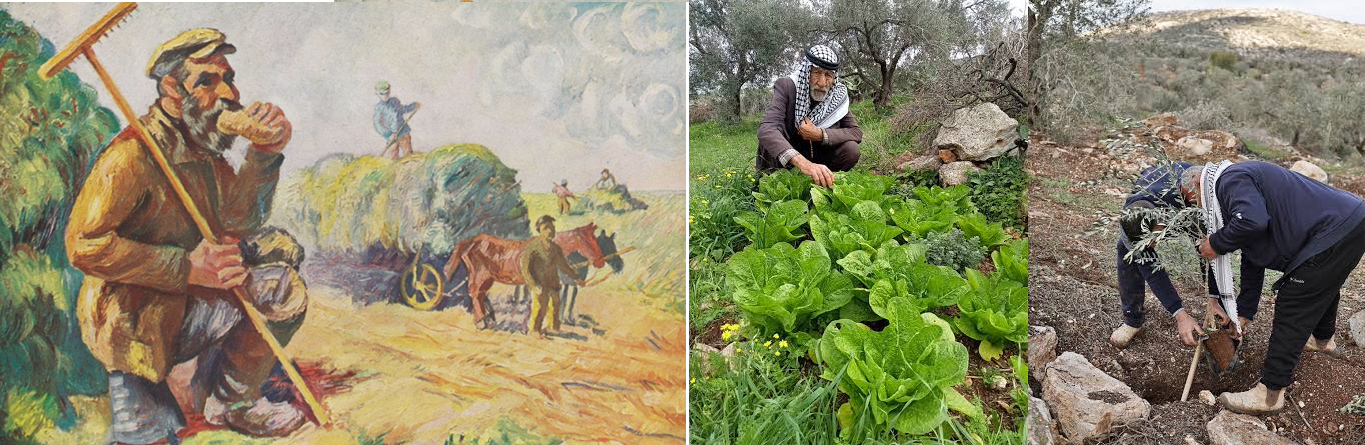
By MARTY GREEN I know many Jews will be outraged at the very notion of comparing the two. “The pogroms!”, I hear you cry. “The Naqba!”, the Arabs might just as well respond. We all have our own simplified narratives regarding the rights and wrongs of the past; but just as the true story of Arab life in Israel is much more complicated than the Naqba, so the story of Jewish life is Russia was, for better and for worse, much more nuanced than the mere fact of the pogroms.
There are some obvious parallels between our respective stories. We came to be the authority over several million Arabs as an unwelcome by-product of our great victory in 1967. Similarly, Russia inherited some half million Jewish subjects over the course of the three partitions of Poland (1772-1795). We were hardly more welcome to the Tsars than the Arabs were to us. We sometimes mock the “genocide” allegations by pointing out how 1.2 million Palestinian Arabs in 1945 now claim to number over 14 million. But we were no pikers by comparison: in the course of the 19th century, our numbers in Russia grew anywhere from ten- to twenty-fold.
We remember how the Russian government quickly instituted the Pale of Settlement, restricting our mobility. Can the Arabs under Israeli rule not complain of similar or worse restrictions? It is true that we have obvious security concerns regarding the mobility of a hostile population. The checkpoint system has almost certainly saved lives. But by the same token, can we be sure that the Russians had no valid reason to worry about the loyalty of their Jewish subjects?
There can be little doubt that in the First World War, many Jews hoped that the German invaders would liberate them from their Russian oppressors. And even before the German invasion, as a large minority group speaking their own language and having close connections with their co-religionists in foreign not-always-friendly countries, surely the Russians had as good reason to be concerned with our loyalty as we have with regard to our Arabs?
(Incidentally, it is said that the Jews of 1812 might have whole-heartedly thrown in their lot with the invading Grand Armee, if not for the unlucky resemblance of the French Emperor’s name with the Yiddish word mapole (meaning “defeat”). But that is a tale for an alternate version of history.)
Finally, we remember well how Jews in Russia were not allowed to own land; the truth is, we mis-remember that “fact” because we did indeed own land, and when challenged our title was upheld in the Russian courts. Similarly, in the Occupied Territories the validity of Arab land titles under Ottoman Law are rigorously protected by the Israeli courts. Nevertheless, some residents of the Jordan Valley may argue that it is less than “rigorously” enforced on the actual ground.
Which brings us to the subject at hand. Because back in Old Russia, in der alter heim, disputes between us and our Gentile neighbors over land ownership and usage were an ongoing feature of life for centuries. For a somewhat poetic description of the nature of these conflicts, I turn to the words of memoirist Falek Zolf (1898-1962), who recalls this about his youth in the shtetl of Zastavia, a village of several hundred on the outskirts of Kamenetz-Litovsk. To preserve a bit of the flavor of the original, I have transcribed Zolf’s narrative here in a mix of English and Yiddish.
“The village led a poor, quiet life. We lived from what God gave us; this one from a manual trade, this one from farming, another from buying and selling, and so forth. A few dozen families pulled in a meager livelihood from working in Asher Guterman’s brewery, which was known throughout the region for its beer. Outside of that, almost everyone had his own garden and his own cow – most likely one which he had raised himself from a calf. You could always rent a small patch from one of the landowners who lived in the Gentile quarter; the vegetables and produce could be sold in the neighboring towns and villages: in Brisk, Kobrin, Orleh, Bialovezh, etc.
“Quiet and peaceful was the flow of life in the stäedtele. It was truly mit’n schwéiss vun sein ponim (by the sweat of his brow) that each one earned his own piece of bread, along with the vegetables which the good Mother Earth provided to everyone in full measure.”
Of course we all know that Jewish life in Russia was not quite so idyllic as Zolf makes it out to be in the preceding passage. Let us see what comes next:
“The stäedtele of Zastavia was at one time, according to the stories of the old men, entirely a Jewish peasant-village. The whole surrounding area with its fields, gardens, and hills had once belonged to Jews, who were originally men of the soil. But little by little, for a number of reasons, the Yiddische erd had passed over into Gentile hands. If a Jewish peasant needed to make a shidukh for his daughter, he might be driven to sell a strip of farmland to a Gentile; and with the money, he could put on a proper khasseneh with all the sheva brokhos. If his son didn’t want to go serve the Russian Tsar and had to run off azh ken Amerikeh, the Jew would once again cut off a piece of land and sell it to a neighboring Goy (to pay the 300-rouble penalty). If his grown children went off to seek happiness somewhere in the far-away, and the elderly parents simply didn’t have the koyakhto go out and push the plow, then the last stückel feld would be sold to the local meshtchan, and with the money they could enjoy the few years remaining to them. And so with time, the Yiddische erdfell largely into Goyische händt.
“In the end, all that remained to us was a large vihon, a communal grazing-field, which according to legend had once belonged to a rich Jewish landowner, who had donated it to the stäedtel. In the end, the Yiddische beheymos had actually been forced to share this pasture with Goyische khazerim. It was painful for us to have to watch those khazerim turning our Jewish vihon into a pigsty, but there was little choice; one was, after all, living in golus.”
Perhaps we should pause here to consider that while the Jews seem to have sold much of their land to the Russians due to economic pressure, there are nowadays, for obvious reasons, only the rarest cases of Arabs selling their lands to Jews. Furthermore, I am not aware of any situations where the Bedouins of the Jordan Valley willingly share their grazing land with the Jews of the hilltop outposts. Whether these differences are to our credit or theirs is not for me to say here.
In any case, we will see further that it was not only economic or social pressures which came into play:
“Unfortunately, the more the Goyischer Gass (the Gentile Quarter) grew at the expense of the Yiddischer Gass, the more brash and the more khutzpah-digker they became. They started to look for any pretext or opportunity to snatch away this last remaining piece of Jewish grazing land, so that not a single Yiddische beheymah should have a place to roam. They would sometimes show up armed with sticks, hoes, and pitchforks, ready to start a milkhomah….”
Sound familiar?
“….but on such occasions, the ZastavierYidden, who were in those days no pushovers, would quickly arm themselves with the implements of ha-yadayim y’dei Eysav and go forth to meet the Gentile foe. Blood would flow from both sides. For the Jews, it was a matter of kidush ha-shem, a case of milkheymes mitzvah, to uphold their Yiddischen koved and also to save and protect the Yiddische beheymah-lach from Goyische händt…”
And of course, in such situations, the Russians would call in local gendarmeria or even the dreaded Cossacks, and the Jews would be quickly dispersed, arrested, or even beaten.
Or were they….?
Perhaps not. Let us see how Zolf describes it:
“Fortunately, these little milkhomos would not last for long. The storm would quickly die down, and the stäedtel would soon go back to its normal, peaceful life, as though nothing had happened.”
And with those words does Zolf conclude his fond reminiscences of his childhood years. But of course that is not the end of the story.
We all know the devastation brought by the Second World War. But in the wake of the Holocaust, we are liable to forget the enormous impact of the First World War on the Jewish world. The collapse of empires was followed by the emergence of new, ideologically-driven regimes which. It is hard to say whether Communist Russia or nationalist Poland was more hostile to the Jews. In any case, Zolf’s village found itself on the Polish side of the border. And the Jewish way of life quickly became economically untenable.
Among the first the measures adopted under the Polish national slogan of “swój do swego“…that the Gentile should only patronize “his own people”….was the establishment of Christian cooperatives, so that the Polish peasants would not see their hard-earned money fall into the hands of Jewish intermediaries. Then there was the nationalization of entire industries like wine, alcohol and tobacco…again, with the purpose not so much of the betterment of the working class as the impoverishment of the Jewish merchant class. Then the strict enforcement of the Sunday laws, so that the observant Jewish shop-keeper would have to close down for two days of the week. Finally, the imposition of a host of new taxes, of which Zolf reels off the names: gruntovi, dokhodovi, handelyovi, obratov… (ed. Note: would be nice to get the correct Polish spellins of these)
The bailiff’s wagon, which quickly made it’s appearance in one Jewish community after another to haul away confiscated goods in lieu of unpaid taxes, was given the nickname “Grabsky’s Aguleh (hearse)”, after the infamous finance minister Grabsky, a notorious anti-semite. And in Warsaw, it was said to have been followed all to often by another kind of aguleh, this one from the khesed shel emes, to collect the bodies of bankrupt Jewish merchants who had thrown themselves from a fifth-story window.
The precarious condition of the Jewish staedtel could hardly go un-noticed by the local peasantry, and before long they had renewed their ambition to take over the last remaining grazing-field, the communal vihon, and make it once and for all Juden-rein. In Old Russia, the Jews had been ready to defend themselves with clubs and pitchforks; and interestingly enough, Zolf records that they had even sought and obtained recourse from the Russian courts:
“Back then the städtel had engaged the services of berühmte advokaten (famous lawyers) who fought the case azh in der gubernieh un in Petersburg. The protzess dragged on for years, until the Jews were able to secure once and for all séier recht zu mägen paschen séiere beheymos auf’n kehill’schen vihon, inéinem mit die Goyische khazerim.
Yes, there was now and then justice available to the Jews from the Russian courts. We sometimes forget that Mendel Beyliss was aquitted by an all-Christian jury. In this regard, it is noteworthy that the Arab villagers in the Jordan Valley have also been able to obtain favorable judgments from the Israeli courts on occasion.
But in post-war Poland, things were not the same. The villagers knew that in the course of the war and the fires that had destroyed Zolf’s shtetl, the Jews had lost the papers which gave them the right to to an equal share of the communal lands. In addition, the shtetl had been seriously weakened by the war, the Spanish Flu, and emigration to America. The end was in sight to one and all.
And so one bright summer morning, the Catholic and Orthodox peasants (who otherwise had little affection for one another) herded their flocks into the communal vihon. Zolf describes what happened next. One doesn’t need to understand word for word to get the general picture. Sadly, the same story seems to be repeating itself today in the Jordan Valley: only the roles have been changed:
“Their field-hands let loose the dogs auf die Yiddische beheymos, and drove them weit in a sumpign winkel. The Jewish cattle had to spend the rest of that day versunken in der tiefer blotte, searching in vain for a green stalk mit wâs zu stillen séier hunger, un nischt gekönnt gefinnen. Late that afternoon, they were led home, tired, hungry, and covered with mud. Locked away in their barns, they gnawed at the walls. Séiere hungerige geschreien hâben sich weit getrâgen über’n stäedtel.
“And in the pitiful cries of their hungry animals, hâben die Yidden gehört a min trauerign shoyphar-blâsen, which announced the end, not only for their teuere, liebe beheymellach, from whom they had derived at least a stückel khayunah…but also the end vun séier alt-eingesessene Yiddischen stäedtel.”
Falik Zolf left Poland in 1926 and became a Yiddish teacher in Winnipeg’s I.L. Peretz Folks-Schule. He published his memoir in 1948 under the title “Auf Fremder Erd” (On Foreign Soil).
Features
Embracing your femininity in Cheshvan

By ELENA KNIGHT Rosh Chodesh Sameach! Though last month’s article (Embracing your femininity in Tishrei) had far more holidays, thus more material, the month of Cheshvan is not as empty as it appears. It may contain no holidays or mitzvot specific to the month, but I take issue with the idea that Cheshvan is “bitter”.
Some people refer to this month as MarCheshvan, Mar meaning bitter, but Mar can also refer to a drop of water; this month is the beginning of Israel’s rainy season! We began praying for rain with Shemini Atzeret last month, so by this time, G-d has usually heard Am Yisrael and started sending rain to the Holy Land. To connect this to womanhood, let’s revisit last month’s article, where I explained the connection of water to femininity.
In Tishrei, I spoke of the divine feminine, and how rain is associated with the womb of creation, fertility, and gentle, life-renewing power. In Cheshvan, however, I’d like to focus more on feminist reclamation of water metaphors; in Margaret Atwood’s The Penelopiad , for example, when trying to protect herself from unwanted suitors, Penelope recalls her mother’s advice: “Behave like water… Don’t try to oppose them. When they try to grasp you, slip through their fingers. Flow around them.” We can take this literary advice and put it into practice in our lives this month. When in a position where we feel powerless, and in spaces where female assertion is unwelcome, we could do well to be like water. Nobody can hold water in the palms of their hands without losing control of it. Water is not easy to contain. Nor are we women.
Taking Mar of MarCheshvan to mean a drop of water, rather than bitterness, can be interpreted now as a call to action. This month can be the time when we refuse to be controlled, much like the prophetess Miriam. In Torah, Miriam’s connection with water is clear; in Exodus 15, she takes the Israelite women out from the community to sing a song of deliverance through the Red Sea. She is with her brother, our teacher, Moses, when he is sent down the Nile in a reed basket, and she is the one who ensures he is cared for at the Pharaoh’s palace in Exodus 4. In many Pesach seders, a cup of water is set out for Miriam, like the wine for Elijah, because she ensured that the Israelites had water while travelling through the wilderness during the Exodus journey.
Miriam is, clearly, a passionate leader, creating a specific space for Israelite women when they are so often overlooked in Torah stories. By establishing her place as a role model for the Israelites leading up to their freedom from Egypt, the Torah makes it clear that G-d accepts female leadership. This month, let us take a page from Miriam’s book, and lead when we are called to do so. Like I suggested in my last article, mentoring a young girl in your community may be the perfect way to lead.
Cheshvan is also said to be reserved for the time of Moshiach. To prepare for the Moshiach’s arrival, we can act in ways that will bring about Israel’s reformation, both in the land itself and in the diaspora. By supporting charities both in our home communities and in Israel, by acting with chesed, loving-kindness, even when we don’t really feel like it, and by studying–whether that be studying Torah, feminist theory, or any other subject that will improve the world–with fervent passion. By working on tikkun olam, repairing the world, as we have it now, we can bring about a better world for future generations. What better way to remove the bitter reputation of Cheshvan?
