



Features
U.S. Senate candidate from Michigan calls Israeli government ‘evil’ like Hamas
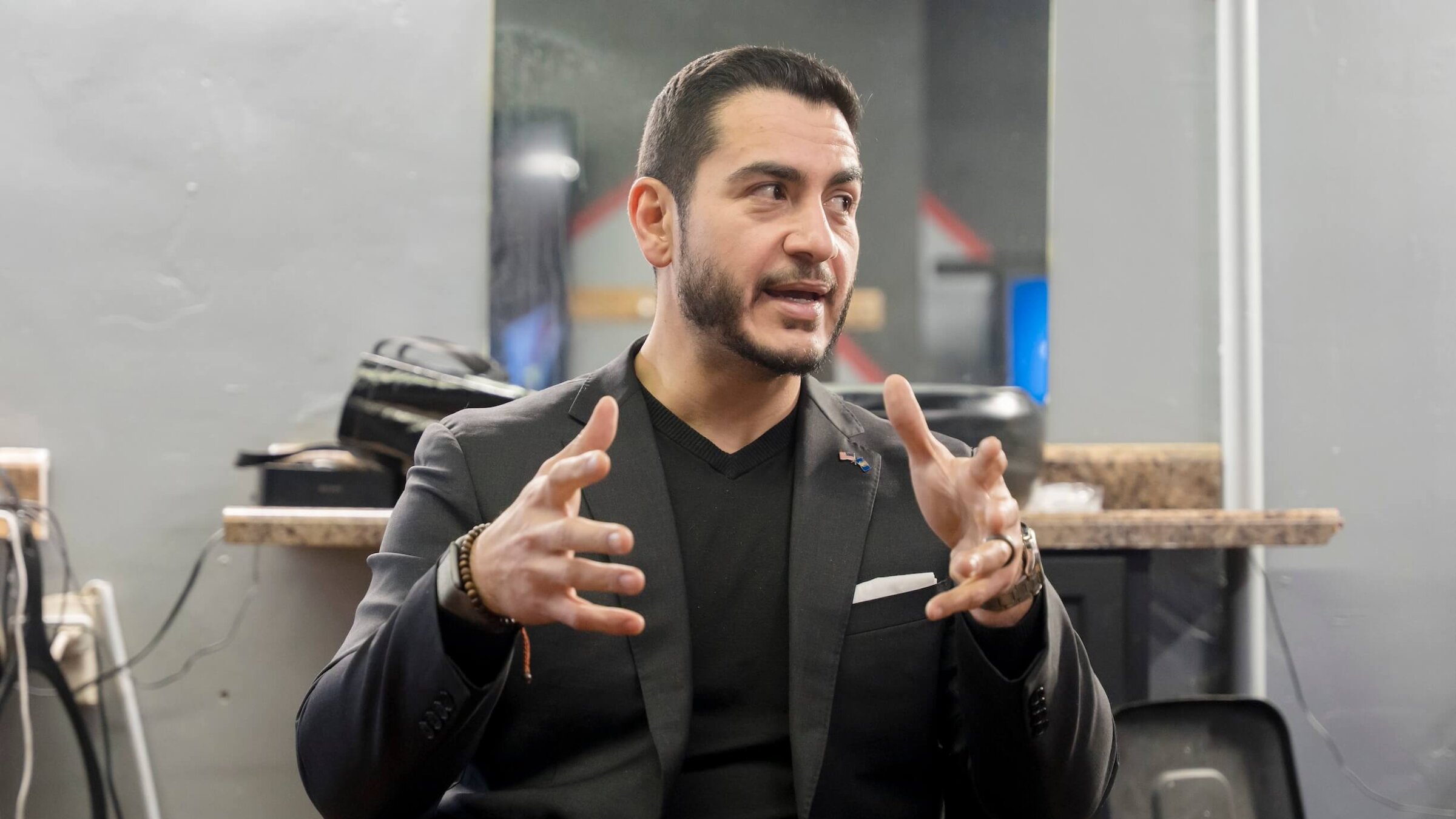
Abdul El-Sayed, doubled down on his criticism of the Netanyahu government and defended campaigning with controversial streamer Hasan Piker
By Jacob Kornbluh (Posted April 19, 2026) “This story was originally published in the Forward Click here to get the Forward’s free email newsletters delivered to your inbox.”
FoAbdul El-Sayed, a U.S. Senate candidate from Michigan, said in an interview aired Sunday that the Israeli government is as “evil” as Hamas, sharpening his criticism of Israel in the closely-watched Democratic primary.
“Killing tens of thousands of people makes you pretty damn evil,” El-Sayed told CNN congressional reporter Manu Raja on the network’s Inside Politics program. “It’s not how evil is this one versus that one — Hamas: Evil, Israeli government: Evil. We can say both.”
El-Sayed, 41, is a physician and the son of Egyptian immigrants. He is seeking to channel the energy of the 2024 Uncommitted movement, which protested the Biden administration’s support for Israel in the war against Hamas in Gaza. He is also hoping to build on the surprise success of the New York City mayoral campaign of Zohran Mamdani in taking on the Democratic establishment.
He is locked in a dead heat with state Sen. Mallory McMorrow and Rep. Haley Stevens. The primary is set for Aug. 4.
Earlier this month, El-Sayed faced backlash for appearing alongside streamer Hasan Piker, who has been accused of antisemitic rhetoric — including saying that Hamas “is a thousand times better” than Israel. McMorrow, who is married to a Jewish man, and Stevens, who is closely aligned with AIPAC, have both criticized El-Sayed.
In the CNN interview, El-Sayed defended his decision to campaign with Piker, framing it as an effort to reach voters who feel alienated from traditional politics. “My understanding of America is, it’s a place where we have freedom of speech,” he said.
The Michigan Senate race is shaping up as one of the starkest tests of the Democratic coalition and how the party navigates policy towards Israel in Congress amid the wars in Gaza and Iran. The state is home to the largest concentration of Arab Americans in the United States.
Last week, 40 Senate Democrats voted to block $295 million for the transfer of bulldozers, used by the Israeli military to demolish homes in the West Bank and Gaza; 36 of them also supported a measure to block the sale of 1,000-pound bombs to the Jewish state. It shattered a previous high of 27 Democrats who backed a similar pair of resolutions of disapproval to block some weapons transfers last year.
Sen. Elissa Slotkin of Michigan, who is Jewish, was among those who voted for the measures. In remarks as they announced their votes, Democrats highlighted their opposition to the Israeli government’s policies in the occupied West Bank, the humanitarian situation in Gaza and the war with Iran.
Features
Part 6 of my story of the delusional Winnipeg con man: The lawyer who worked with the con man for years

Bob Anderson and the non disclosure agreements Devlin insisted on people signing
By BERNIE BELLAN This is the sixth part of a story about a delusional Winnipegger who believes he is someone of great wealth and has spent the better part of 30 years contacting people all over the world telling them that he wants to invest in their businesses or projects.
The other five parts have been posted here at: Part 1: “The delusional Winnipeg con man who actually believed his own elaborate con and led one victim in Africa to consider committing suicide”; Part 2: “Meeting the con man for the first time in 2021; Part 3: “An explosive email arrives in my inbox on January 16.”; Part 4: Someone in LA figures out who everyone else was that was conned; and Part 5: The plan to buy jets in Israel and convert them to planes that could fight forest fires
As I was piecing together this rather incredible story, I was repeatedly told that one of the things Devlin would insist upon when he began communicating with someone – supposedly for the purpose of backing them in one sort of investment or another, was that they sign a non disclosure agreement.
One name kept coming up: Bob Anderson. Anderson, I was told, was the person who would send out these nondisclosure agreements. In two instances, I was also told, Bob Anderson sent out cease and desist letters to individuals, one of whom, Jonathan Soloway, had entered into what he thought was a legitimate business relationship with Devlin, but who was so angered and frustrated over Devlin’s constant delaying providing the funds which he had promised would be forthcoming that he went so far as to contact Devlin’s parents. Apparently that angered Devlin to the point where he asked Bob Anderson to send a cease and desist letter to Jonathan. The other letter, as Bob was to tell me during a phone conversation, was sent to a psychiatrist in a hospital where Devlin was being treated.
It was in my talking to Rick that I learned about Bob Anderson and the integral role he had played in leading the many individuals who fell victim to Fred Devlin to believe that Devlin was absolutely on the up and up. Because Rick was the one individual who was the first to come to know all the other players in this story, I relied upon Rick to be the intermediary between me and each of the individuals to whom I eventually spoke – either over the phone or, as was the case, through emails with one particularly unfortunate individual in Africa who told me he was contemplating suicide over what Devlin had done to him.
But, as Rick explained to me when he first broached the name Bob Anderson to me, it was Bob Anderson who had aided Devlin in his duplicity. Rick added that he doubted Anderson would be willing to speak with me because, Rick thought, Bob would be too embarrassed to own up to his role in this whole sordid story.
In time though, Rick got back to me to say that Anderson had agreed to talk to me after all. I was somewhat surprised when I heard that – and wondered what had led to his change of heart?
Now, I have to admit that, although I’ve had a long career in publishing, I wouldn’t have thought of myself as a well known journalist. Sure, I’ve Googled my name a couple of times (who hasn’t?) and what comes up are a number of stories with which I’ve been associated over the years. I’m most proud of work I did over 20 years ago to expose an investment fund in Manitoba known as the Crocus Fund. It really had nothing to do with the Jewish community per se, but, each year for many years The Jewish Post & News would publish an annual investment guide. It was in 2002 that I wrote an exposé of the Crocus Fund which, I suggested in my article, was in very deep financial trouble.
For that, I was threatened with a lawsuit (to which I referred earlier in this story). But, in 2004 the Crocus Fund was placed into receivership and further, I went on to become the representative plaintiff in a class action lawsuit filed on behalf of Crocus Fund shareholders against a number of defendants. That lawsuit eventually garnered over $12 million in damages for Crocus Fund shareholders. I’m quite proud of the role I played, both in exposing the house of cards upon which the Crocus Fund was built, and in being able to help bring some degree of compensation to Crocus Fund shareholders. So, when you Google my name, as perhaps Bob Anderson might have done, you’re going to come across some references to my role in the whole Crocus Fund affair.
I mention all this as a preamble to what is about to follow, which is an account of my phone conversation with Bob Anderson. In what now ensues I try to retain as much of the flavour of our actual conversation as possible. Thus, there seem to be sudden leaps in Anderson’s train of thought, but that’s not all that unusual. After all, there’s a well known president whose speaking style is so incoherent that even he is aware of that, but tries to pretend that it’s deliberate by describing it as “the weave.” To a certain extent Anderson weaved in and out of thoughts, too.
Bob Anderson phoned me one day in February 2026, to say that he was willing to talk to me. I told him that I was going to record the conversation, to which he responded: “I just want to tell you it’s an honor and a pleasure to talk to you about what I read about you. You have led a meritorious life, self-sacrificing, particularly for the Jewish community, and it sounds like you’re the ultimate voice of reason that they need more people like you. And I just want to take my hat off to you and the service you’ve offered and bestowed upon your community up there, and I just am proud to be talking to you.”
Well, talk about exaggeration! I’m not sure there are many who would go so far as to describe what I’ve accomplished over the course of my career in quite such laudatory terms – and I honestly wondered whether I was being set up for what would turn into nothing more than a round of total B.S.
So, I responded: “Well, thank you for that. Okay, this isn’t about me. But let me start by asking you, When did you first meet Fred Devlin?”
Anderson: “It was about 20 years ago.”
Me: “Do you want to tell me the circumstances?”
Anderson: “Sure. Okay, well, I mean, I don’t have to tell you that, but I met him about 20 years ago up in Winnipeg. I met him in person.” (Why would he say he didn’t have to tell me that, I wondered? Why not?)
He went on: “It was the first time I had contact with him. And I’ll try to give you a little short story, .. I’m not actively practicing law, but that was back when I was actively practicing law, and I was engaged by a group up in Canada who had a real bleeding heart for Bolivia, and they wanted to buy a bank … Like, put it in the foundation.” (I still don’t know what he was talking about, but as is often the case when you’re interviewing someone, you don’t want to disrupt their train of thought, so you just let them wander on – strange as what they may have just said sounds.) “It was a bank that was struggling in Bolivia.” (I have to admit that the first thought that came to mind when he mentioned a bank in Bolivia was “Butch Cassidy and the Sundance Kid.” Anyone who’s seen that movie would understand what I’m talking about.)
Anderson continued: “So I went all the way up to Canada, and Mr. Devlin – Fred Devlin was a prospective investor they wanted me to talk to as I was their kind of international tax counsel for the project.” (Again, who were the “they” Anderson was referring to, I wondered?) “And I met him in person. We had about a 15- to 20-minute meeting, and he was very well-dressed, very well-spoken.
“He was very well-groomed, had a good sense of humor, and, you know, we seemed to kind of have common ground on spiritual… Even though he’s Jewish, I’m Christian. We had, you know, the fact that he felt family… His priorities in life were similar to mine, you know, God, family, and country kind of thing. So we just kind of hit it off personally.
“He seemed like a real nice guy, and then I just kind of lost contact. I mean, we didn’t have any contact for many years. You want to go to the next step?”
Me: “Before we do that – when you met him, what did he present himself as? What did he claim to be?”
Anderson: “He was just, you know, it’s funny. In fact, I’m just trying to think. He was just a businessman, a successful business real estate investor. Real estate. Business real estate.”
Me: “Did he mention at that time the Xanadu group of companies?”
Anderson: “Not at that time. No, sir. No, sir…He kept bragging, kind of bragging. Well, not bragging, but he was… The number one thing in his resumé was his relationship with Izzy Asper…And then we had a hiatus of several years.”
I then told Anderson that, of all the people with whom I had spoken, his relationship with Devlin went back the longest (20 years). I said to him: “I’ve been trying to understand when did Fred completely flip? And apparently it happened sometime when he was around 30 that he started developing these delusions.
“Apparently he was quite capable before then. I believe he had a position with the…” (and I’m deliberately omitting where Devlin was employed because if I get too specific a lawyer might say that I didn’t sufficiently disguise Devlin’s true identity.) “And he did get his Master’s in Business Administration at the University of Manitoba.
“So that all checks. So, you know, for me, the curious part is when someone develops a delusion, a psychosis, when did it happen? And according to his mother, she corroborated that it happened sometime when he was around 30 and he’s 60 now. So you would have met him when he was in his 40s.
“And I think what’s happened, my observation is that it’s gotten worse in more recent times, his delusions. But I want you to continue. You said there was a period of time then when you didn’t have any contact with him, right?”
Anderson: “Right.”
Me: “So when were you in contact again?’
Anderson: “Well, just to put a finishing on the Bolivia story, I went ahead and did that project with the Canadians.” (The way Anderson said “the Canadians,” you’d think he’s talking about a really shady group, like say, “the Chechens.”) “But, you know, Fred ended up not wanting to invest.”
Now, at this point Anderson’s language got really twisted, but I want to retain the flavour of it: “I had a little suspicion of being capable of investing and then it was a nice opportunity for somebody who had a heart for the living people, you know, like an altruistic, a neo-mercenary kind of a heart, which he presented himself as representing. But anyway, he had no involvement in that project, lost contact with him for, it could have been 10 years, I mean, it’s just been a lot of years. I mean, it could have been, it could have easily been 10 years, 15 years.
“And then he just kind of, he got in contact with me about, I think it was for the explicit purpose of doing an NCND, a non-disclosure agreement.” (I wasn’t sure what Anderson meant by “NCND.” I knew a nondisclosure agreement is commonly referred to as an NDA, but I had to look up NCND. The closest I could come to that term is what is known as an NCNDA: a Non-Circumvention, Non-Disclosure Agreement. Here’s the definition of an NCNDA: “a specific type of contract used in international trade or business deals where one party wants to ensure that the other party does not bypass them (“circumvent” them) to do business directly with their contacts or intermediaries, while also keeping shared information confidential.”)
“I don’t know why he, I guess he probably figured I would do it for him for free or something. He kind of preyed upon, as I look back on it, he kind of, I guess, you know, felt like I might do it for him on a friendship basis or something like that.
“And I did do it and he loved it. I mean, it’s a great agreement. It’s really tight, I’ve spent a lot of time on it, it’s only a couple of pages, but it’s a very tight NCND.
“And then from that though, the reason I’m making a point of that, most of my, like, quote-unquote, representing him, not as an attorney, but just as a quote-unquote advisor, most of it was sending this NCND out to all these people. Like every so often he’d send an NCND here to protect me and, you know, protect him. So I would send a cover letter and an NCND and that’s most of the contact, that’s like 99%, 90%, 90% of the contact I had with people on his behalf was sending out this NCND for them to sign and execute.
“I don’t know why…, I guess he probably figured I would do it for him for free or something. He kind of preyed upon, as I look back on it, he kind of, you know, felt like I might do it for him on a friendship basis or something like that.
“And I did do it and he loved it. I mean, it’s a great agreement. You know, it’s really tight, I’ve spent a lot of time on it, it’s only a couple of pages, but it’s a very tight NCND.
At this point I have to step back – and give my head a shake – something I did metaphorically throughout my researching material for this story. Here was a lawyer – talking about creating very “tight” non-disclosure agreements or, as he referred to them, as “NCND’s” – and he’s clearly very proud of the work he did for Devlin.
But, what the hell was it all for, I wondered? And didn’t he ever stop to think – just why was he sending out those NDAs or NCND’s or whatever the heck he wanted to call them? What was it in whatever agreements that various parties were signing with Devlin that Anderson was requiring of the recipients of whatever it was he was sending to them that had to remain so absolutely confidential that no one could even talk about what was in those agreements with anyone else?
Since my conversation with Anderson though, I have seen actual agreements between Devlin and some of the individuals who were to become part of his vast delusion. I admit those agreements are very impressive. They spell out in precise detail the respective obligations of Devlin and the person with whom he was entering into an agreement. They are very detailed contracts – and clearly reflect the knowledge and experience of someone who had an extensive business background.
Which makes me wonder all the more – when did someone of such obvious talent and experience go completely off the rails? My own brief encounter with Devlin eight years ago didn’t offer me the kind of insight into his approach that others must have witnessed – where they would have been dazzled by his extreme self-confidence, composure, and apparent vast business experience. In time, as I was to speak to others who were taken in by Devlin – and some of them mentioned names of some very prominent individuals who had also come into contact with Devlin and who had also spoken quite highly of him, I began to realize that his delusion was so intricate – and he so totally believed in what he was telling people, that it was possible to get a better understanding how he was able to completely fool so many people into thinking he was the real deal.
I must also disclose that I have attempted to contact some of the people whose names have been mentioned to me as also having been part of Devlin’s network – and who hold very prominent positions in the business world. In one instance, I did get a response from one of those individuals.
I had written a similar email to several different people, in which I asked about the extent of their relationships with Fred Devlin.
I would send emails to head offices of companies or organizations, explaining who I was and why I was trying to contact specific individuals. In one instance, I did receive a response.In the following email, I’ve left out the real name of the person who is the subject of this story. I’ve also omitted the name of the person I was trying to contact”
Hi,
I’m writing a story about someone by the name of …. …. is totally delusional and has defrauded many different people all over the world.
I’m told that …. had some contact with … at some point. I’d like to speak to … about the nature of their contact with …
I can be reached at ….
Thank you.
Bernie Bellan
Publisher,
Here is the response I received:
Hi Bernie,
Thanks for reaching out.
This is a troubling email! I’m afraid I don’t know Mr. …. very well. …oversees the development of … helps to facilitate investment into … markets it nationally and internationally. Mr. …reached out to … in order to inquire about opportunities at … so we gave him some information and connected him with a couple of folks to continue his conversations, same as we would for any company or individual considering investing in operations at ….. It’s been several months since we last spoke.
I wish you the best with your project!
….
I thanked …for responding to me:
Hi ….,
Thanks for getting back to me. I wonder what became of the contacts you gave …. His pattern of behaviour has been to insinuate himself into someone’s life by making him seem to be someone of great importance and wealth, and then once he has someone’s interest – to broach the idea that he would be willing to invest in a particular project that someone may be trying to advance. He would also try to obtain contacts from whoever it was that he was discussing a project idea with.
The problem is he is absolutely delusional. He has no money and all his talk of putting up investment dollars has always been total nonsense.
I hope that whoever it was that you might have put in touch with … didn’t get too far into it with him. He’s deceived people all over the world into thinking that he’s someone of great wealth.
While the story is fascinating, it’s also very sad once you know how many people have been deceived by ….. Right now I’m working closely with someone who’s been trying to get a police investigation of …. launched, but it’s been a bureaucratic nightmare as different police forces claim that it’s not in their jurisdiction and they keep passing the buck.
I’ve also put that same individual in touch with one of Winnipeg’s leading law firms. Their head of civil litigation says that there’s a solid case to be made against …., but the problem is he’s absolutely penniless so what’s the point of seeing him?. I believe he’s being supported by his very wealthy parents, but the lawyer says that they can’t be held liable for their son’s behaviour.
And, as I wrote to you, it’s all so crazy that I decided to write a story about it. But even as I’ve been writing it I’v’e been finding out more and more about …, including just recently when I was told that he had contacted you and ….from ….
You were good enough to respond to me.
…. hasn’t.
Thanks at least for responding.
-Bernie
And so, even though I began this story by asking how so many people could have been taken in by what was clear to me almost from the moment I met Devlin, was his total delusion that he was a hugely wealthy businessman and owner of a vast network of companies, as time wore on – and I spoke to more individuals who had fallen prey to his charming blarney, I began to understand how each individual was unaware there were other individuals who had become part of Devlin’s delusion. (And that is why those nondisclosure agreements or whatever Anderson called them played such a crucial role in keeping each individual who was to be victimized by Devlin ignorant of others who were in similar situations.)
It occurred to me as I was writing this story that the fact Devlin was so insistent on anyone with whom he was supposedly entering into some sort of business arrangement sign a nondisclosure agreement perhaps meant that somewhere in that twisted mind of his he had a sense that what he was doing was actually a total fraud. Or, perhaps his past business experience would come to the fore and he would put into practice lessons he had learned years before without actually realizing that he was exhibiting totally delusional behaviour. I don’t think I’ll ever know if either of those suppositions is correct.
I asked Bob to describe what he would send to the various individuals to whom he sent nondisclosure agreements. How would he explain why he wanted them to sign NDAs (or whatever he called them)?
He said that he’d send “a cover letter out explaining the request to sign the agreement…So I’d send, you know, just, hello, how are you, please see the attached agreement. That was the extent of these letters I’d sent out.”
Me: “Any idea approximately how many of these letters you sent out?”
Bob: “10 to 15.”
That at least gave me some idea of the scope of Devlin’s network – and how many more people might have been approached by him within the past few years of whom I wasn’t aware. Remember, Bob had said that he had first met Devlin 20 years ago and then had lost contact with him for 10-15 years. It was only after they reconnected that Devlin asked Bob to start sending out those NDAs, which must mean it was likely only within the past 5-10 years that his delusion took hold completely. Also, each of the individuals with whom I spoke, other than Dan Winthrop, told me they had come into contact with Devlin only in the past five years. Dan Winthrop, you may remember reading, said that he met Devlin 16 or 18 years ago – he wasn’t sure.
All this makes me wonder what was going on in Devlin’s life in the more distant past. I know that he had been hospitalized on several occasions – in the psych ward, in different hospitals, based on accounts given to me by different individuals. And, I know that when I met him he claimed that he had stepped back from running his vast network of companies and was at that point interested in pursuing his philanthropic work.
But, something must have happened that led Devlin to become so active in establishing contact with different individuals in recent years – always with the intention – or so he would tell them, of investing in different businesses or, as proved to one of the most damaging lies he told – of helping that individual in Africa to whom I referred earlier (Charlie) establish a charitable foundation.
Since no one in Devlin’s family has ever been willing to talk about Devlin – beyond saying that he’s “not well,” it’s very hard to know what else he might have been up to in all the years since he had attained a very senior business position. Was he for a very long time attempting to inveigle himself into people’s lives under the premise that he was a wealthy businessman who wanted to invest in their businesses or help bring a project to fruition?
I can’t really answer that. But it is apparent that within the past five years Fred Devlin was quite active in contacting various individuals and spinning his incredibly deluded fantasy.
To return to Bob Anderson’s story, which takes an interesting twist. He had explained that he had sent out a large number of NDAs on behalf of Devlin and then, he said: “I lost contact with him again.”
But, Bob continued: “Shortly after that, we got real hot and heavy, I mean, you know, he wanted me to come up to Winnipeg and he wanted to be the family counsellor and all this stuff – to the point where he had plane reservations and I was about to step on a plane to go up there and see him.
“Then all of a sudden I got this call, you know, he was in the hospital, he was sick or something like that, which I don’t really buy the story now. I think he just couldn’t afford a plane ticket or something like that. And then several years after that, I think he had this relapse, probably one of these relapses into the hospital, probably for the mental side, you know.
“I think he might have said he hurt himself. And then several years after that, he got back in touch with me again and wanted me to write some more of these letters, which I did. And then I lost contact after a couple years after that and then he resurfaced a couple years ago.
“And then for the past couple years on and off, he’s been requesting the same type of thing. And then in the process, offering me all these opportunities and, you know, all these potential contract agreements and going to make me rich. And he always wanted to give me a piece of the equity.“
Now, if you’re confused by the apparent contradictions in Bob’s story, then join the club. What period of time was he talking about, I wondered? At one point he claimed that he “had lost contact with him again,” but then he says “Shortly after that, we got real hot and heavy.” So, how long was it that he didn’t have contact with Fred?
It doesn’t really matter because this entire story is about one huge delusion: Devlin’s unshakable belief that he was an extremely wealthy and successful businessman. Trying to figure out the chronology of events that occurred – such as when did Bob Anderson actually have contact with Devlin is almost impossible since Bob’s narrative is all over the place.
I asked him though, what were the “opportunities” that he said Devlin offered him?
Here’s what he answered: ‘Let me pull up his letterhead. Let’s see, I’m pulling it up here. Okay. He said I was going to become Chief Global and Senior Advisor. And he gave me this address called Boulevard Grand, Duchesne, Charlotte, Luxembourg City.”
Me: “The headquarters for his global group of companies – right?”
Bob: “Right, right.”
Me: “Man, his delusions are fascinating, but you can just imagine the imagination that went into them.”
Bob: “No kidding, no kidding.”
Me: “So did he ever offer to pay you for any of the work you were doing?”
Bob: “Oh, yeah. Oh, and as a matter of fact, he paid me a thousand dollars or something a couple times, but I think that ended up coming from his father. I think he borrowed it from his father or maybe his wife or maybe even his mother or his father himself. It might have even been one of his brothers. I’ve had sporadic contact with most of his family.”
That payment provided a crucial piece of evidence that Devlin’s family was well aware what he was doing – and, in fact, was complicit in his behaviour. Based on that, when I was later to talk to Jonathan (whose name I mentioned early in this story as someone who had lost quite a bit of money as a direct result of Devlin having convinced him to stop paying his debts; I’ll explain all that in another chapter), I told Jonathan that he should sue Devlin, his wife, and his parents. In fact, I told Jonathan that I knew of several Winnipeg lawyers who might be willing to take on a lawsuit of that sort. I did contact a very well known lawyer and, as of the time of writing and, as I’ll explain, the law firm was willing to take on the case to sue Devlin on behalf of Jonathan, but the lawyer who was going to handle the case said there were no legal grounds for extending the lawsuit to Devlin’s wife or his parents.
Bob, however, noted that getting that $1,000 payment from Devlin wasn’t easy, but he was sure the cheque was signed either by Devlin’s wife or his father; he couldn’t recall.
I said to him that “the point of my trying to find out about the source of his funds is Rick has been pretty adamant that without the support of his parents, he wouldn’t have been able to carry on whatever he’s been doing.”
Bob: “It was just amazing. I’m sure the company line he gave to all the other people he talked to, to Rick and Jonathan and everybody else was that he had some impediment where he couldn’t transfer all of his millions of dollars into North America. I mean, I kept saying, ‘If you’re the richest guy in the world,’ which is what he claimed at one point, ‘why can’t you send $100 or $200?’ And he said, ‘well, I just don’t have any cash. I can’t get cash.’ “
I said to Bob that what he just told me led me to react the same way I had reacted when I had heard everyone else’s story of their dealings with Fred Devlin: “It sounds like this guy just wanders in and out of reality. And when he’s in his delusional state, he starts contacting people. I’m not sure how much thinking was going into it. His delusion simply takes over.”
Rick, though, had mentioned that Bob had sent a couple of “cease and desist” letters, as well as NDAs. I wanted to ask Bob about those cease and desist letters. I said to him: “I was told Fred had sent out cease and desist letters. Did you author those letters, as well?”
Bob: ‘Well, when he was in the hospital, he claimed they were keeping him against his will. He would dictate a letter and I would just send it out on his behalf. I’d say on behalf of Fred Devlin. I made it very clear that I was just parroting what he had told me to say. I don’t think it ever did any good at all, it sounded so desperate, I really kind of felt sorry for him.”
As I noted earlier, Bob explained that he had sent two cease and desist letters. One was to a psychiatrist in a hospital where Fred was being treated. The other, however, was to Jonathan Soloway – the fellow in Ontario who actually lost a lot of money as a result of Devlin’s promises to Jonathan that he would be paid a huge salary if he entered into a contractual relationship with Devlin to develop a Real Estate Investment Trust. Jonathan did not take kindly to Devlin’s failure to fulfill his obligations and subsequently began to send threatening letters to Devlin saying that he was going to sue him for breach of contract. That’s when Devlin asked Bob to send Jonathan a cease and desist letter.
Bob now admits he is deeply embarrassed over having sent that letter, saying he’s since “apologized” to Jonathan. Bob says: “And here Fred had me send this letter to him like he was being preyed upon by Jonathan. It was just the opposite.”
At that point in my conversation with Bob, he went off on a totally different tangent, telling me he had “a deep interest in outer space and rockets.” What? Where was this going, I wondered?
He began to describe his particular interest in “outer space entrepreneurship.”
Now, before you lose interest, I have to disclose that in another conversation that I had – previous to my conversation with Bob, I was told that Devlin’s past experience in the aviation industry had played a prominent role in his having networked with someone else – this time an Israeli fellow by the name of Avi, who now lives in the US. That will be the subject of a later chapter, but suffice to know that Devlin was able to convince many intelligent people that he wanted to enter into an arrangement whereby he would bring jets from Israel to be converted into water bombers in Canada.
And that’s where Bob Anderson picks up the story: “I got an email from a lady named Dalit Galon (not her real name) and she’s in Canada, but she’s like a public relations representative for Israeli aerospace. I looked her up – you know, on AI, she’s a legitimate person. And Fred’s big project was going to be to convert 67 planes from Israel in Canada into flame retardant sprayers.”
I said to Bob that I had heard that story from someone named Avi. I asked Bob whether he knew Avi? He said he didn’t.
Bob continued with his story about Devlin and his having contacted people involved in the Israeli aerospace industry: “I have correspondence, I don’t think he could have faked these emails. I have correspondence from him to these people, and these people replying to him.”
I said to him: “Yeah, I can see how people can get enmeshed in this kind of web. It’s not conspiracy, it’s just delusion.”
Of course though, nothing ever came of Devlin’s grand plan to bring jets over from Israel to Canada. Bob eventually came to the realization that there was nothing of substance in any of Devlin’s supposed plan: “The main thing really that came through to me is, the thing he wanted to do most – was just talk. We got to talk, we got to talk, and we get on the phone, he’s taking my time to talk for half an hour, and then he said, ‘Well, I got to go, we’ll continue next week.’ He never comes to any conclusion.”
I responded: “Well, that’s the pattern of someone who’s delusional. Okay, so was there a certain point where you just realized that this is all just fakery, and that he is delusional? Or was it just gradually, over time, you came to that conclusion?”
Bob: “I’d get to a point and say, ‘Fred, we’ve got to have some money here, a retainer or something, I just can’t deal with talking and spending my time’, and I’d kind of cut him off. He’d come back in six months and say, ‘well, I think I’ve got it all worked out, including the money.’
“And I kept thinking maybe – like Elon Musk will make these crazy things. To me, putting a civilization on Mars is about as crazy as what Fred would talk about. Although, of course, Fred claims he’s richer than Elon, he knows Elon.”
And then Bob was brought back into reality by Rick: “That’s where I got the face slap,” he says. “You know, he (Rick) shook me up. He was the first person that said, ‘Look, you know, this ain’t right. This ain’t so. I’ve got all these other people (who had been victimized by Devlin).
“But he was the first person that really shook me into reality. And I just felt like a dog for, you know, just going along with this thing. And then that’s when I apologized to Jonathan and I apologized to Rick.
“And I just felt like a dog. And, you know, I blame it on me for being gullible. You know, I don’t hold any grudges. I shouldn’t have been that gullible. You know, I’m no spring chicken. I’m 76 years old, but I still should not have been that gullible.”
I said to Bob: “But you see, as I wrote to Rick last night, I really wanted to speak to you because you were coming at it from a different perspective. You weren’t being asked to invest. You were sort of facilitating Bart’s delusions to a certain extent.”
Bob: “Yeah. Unfortunately. Yeah.”
And then Bob asked me something that left me confused for a moment. He said: “Let me ask you: Did you get the museum open?”
Me: “What museum?”
Bob: “I read an article that you were going to convert a synagogue.”
I realized then what it was to which he was referring. It was a story I had written some years back about a plan by a Winnipeg doctor to partially convert Winnipeg’s oldest synagogue building into a partial museum. I was quite impressed that Bob had actually read that story. It told me he wasn’t just buttering me up when he was laying it on so thick at the beginning of our conversation about what an honour it was to speak to someone who had done so much for the Jewish community of Winnipeg. Of course, that’s nonsense. I’m just a former newspaper publisher. But it did tell me that Bob had actually read at least one article I had written.
I explained to him that I didn’t know what the status of that museum project was, but it did remind me that I should follow it up with that Winnipeg doctor. I said to Bob: “As far as I know, they’re just doing feasibility studies now. Honestly, I don’t believe that project will go anywhere. But unlike Fred Devlin’s ideas, it does have some basis in reality.”
Bob said: “You come across with a stellar resumé and life’s work, and you’ve done a lot of great things. I just want to commend you, sir, and it was a pleasure to talk to you.”
I responded: “Okay, thanks very much, Bob.”
He said: “Take care. Yes, sir. Let me know if you need anything.”
I signed off, saying: “I certainly will. Thank you very much for calling. Have a good day.”
Features
Israeli Government Report Ranks World’s 10 Most Influential Antisemites

Israel’s Ministry of Diaspora Affairs and Combating Antisemitism published this week its official ranking of the 10 most influential antisemitic figures in the world in 2025, and the No. 1 spot was given to social media influencer Dan Bilzerian, who is running for US Congress in Florida.
The Armenian-American entrepreneur and US military veteran is a prominent critic of Israel and Judaism who has promoted antisemitic conspiracy theories and Holocaust denial. He has said he wants to “kill Israelis” and thinks Judaism is “terrible.” He recently claimed antisemitism is a “made-up term” and there is a “big Jewish supremacy problem” in the United States. He formally filed paperwork earlier this month to run as a Republican and unseat incumbent Jewish Rep. Randy Fine in Florida’s 6th Congressional District.
Swedish climate activist Greta Thunberg is the world’s second most influential antisemite, according to Israel’s Ministry of Diaspora Affairs, which highlighted her use of terms such as “genocide,” “siege,” and “mass starvation” in reference to Israel’s military actions in the Gaza Strip.
Third place was given to Egyptian comedian and former television host Bassem Youssef, followed by far-right American political commentator Candace Owens in fourth place and Palestinian-British journalist and editor Abdel Bari Atwan in fifth.
The list includes American imam Omar Suleiman, Denmark-based doctor Anastasia Maria Loupis – who has shared online conspiracy theories about Jews and Israel – far-right commentator and white nationalist Nick Fuentes, and conspiracist Ian Carroll.
Rounding out the top 10 is far-right podcaster and former Fox News host Tucker Carlson, who regularly promotes antisemitic conspiracy theories about Jewish influence.
Israel said the 10 most “prominent influencers in the global antisemitic and anti-Zionist arena in 2025” were selected based on “both the severity of their actions/statements and the scope of their influence” related to their activities last year. “Each of them has expressed antisemitic views or promoted false information related to Jews, Israel, or both,” the ministry explained. The list does not include individuals with formal political or government positions.
Each individual was ranked based on their influence on social media, but also other factors such as their repeated appearances on news channels, “perceived influence on public opinion, and prominence in certain communities.” The ministry also took into consideration each person’s “level of impact and risk,” which includes how often they upload antisemitic and anti-Israeli posts on social media. The report was released ahead of Israel’s Holocaust Remembrance Day, known in Hebrew as Yom HaShoah.
In a separate section of the report dedicated to antisemitic and anti-Israel influencers in the US, Israel’s Ministry of Diaspora Affairs singled out YouTuber and children’s educator Ms. Rachel, who has “increasingly used her social media accounts to amplify pro-Palestinian messages and criticize Israel.”
“Her posts have been interpreted by pro-Israel organizations as one-sided and hostile to Israel, and organizations such as StopAntisemitism have accused her of spreading anti-Israel or pro-Hamas propaganda and called for an examination of her activities,” the ministry stated.
Features
Part 1 of the story of the delusional Winnipeg con man who actually believed his own elaborate con and led one victim in Africa to consider committing suicide

The first part of a multi-series story
By BERNIE BELLAN
Introduction
The story you’re about to read originally began as a work of non-fiction. Although everything in this story is true, I’ve changed the names of most of the individuals mentioned in this story – to protect their identities.
This story is about a very sick man who lives in Winnipeg and who has caused terrible damage to many different people over a long period of time by promising he would invest in projects with different individuals. The reality, however, was that the person making all those promises was – and still is, deeply delusional. In fact, while he has very little money, for years he has believed he was someone of immense wealth – and has been telling people all over the world that phoney story. Further, because he is actually highly intelligent and, at one point, had a very successful business career, he has been quite adept at convincing different people all over the world who were looking for someone to help invest in their particular projects that he would invest in those projects.
I originally posted that story – in two parts, on two separate days, to this website in early February 2026. When I posted that story though, I didn’t hide the name of the person who is now the subject of this story. Two days after the first part of that story appeared on this website, however, I received a warning email from a lawyer – who happens to be someone I’ve known for a long time, but who also explained that he’s a cousin of the individual who was the subject of my story. In that email the lawyer wrote that, unless I removed that story from my website immediately, I could be sued for defamation.
That lawyer said that he was acting for the parents of the man about whom I had written my story. Receiving that email incensed me because, as you read on, you will see that many of the individuals who suffered greatly as a result of what had happened to them when they were contacted by the “con man” about whom this story is written, had attempted to reach out to the con man’s parents, asking them to do something to keep their son from continuing to deceive individuals with promises that he would invest in the various projects which these individuals hoped to see succeed.
But – that email had the desired effect. As I will explain, I’ve had previous experience with being threatened with a defamation lawsuit and I had no desire to go through that experience again. So, I took the story down.
This story though, was something I was very ambivalent about writing in the first place because it’s about someone who suffers from a very serious mental disorder and, in my career as a journalist, I’ve preferred to stay away from doing medical stories, especially ones that relate to psychiatric illnesses. I have had writers who specialize in medical stories work for me and I know how much effort they would put into understanding what it was they were writing about when it came to specific illnesses. It’s time consuming to do the necessary research and not easy for a writer who doesn’t have a medical background to understand the terminology involved in doing those kinds of stories.
This story, therefore, is not intended to offer a deep dive into the one particular form of mental disorder that, it seems apparent, has affected the principal subject of this story – in this case a delusional disorder – or psychosis. I don’t know his medical history, so when I say that he has a delusional disorder, I’m offering that assessment based entirely on his behaviour, not on any actual medical reports.
In speaking with his mother many years ago, after I had first met the man who is the subject of this story, I was told by her that her son is bi-polar. Whether he is or is not bi-polar though, he is totally delusional. About that, there can be no doubt. Further, his behaviour clearly fits a diagnosis of a delusional psychosis, so I am going to refer to him throughout this story as someone who is suffering from a delusional psychosis. For the purpose of this story, I’ve given him a name which is not his real name: Fred Devlin.
I have no idea what may have triggered the delusion that so clearly manifests itself in Devlin’s behaviour, but the harm he has caused to so many people over the years is a clear indication that his disorder has not been brought under control or, even if it has been brought under control at times, it couldn’t have been for very long, since I spoke to many individuals who had been contacted by Devlin, going back quite a few years – all of whom told similar stories of being totally deceived by him.
I won’t pretend to understand what may have led Devlin to become so totally delusional that he can no longer distinguish fantasy from reality. He has been hospitalized many times, according to individuals with whom I spoke, but it is apparent that even when he’s been hospitalized, he still behaves in a delusional manner.
According to material found on the internet – “Delusional disorder is a psychiatric condition characterized by the presence of one or more fixed, false beliefs (delusions) lasting for at least one month, without other prominent psychotic symptoms like hallucinations or disorganized thought. Individuals often function normally apart from the delusion, which can be non-bizarre (situations that could occur in real life)….Their delusions are not caused from drugs or general disorders.”
“Delusional psychosis (or delusional disorder) is treated primarily through a combination of antipsychotic medications and psychotherapy, such as cognitive-behavioral therapy (CBT), often requiring long-term management. Treatment aims to reduce symptoms, improve functioning, and build trust, as individuals frequently lack insight into their condition and may resist care.”
I don’t know enough about Devlin to know what kind of treatment he may have received over the years but, whatever treatments there may have been, they clearly didn’t work. He has carried on a long pattern of promising substantial financial support to a great many different individuals – who put their trust in him, often signed contracts with him and, in many cases, spent huge numbers of hours working on projects, only to learn that it was all for naught because Devlin was a total fraud. Many of those stories will be told in the following pages.
Further, when he has been confronted over his lies, Devlin has consistently lashed out at anyone who would dare suggest he’s delusional, threatening those individuals with lawsuits or other forms of retaliation. Even as I’ve been writing this story, apparently word of what I’ve been doing has filtered back to Devlin, and he’s threatened different individuals who have been telling me their stories that he will commit great harm to them if they continue to cooperate with me.
Some of the individuals whose stories are told in this story related to me that they would often get phone calls from Devlin while he was hospitalized in different psychiatric wards. He would make excuses for his being hospitalized – that he was sick with various physical illnesses whose nature would vary, but he would never admit that he had been placed in a psychiatric ward.
It is also possible that, since he is totally delusional, he did believe that he was in the hospital for reasons that had nothing to do with him being mentally ill. At one point, for instance, when he was asked by another psychiatric patient why he was in the psych ward, Devlin replied that he owned the hospital and he just wanted to see how they were treating patients there. As you can read when I tell that story in more detail later on, the psych patient who asked Devlin that question didn’t think there was anything unusual about Devlin’s answer. That tells you all you need to know about the state of mind of the person who told me that story.
Although I was somewhat amused that he didn’t find Devlin’s having told him that he owned the hospital where they both found themselves at all difficult to believe, I found that a great many of the other individuals who were caught up in Devlin’s con also suffered from various psychological disorders of one sort or another. In some ways it goes to explain how otherwise intelligent sounding people might have fallen for stories that one would normally expect would be dismissed as utter nonsense.
One of the mysteries in learning about Devlin though, was who was putting him into the hospital on those occasions when he ended up in the psych ward? Was it his wife? Was it his parents? It really doesn’t matter – but his wife and his parents have been complicit in allowing Devlin to perpetrate his delusional behaviour for years and, I would argue, bear responsibility for the damage he has caused to so many different people. What does matter is that he has engaged in communication with so many different individuals over a great many years while suffering from the delusion that he is immensely wealthy and is capable of offering huge financial help to trusting individuals. (There are other aspects of his delusion too, about which I’ll write, such as that he is guarded by agents from Israel’s Mossad, that he is very involved in helping maintain Israel’s security, and that he owns huge tracts of land in Winnipeg and in Israel.)
One of the things I learned during the course of my investigation into Devlin’s long career as a con artist – and I have to reiterate that he didn’t actually realize he was a con artist, was that he likes to spend his days in a very fancy Winnipeg hotel that’s very popular with Winnipeg’s business crowd – the Fairmont, where he holds court. Devlin has a regular table in a restaurant there and is well known by many of the staff there.
He also likes to hang out an another nearby spot that’s also popular with the business crowd: Hy’s. In fact, after I had finished writing most of this story I was surprised to be contacted by Devlin himself, inviting me to meet him at either the Fairmont or Hy’s. That very strange meeting, which happened to take place at Hy’s, forms the basis of the final chapter of this story.
One of the things I asked Devlin at that meeting, however, is who was paying for all his meals at those two establishments? As I will show, Fred Devlin has no visible means of support, which means that someone else is providing him with the money that is allowing him to continue perpetrating his con – even as I write this. I asked Devlin that very question when I sat face to face with him, but when he still insisted that he is fabulously wealthy – a trillionaire nine times over as a matter of fact, I persisted in asking him whether it’s not the case that his parents have been providing for him for years? In fact, it’s his parents’ role, also his wife’s, in allowing Devlin to carry on his nonsense for so many years that has allowed him to inflict so much damage on so many people’s lives.
Many of the individuals with whom I spoke – or with whom I exchanged a lengthy email correspondence in one particular case, recounted their having reached out to Devlin’s parents in attempts to have them intercede once those individuals realized that Devlin was a complete fraud. Those attempts were all met with the same explanation from Devlin’s parents, I was told: that Fred Devlin was not well – and to leave it at that. In no case did his parents offer to intercede, even when told how much Devlin’s behaviour had so negatively affected so many individuals.
You may be asking yourself: Why write about someone who was – and still is, so clearly mentally ill? The reason is that what Fred Devlin did – to so many different people and, even as I’m writing this, is apparently still attempting to do, was so awful, that when I was first told about him in an email I received on January 16, 2026, my initial reaction was: What could I do to expose this guy and keep him from harming anyone else? My thinking was that if I wrote about him and published something on my website, at the very least others who might be contacted by him, but who would do an internet search to verify who he was, would see my story and realize he’s a total fraud.
Unfortunately, when I was threatened with a lawsuit over what I had written – and I immediately withdrew what I had published, I thought that instead, I’ll write the same story, but I’ll use a different name for the subject of my story – and not use his wife’s or his parents’ real names either.
In addition, I had already promised everyone with whom I spoke for the purpose of gathering material for this story that I would not use their real names in whatever story I would write. I didn’t want to embarrass any o f them by revealing that they had fallen for Devlin’s deception. Thus, my giving everyone different names than their real ones is consistent with what I had told each of them I would do. What I had told each of the individuals whose lives were impacted by Paul Devlin though, was that I wanted to write about what had happened to each of them and include it in a larger story.
Each part of this continuing story will tell a different story – as told to me by each of the individuals with whom I communicated over a period of time in an attempt to understand just how Fred Devlin had convinced each one of them that he was fabulously wealthy and he was going to help each of them with particular projects in which they were involved. How Devlin found each of these individuals is in itself a mystery. Apparently, he is very adept at networking, so that one individual whom he would contact would put him in touch with another individual – and so on, to the point where he built up a large network of contacts.
As I’ve become immersed in this story, however, I’ve been playing a more active role than simply as a journalist trying to write a story. I’ve been quite involved in trying to help one of Devlin’s victims – who suffered the worst financial losses of any of the individuals with whom I spoke who had told me they had fallen victim to Fred Devlin’s promises of financial help. I’ve been trying to help this one individual launch a lawsuit against Devlin. Although we did garner the interest of one of Winnipeg’s top civil litigators, in the end the notion of filing a lawsuit against Devlin was abandoned for the simple reason that it’s pointless to sue someone who has no money or assets and, as the lawyer explained, it would not be possible to attach either Devlin’s wife’s name or his parents’ names to any lawsuit – no matter how much one might argue they bore responsibility for his behaviour by not keeping him under careful supervision.
I’ve also been attempting to contact various police agencies to see why no fraud charges have been filed against Devlin. That story is ongoing as I write this, but here we’re running up against bureaucratic police behaviour – in which one police agency is reluctant to cooperate with another police agency. To illustrate, a detective in the York Regional Police department did open an investigation into Devlin back in January 2026 at the behest of an individual who lives in Toronto who was one of Devlin’s victim but, since Devlin himself lives in Winnipeg, that detective sent the file to Winnipeg Police Service. However, the detective in the York Regional Police department attached a file number to that file. When the individual in Toronto who had filed the complaint with York Regional Police contacted WPS to ask whether a file had been received from York Regional Police the answer he was given was that the “case file number you refer to would not be associated with a WPS numbering system as our case numbers would start with a letter, year, and file. (C2600XXXXX).
“As such, I did not find a any case number associated with Mr. … in our police records.”
What was strange though, was that the detective with the York Regional Police had sent that file by registered mail – and it had been signed for by someone in the WPS.
When the person who filed that original complaint asked WPS to search for the file, he did receive a confirmation that they had found the file – but would not provide any further information. So, who knows? Maybe long after this is published we’ll hear something about the WPS actually launching an investigation into the person we’re calling Fred Devlin here.
I’ve also been trying to help another of Devlin’s victims – this time someone who lives in Africa, try to restore his reputation in his community. This poor fellow had gone so far, at Devlin’s behest, as to set up a charitable foundation in the phoney name of Devlin’s supposed group of companies – using money borrowed from someone in his community, after Devlin had promised him he would provide funding for that charitable foundation. That African individual has told me several times that he is thinking of committing suicide, both because he is now a pariah in his community for having promised the members of his community that a large charitable foundation was about to be set up there, and because he is in debt to a money lender in his community to whom he owes a great deal of money with no practical means of paying off that debt.
I actually went so far as to send this poor fellow enough money to stave off the money lender from coming after him for a few months. As I write this, I don’t know what the African individual’s status is re the debt he owes, although I am staying in constant communication with him – in no small part because I don’t want him to kill himself over what Fred Devlin did to him. The story of the African man who just wanted to help others by starting a charitable foundation – that was supposed to be funded by Fred Devlin, is told in the second last chapter of this story.
So, I have more than a dispassionate interest in telling a good story. I’ve placed myself directly into the story itself – and my hope is that, at some point I’ll be able to report that, at the very least, Devlin is no longer perpetrating his frauds on anyone else. That could happen in one of three ways: The individual whom I’ve been assisting in finding a lawyer who would be willing to sue Devlin has also been in contact with police authorities. Perhaps there will be a charge or charges laid against Devlin but, in truth, it’s been more than three months since the police were first contacted about Devlin by that individual and, to date, nothing has happened.
The second possibility is that we may discover that Devlin actually has a sizeable amount of money – perhaps given to him by his parents. He does spend his days in fairly expensive surroundings – as I noted. While a lawsuit seems improbable at this point, the lawyer who was considering whether to file one certainly agreed that there are very solid grounds to file one, but warned that it would be fruitless unless it can be shown that Devlin either has money or owns some assets of real value.
The final possibility is that the individuals who are closest to Devlin – his wife and his parents, would take concerted action to put a stop to his behaviour. All they have to do, realistically, is make sure he never comes into contact with a phone or a computer ever again. It’s by contacting unsuspecting people all over the world and feeding them a line about how wealthy he is that Devlin has been able to carry on his gigantic fraud for so many years. But, if he’s not able to contact anyone – via a phone or a computer, then it would be possible to put a stop to his behaviour. Is that so difficult to do? I suppose the answer is yes, it’s very difficult to do. How do you keep someone from obtaining a phone these days? At the very least, if he could be monitored closely then Devlin might be prevented from reaching out to more innocent victims which, unless he’s stopped, he is bound to persist in doing.
I should note that, in writing a story that is still ongoing, I’m having to make constant additions to the story as new information comes to my attention. For instance, even though I’ve already noted that I had published a story on my website about the real person whom I’ve chosen to refer to as Fred Devlin here – and I did remove it, I have now been made aware that apparently someone managed to retrieve what I had posted even after it was expunged, and another website was created with the sole purpose of republishing what I had written. Thus, I might still be held accountable for what I originally published – even though I did remove it from my website. But, since that story has apparently been quite accessible for quite some time, according to what I was told, and I haven’t heard anything more from the lawyer who warned me I could be sued for defamation, my guess is that Devlin’s parents realize that suing me would only cause them greater embarrassment than if they simply did nothing.
Perhaps, too, the embarrassment of seeing that story still disseminated on the internet might be enough to motivate Devlin’s parents to keep him in check – something, I would suggest, they have been fully capable of doing ever since he developed his psychosis. Since his parents have refused to discuss their son’s condition with me, I have no idea what steps they may have taken over the years to harness his behaviour, ever since they learned that their son is mentally ill. I do feel compassion for them – and how much anguish their son must have brought to their lives, but the fact is he has brought so much grief upon so many others that any compassion I feel for them is outweighed by the anger I have that they have been complicit in allowing him to con so many people.
Next: My own meeting with the delusional con man six years ago