


Uncategorized
A New York Jewish childhood at the Dalton School where privilege met progressivism
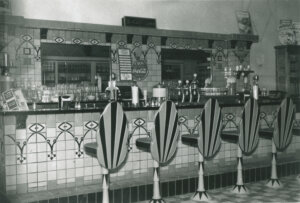
I am what is called “a Dalton lifer.” I was born in Manhattan on Dec. 1, 1943, at Lenox Hill Hospital and was a New Yorker all my life before I married and moved away. For 14 of those years, from when I was 3 (going on 4) until I was 18, I attended the Dalton School.
My parents chose Dalton because it was a progressive school that was comfortable for Jewish children, who made up about one-third of the school’s population, and it admitted Black students. There were a number of such schools in Manhattan at the time; influenced by the educational philosophy of John Dewey, they believed learning should be taught by doing, and that education should include active inquiry and problem solving. (My father, in fact, had attended the University of Chicago Lab School that Dewey created in 1896.)
When I was little, I often walked with my older brothers from our apartment at 81st and Park Avenue to 89th where Dalton was located between Park and Lexington. On the way, we would pass a stationery store where adults would put down some change on top of the newspaper pile and take one or two of the papers that the shopkeeper had neatly arranged on a wooden bench outside of the store front. As a child, I sometimes stole some of that change and to this day I am horrified at myself.
By the time I was eight, I would walk back home by myself on Lexington Avenue, which formed the western boundary of Yorkville between 72nd Street and 96th. Yorkville was then populated by Germans and German-speaking immigrants such as Hungarians and Czechs. During the 1930s and World War II, it had been the headquarters of the German Bund. It was less than a decade after the end of World War II, and as Jews, my parents were keenly aware of Yorkville’s past. While they shopped on Lexington, they warned us it could be dangerous, and indeed, one of my brothers got held up there. My parents were reluctant to allow me, as a girl, to walk east of 86th and Lex – where there were still dance halls and beer parlors and clubs that seemed to me both alien and alluring.
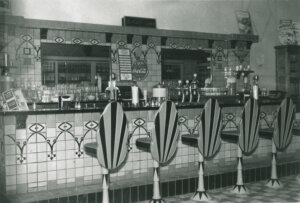
Nevertheless, I strode down Lexington by myself, entranced by the wonderful shops. There was a fabulous marzipan store; I loved that candy, molded into tiny figurines small apples and lemons, hand-sculpted dogs and statuettes, and seasonal Christmas and Easter pieces. Near 82nd Street, there was a drug store with a soda counter that sold sandwiches and drinks where my mother would always order an egg salad sandwich and a coffee milkshake. There was an old-fashioned health-food store that sold specialty items such as nut bread, yogurt and whole grains.
Lexington was still a two-way street, and the bus price had recently gone up from a nickel to a dime. Later, when we were in high school, we would cheat on both the bus and subway and shove a whole bunch of us through without paying for everyone. But fixed in my memory is that contrast between the still-living fear of American Nazis that my parents embodied and the richness of store life on Lexington Avenue.
A privileged childhood
Of course, memories are tricky, and mine are probably filled with biases and mistakes. We misremember to be sure. And we imagine our childhood recollections through the prism of who we were. I was from a privileged German-Jewish family. At the time I did not think of myself as especially fortunate. It was just who I was.
When I went to college, I encountered the wonderful post-Civil-War writer, Henry Adams. Near the beginning of his masterpiece, The Education of Henry Adams, he tells the story of being about 5 or 6, and playing on the grounds of his grandfather John Quincy Adams’ house. Adams’ gardener declared that young Henry probably believed that he would grow up to be president too. Henry recalled that it had never occurred to him that he would not become president; that’s what his family did.
Not only are my recollections filtered through an unconscious perception of privilege, they are also intertwined with my identity as a young Jew. When I was a student in Dalton’s lower school, I don’t remember if I was aware of the double luck of having been born into money and what we then called culture; and into an America with no close relatives who had been murdered in the Holocaust. My grandmother worried about some of her family back in Europe; she’d been told some of them were still alive, but she could not find them.
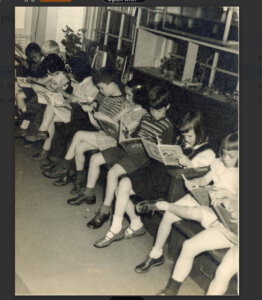
In the 1940s and 1950s, America was still a country made up largely of white European nationals and Blacks whose grandparents or great-grandparents had been born into slavery. The distinctions between European nationalities defined much of my world. I knew I was not Irish, Italian, or Polish Catholic, nor was I German-Lutheran or Scandinavian Most of the white children — other than the Jews — who attended Dalton were WASPs and I wasn’t one of those either. I remember only one boy who was Catholic, Fitzhugh Seamus MacManus Mullin whose father’s family was Irish and whose mother’s family was Spanish. His grandfather would come to Dalton, sit on a chair in our wonderful theater, and enrapture us by reciting Celtic tales. I assume that he was Seumas MacManus, who according to Wikipedia was considered by many to be the last great seanchaí, or storyteller of the ancient oral tradition.
I knew there were barriers between Jews and Christians, but they never impeded upon my sense of self. Park Avenue apartment buildings were either Jewish or gentile, and my building, 941 Park Avenue, was occupied entirely by Jewish families. The only non-Jews with whom I interacted in my building worked for one the families who lived there, or for the building itself; they were maids and supers and doormen, and they were white and largely Irish.
When I was little and in the lower school, I did not think about religion. Most of my family had come from Germany and had been in America since before the Civil War. They were not observant, in fact quite the opposite. My parents believed that religion was the opiate of the masses, and we ate shellfish and ham. My father banned uncured pork as in pork chops, so my mother often served lamb chops, which was unusual in the America of that time. Both of my parents grew up in Chicago, my mother in the northern suburb of Kenilworth, my father on the south side of the city near the University of Chicago. My mother’s family was wealthy and lived in a very large house where I happily played as a child and where my best companion there was the son of my grandparents’ chauffeur, whose family lived in an apartment above the garage.
Their world was German-Jewish, and my grandfather was one of the founders of that communities’ local country club. My grandparents, seeking spiritual meaning in their lives, followed Christian Science, but they still considered themselves Jewish, though as members of the upper-class German-Jewish world they would never have considered joining a Conservative or Orthodox community.
My father’s family was split between Eastern and Central Europe. His father was Lithuanian and Orthodox, his mother was German and reform, and that divide contributed to my paternal grandparents’ divorce. After my parents had married and moved to New York, our father would take us on excursions to the Lower East Side where we would buy challah, which we never ate on Friday night. I understood — without knowing the word — that we were part of what the larger Jewish world called Yekke. That is, we were of German and Central European descent and our grandparents and their parents before them did not speak Yiddish. This was in contrast to the Jews from the areas of Eastern Europe where Jews did speak Yiddish, who had not yet assimilated into American culture and language as we had, were often poorer, and were looked down upon by the Yekke.
My parents may have disliked organized religion, but they certainly felt Jewish. In the late 1930s, my mother and her mother sponsored Jews trying to get out of Germany. My mother had a letter from Albert Einstein, written in German and addressed to Fraulein Spiegel (her maiden name) thanking her for trying to help a Jewish family of mathematicians. And in retrospect, their Jewish identity must also have been reinforced in 1948 by the establishment of Israel, then a small, scrappy, underdog state. Like most American Jews, they thought of Israel as a symbol of survival: Hitler had not wiped us off the face of the earth.
Later I learned that my parents’ largest contribution every year was to the United Jewish Appeal (UJA). But this was true of the vast majority of Jews of their generation, and I would guess was so for the parents of virtually every Jewish child in Dalton’s lower and middle school. One of the girls in my Dalton class was Elizabeth Rosenwald (Varet), the daughter of William Rosenwald (and granddaughter of Julius Rosenwald) who, along with much of his family, helped found the UJA. Another was Ruth Slawson, daughter of John Slawson, who was director of the American Jewish Committee from 1943 to 1968. But, in the lower school I felt simply part of my environment, and a very large part of that environment was Dalton.
A world of progressives and universalists
When we were in kindergarten, our schoolroom had its own sandbox: Dalton allowed us to play and simply grow. When we started 1st grade, however, we were meant to learn how to read. But I had no interest in reading except for comic books, especially Tarzan. Not knowing how to crack the code to read all those words contained in the bubbles attached to each character’s head, I happily made up my own stories. A group of us remained illiterate until the fall of 3rd grade, when we attended a remedial class and I learned how to decode letters and symbols. When we each finally conquered the art of literacy, we were given a very small penknife clad in mother of pearl. Comics were never the same.
Each lower school grade was split into two classes, each with its own teacher. The lower school teacher I remember best was Ellie Seeger, a fabulous storyteller who regaled our class with stories until the other second grade class got so jealous she had to stop. Her husband was John Seeger, brother of Pete Seeger. John Seeger taught middle school geography where we made papier mâché maps, something I adored doing. He would sing for us sometimes, and although I became a great fan of Pete Seeger, I think John was just as good.
School at Dalton would frequently begin with a morning assembly. We would march into our wonderful proscenium theater with red-covered theater seats to piano music. It was there that John Seeger sang for us. It was there that we put on plays and made costumes in a wonderful anteroom space. And it was also there that Dalton held its Christmas Pageant, a re-enactment of the birth of Jesus and the story of the wisemen from the east, to which none of our Jewish parents objected.
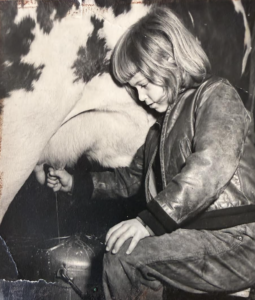
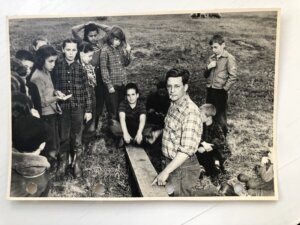
In 1951, we went on a trip to Otis, a farm in Massachusetts. We crossed over a gully or a stream on a log. I still have a photo of myself milking a cow into a metal bucket
I was friends with a Black girl named Judy Walker and we had sleepover dates. She would come with us to our summer house in Connecticut, and I went with her to the vacation home her family was building, and to her home in Harlem. Her father was a chemist and one morning at her house I woke up to music, thinking it was the theme to the Lone Ranger. Her parents must have liked classical music because it was the William Tell Overture.
The biggest event of 5th grade was the Greek Festival — a very Dewey-inspired production. Tessie Ross was our teacher, and we loved her. She taught at Dalton for 43 years beginning in 1944 after she had fled to the U.S. from Belgium and she led the Greek Festival, which took place in the gym and had carriages and spears and shields and armor. We played at being Greeks — Athenians against the Spartans, with parents as our audience.
In high school, I had one other teacher who was a refugee from Europe, our history teacher Nora Hodges. Mrs. Hodges was born in 1899 as Nora August Warndorfer, from Vienna. She came from a family of wealthy Jews, and fortunately she got out of Vienna many years before the Anschluss. She went back to Austria in the mid-1930’s and told us how she had listened to the radio, and, hearing a magnetic voice come over the air, felt captivated — until she learned that it was Adolph Hitler.
In the lower school, girls got to wear pants on Fridays. That was a big deal then because girls still wore skirts and dresses. Always. I remember mine as being corduroy with an elastic waist. I believe that going casual on Fridays, however, was not simply a symptom of Dalton progressive philosophy, but an indicator that it was populated by well-off families. Of course, the America of the 1950s was not as divided between rich and poor as it is now, and those who were upper middle class, or even rich, were not inclined to be ostentatious. But many families had either country homes or were members of country clubs. So, the school allowed girls to sport trousers on Fridays so they would be dressed to go to their second homes.
Not that all families were wealthy. Robert Newman, whose daughter Hila was a class or two above me, was a radio-drama playwright turned children’s book writer. Wally Shawn’s father WIlliam was the editor of The New Yorker, so he was very well-known but wasn’t paid a banker’s salary. Bettye George Dockery’s father was a dentist. Michael Lerner’s father, Max Lerner, was a writer, professor, and public intellectual, and also famous, but not wealthy. Pebble Baker’s father was a journalist for Time.
We ended our school year with a festival called “Arch Day.” Each class went through an arch on the auditorium stage. We went in as part of one grade and exited as part of the next. There were skits as well. My brother Paul finished 8th grade in 1954, when so many Americans were obsessed with the McCarthy hearings, so Paul’s class put together a skit entitled “Point of Order.”
Most Dalton students, and I assume most of the teachers, were liberal, but establishment liberal. We all assumed Alger Hiss was innocent. His son Tony went to Dalton and was a few years ahead of me. One of his lawyers was Helen Buttenweiser. The Buttenweiser children went to Dalton. She and her husband Benjamin were wealthy German Jewish New York philanthropists..
But while we were all aware of Joseph McCarthy, of the House Un-American Affairs Committee (HUAC), and of Alger Hiss, we never talked about Ethel and Julius Rosenberg. Ethel Greenglass was a secretary and a member of the Young Communist League. Julius’ parents were immigrants from Russia who grew up on the Lower East Side and he also was a communist. Alger Hiss was accepted by much of German Jewish Yekke Manhattan, though he himself was not Jewish, but the Rosenbergs were not. They were the wrong kind of Jews — the ones who would never have sent their sons to Dalton.
That divide, between Hiss and the Rosenbergs, perhaps illuminates my Dalton world in the 1950s. We were comfortable progressives and post-World War II universalists. We believed in Civil Rights and the future of Blacks in the United States. We supported John Lindsay for congress and mayor. My father once chaperoned me and a friend to a Pete Seeger concert, and he was terrified by how Pete Seeger could whip up a crowd — it reminded him too much of Adolph Hitler.
In the 7th or 8th grade, I read The Diary of Anne Frank. I devoured it one summer when I was at my parents’ vacation house in Martha’s Vineyard. There was a great tick scare that summer, so I lay in my bed, clenching my teeth to ward off any ticks, reading Anne Frank and refashioning my identity.
By middle school, questions of my own identity began to intertwine with my Dalton childhood. My mother once told me that some of the girls whose parents sent them to Dalton in the lower and middle school did so in order to provide their children with a diverse environment but then put them elsewhere for high school so that they would not become romantically attached to a Jewish boy or too acculturated into Jewish (or at least Yekke) life.
A story worth preserving

When I went through the arch in June of 1957, I entered as an 8th grader and emerged as a high school student. Four years later, in 1961, I graduated — 65 years ago. America was a different world then. The gap between rich and poor was not as yawning, and the wealthy were not as excessive. For Jewish children today, the memory of the Holocaust is often a nearly untouchable past that they learn about in Hebrew School; the story of Anne Frank is recalled from a school assignment; and secular Jews like my family have left the emotional ghetto in which my parents still lived. Our public and private contexts have changed. And so I have decided to tell my story of one German Jewish child living in Manhattan in the 1940s and 1950s, attending one progressive grade school, during one slice of time that I feel is worth preserving.
The post A New York Jewish childhood at the Dalton School where privilege met progressivism appeared first on The Forward.
Uncategorized
UK adopts sweeping measures against antisemitism in schools
(JTA) — The U.K. has adopted sweeping measures to combat antisemitism in English schools, prompting pushback from the country’s largest teachers’ union.
The move came after a new government-commissioned review found that three in five Jewish students reported experiencing antisemitism in English schools. The most common incidents were jokes, stereotypes and comments about Jewish people. About half of respondents who witnessed or experienced antisemitism said the incidents were not reported, most often because they did not think they would be taken seriously.
The government on Wednesday accepted 27 recommendations from the report, including dedicated antisemitism training for leaders and staff, improved recording of antisemitic incidents and moves to build a better understanding of Jewish life, identity and contemporary antisemitism.
The government commissioned the report following a spate of high-profile attacks on Jews in Britain, including an attack on a synagogue in Manchester last year that left two men dead.
The report’s author, Sir David Bell, the vice chancellor of the University of Sunderland and former chief inspector of schools in England, recommended addressing antisemitism distinctly from other forms of racism. He argued that antisemitism was a “uniquely complex” problem because of intertwined racial and religious dimensions, since Jewish identity can encompass both an ethnicity and a religion, along with expressions of prejudice that hold all Jews responsible for the actions of Israel.
The government will also encourage English schools to adopt the International Holocaust Remembrance Alliance (IHRA) working definition of antisemitism. The definition is supported by many mainstream Jewish organizations and has been adopted by 47 countries, including the U.K., but critics say that it conflates some forms of antisemitism with criticism of Israel.
British Education Secretary Lucy Powell called Bell’s review a “generational moment” and said that “implementation is now my priority.”
However, the National Education Union, the largest union representing teachers, lecturers, teaching assistants and support staff in the United Kingdom and Europe, raised concerns on Wednesday about recommending the IHRA definition for schools. NEU general secretary Daniel Kebede said in a statement that the definition “risks deepening the problem rather than tackling it, and actively undermining efforts to confront antisemitism.”
“The IHRA’s contested framing risks blurring the line between antisemitism and legitimate criticism of the Israeli government and the genocide in Gaza, leaving teachers with uncertainty when they need clarity,” said Kebede. He cited a risk that “children who cannot critically explore issues through classroom discussion will instead seek their answers in online and unsafe groups.”
Kebede also encouraged Britain’s Department for Education to strengthen guidance on all forms of racism, not only antisemitism, saying that 65% of teachers report they have not received any antiracism training in the past year.
The Board of Deputies of British Jews, an umbrella organization for British Jewish communities, celebrated the antisemitism report and the government’s adoption of its proposed measures. The group specifically praised the report’s “clear recommendations that schools and local authorities follow government guidelines by adopting the IHRA Working Definition of Antisemitism as a tool to deepen understanding of contemporary antisemitism.”
“We remain concerned about undue external influence on schools driven by narrow political agendas, and tendentious materials seeping into schools and increasing disharmony, and we will continue to press for vigilance against this,” said the Board of Deputies.
The post UK adopts sweeping measures against antisemitism in schools appeared first on The Forward.
Uncategorized
Orthodox Jewish man stabbed in midtown Manhattan
(New York Jewish Week) — An Orthodox Jewish man is in stable condition after being stabbed on Wednesday evening in the Diamond District of midtown Manhattan. Police are investigating the attack as a possible hate crime.
Police told the Jewish Telegraphic Agency that the NYPD’s Hate Crimes Task Force is investigating the incident as a possible antisemitic attack, and Manhattan Shomrim — the Jewish community watch group — has asked people to share footage as police search for the suspect. No arrests have been made.
The victim was identified by police as a 26-year-old man, and Orthodox Jewish outlet COLLive identified him as a resident of Crown Heights, the neighborhood that is home to the Chabad-Lubavitch Hasidic movement’s headquarters.
He was taken to Bellevue Hospital in stable condition. Police said they were called at about 5:50 p.m. on Wednesday after the man was stabbed in the back with “an unknown sharp object” on 47th Street near Fifth Avenue. ABC7 reported that the victim told investigators he believed he was stabbed with a needle or syringe.
According to the Chabad website, which published an interview with the victim, he is a recently ordained Hasidic rabbi named Joseph, who commutes to Midtown each day to wrap tefillin with Jewish merchants. The attacker, Joseph told the website, was a woman who seemed to be following him prior to the stabbing.
The attack comes as Jewish New Yorkers have been targeted in more than half of the hate crimes committed in New York City this year, despite making up about 12% of the city’s population.
In July, an assailant stabbed two men on the Upper West Side, including one who was leaving a synagogue, while yelling “Allahu akbar,” and was charged with committing hate crimes.
Louis Keene contributed reporting.
The post Orthodox Jewish man stabbed in midtown Manhattan appeared first on The Forward.
Uncategorized
VIDEO: A Hasid gives us a tour of Morocco in Yiddish
דער ירושלימער יוטוב־שטערן וועלוול קירשנבוים האָט לעצטנס אַרויסגעשטעלט אַ ווידעאָ אויף ייִדיש פֿון אַ פּרעכטיקן וויזיט, וואָס ער האָט געמאַכט אין מאַראָקאָ. עס באַגלייט אים זײַן חבֿר אַבֿרהם פּרץ.
אינעם ווידעאָ זעט מען ווי קירשנבוים דאַוונט שחרית מיט די אָרטיקע ייִדן און באַזוכט אַ גוט אָפּגעהיטענעם בית־עולם, וווּ עס ליגן באַערדיקט גרויסע צדיקים ווי למשל הרבֿ חיים בן עתר (1696–1743), באַקאַנט ווי דער „אור החיים“. „מענטשן מיינען, אַז נאָר אין אייראָפּע זענען דאָ קבֿרים פֿון צדיקים!“ זאָגט קירשנבוים.
מיר זעען אַ גרויסע, שיינע שיל מיט אַ פֿײַנער אַרכיטעקטור אין קאַזאַבלאַנקאַ; דעם גרויסן אַראַבישן שוק, וווּ קירשנבוים קויפֿט זיך אײַן מלבושים פּונקט ווי די מאַראָקאַנער גייען אָנגעטאָן. ער באַוווּנדערט אויך די שיינע טיי־גלעזער און טשײַניקן, וואָס מע פֿאַרקויפֿט דאָרט, און באַקענט זיך מיט אַ ייִדישן סוחר וואָס האַנדלט מיט זילבער און גאָלד, פּונקט אַזוי ווי זײַן טאַטע און זיידע האָבן געטאָן פֿאַר דור־דורות.
The post VIDEO: A Hasid gives us a tour of Morocco in Yiddish appeared first on The Forward.
