



Local News
Conservative, Reform synagogues see continued expansion in number of online Yom Tov viewers
 By MYRON LOVE In a full page ad on the back page of the August 4 issue of The Jewish Post & News, Shaarey Zedek Congregation let it be known that there would not be any in-person high holyday services come September, but all members of the community would be welcome to participate online.
The ad also said there would not be any charge to join online and that no tickets or passwords would be needed. In addition, the machzorim were to be digital, the aliyot virtual, and viewers would be able to chat online with other viewers.
The result, Ran Ukashi, the congregation’s executive director reports, is that over 16,000 viewers – from around the world – tuned into services at one point or another – a number that is about ten times the number of people who normally attended in person in pre-covid days.
“While the province did loosen restrictions, we felt it better – with conditions constantly subject to change – to take a safe rather than sorry approach,” Ran observes. “Our membership was really understanding.”
The Shaarey Zedek has been a leader among our community’s synagogues in livestreaming services, a technology that has been in use at the synagogue for several years.
“Everything went very well,” he adds. “It was nice to see our viewership continuing to grow.
”Maybe next year, we will be able to return to in-person services for the Holidays.”
While Congregation Etz Chayim opted to return this year to limited in-person attendance – in contrast to last year’s almost entirely virtual service(with the exception of ten people to form an in-person minyan ) – our community’s second largest congregation also increased its online presence.
“We were very pleased with how High Holy Days went this year – given the circumstances and the amount of uncertainty leading up to it,” says Jonathan Buchwald, Congregation Etz Chayim’s executive director. “We offered on-line services for the second year in a row but also included limited in-person attendance. Congregants could choose to attend either for Rosh Hashanah or for Yom Kippur in order to maximize attendance. For the first two days of Rosh Hashanah we had 50 people attend and for Kol Nidre and Yom Kippur we had 100 people attend. We were able to follow all of the safety protocols and everyone was extremely cooperative. It was so nice to have our congregants back in the building for the first time in a very long time. It was actually quite emotional for many of them and they were so grateful that they could attend.”
In terms of the on-line audience, Buchwald estimates that close to 200 screens were watching services daily, including many from out of town. “This would translate into about 500-600 people watching our services at any given time,” he notes. “Congregants were also able to offer special readings live via Zoom.
“Rabbi Kliel, Cantor Tracy and the entire Etz Chayim team deserve a huge Yasher Koach for delivering such uplifting and inspiring services during these most extraordinary times.”
As with Etz Chayim, Temple Shalom, our community’s only Reform Congregation, combined limited in-person services and livestreaming.
“A lot of people still feel uneasy,” observed Rabbi Allan Finkel in an earlier interview. “We are working to make sure that everyone will feel incredibly safe here.”
That included pre-registration – with members being priorized, limited seating, vaccinations and masks, and a shortened service.
Finkel reports that in-person services were limited to 100 congregants -in addition to clergy and technical staff. “We were close to capacity for Rosh Hashonah morning and Yom Kippur,” he says. “We estimate that we had between 400 and 600 people viewing us online. We had a lot of positive comments about our service both from people who attended in-person and those who watched online.”
For our community’s other shuls, livestreaming of Yom Tov services is not an option. While for Orthodox shuls, it goes against Halachah, the Chevra Mishnayes, a Conservative congregation in Garden City, doesn’t have the technology in place.
In a pre-High Holiday interview, Murray Greenfield, a member of the congregation’s executive, reported that “we are going beyond the government Covid guidelines. We are asking people to register ahead of time and we will be assigning seating.”
Social distancing was enforced – although family members could sit together.
As with last year the Adas-Yeshurun Herzlia, our community’s largest Orthodox congregation, limited in-person attendance to a maximum of 50 – but with two services a day for Rosh Hashonah. Congregation members hoping to attend had to register in advance and be able to show their vaccination cards (a scan or photocopy sufficed).
Congregation President Jack Craven reports that everything went well.
The Orthodox House of Ashkenazi in the North End and the Lubavitch Centre in south Winnipeg were the only shuls open to non-members for the High Holidays. The Lubavitch Centre does not actually have a “membership” category.
“While we had to limit our numbers, we had a nice group in attendance,” notes Rabbi Avrohom Altein, our community’s Lubavitch Rabbi for the past 50 years. “For Rosh Hashonah and Yom Kippur, all of our tables were full.”
Only family members were allowed to share a table, he adds.
And Gary Minuk, the president of the House of Ashkenazi, reports that there were about 30 men and a few women in attendance for Yom Tov services – around the same number as last year.
“We had a nice service,” he says.
The Ashkenazi, he adds, is celebrating its 100th anniversary this year. The synagogue is the last of the old time shuls in the old North End – with a women’s section upstairs. Until Covid restrictions, the Ashkenazi was still offering daily morning minyans. Currently, the congregation is trying to have minyans Thursday mornings.
Local News
UNVEILING for the headstone of Dr. Velimir Kon (Sept. 18, 1950-June 27, 2025)
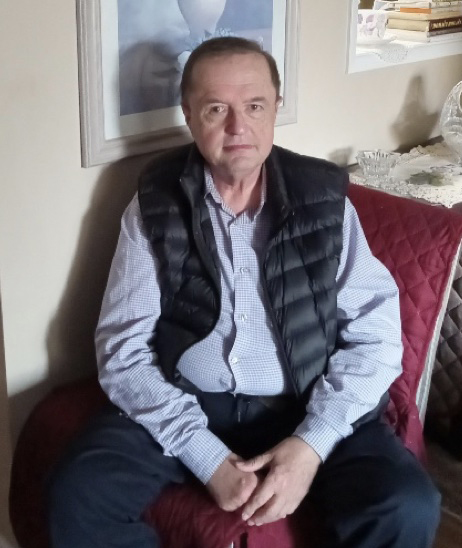
A true mensch and person of many talents and profoundness, Dr. Velimir (Shlomo) Kon is deeply missed and loved by his family and friends.
Known for his warmth, kindness, integrity and love of learning and teaching, Velimir continues to inspire all who knew him and his memory warms our hearts and souls. Velimir is deeply missed.
You are invited to helps us remember and honour our beloved husband and father who passed away almost a year ago.
We, Branka, Deborah and Lea Kon, wish to inform our relatives and friends of the unveiling of a headstone dedicated to his loving memory on FRIDAY, JUNE 26, 2026 at 11:00am at the HEBREW SICK CEMETERY (2605 McPhillips Street) followed by lunch at the Chabad Lubavitch of Winnipeg – Jewish Learning Centre (1845 Mathers Avenue). Please come say a l’chaim in his honour.
In Memoriam
1st Yahrzeit
In loving memory of Dr. Velimir (Shlomo) Kon who passed away June 27, 2025, 12 Days in Tammuz.
⁃ Forever and deeply loved and missed by his wife of over 50 years, Branka, and daughters Deborah and Lea Kon. Velimir brought joy to our lives with his boundless kindness and gentleness, irrepressible humour, great intellect and love of people, tikun olam and Judaism.
Not a day goes by that we do not mention Velimir and feel his presence with us. Our lives are not the same without him and we deeply miss and cherish him. We can never forget his presence that was larger than life, yet also his humility and thoughtfulness.
A gentleman to the very core, Velimir was respected as a scientist, academic, professor, researcher, and later as a teacher and mentor. He always endeavoured to make every place he worked and lived at better and was able to bridge many cultures. He was Abraham of his generation and made many personal sacrifices; giving up status, position and privilege in order for his family to have a better and peaceful future.
May his memory always be a blessing. He left us at only 74 years young and we wish we had had more time together. Indeed, to know him was to love him.
Local News
Younger Jewish talents continue to shine in their respective categories at annual Winnipeg Music Festival
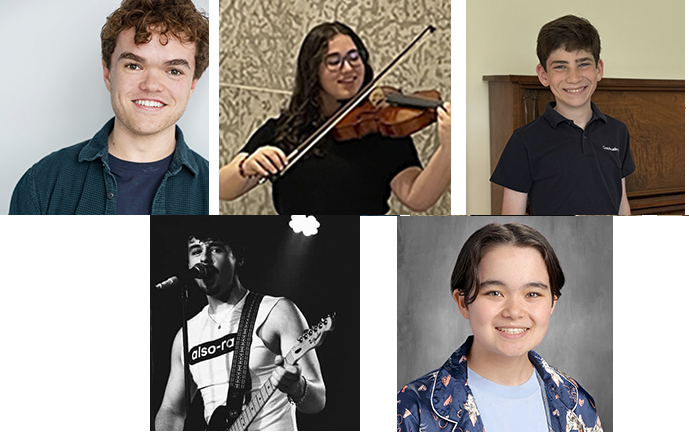
By MYRON LOVE A number of younger members of our community were repeat stars at the most recent (108th annual) Winnipeg Music Festival – which takes place annually in March. Among the repeat Jewish singers and musicians in the ranks of high achievers this year were” Yale Rayburn-Vander Hout, Gregory Hyman, Alex Schaeffer, Juliet Eskin, Noah Kravetsky, and Lyla Chisick.
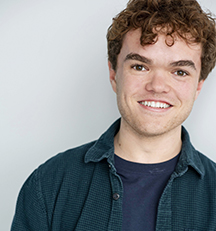
Vocalist Yale Rayburn-Vander Hout, the oldest of this year’s group of Jewish repeat winners, was competing in his fifth straight festival, where he continued to build on his accomplishments in previous festivals. This year, the 20-year-old son of Samantha and Peter finished first in two musical theatre categories – songs from musical theatre productions between 1965 and 1999, and shows from the past 26 years. Yale sang “I’m Allergic to Cats,” from the 2016 musical “The Theory of Relativity,” and “Suppertime,” from the 1967 musical, “You’re a Good man, Charlie Brown.”
The former Gray Academy student is currently enrolled at the University of Manitoba’s Desautels Faculty of Music in the Choral program. Yale says that he is hoping to get into the performance track in the fall with the goal of earning a degree in Classical Voice Performance en route to pursuing a career in musical theatre.

As reported previously, Gregory Hyman is a multi-faceted artist who can do it all. The 18-year-old son of Hartley and Rishona Hyman is a singer/songwriter/musician (guitar) who records and performs under the stage name, GMH. His versatility shone through once again in his eighth Music Festival, in which he registered first-place finishes for vocal performances in both “Popular and Contemporary Music” and “TV and Movie Music “categories.
Gregory notes that he was also recommended to compete in the provincial finals in June. The St. John’s-Ravenscourt student (and soon-to be) graduate continues to be busy on stage. In January, he headlined a sold out solo show at Sidestage on Osborne featuring some of his new material. In March, he released an album of his newest songs. Readers can check out his latest compositions on any of the music streaming platforms as well as his own social media (thegmh) on Instagram.
Gregory also continues to host his own podcast: “Talk and Rock with GMH – now in its fifth season – in which he interviews various people in the music business across Canada.
While Gregory says that a musical career is his “dream,” he reports that he is hedging his bets and considering different potential career opportunities. Come September, he will be enrolled at the University of Manitoba in a University One program, which will allow him to select from a variety of courses that can count toward a degree.
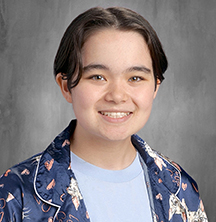
Sixteen-year-old Alex Schaeffer won first place this year in the “Musicals Prior to 1965, 16 Years and Under” category with “Try Me” from “She Loves Me,” and was runner-up in the “Musicals 1965 to 1999, 16 Years and Under” category with “On My Own,” from “Les Misérables.” For the son of Marc Schaeffer and Kae Sasaki, this was his fifth year competing in the festival.
The Grant Park High School student made his big stage debut three years ago as Kurt von Trapp in “The Sound of Music,” followed by playing Michael Hobbs in “Elf the Musical” this past winter at the Royal MTC.
Alex recently performed in Grant Park High School’s production of “Something Rotten!” This summer Schaeffer can be seen again at the Winnipeg Fringe Festival, where he will be appearing in a production staged by Rem Lezar Theatre.
Rounding out the voice winners is Lyla Chisick. The daughter of Daniel and Baillee was competing in her second music festival. This year, she scored Gold performances in the “Vocal Solo,” “Manitoba Composers,” and “TV/Movie Musical, 12 and under” categories.
Lyla reports that she began taking voice lessons from Jessica Kos-Whicher three years ago. She says she regularly takes part in the Shaarey Zedek Synagogue Family Service and has sung at several community events. Lyla adds that she is already looking forward to next year’s music festival.
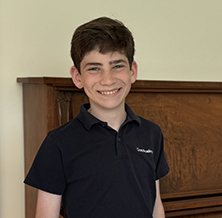
Nate Kravetsky and Juliet Eskin competed in the festival as musicians rather than singers. Juliet, 16, plays the viola, and is also is the violist in the Assiniboine String Quartet. In this, her fifth go-round at the festival, Juliet, the daughter of the musically talented Kelly Robinon and Josh Eskin, had first place finishes in the “Viola Solo, level 8,” “Baroque or Classical Concerto,” and “Romantic Composers” categories.
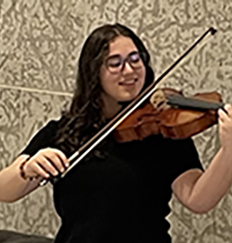
Juliet originally took up the violin – adding the viola a couple of years after. She also just finished performing in the Grant Park High School production of “Something Rotten!”
Nate Kravetsky is currently in Grade 5 level piano. He studies with Erica Schultz and has been taking lessons from her since age 5.
Nate competed in three categories at the Winnipeg music festival: “Baroque,” “Sonata,” and “Contemporary/own choice.”
His own choice selection was the theme from his favourite video game, “Hollow Knight.”
Nate, who is in Grade 7 at Gray Academy, is also preoccupied preparing for his upcoming bar mitzvah.
We look forward to the continued musical success off Yale, Gregory, Alex, Nate, Juliet and Lyla, and what new talent may be unveiled at next year’s Winnipeg Music festival.
.
Local News
Jewish Heritage Centre of Western Canada’s Archivist and Curator Stan Carbone retires
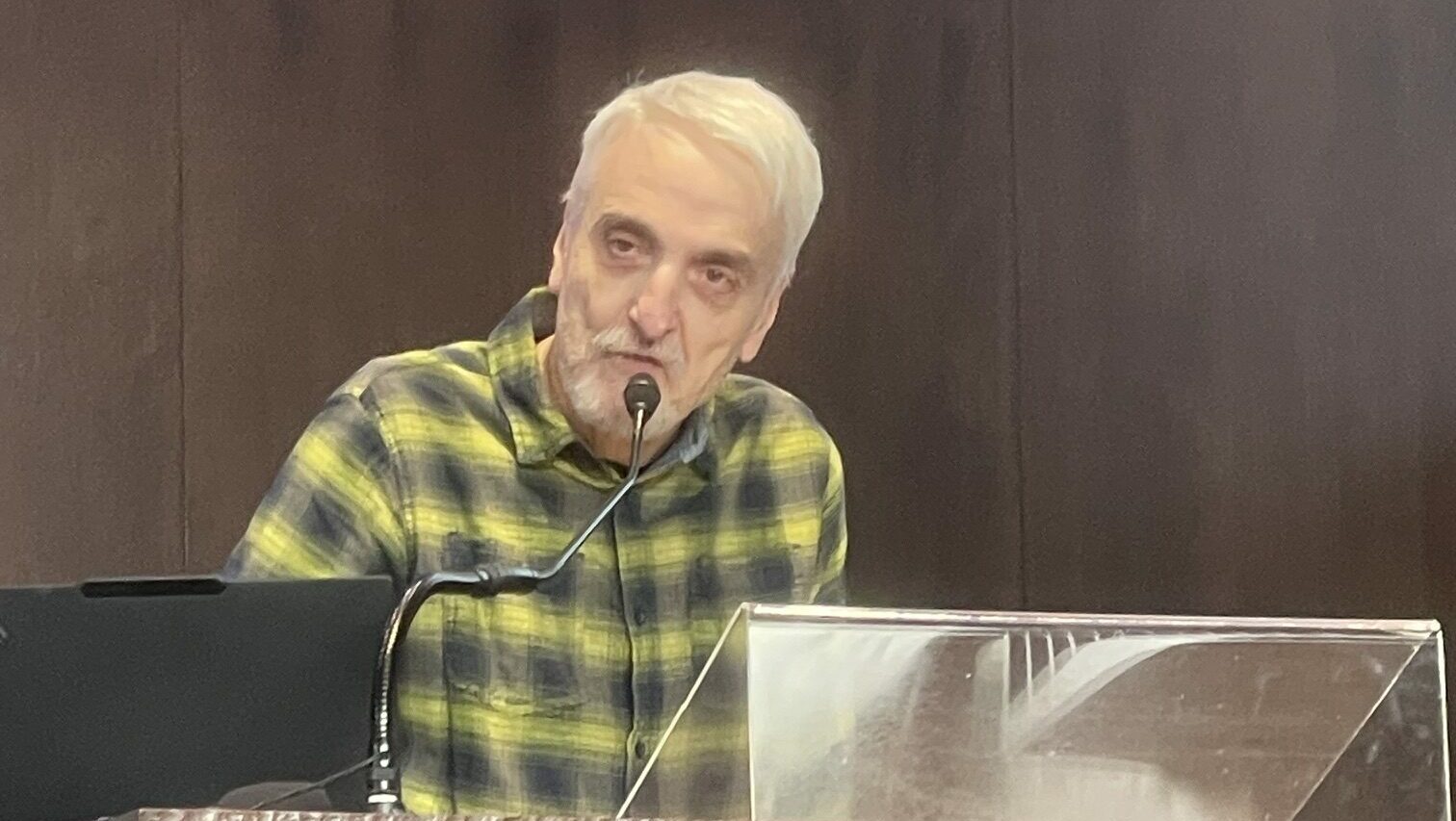
By MYRON LOVE Stan Carbone, a long-time friend of our Jewish community and fixture at the Jewish Heritage Centre of Western Canada (JHCWC) for the past 25 years, retired last week. His last day of work was May 13.
Most recently, he was the JHCWC’s Director of Programs and Exhibits.
“For the past 25 years, the Jewish Heritage Centre of Western Canada has been an integral part of my life,” Carbone said. “I have made a lot of friends in the Jewish community, and I hope to maintain those friendships.”
Carbone’s own history reflects the immigrant experience. He arrived in Canada in 1960 as a three-year-old with his mother and sister, from San Giovanni in Fiore, Calabria in southern Italy. His father had come a few months earlier. Initially, the family settled in Fort Rouge which, at that time, had a substantial Italian community. Within a couple of years, they had relocated to East Kildonan to be closer to where his father’s two sisters and their families lived.
He earned a BA Double Honours in History and Political Studies at the University of Winnipeg, followed by an MA in History at the University of Manitoba, from where he graduated in 1981.
In 1993, he was hired at the Manitoba Museum of Man and Nature (as it was then called) as Curator of Multicultural Studies.
“I always enjoyed doing research,” he said.
His first project for the JHCWC came in 2000, the year after the organization was formed through the amalgamation of the Jewish Historical Society, the Ed and Marion Vickar Jewish Museum of Western Canada and the Freeman Family Foundation Holocaust Education Centre.
Marim Zipursky had approached the Manitoba Museum of Man and Nature looking for a curator to organize a JHCWC exhibit featuring Jewish music and musicians in Winnipeg,” Carbone recalled. “I didn’t know much about Jewish music and musicians, but I was familiar with the Jewish Historical Society – which preceded the JHCWC. I was really impressed by its extensive archives, and I was intrigued by the Jewish community’s history and the wide range of subject materials in the archives.”
The next year, when a position opened at the JHCWC, Carbone applied.
“I have been here ever since,” he said.
Over the past quarter century, Carbone has been involved in bringing to fruition several interesting exhibits. He mentions the synagogues display, a history of the YMHA, and the current exhibit highlighting the important role of women’s organizations. The exhibit that was closest to his heart though was “A Stitch in Time,” a look at how Jews contributed to the development of the garment trade in Winnipeg. Both of his parents worked in the garment industry.
The exhibits though are just one facet of the JHCWC’s focus, Carbone noted. He mentioned how the organization contributed to the publication of Allan Levine’s “Coming of Age: A History of the Jewish People of Manitoba.”
There have also been several compilations over the years of talks that the JHCWC has organized. These are known as the “Jewish Life and Times,” consisting to date of ten volumes.
Carbone further pointed out the organization’s commitment to Holocaust education and the numerous initiatives that have brought that subject to greater public attention.
The organization’s genealogical component, he reported, draws numerous queries from people all over the world.
One particularly interesting project that Carbone spoke about is an ongoing cooperative partnership with Gray Academy. For the past 10 years, the JHCWC has been loaning photos from the archives to the school’s art program, allowing the students to make drawings based on the photos.
“It has been a wonderful program which has given the students a better understanding of local Jewish history,” he said.
“During my time here, we have worked with numerous Jewish and non-Jewish organizations,” Carbone added. “It helps to build bridges between the Jewish and other communities.”
In retirement, Carbone is looking forward to doing more travelling with Anna, his wife of 40 years. They were scheduled to leave for southern Italy on May 16.
He will also continue to be busy in his role as Italy’s vice-consul here, helping fellow Italians and others in Winnipeg.
And he is excited about having more time to spend on his own genealogical and historical research. He has already published two books: “Italians in Winnipeg: an Illustrated History,” and “The Streets Were Not Paved With Gold: A Social History of Italians in Winnipeg”.
A future project which he is seriously considering is a study of the history of Jewish life in Calabria.
He is also working on a family tree.
“I may be retired,” he said, “but I will still be available from time to time to help out if needed.”