


Local News
Local foodie finds fame by trying foods on Facebook Marketplace

By BERNIE BELLAN Disclaimer: The subject of this story is my daughter, but don’t hold that against me.
Shira Bellan is an intrepid adventurer when it comes to trying out new foods. A while ago, as she explained in an interview conducted with her by CJOB’s Hal Anderson on January 28, Shira was just laying on her couch scrolling through Facebook Marketplace when she came up with the idea of trying different foods and posting her reactions to them – first on Facebook, then when she developed a following – on Instagram, followed by a YouTube channel and, at my suggestion, on TikTok. She now has tens of thousands of followers all over the world, with her audience growing every day.
Following are excerpts from the interview:
Anderson: How did you come up with this idea?
Bellan: Honestly, I was just, uh, laying on my couch browsing Marketplace like I often do, and I kept seeing food pop up and I just thought it would be hilarious to start buying food and then reviewing it because I thought there were some very interesting food items on there. And I was pretty surprised that people were trying to sell them on Marketplace. And it just made me laugh. And so I thought, “Let’s do this.”
Anderson What have you found out?
Bellan: Yeah, I kind of think that it’s a bunch of family members that say to each other, “This is so good. You should sell this.” And it’s not easy to get your food into a restaurant or into a bakery. And Facebook Marketplace is thriving and it’s super easy to use for anyone of all ages, and I think Facebook is just super well known.
So I think people started putting super simple food items up there and I really think my page has made it explode a lot bigger as of lately. But I think there’s always been food on there. I just don’t think it was as big until very recently.
I’ve always seen people selling food, and I’ve gone, “Well, I wouldn’t want to try that, that doesn’t look very good, or man, that looks great. I would love to try that.”
And I think in many cases it’s food tied to an ethnicity of one kind or another that maybe we wouldn’t normally get to try in a restaurant in Winnipeg.
Anderson: Right. So good for you for doing this because you’re sort of, without me having to do it, you’re saying, “Yeah, this is worth it, or, or this one isn’t.”
Bellan: That’s exactly what I’m doing. And it’s been interesting. I’m loving chatting with the different people, the different languages, and just exploring all the foods and, and there’re some foods that I’m trying that people from that specific ethnicity are saying, “Oh God, do not eat that.”
I’ve had some good ones, I’ve had some bad ones. And for the most part though, it’s really good. I think it’s just cool to learn about other people’s heritage and what they eat and like.
Anderson: So you said – in the clip I just played (referencing a clip he played before Shira came on the air) I love that one – the butter chicken. But if you had stuff that you bought that you went, “Oh man, this is a miss.” What would you say?
Bellan: I’m quite nervous to post some of the ones I don’t like because I’m called racist multiple times a week. And I’ve tried to make it clear that when I don’t like something, it has absolutely zero to do with the culture, ethnicity, or country that the food’s from, it has everything to do with how the food tastes.
And I need to remind people that these are home chefs. I don’t know how they made the recipe. I don’t know that they followed a recipe. I don’t know that they didn’t put dog food in it. So, if I don’t like something, it doesn’t mean that it’s bad. It means that I personally did not like it.
I try to be very open-minded to foods. I don’t eat meat. I’ll occasionally eat chicken – so that kind of eliminates a lot of the foods that I’m able to buy on there. But I am very interested in all the different ethnicities and their foods. Some of ’em are very scary ’cause they’re not foods I would eat every day, but it would be very boring if I was just buying chicken fingers and fries off marketplace.
Anderson: Well, that’s how I feel sometimes, right? I mean, even, you know, even with these delivery apps now, if we decide, well, we’re gonna order in, we’ll spend sometimes way too long deciding what we’re gonna have. Because it feels like even though we have all these incredible choices, it feels like it’s the same, four or five things and we don’t feel like it.
So I I like what you’ve done. Listen, on people being critical when you say you don’t like a certain food. You’re gonna have those people – trust me, being in the business I’m in, you’re gonna have people that are gonna make that connection. And just based on what I’ve seen of your stuff I don’t get a hint at all that it’s about the people you bought it from or their ethnicity.
It’s just you aren’t a fan of that particular food. And they may have made it perfectly, but you’re just not into that food.
Bellan: Exactly, and I’ve tried some North American foods that just tasted disgusting, too. And again, it’s home chefs and as for myself – I am the worst cook on the planet.
If I put something on Marketplace and someone ate it, they wouldn’t be ridiculing me. They’d be ridiculing my horrible cooking skills. What’s more fun for me is trying these foods that I consider strange. I had a really interesting one today. It was like a slippery, slimy, gooey shrimp. I couldn’t do it.
Someone might like it, but nope. Wasn’t for me.
Anderson: Yeah, and you’ve had some really cool ones, like a fairly recent post is the marshmallow flowers. I mean, incredible, incredible.
Bellan: They tasted unbelievable too. They did not taste like a store-bought, packaged marshmallow. They had a very unique flavour and texture.
They tasted amazing. I would eat them every day and the girl who makes them puts so much time and love into them. She told me that it takes about two days to make with all the processing and all the different steps it takes, and they were so beautiful. I didn’t want to eat them, but of course I did.
Anderson: Here’s the other thing too, about what you’re doing it, and you tell me, you probably didn’t realize this when you started doing it, but in some cases where you do this and you got a lot of followers, you’re getting a lot of views.
And when you say, “man, this is really good.” That person then gets maybe more orders than they can handle, but many of them are really happy about that. You had them call you up in tears after the fact and say, you know, “I was selling these dishes to make a couple of bucks ’cause my, my family is struggling” and now they’ve got more orders than they know what to do with.
And, you have really helped them make ends meet.
If you would like to see any of Shira’s food review videos you can look for them on Instagram by entering winnipegmarketplacefoodfinds or on YouTube enter @shira_time
Local News
Rachel Fish, leader in combating antisemitism in academia, this year’s Kanee Distinguished Lecture series speaker

By MYRON LOVE The Jewish Heritage Center of Western Canada would seem to have hit another home run with the announcement that Dr. Rachel Fish, a leading voice in tackling anti-Zionism and Jew hatred in North American academia, is this year’s guest speaker at the JHCWC’s upcoming annual Sol and Florence Kanee Distinguished Lecture – which is scheduled for Thursday, April 30, at the Shaarey Zedek Synagogue.
The theme of her timely lecture will be“How the Academy Has Created a Fertile Ground for Antisemitism,” a topic in which she is well versed. Fish has an impressive resumé. She is the co-founder of the nonprofit “Boundless,” a think tank partnering with community leaders across North America to revitalize Israel education and take bold collective action to combat antisemitism. She also serves as Director for The Brandeis University President’s Initiative on Antisemitism; is an associate research professor at the Cohen Center for Modern Jewish Studies; and teaches Israeli history and society at The George Washington University as Visiting Assistant Professor of Educational Leadership in the Graduate School of Education and Human Development.
In the past, she has served as Senior Advisor and Resident Scholar at the Paul E. Singer Foundation in New York City and Executive Director of the Schusterman Center for Israel Studies, where she trained the next generation of academics in the field of Israel Studies. She has also served on the faculty at Brandeis University, George Washington University, and Harvard University. She has has written articles for several publications in the mainstream press and academic journals, and co-edited the book “Essential Israel: Essays for the 21st Century.”
I had the pleasure of speaking with Dr. Fish a couple of weeks ago. My first question to her was how she finds the time to do all that she does. Her response is that there are not enough hours in the day. Her multiple activities remind me of an expression I heard once years ago while I was a member of a short-lived Jewish international development group – “if you want to make sure something gets done, you give it to the busiest person you know.”
Fish observes that she has been explaining Judaism to non-Jews all of her life. “I was raised in Tennessee in a place called Johnson City in the foothills of the Smokey Mountains,” she recounts. “My parents were originally from Ohio. There were very few Jews where we lived. My family spent a lot of time teaching our neighbours, teachers in my school and others we associated with about Jews, our practices and the State of Israel.”
She recalls – as early as 2001 when she was studying at Harvard’s Divinity School, that she was noticing what she describes as a “strong undercurrent of anti-Israel feeling and Jew-hatred”.
“I was determined to pursue a career in higher education,” she notes, “in part because I believe that education matters, because I derive oxygen from teaching, and I particularly enjoy dealing with complex issues. As well, I appreciate the opportunities that teaching at the university level gives me to share what I have learned in public forums such as the Kanee Lecture.”
Ideally, she observes, a professor should not – as much as humanly possible – be sharing her political or personal opinions in class. Higher education should be about creating a space where students can debate freely and challenge each other’s ideas. Instead (as I am sure many readers are aware), too many educators are focused on indoctrinating their students in the teacher’s beliefs – with students with dissident opinion facing hostility and risking ostracism.
Too many universities have become ideological monocultures where critical thinking is discouraged and there is a litmus test for new hires. She cites a FIRE (Foundation for Individual Rights and Expression) report in which an overwhelming majority of the faculty at many leading universities share a leftist – anti-Israel, anti-Christian and anti-Conservative worldview.
That is particularly true with Ivy league and other elite universities in both the United States and Canada – and especially in their liberal Arts and Humanities programs. Much of the anti-Zionist and antisemitic atmosphere – such as the takeover of university quadrants in the wake of October 7 – has been created by outside agitators and foreign funders – notably the oil rich Islamic sheikhdom of Qatar.
“Where you have universities with strong administrative leadership,” she points out, “the level of hostility to Jewish students and threats of violence have not been allowed to take root. It has only been the case where the administration and the board are weak.”
So why, I asked her, do so many Jewish students not seek out alternatives to these compromised campuses?. She responded that some Jewish students have chosen to enrol in universities in the southern United States where there is a more welcoming environment.
But many Jewish students, she observes, continue to enrol in leading universities such as Harvard and Yale, Cornell and UCLA (or York or the University of Toronto in Canada). Many Jewish students still share the belief that being identified with being affiliated with a top flight university will benefit their future careers.
Sadly, she further points out, this poison has filtered down to the K-12 level. Many university education departments have graduated numerous indoctrinated teachers who have taken control of school boards and administrations and seek to impose their vile doctrines on susceptible young minds.
Nevertheless, there are a great many state and lesser known universities that provide a more welcoming attitude to Jewish students.
Rachel Fish suggest that, for too long, North American Jewish communities have been complacent and not recognized the danger in our midst. She does see some hopeful signs though. She has observed that more and more communities, parents and student s have woken to the danger and begun to fight back.
“It’s difficult,” she acknowledges. “It can feel overwhelming. But we have to keep chipping away and not just let the other side win.”
The Sol and Florence Kanee Distinguished Lecture series was inaugurated by the Jewish Heritage Centre of Western Canada in 2006 to celebrate Sol Kanee’s 95th birthday. In welcoming the audience to that first lecture, lecture series co-chair Harold Buchwald paid tribute to Kanee, who died on April 23 at 97, as a man who “cast a giant shadow” on world Jewish history in the second half of the 20th century. The former resident of Melville, Saskatchewan, who spent almost all of his adult life in Winnipeg, Kanee was a leader in the development of Israel and the Free Soviet Jewry movement as well as a macher in our Jewish community and across Canada.
I would encourage readers who may be interested in learning more about the current state of antisemitism in academia – and want to support the JHCWC to go online at jhcwc.org for further information or to order tickets. The price of admission is $50.
Local News
Young tech entrepreneur Adam Fainman gathering accolades locally and internationally
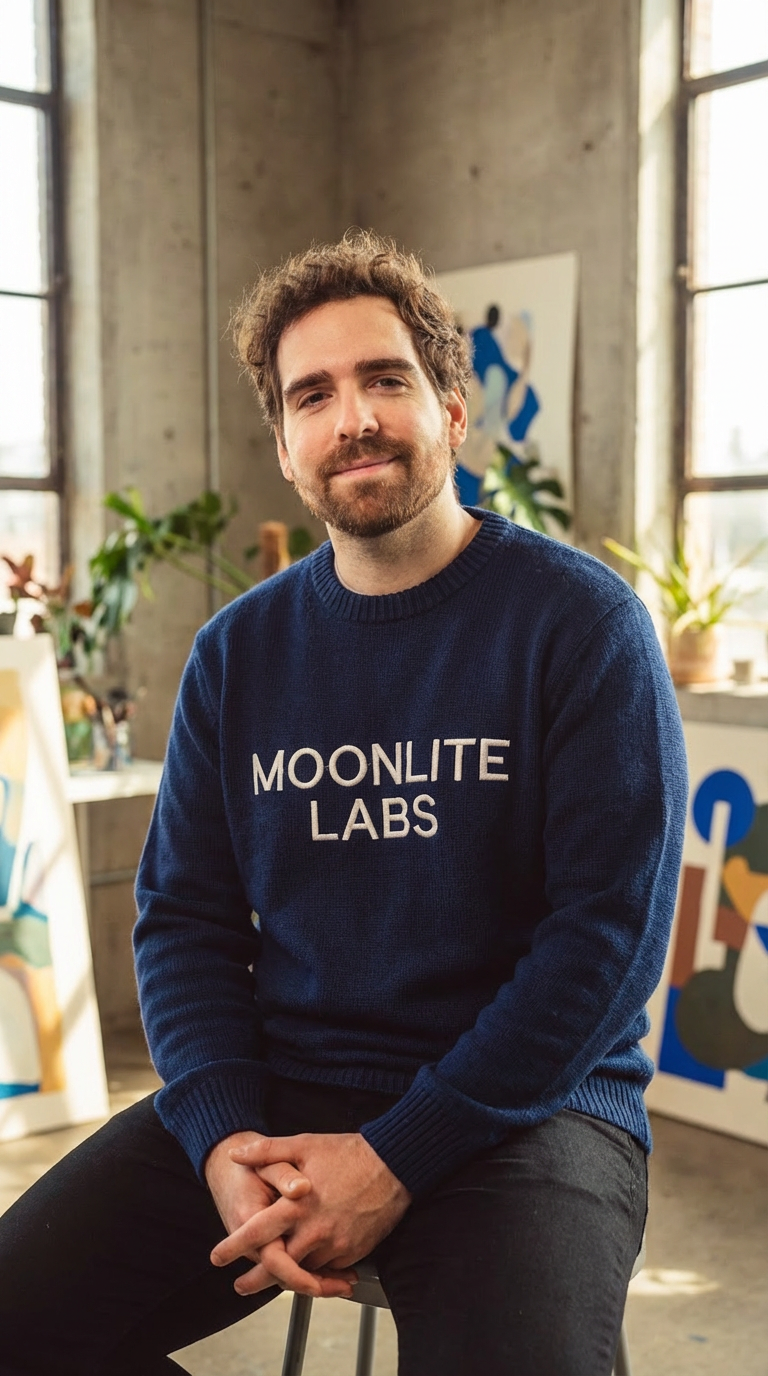
By MYRON LOVE Winnipegger Adam Fainman is taking the world by storm. In fewer than three years his new AI start-up – Moonlite Labs – has attracted thousands of users in 550 cities in 95 countries world wide.
As he explained in an interview in the Winnipeg Sun last June, Moonlite Labs is “a creative content platform designed to make multimedia storytelling radically more accessible. With a few prompts,” he noted, “users can generate professional grade videos, animations, voiceovers, talking avatars, music-reactive visuals, and more.”
On Tuesday, February 24, the young entrepreneur garnered his newest accolade when Winnipeg-based North Forge, Canada’s only start-up incubator, accelerator and fabrication lab, gave Fainman its DARE Emerging Innovator Award at a reception at the Royal Aviation Museum of Western Canada.
“I dedicated the award to my zaida, Jacob T. Schwartz,” Fainman says, noting that his zaida was a prominent computer scientist and professor of Computer Science at the New York University Courant Institute of Mathematical Science, and founder, in 1964, of New York University’s Department of Computer Science – which he chaired for 16 years.
At the awards evening, Fainman adds, he had the opportunity to meet many of the movers and shakers in the industry here.
The son of Shane and Rachel Fainman began his life in Toronto. “My father is from Winnipeg, my mother from New York. They met in the Sinai Desert at a music festival.”
The family moved to Winnipeg in 2006 when Adam was in high school. After graduating from the University of Winnipeg Collegiate he went on to earn a B.Sc. in Computer Science from the University of Winnipeg.
“Performing was always my first love” he says.
Post university, he began a career as a rapper, beatboxer, and producer under the stage name Beatox, touring across Canada and central Europe with his rare ability to combine story-telling and singing.
In 2015, he enrolled in a two-year digital media and design program at Red River Community College. After graduation, on the encouragement of a University of Toronto professor, he continued his studies in Toronto earning a Masters Degree in Music Technology and Digital Marketing.
“During the Covid shutdown,” he recounts, “I began experimenting with AI and producing music videos combining music, story-telling and animation. I posted them on social media sites such as YouTube and TikTok. They went viral, garnering millions of views. People were asking me if I could help them with creating similar videos. I saw there was a gap in accessibility to this technology, so I decided I should create a platform as a solution”
“A friend of mine, Brayden Bernstein was involved in the tech scene in Winnipeg, saw the success I was having on TikTok and gave me some advice on how to go about this” Fainman continues. “As well, a few colleagues from the University of Winnipeg expressed interest in building a solution together.”
Wanting to create a platform that would make it easy for others to replicate what he was doing, Fainman sought out resources in Winnipeg that might be able to help him.
He pitched his idea first to NRC-IRAP (National Research Council of Canada Industrial Research Assistance Program), Canada’s leading innovation assistance program for small and medium-sized businesses,
“They loved the concept and traction I was getting, and agreed to help fund us,” Fainman says.
His next stop was North Forge – in 2024 – where Moonlite joined their Ascent Program and was matched with mentors.
In early 2025, Moonlite Labs made its official debut at the Manitoba AI Innovation Showcase where the new company was greeted with an award. “It was a massive confidence boost,” Fainman told the Sun in that earlier interview. “It was our first time sharing with the public what we’ve been up to for the last year. To win the award… that was very, very rewarding.”
Last June, the company made its presence known on the international stage at VivaTech 2025 in Paris — Europe’s largest startup and tech conference, with over 180,000 visitors.
Moonlite was selected as one of TechCrunch’s Top 30 Startups of the Year, a shortlist that included only two Canadian companies.
“Getting the AI Showcase award, getting into VivaTech, being selected as one of the top 30 startups of the Year by TechCrunch, that was pretty crazy,” Fainman told the Sun.“Backed by ScaleAI, Moonlite joined Canada’s official delegation at VivaTech, which had special visibility this year with Canada named Country of the Year at the conference.
“We had a massive space. The French president came through our whole area. It was the craziest thing,” Fainman recalled. “Everyone had their phones. It was like a mob… then we’re like, oh my God, it’s the French president. People were freaking out.”
As per the Sun story, Fainman was given two days to showcase Moonlite, with a booth for both the platform’s business-to-business (B2B) and business-to-consumer (B2C) offerings. But the most personal moment came on stage, where he delivered a presentation showcasing his journey from beatboxing artist to tech founder.
With Moonlite Labs growing exponentially, Faiman and his team of eight are hoping to become as ubiquitous as Adobe and Canva. “My ultimate goal is to help as many people as possible to create professional-grade videos and ultimately share their stories,” he comments.
He himself, he adds, is hoping to get back to live performances as well. “I recently appeared at Festival du Voyageur and I have just completed my 4th studio album. I can’t wait to use Moonlite for all my videos and world building” he reports.
Readers who might want to try Moonlite for themselves can go to https://moonlitelabs.com
You can get in touch with Adam Fainman at adam@moonlitelabs.com
Local News
Richard Morantz and Sheree Walder fund new MBA degree, annual real estate symposium, at Hebrew University
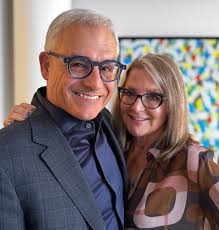
By MYRON LOVE Last October, the husband and wife team of Richard Morantz and Sheree Walder donated $1 million towards the Shaarey Zedek Synagogue’s ongoing capital campaign. Last month, the couple followed up with an equally generous donation – this time to the Canadian Friends of the Hebrew University, to establish a new degree program in real estate through the Hebrew University’s business school.
“We are long time supporters of the Canadian Friends of the Hebrew University,” notes Walder, who is a lawyer and former partner in the firm Myers LLP.
“We had funded some smaller projects at the Hebrew University, adds Morantz, the president and CEO of Globe Property Management, one of Canada’s leading privately-held residential real estate firms.
(Globe was founded in the 1920s by Richard’s grandfather, Morris. Richard became the company’s sole shareholder in the mid-1990s after buying out his father Saul, and his siblings. Under Richard’s leadership, the company has expanded steadily and strategically, acquiring and developing real estate almost every year for the past three decades. Over the last 30 years, he has built an impressive and diverse portfolio, which includes over 8000 residential and commercial properties, particularly notable given that Globe remains privately owned and independently operated.
“Two years ago, we approached the (Hebrew) University about doing something more impactful. Since I am a businessman in real estate, we wanted to work on a project with the business school.”
The first fruits of the relationship between Richard and Sheree and the university was the establishment the annual Richard Morantz Real Estate Symposium in the Hebrew University Business School (HUBS) MBA Program.
“I was able to attend the most recent symposium in November,” Morantz reports. “I wanted to see for myself how this was working.”
Morantz also used the occasion to arrange – with the help of CFHU executive director (and former executive director of the JNF office here) Rami Kleinmann – a meeting with HUBS officials about building on the symposium and creating a new MBA program at the university.
The Richard Morantz Major in Real Estate and Finance, in the words of Business School President Dr. Orly Sade, “will, together with traditional academics, feature non-academic practitioners and leaders in all aspects of the real estate industry, providing students an opportunity to expand their professional networks, while gaining real-world industry insights and bridging the gap between theory and practice.
In a press release issued on February 24, Seade added that “this investment is a defining moment in the evolution of the school. The importance of an academic discipline focused solely on the real estate sector has significantly increased, owing to an understanding of the sector’s unique position in the global economy and international finance. HUBS consistently ranks within the top five business schools in Eurasia & the Middle East. The addition of this major will further elevate HUBS academic offerings, and the annual symposium will help expand the Hebrew University and Israel’s footprint as a global hub for intellectual exchange in the sector, drawing diverse professionals from around the world, fostering cross-border collaboration, increasing visibility, and contributing to the potential to attract top-level investors.”
Kleinmann further pointed out that “Richard’s comprehensive industry knowledge, combined with his dedication to Israel and the University, has resulted in an innovative academic program that, combined with the Symposium, is setting a new benchmark for industry education. We are all extremely grateful and look forward to the outcomes.”
As reported in the Jewish Post in relation to the couple’s donation to the Shaarey Zedek, Morantz noted that it was the Hamas-led assault on Israel and subsequent tsunami of antisemitism worldwide that prompted Richard and Sheree to consider stepping up and contributing to the Shaaray Zedek campaign in such a magnanimous way.
“I have never been a religious person,” Morantz remarked. “While I may be more secular, I strongly believe in the traditions of Judaism. I had a charmed upbringing in the 60s and 70s in River Heights. It is not the case that I experienced no antisemitism, but those experiences were very minimal. Post-October 7th, I found myself, for the first time in my life, having to judge every situation and every person I came across before divulging the fact that I am Jewish or discussing Israel. I came to the realization, during the process of considering this donation, that a primary driver for us is that this synagogue is a safe place for Jews, where we can comfortably be ourselves.”
Walder pointed out that, while her mother’s large family were Jewish pioneers, her father was a Romanian Holocaust survivor, with almost no family after the war. “Family matters a great deal to us,” she said, “in addition to strongly agreeing with Richard that the tragedy of October 7th and continuing and growing antisemitism are big drivers for us in making these donations.”
“There will be an event celebrating the new MBA program at the Hebrew University’s Board of Governors meeting in June,” Morantz says. “We are looking forward to attending.”