


Uncategorized
Mamdani’s first act: revoking Eric Adams’ executive orders, including on Israel, antisemitism and BDS
With weeks to go before Zohran Mamdani would replace him as mayor of New York City, Eric Adams issued an executive order barring city officials from taking action against Israel or entities associated with it.
The order, issued Dec. 5, represented a gauntlet by the avowedly pro-Israel mayor for Mamdani, who opposes Israel. Most recent New York City mayors have extended their predecessors’ executive orders, at least temporarily. Would Mamdani prioritize city tradition or his stance on Israel?
In his first hours in office on Thursday, Mamdani offered an answer. He revoked all of the executive orders Adams issued after Adams’ September 2024 indictment on federal corruption charges that were later dropped on the Trump administration’s demand.
Mamdani said the mass revocation reflected New Yorkers’ lack of confidence in Adams after his indictment. But it also had the effect of undoing multiple pro-Israel and antisemitism-related executive orders without targeting them specifically.
Included in the revocation were the ban on Israel boycotts, or BDS; the city’s adoption of the IHRA definition of antisemitism, which critics say inappropriately treats some forms of Israel criticism as antisemitic; and a requirement that the police chief “evaluate” rules about protests outside houses of worship that Adams issued last month after an anti-Israel rally at a Manhattan synagogue.
The revocations drew ire from pro-Israel voices who said Mamdani had wasted no time before seeking to impose an anti-Israel agenda on New York City. Mamdani, a longtime pro-Palestinian activist, supports Israel boycotts and has vowed to arrest Israeli Prime Minister Benjamin Netanyahu if Netanyahu visits the city. A wide majority of Jewish voters did not back him.
In a statement, William Daroff, CEO of the Conference of Presidents of Major Jewish Organizations, who had publicly opposed Mamdani, called the revocations “a troubling indicator of the direction in which he is leading the city, just one day at the helm.”
Inna Vernikov, a Jewish Republican New York City Council member, criticized the revocations on X, saying that safeguards were needed because “pro-Hamas antisemite emboldened by @NYCMayor are coming!” She called on Gov. Kathy Hochul to impose the IHRA definition of antisemitism through an executive order of her own.
Mamdani also issued new executive orders advance his affordability pledges and rolled back multiple executive orders that were unrelated to Israel, including one that allowed federal immigration officials to intervene on Rikers Island and another promoting cryptocurrency. He also said he planned to maintain the Mayor’s Office to Combat Antisemitism, which Adams created via an executive order in May.
“That is an issue that we take very seriously. That is part of the commitment that we’ve made to Jewish New Yorkers to not only protect them but to celebrate and cherish them,” Mamdani told reporters on Thursday.
The changes came on an Inauguration Day that brought tens of thousands of New Yorkers to celebrate Mamdani in frigid conditions outside City Hall in Lower Manhattan. In his public address, Mamdani included “Russian Jewish immigrants in Brighton Beach” among those who should feel included in his vision of the city; cited Yiddish as among the languages spoken in the city and “shul” as among the places New Yorkers pray; and name-checked bagels and lox and pastrami on rye as personally beloved dishes.
Also sworn in on Thursday was Mark Levine as comptroller. Levine, who is Jewish and has said he supports the city’s continued investment in Israeli assets, was sworn in on a Chumash, or Hebrew Bible.
Other first-day acts by the new Mamdani administration also drew the ire of pro-Israel advocates. Two recent tweets posted to the official mayor’s X account by Adams expressing a commitment to fighting antisemitism were deleted. Mamdani’s team said the deletions came in the process of transitioning the account to reflecting the new administration and that old tweets would be archived.
The X transition also provided fodder for laughs for Mamdani’s pro-Israel critics. Because the account briefly featured Mamdani’s name atop all of Adams’ past tweets, it was possible to take screenshots that appeared to show Mamdani expressing support for Israel. “Oh that’s funny!” tweeted Hillel Fuld, an Israeli influencer who shared one such screenshot. The post is now no longer part of the public-facing mayoral account.
This article originally appeared on JTA.org.
The post Mamdani’s first act: revoking Eric Adams’ executive orders, including on Israel, antisemitism and BDS appeared first on The Forward.
Uncategorized
‘No speaking Swedish here!’ — Yiddish Day in Lund University
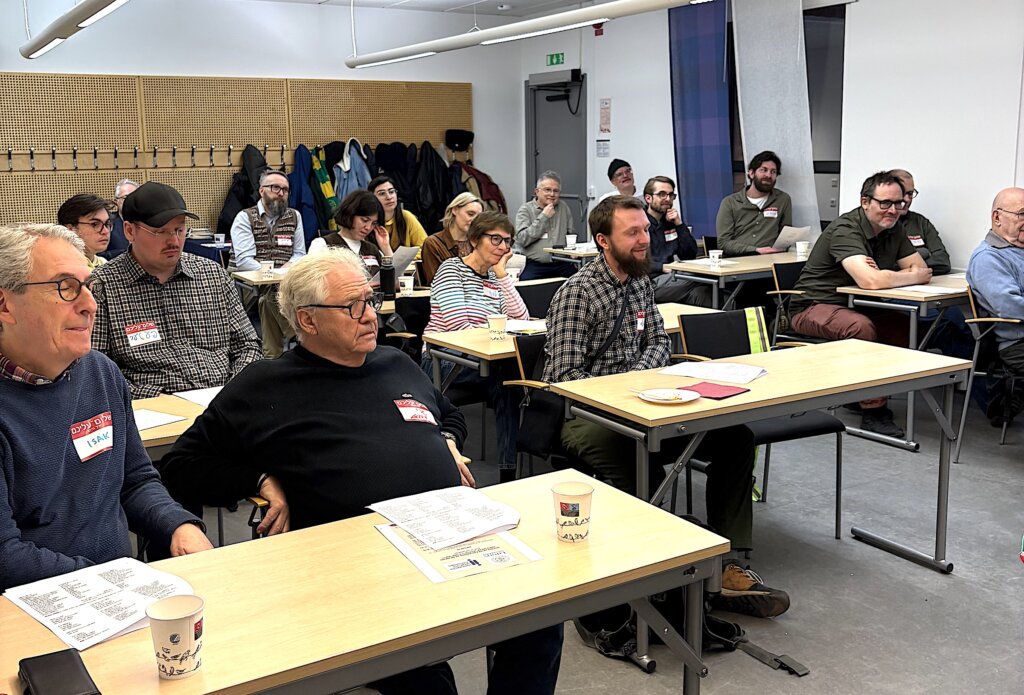
דעם 26סטן פֿעברואַר 2026 איז אין לונד, שװעדן, פֿאָרגעקומען אַ „ייִדיש־טאָג“.
דער לונדער אוניװערסיטעט בשותּפֿות מיטן שוועדישן אינסטיטוט פֿאַר שפּראַכן און פֿאָלקלאָר („איסאָף“) האָבן אָרגאַניזירט אַ צונױפֿטרעף פֿון אַמאָליקע און איצטיקע לונדער ייִדיש־סטודענטן. ס׳רובֿ הײַנטיקע ייִדיש־לימודים בײַם לונדער אוניװערסיטעט װערן געלערנט אָנלײַן, אין דיסטאַנצקורסן. דערפֿאַר איז דער ייִדיש־טאָג פֿאַר עטלעכע אָנטייל־נעמערס געװען דאָס ערשטע מאָל װאָס זײ טרעפֿן זיך מיט זײערע שותּפֿים און לערערס מחוץ די ראַמען פֿון קאָמפּיוטער־עקראַן.
אַחוץ סטודענטן און רעדנערס, האָט מען אויך פֿאַרבעטן מאַמע־לשון־רעדערס פֿון מאַלמע, אַ שטאָט נאָענט צו לונד מיט אַ גרעסערער ייִדישער קהילה. די טאַטעס און מאַמעס פֿון די הײַנטיקע מאַלמער ייִדיש־רעדערס זײַנען געװען פֿון דער שארית־הפּליטה און האָבן זיך בשעת אָדער קורץ נאָכן חורבן באַזעצט אין שװעדן. דאָס איז דער דור וואָס האָט אויפֿגעשטעלט דעם „ייִדישן קולטור־פֿאַראײן 1945“ אין מאַלמע.
די איבעריקע אָנטײל־נעמערס זײַנען געקומען צו פֿאָרן פֿון גאַנץ שװעדן, און אױך פֿון נאָרװעגיע, פֿינלאַנד, דענמאַרק, דײַטשלאַנד און האָלאַנד. אַלץ אין איינעם האָט די אונטערנעמונג צוגעצויגן אַ 30 מענטשן, פֿון יונגע סטודענטן ביז יונגע פּענסיאָנערן.
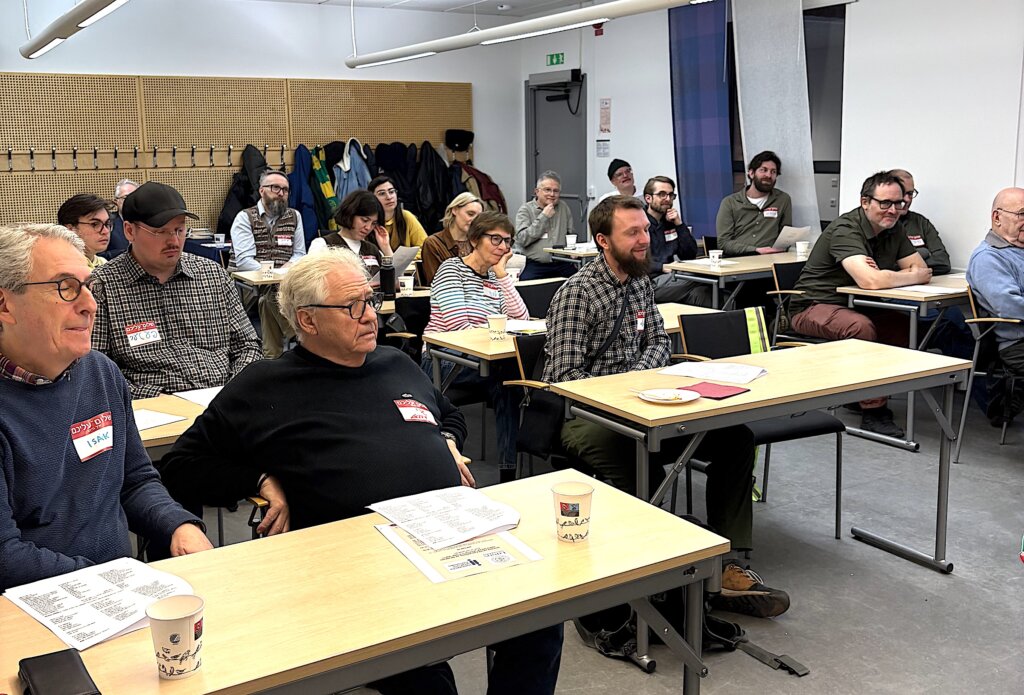
„פֿיקאַ“
אַ שוועדיש וואָרט אינעם אָרטיקן ייִדיש: אַ שמועס אַרום אַ טעפּל קאַווע מיט קוכן און אױבס.
מיט אַזאַ „פֿיקאַ“ האָט זיך נײַן אַ זײגער אָנגעהױבן די פּראָגראַם. די אָנגעקומענע האָבן זיך באַגריסט צװישן זיך, זיך פֿאַרשריבן, און יעדער אײנער האָט זיך אָנגעקלעפּט אַ ייִדיש־שפּראַכיק נאָמען־צעטל.
מאַריאַ פּערסאָן (ראָש פֿונעם צענטער פֿאַר שפּראַכן און ליטעראַטור בײַם לונדער אוניװערסיטעט) און ראָקעל נילען (קאָאָרדינאַטאָרשע פֿון די ייִדיש־לימודים) האָבן מקבל־פּנים געװען דעם עולם מיט אַ קורצער באַגריסונג אויף ענגליש. גלײַך נאָך דעם איז מען אַריבער אױף ייִדיש: אליעזר ניבאָרסקי און אורן כּהן ראָמאַן האָבן פֿאָרגעשטעלט די מיט-אָרגאַניזאַטאָרן פֿון „איסאָף“. מע האָט אָנגעװוּנטשן, אַז יעדער אײנער זאָל „הנאה האָבן פֿון ייִדישן װאָרט.“
און דאָס האָט זיך תּיכּף אײַנגעגעבן: מע האָט זיך אַרײַנגעטאָן אין אַ ליטעראַטור־װאַרשטאַט, וווּ עטלעכע אָנטײל־נעמערס האָבן פֿאָרגעלײענט לידער פֿון אַבֿרהם רײזען, ישׂראל שטערן, קאַדיע מאָלאָדאָװסקי, איציק מאַנגער און ציליע דראַפּקין. אַז איין סטודענטקע האָט פֿאָרגעלייענט דאָס פֿאָלקסליד „אַ מאָל איז געװען אַ מעשׂה“, האָט דער גאַנצער עולם גענומען זינגען אין איינעם. מע האָט געלײענט ניקאָלײַ אָלניאַנסקיס אַ פֿיקטיווע באַשרײַבונג פֿונעם אַמאָליקן ייִדישן קװאַרטאַל אין לונד און בפֿרט פֿון איין באַזונדער הײַזל.
אײנער פֿון די אָנטײל־נעמער האָט אויך דעקלאַמירט אײגענע פּאָעטישע און דראַמאַטישע טעקסטן.
בעת אַ צװײטער „פֿיקאַ“ האָט מען געהאַט די געלעגנהײט אַ קוק צו טאָן אױף די נײַסטע ייִדישע אױסגאַבעס אין די זאַמלונגען פֿון דער אוניווערסיטעט־ביבליאָטעק, מערסטנס פֿונעם שװעדישן „אָלניאַנסקי־פֿאַרלאַג“. ס׳רובֿ אָנטײל־נעמערס האָבן לײַכט געשמועסט און זיך אױסגעשפּאַנט מיט אַ טעפּעלע קאַװע, נאָר עטלעכע סטודענטן פֿון צװײטן יאָר האָבן שױן אָנגעהויבן דורכפֿירן אינטערװיוען צוצוגרייטן אַ רעפּאָרטאַזש וועגן דער קאָנפֿערענץ.
שידוכים
הײַנט איז נישט דאָס ערשטע מאָל װי מע לײענט װעגן לונד אין דער ייִדישער פּרעסע. אליעזר ניבאָרסקי האָט געברענגט „אַלטע נײַעס“ און פֿאָרגעשטעלט עטלעכע אַנאָנסן און באַריכטן בנוגע לונד אין אַמאָליקע צײַטונגען. נאָך אין 1895, עטלעכע יאָר נאָך דעם ווי אַ צאָל ייִדישע אימיגראַנטן ליטוואַקעס האָבן זיך אײַנגעאָרדנט אין אַ נײַעם פּעריפֿערישן קוואַרטאַל פֿון דער שטאָט, האָט מען געזוכט דורך אַנאָנסן אַזש אין װאַרשע אַ בעלן אויף אַ פּאָסטן פֿון שוחט, שליח־ציבור און מלמד אין לונד. און עס װײַזט זיך אַרױס אַז אין 1940, שוין לאַנג נאָך דער בליצײַט פֿונעם „לונדער שטעטל“, האָבן די „לונדער כּלות“ נאָך געהאַט אַ שם צווישן שוועדישע ייִדן.
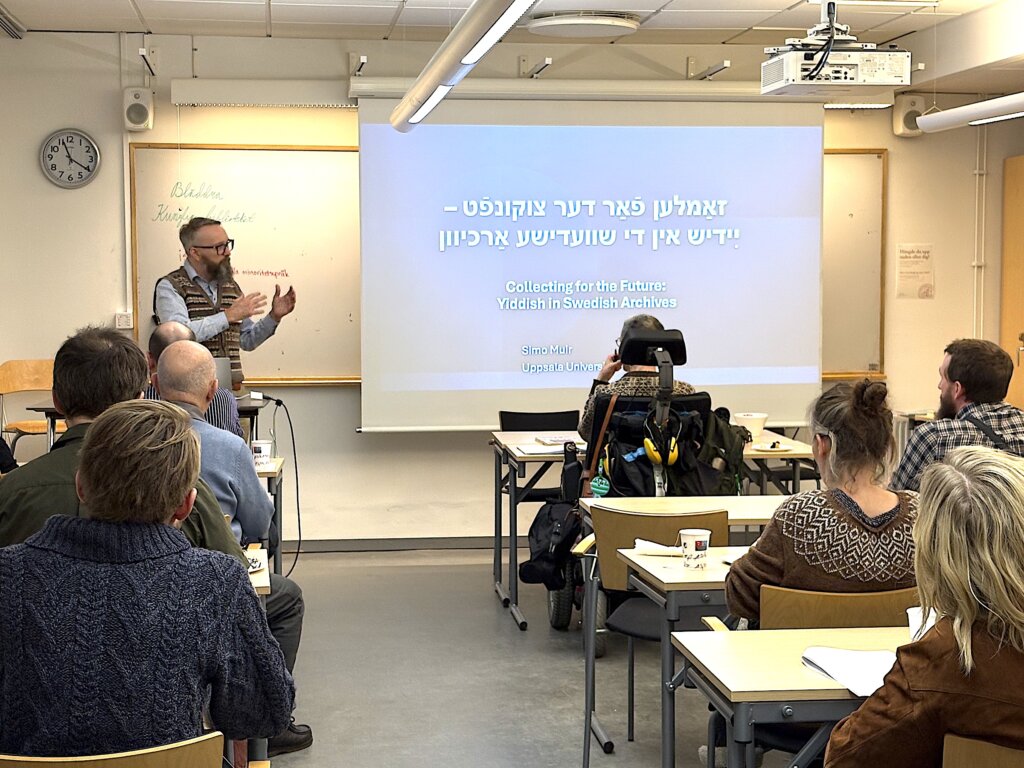
נאָך דעם האָט סימאָ מויִר, אַ פֿאָרשער פֿון דער ייִדישער שפּראַך און חורבן־לימודים אינעם אוניװערסיטעט פֿון אופּסאַלע, שװעדן, װאָס האָט פֿריִער געלערנט ייִדיש בײַם לונדער אוניווערסיטעט, געהאַלטן אַ רעפֿעראַט װעגן דעם פּראָיעקט „ייִדיש אין די שװעדישע אַרכיװן“. מע האַלט אין צוגרײטן אַ דיגיטאַלישן קאַטאַלאָג פֿון די ייִדישע מאַטעריאַלן װאָס געפֿינען זיך, אָפֿט מאָל אָן געהעריקע באַשרײַבונגען, אין די שװעדישע אַרכיװן.
מויִר האָט געװיזן בילדער און כּתבֿ־ידן פֿון די אַרכיװן אין שטעט װי שטאָקהאָלם, קריסטיאַנשטאַט און מאַלמע, און דערמאָנט אַז עס װאָלט געװען כּדאַי אויסצופֿאָרשן און צושטעלן די נעמען פֿון די מענטשן אױף די בילדער. האָט זיך אָפּגערופֿן דער פֿאָרזיצער פֿון מאַלמער קולטור־פֿאַראײן, יערי אײלנבערג: „דאַרפֿט איר פֿרעגן מיך, איך האָב זײ דאָך אַלע געקענט!“
דער פֿאָרשער האָט אויך גערעדט װעגן דער פּראָבלעם, אַז מע װײסט שױן נישט װוּ עס געפֿינען זיך טייל אַרכיװ־מאַטעריאַלן. זײער אַ סך פֿון צווישן די 1940ער און 1960ער יאָרן איז אַ פּנים נעלם געװאָרן, למשל פֿונעם אַרכיװ פֿון דער מאַלמער ייִדישער ביבליאָטעק. האָט זיך אָבער יערי אײלנבערג גלײַך אָפּגערופֿן: „דאָס האָבן מיר פֿאַר אַ יאָרן אַלץ אַרױסגעשלעפּט, די קעסטלעך שטײען בײַ מיר אױפֿן בױדעם.“ אַזוי אַרום האָט דער ייִדיש־טאָג טאַקע בײַגעטראָגן צו אַ פֿרוכפּערדיקן אױסבײַט צװישן פֿאָרשערס און דעם ברייטן עולם.
מיטאָג האָט מען געגעסן בײַ איינער פֿון די אוניװערסיטעטישע קאַפֿעטעריעס: עס איז געשטאַנען אַ בופֿעט מיט כּל־המינים גוטע מיטל־מיזרחדיקע מאכלים און דער עולם האָט זיך צונױפֿגעקליבן בײַ די טישלעך און געשמועסט גאַנץ לײַטיש, זיך דערצײלט װיצן – אױף ייִדיש, פֿאַרשטײט זיך.
– יערי, קײן שװעדיש רעדט מען נישט!
– זײַ מוחל! איך האָב שױן נישט געטראַכט אַז איך וועל דערלעבן דעם טאָג װאָס די אײנציקע שפּראַך װאָס מע מעג רעדן איז ייִדיש!
אױפֿן פּריפּעטשיק
נאָכן עסן איז מען אַרױס אױף אַ שפּאַציר. מע איז געגאַנגען דורך דעם היסטאָרישן לונדער צענטער שטאָט און די „מדריכים“ אינעם עולם האָבן דערצײלט װעגן אַזאַ צי אַן אַנדער פּרט פֿון דער געשיכטע פֿון ייִדישן לעבן אין לונד. טומאַס װוּדסקי, אַ מיטאַרבעטער פֿון „איסאָף“, האָט אַלעמען דערלאַנגט אַ טיפּיש שװעדישן כּיבוד, היימיש באַקאַנט ווי „שטױבזױגערלעך“: אַ מין זיסװאַרג מיט מאַרציפּאַן און שאָקאָלאַד װאָס איז שטאַרק באַליבט בײַם ייִדיש־אָפּטײל פֿון לונדער אוניווערסיטעט. מע האָט באַזוכט דעם אַמאָליקן ייִדישן קװאַרטאַל און געפֿונען דאָס הײַזל פֿון אָלניאַנסקיס דערצײלונג. פֿאַרן הויז פֿונעם ערשטן ייִדיש־לערער בײַם לונדער אוניווערסיטעט, שלמה שולמאַן ז״ל, האָט זיך די גאַנצע גרופּע אָפּגעשטעלט און געזונגען „אױפֿן פּריפּעטשיק“ לזכר אָט דער באַליבטער פֿיגור.

אַ באַקאַלאַװער
צוריק אין אוניװערסיטעט האָט יאַן שװאַרץ, עמעריטירטער ייִדיש־לעקטאָר אין לונד, געהאַלטן אַ „קלײנע זאַך, נישט קײן רעפֿעראַט“ װעגן זײַנע „לונדער יאָרן“, און דערצײלט װעגן דעם בראשית פֿון די ייִדיש־לימודים אין דער שטאָט, װעגן די חבֿרישע מחלוקתן מיט זײַן קאָלעגע שלמה שולמאַנען, און װעגן זײַן טאַטן, װאָס איז מיט זײַן זאַפֿטיקן פּױלישן ייִדיש געװען אַ יוצא־מן־הכּלל צװישן די ליטװישע קלאַנגען פֿון די ייִדיש־רעדערס אינעם נאָך־מלחמהדיקן דענמאַרק.
די געשיכטע איז אַזאַ: זײַט דעם יאָר 2000 האָט ייִדיש אין שװעדן דעם באַזונדערן סטאַטוס פֿון אַן אָפּגעהיטער מינאָריטעט־שפּראַך. אין 2007 האָט די רעגירונג אָנפֿאַרטרויט דעם לונדער אוניװערסיטעט דאָס אַחריות פֿאַר די ייִדיש־לימודים אין שװעדן, און זײַט 2012 קענען סטודענטן זיך לערנען אױף אַ באַקאַלאַװער אין ייִדישע לימודים.
דער תּחום האָט זיך אַנטװיקלט און הײַנט באַטייליקן זיך אין דעם פֿאָרשערס פֿון פֿאַרשײדענע אוניװערסיטעטן. און בזכות די איבערגעגעבענע טוערס און רעדערס האָט אױפֿגעבליט דאָס קולטורעלע ייִדישע לעבן אין שװעדן פֿון דאָס נײַ.
ווײַטער האָט מען זיך צעטײלט אין דרײַ גרופּעס אױסצופּרוּװן די נײַע ייִדישע „שמועס־קאַרטלעך“ װאָס דער „איסאָף“ האָט אָקערשט אַרױסגעגעבן. עס האָבן זיך אײַנגעשטעלט לעבעדיקע שמועסן אַרום פֿראַגעס װי „מיט װעמען רעדסטו ייִדיש?“ און (בפֿרט אַ שװעדישע פֿראַגע) „װאָסערע מאכלים עסטו לכּבֿוד מיטזומער?“ די טוערס פֿון „איסאָף“ האָבן ברייטהאַרציק געשאָנקען יעדן איינעם אַזאַ פּעשל שמועס־קאַרטלעך.
אין סופּערמאַרק
דער פֿאָרשער אורן כּהן ראָמאַן האָט געהאַלטן אַ רעפֿעראַט „ייִדיש אין סופּערמאַרק“. ער האָט פֿאַרגליכן מאכלים מיט אַ בפֿירושן ייִדישן נאָמען אין העברעיִש־שפּראַכיקע סופּערמערק אין ישׂראל און ענגליש־שפּראַכיקע אין די פֿאַראייניקטע שטאַטן, און דערצײלט װעגן די װאַריאַציעס און בײַטן אין אױסלײג, אַרױסרעד און באַניץ במשך דער צײַט אין די צוויי לענדער. מע האָט זיך צערעדט וועגן דער פֿראַגע, „צי איז „ראָגעלעך“ אויף עבֿרית צי אויף ענגליש אײנצאָל אָדער מערצאָל?“ און „פֿאַר װאָס שרײַבט מען אין ישׂראל אַזוי זעלטן אַ קמץ־אַלף?“
טראַדיציע
פֿאַרן געזעגענען זיך האָבן אַלע אָנטײל־נעמערס געזאָגט אַ װאָרט װעגן זײערע אײַנדרוקן פֿונעם טאָג, און די אָרגאַניזאַטאָרן האָבן אונטערגעצויגן אַ סך־הכּל. האָפֿנטלעך װעט זיך לאָזן אײַנשטעלן אַ טראַדיציע און מע וועט זיך װידער קענען זיך טרעפֿן אין לונד אין 2027.
דער עולם איז זיך פֿונאַנדערגעגאַנגען. אַ ווײַל האָט מען נאָך געהערט ייִדיש אױף די לונדער גאַסן און אין די רעסטאָראַנען. נאָך דעם איז דאָס ייִדיש מיט זײַנע רעדערס אַוועק אױף דער באַנסטאַנציע און אין דער װעלט אַרײַן.
דער ייִדיש־טאָג האָט דערלאַנגט אַלע אָנטײל־נעמערס אַ געלעגנהײט אָנצוקניפּן נײַע באַציִונגען און צו באַנײַען אַלטע חבֿרשאַפֿטן, זיך צו באַקענען מיט דער הײַנטיקער ייִדיש־פֿאָרשונג אין שװעדן און צו פֿילן דעם טעם פֿון דער שװעדיש־ייִדישער קולטור. בײַ ס׳רובֿ אָנטײל־נעמערס איז אָבער געשטאַנען ברומו־של־עולם דער פֿאַקט אַז מע האָט אַ גאַנצן טאָג געקענט הערן און רעדן נאָר ייִדיש.
The post ‘No speaking Swedish here!’ — Yiddish Day in Lund University appeared first on The Forward.
Uncategorized
We’re forgetting the lessons of the Triangle Shirtwaist Factory fire
When the young women of the Triangle Shirtwaist Factory sat down before their Singer sewing machines on Saturday, Mar. 25, 1911, they could not know that their lives would soon be extinguished because of a lit cigarette.
At around 4:40 p.m., a worker flicked a still-smoldering cigarette butt into a bin filled with paper patterns and fabric scraps. The contents ignited instantly. Someone threw a bucket of water to douse the flames — to no avail. Eighteen minutes later, 148 people were dead: 123 women and 25 men, many of them teenagers, most of them immigrants.
The Triangle Shirtwaist Factory fire, which remains the deadliest workplace disaster in New York City and one of the worst in the country, not only shocked the nation, it transformed American labor law. Locked doors, unsafe conditions, and the exploitation of young workers came to symbolize an industrial system that all too often treated human beings as expendable. Public outrage led to sweeping workplace reforms and helped launch modern labor protections.
Now, 115 years later, those hard-won safeguards are eroding.
Across the country, child labor violations are rising. Teenagers are working longer hours and, in some cases, dangerous jobs like working in industrial freezers, on construction sites, and in meat-processing facilities. According to the U.S. Department of Labor’s Wage and Hour Division, the number of children employed illegally nearly quadrupled between 2015 and 2024; meanwhile, the companies that hire them often face minimal penalties.
The lesson of Triangle was clear — when economic pressure meets diminished regulations, minors become the most vulnerable workers. Today’s legislative rollbacks and declining enforcement risk recreating the very conditions reformers fought to eliminate.
Few understood those stakes better than Pauline Newman, one of the most influential labor organizers of the early U.S. labor movement. Born in Lithuania, Newman immigrated to the United States with her mother and sisters after her father’s death. By age nine, she was climbing dark factory stairs to work in a hairbrush factory. Later, she rolled cigars, and by 12, she found work at the Triangle Shirtwaist Factory, laboring 14 hours a day in what workers called the “kindergarten,” trimming loose threads from finished garments. Shirtwaists arrived piled in cases taller than some of the children themselves.
“We were too young to do anything else,” Newman later recalled.
In one of several pieces she wrote for The Forward, she chronicled her experience working at The Triangle and what she described as her “own drab existence,” wondering “dear God will it ever be different?”
Although Newman had left Triangle before the fire, the disaster changed her life. The deaths of former coworkers propelled her into a lifetime of labor organizing and fighting to protect workers, especially minors, from exploitation. Her activism helped reshape public understanding of workplace safety and child labor, showing that reform comes only when society decides certain risks are unacceptable.
Throughout the 19th century, reformers had pursued piecemeal protections. Religious leaders fretted over working children who couldn’t read scripture, while secular advocates argued democracy required an educated citizenry. Early laws limited hours or required factory owners to provide basic education, but enforcement was inconsistent and protections varied state-by-state. When Newman arrived in New York City in 1901, meaningful safeguards were largely absent.
The Triangle fire changed that calculus. By 1913, Newman and her fellow organizers, including Rose Schneiderman, Clara Lemlich and Frances Perkins, helped push legislation that moved thousands of children from factory floors into classrooms and introduced workplace safety standards. The culmination came in 1938 with the Fair Labor Standards Act, establishing nationwide rules governing wages, hours and child labor.
Now many of these protections are being undermined. Since 2021, at least 17 states have rolled back child labor protections, while others have introduced legislation to diminish existing safeguards.
In Florida, proposed legislation would remove limits on working hours for 16- and 17-year-olds, potentially allowing overnight shifts during the school year. In 2023, Iowa passed laws permitting minors to work in previously restricted environments, including meat coolers. Arkansas, Missouri, Ohio and other states have pursued similar measures.
Supporters argue the changes provide flexibility for families and help businesses facing labor shortages. Opponents warn they expose minors to injury and undermine education.
Many young workers entering hazardous jobs today come from immigrant families struggling with rising living costs. Some are recent arrivals, including unaccompanied minors particularly vulnerable to exploitation. For these families, work isn’t an extracurricular activity; it means economic survival. But hardship does not make dangerous labor safe, nor should it justify dismantling protections.
Families facing financial instability often feel they have little choice but to send children into the workforce. But no family, however, should face the choice Pauline Newman once did: education or survival.
Nostalgia often shapes today’s political arguments. Lawmakers recall babysitting, shoveling snow, or scooping ice cream as teenagers. But many modern violations occur not in safe, supervised settings but in industrial workplaces where injuries can be life-altering or fatal; as was the case when in 2023 a 16-year-old Wisconsin boy died in a cotton-packing machine.
Weakening protections risks reversing more than a century of progress, undermining not only individual futures but an economy and democracy that depend on an educated workforce.
Preventing a return to early industrial exploitation doesn’t require reinventing labor law. It requires enforcing and modernizing protections already proven to work.
States can strengthen work-permit systems, as Illinois did in 2024, improving oversight and reducing violations. Civil and criminal penalties must increase so illegal child labor is not treated as a routine business expense. For example, New York has expanded enforcement authority and centralized employment records for minors, enabling fines upwards of $50,000 for serious and repeat violations. Policymakers should eliminate subminimum wages for young workers and tighten prohibitions on hazardous work, particularly in agriculture and manufacturing. Colorado has taken steps allowing injured minors to pursue private legal action, strengthening employer accountability.
The Triangle Shirtwaist Factory fire compelled Americans to confront what happens when profit outweighs protection. Reformers like Pauline Newman spent decades ensuring children would no longer bear the cost of unsafe workplaces. Reform was hard-won, and progress is never inevitable. More than a century later we ought to remember why those protections exist.
The post We’re forgetting the lessons of the Triangle Shirtwaist Factory fire appeared first on The Forward.
Uncategorized
Roald Dahl’s monstrous views have a seat at the table today
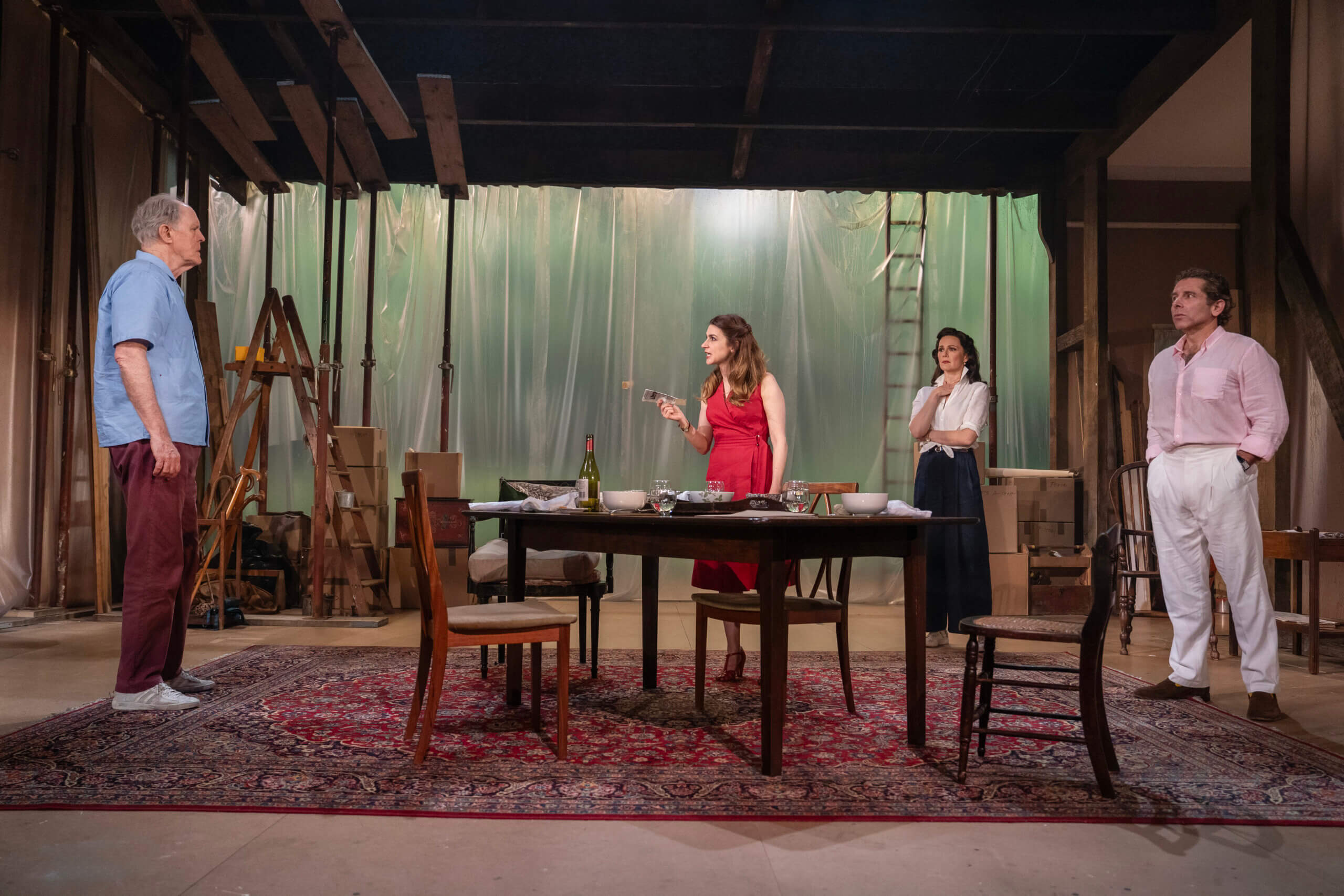
Roald Dahl’s house is falling down.
It’s 1983, and the children’s author’s Buckinghamshire estate is undergoing a gut renovation. Its exposed plumbing and naked beams bespeak an unseemly core behind the author’s facade of prickly charm, cracking after publication of his incendiary review of the book God Cried, about the 1982 Lebanon War. The article, which ran in the magazine Literary Review, crossed a then-clear line from legitimate critique of Israel into antisemitic tropes of the most noxious variety.
The play Giant, now on Broadway after an Olivier Award-winning run on the West End, imagines an afternoon in which Dahl’s publishers try to cajole him into an apology he’s determined not to make.
For the greater part of the first act in Mark Rosenblatt’s crackling script, the precise nature of Dahl’s comments remains obscure. We’re told that they were condemned in the press as “the most disgraceful thing to be written in the English language in a very long time.” They were so bad as to inspire a death threat credible enough to station a police constable outside Dahl’s home.
Finally, a Jewish-American sales director from Farrar, Straus and Giroux, who has arrived to do damage control, quotes Dahl’s remarks at length following a tense lunch of salad niçoise.
“Never before in the history of man has a race of people switched so rapidly from being much-pitied victims to barbarous murderers,” Dahl wrote of Israelis — or was it simply Jews? “Never before has a race of people generated so much sympathy around the world and then, in the space of a lifetime, succeeded in turning that sympathy into hatred and revulsion. It is as though a group of much-loved nuns in charge of an orphanage had suddenly turned around and started murdering all the children.”
Is it bad to say I’ve heard worse?
Were Dahl still with us, he would have an ideological home with certain members of Corbynite Labour and the Greens, to say nothing of Roger Waters. He would not run afoul of the “Zionists in Publishing” X account that tells consumers which authors are insufficiently critical of Israel; perhaps he would be marked on reading lists as an acceptable, pro-Palestinian alternative to J.K. Rowling.
Even the context of war in Lebanon that Dahl decried has currency, as Israel now trades fire with the remnants of Hezbollah and videos of demolished apartment blocks in Beirut proliferate online. More than 1,000 have died in airstrikes, more than 1 million are displaced and a possible ground invasion looms. (The play, written well before Oct. 7, and certainly before the latest offensive in Iran, suffers from a poignant prescience.)
Can a drama built around Dahl’s screed still work with the shift of the Overton Window toward a strident, existential questioning of Israel and its influence? Remarkably, it does.
The credit is shared. John Lithgow, playing his whole repertoire from Churchill and avuncular alien to Dexter’s Ice Truck Killer, is a rangy stick of dynamite. He pivots from boyish jokes to cruel barbs that catch on his victims like nettles.
Also in the cagey chess game are Aya Cash — as the invented American FSG envoy Jessie Stone — and Elliot Levey’s Tom Maschler, Dahl’s real-life British publisher, who was a Kindertransport child from Germany.
Maschler embodies a certain Jewish-English self-effacement, angling to keep the peace and resenting Israel as an impediment to his full acceptance as an Englishman — he thinks of the country as something he’s made to defend at parties.
Stone’s more forceful, American approach — calling out Dahl for lumping all Jews together as a “single organism” — rankles her host.
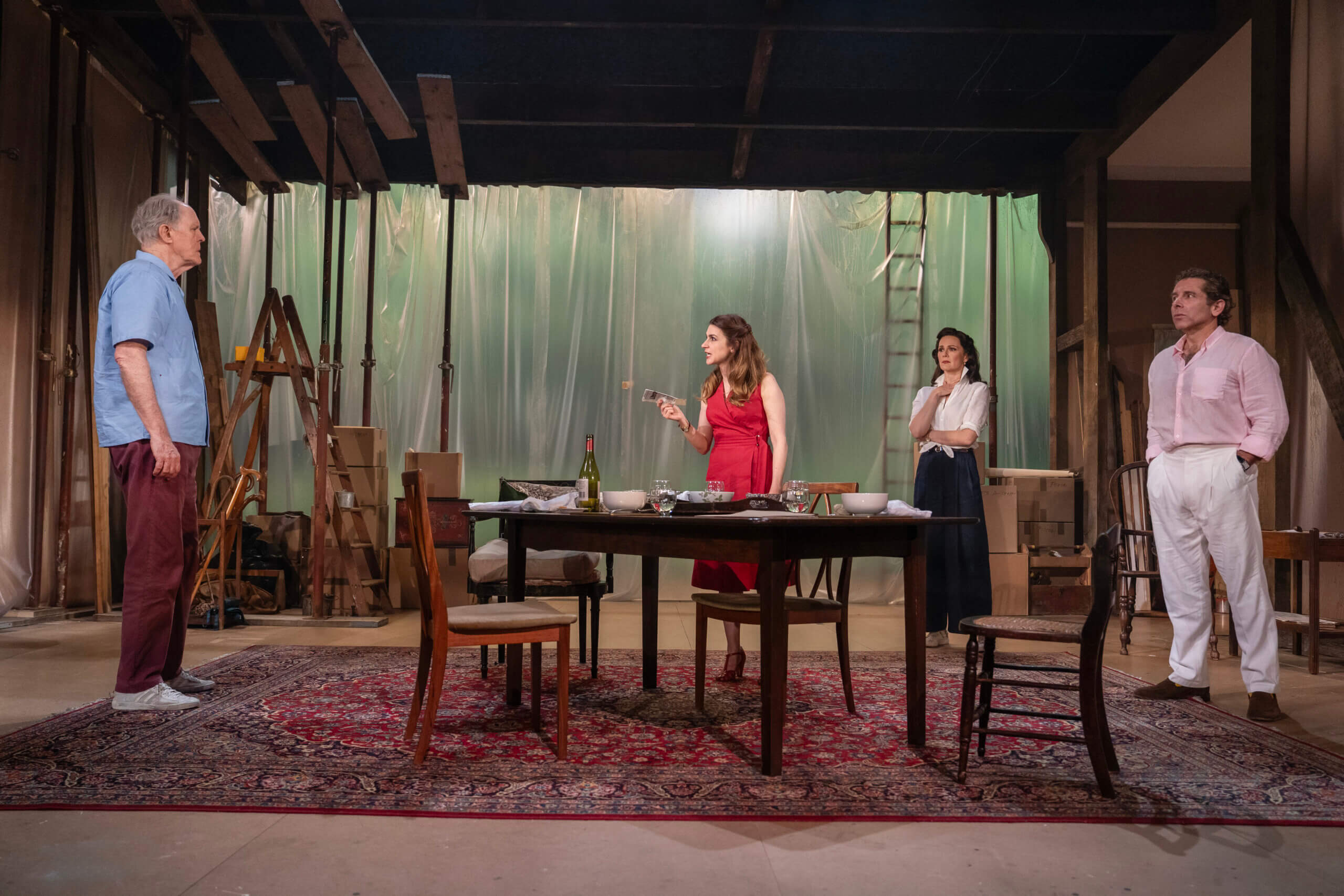
Dahl waxes Goebellsian, calling her “Stein,” and has her take dictation to a Holocaust survivor bookseller in the Hudson Valley who refuses to stock his work: “The kinder of his shtetl in upstate Noo Yoik will have to make do – no, survive on a strictly kosher diet of Laura Ingalls Wilder.”
Director Nicholas Hytner has staged a boxing match for today’s discourse, without changing a line from a pre-Oct. 7 script. What makes the work sing is its refusal to resort to caricature, humanizing Dahl through his fiancée Liccy Crossland (Rachael Stirling), the tragedies of his dead daughter and disabled son and, yes, his genuine concern and justified anguish for the Lebanese and Palestinians, particularly the children.
In a quieter moment, Dahl asks Stone if she read God Cried. She tells him she was moved by an image of a legless boy with crutches. (Dahl identifies him with ease, the victim of a penetration bomb near his school, and describes in typically gruesome fashion how “his arterial blood must have sprayed everywhere like a rogue garden hose.”)
“Why is that image not enough, on its own, for you to demand a halt?” he presses Stone. “And what’s wrong with insisting Jewish people, whose country it surely is, say ‘not in my name’? Surely it’s your voice we need above all?”
This cri de coeur is common now even in Jewish circles, but the sentiment is slippery when it hints at collective blame. After his encounter with Stone, Dahl clarifies his position in a verbatim interview, infamously opining that, when it comes to Jews, “even a stinker like Hitler didn’t just pick on them for no reason.”
That draws a gasp from the audience and a gobsmacked expression from Dahl’s housekeeper Hallie (Stella Everett).
But just how different is this claim to Ana Kasparian saying the goyim are waking up, Candace Owens claiming Satanic pedophile “Frankists” control the world, Young Republicans praising Hitler in group chats, Tucker Carlson platforming Holocaust deniers who suggest Winston Churchill was the real villain of World War II or Joe Kent writing in his resignation letter that the U.S. is continually drawn into wars “manufactured by Israel”? At a point, the figleaf of anti-Zionism proves flimsy. Older innuendos peek out from behind.
In the literary world of today, an audiobook narrator’s call for Zionists to kill themselves is not a cancellable offense — a Zionist moderating a book talk is. (But then, being a Palestinian critic of Israel can lead to a disinvitation to a book festival or reading series — that may be cancelled when other authors withdraw in solidarity.)
Now that we are further from the Holocaust, the carnage in Gaza was broadcast to our phones and the monoculture has atomized into internet echo chambers, Dahl’s review seems pedestrian if not quite mainstream. A cause célèbre in 1983 is now a viral retweet or a chart-topping podcast. His claim that “ancient wounds” didn’t make Jews wiser, but gave them a “partial sight” of their own trespasses sounds a lot like the thesis of Peter Beinart’s last book.
With Giant’s move to Broadway, a local analogy may be in order.
Earlier this month, New York Mayor Zohran Mamdani’s wife, Rama Duwaji, was revealed to have contributed freelance illustrations to a book of stories by young people in Gaza compiled by the Palestinian-American writer Susan Abulhawa. Abulhawa’s social media posts, which called Israelis “vampires” and “cockroaches” and refused to distinguish between Jews and Zionists, prompted Mamdani to call her words “reprehensible,” earning him grief from pro-Palestinian quarters.
What would the response be, had the First Lady of New York provided artwork on a book of Dahl’s and his comments came to light? Abulhawa cuts a different figure: She is the daughter of Palestinian refugees and writes movingly of her people’s suffering. Yet I suspect, like her, Dahl, would have his defenders.
Just as Dahl doubled down when reached for comment on his review — the occasion of his “Hitler stinker” quote — Abulhawa responded to Mayor Mamdani’s censure in an interview by claiming American Jews were the “most privileged demographic in this country” and “the resentment that they are seeing now is stemming from the world watching the so-called Jewish State commit a genocide.”
In other words, the logic follows, the world isn’t picking on Jews for no reason. The sleeping giant of this rationale — a proverbial light sleeper — has been awakened. Dahl, it seems, was just too early to rouse it.
The play Giant is now playing at the Music Box Theatre on Broadway. Tickets and more information can be found here.
The post Roald Dahl’s monstrous views have a seat at the table today appeared first on The Forward.