


Local News
Local gifted crafter Stacey Hochman Corden making her mark via virtual word of mouth

By REBECA KUROPATWA
With so many sad instances of people getting into dire straits since Covid-19 emerged in our community, it’s nice to know that some individuals are finding creative ways to not only stay afloat, but even succeed.
Growing up in the Winnipeg Jewish community, Stacey Hochman Corden (35) attended the Hebrew-bilingual program at Centennial School from kindergarten to Grade 6.When she moved with her dad, Larry, to the town of Birds Hill, when she was in Grade 9, Stacey continued her learning at a nearby public school. Living in a smaller community and away from her Winnipeg friends, Stacey honed her creative side.
Later, she studied Business at Red River College, but from a young age, Stacey says, “I always knew I wanted to be home with kids one day. But, I also had a love for business and have always felt it it’s important to have education anyways.”
After finishing college, Stacey worked for the government for several years. She met her husband in 2009, and they were married in 2012. For their wedding, Stacey created all of their wedding décor.
“I’ve always been super crafty,” she says. “After I had my second son in 2014, my family was encouraging me to sell the things I was making…just different things…And I remember thinking, ‘Who would buy anything I make? That’s crazy.’
“But, I thought, I’ll try. I didn’t know a lot about the handmade community, locally, at the time, or even what it was like online. So, I started on Etsy.com (a website platform for small businesses), and then I discovered the community locally.
“There’s a Facebook page, Handmade Winnipeg. And, I would post in there, things I would make. It just kind of evolved and, from there, I got regular customers, word of mouth. I was meeting tons of people and going to craft fairs.”
At that time Stacey was busy making wood signs, mugs, digital invitations, and vinyl work. Next up, she decided she wanted to start creating bows.
As her business grew, she reached the point where she has to make a decision. “I could no longer do everything, as the bows just skyrocketed,” Stacey explains. “As I had gotten into the handmade community across Canada with the bows, I decided to just focus on hair bows – and scrunchies, too.
“I wanted to add more products. I was having a really hard time finding fun, trendy shoes from a small shop in Canada. So, I started designing shoes and getting them manufactured, and bringing them in this spring. So,
we expanded to that.
“I’ve also fallen in love with sewing again. So, I added beanies too. And, in January, I will also be adding cotton bamboo cardigans, because I’m obsessed with that fabric.”
Things have been going so well that Stacey and her family converted their dining room into a sewing room.
“I told my husband, ‘We’re not entertaining right now, so why not?’ Cotton bamboo is this really sought-after fabric right now, especially in the handmade online community. It’s eco-friendly and super soft, one of the softest things.
“My daughter wears a lot of cotton bamboo clothing, because she just loves the feel of it on her skin. It’s antibacterial, eco-friendly, hypoallergenic, and a natural UV protector. It also repels moisture from the skin, keeping you cool in the summer and warm in the winter. It’s just a wonderful fabric that I’m clearly obsessed with!
“What’s important to me is that my daughter wants to wear it. I will be making cardigans for moms too, because moms are already obsessed with matching their kids.”
Stacey sews most of the items herself, or with the help of her mother-in-law, who sews the scrunchies, while her husband also helps with the back office work.
Beanies were launched just a month a half ago, and the cardigans will be launching in the new year.
For now, all of Stacey’s products are housed in her basement.
“I’m such a homebody…My daughter will be going into kindergarten next year, and I had my boys home with me,” she said. “I’ve been doing this for years with the three kids at home.
“I’m hoping we will not outgrow our house, but, if we had to, I’d get a retail space. If that was the next step, I’d absolutely do that.”
Hochman does all her business these days online, on her website and via Facebook.
For more information, visit Little Lovies Closet at littleloviescloset.com.
Local News
Departures
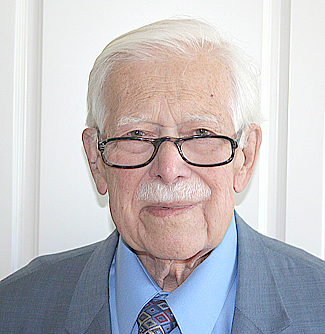
In Memory of Dr. Maurice Shnider (1923-2013)
By MARTIN ZEILIG I first visited Dr. Maurice Shnider at his home in Winnipeg’s River Heights neighbourhood to talk about war.
His house reflected the life of a successful physician. It was spacious and comfortable without being ostentatious. Family photographs occupied shelves and tables. Sunlight spilled into the kitchen where we sat drinking coffee.
By then he was an elderly man, friendly, thoughtful, and possessed of that rare quality found in some people who have lived through extraordinary times. He never seemed impressed by his own experiences.
He had been born in Sheho, Saskatchewan, in 1923 and grew up in Inglis, Manitoba.
Then came the war.
As a young man he served with the Royal Canadian Air Force before being seconded to the Royal Air Force. Flying aboard Catalina flying boats in the Bay of Bengal, he participated in missions searching for downed Allied aircrew and earned the Distinguished Flying Cross.
Those were the stories I had come to hear and later wrote about for the Jewish Post & News.
Stories of long flights over open water.
Stories of rescue.
Stories of courage.
Yet as the interview continued, another chapter of his life emerged.
After the war he returned to Canada, attended medical school at the University of Manitoba, and eventually built a successful family practice in Winnipeg. His patients often became his friends. He took pride in caring for generations of families and became known as a gifted and dedicated physician.
For a period of years, he also served as the physician responsible for checking vaccination records and health documentation for international travellers passing through Winnipeg International Airport.
It was then that his eyes brightened.
The war stories were important.
The airport stories were fun.
“You’d be surprised who came through Winnipeg,” he said.
The coffee was fresh. Outside, a warm prairie breeze shifted the trees beyond the kitchen window.
Then he smiled.
“Even the Beatles.”
The name immediately caught my attention.
“The Beatles?”
He laughed.
“The whole city went crazy.”
It was August 18, 1964.
The Beatles were on their way to begin their first major North American tour and Winnipeg was merely a refuelling stop. They weren’t playing a concert. They weren’t staying overnight.
They were simply passing through.
Yet somehow word spread.
Radio stations reported it. Teenagers rushed to the airport. Parents drove excited daughters across the city. Traffic clogged nearby roads. The terminal filled with screaming fans hoping to catch a glimpse of the four young Englishmen who seemed to have conquered the world overnight.
Maurice happened to be the airport doctor assigned to examine the passengers’ health records.
What should have been a routine day suddenly became anything but.
Almost fifty years later, what remained vivid in his memory was not the famous faces but the sound.
The noise.
The shrieking.
The excitement.
For a brief moment Winnipeg became the centre of the universe for thousands of young Canadians.
Then the aircraft door opened.
John, Paul, George, and Ringo appeared.
They waved.
The crowd erupted.
A few photographs were taken.
A few words were exchanged.
And then, scarcely more than twenty minutes after they had arrived, they were gone.
Winnipeg returned to being Winnipeg.
Maurice chuckled at the memory.
“John Lennon was cheeky.”
I asked what he meant.
He considered the question.
“Always had a smart answer.”
He smiled again.
“Not rude. Just cheeky.”
The passage of decades had done nothing to diminish his amusement.
For a few moments we sat quietly.
Then another memory surfaced.
“Steve McQueen was one of the nicest.”
That surprised me.
Maurice encountered the actor in the airport restaurant.
McQueen was seated alone.
No entourage.
No photographers.
No one making a fuss.
Just a man eating lunch between flights.
Maurice rarely approached famous people.
But there was a reason that day.
One of his children was facing serious medical challenges and was a devoted Steve McQueen fan. Movies offered an escape from hospitals, treatments, and uncertainty.
So Maurice walked over to the actor’s table.
He introduced himself and explained the situation.
McQueen listened carefully.
Then he asked for the family’s address.
That was all.
No promises. No performance. No grand gesture.
Simply an address.
Several weeks later a package arrived at the Shnider home.
Inside was an autographed Steve McQueen poster.
Maurice’s expression softened as he recalled it.
The poster itself wasn’t what mattered.
What mattered was seeing the joy it brought.
Even years later, that was the part of the story he remembered most clearly.
“He was a very humble man,” Maurice said.
“Very soft-spoken.”
The kitchen fell silent.
For a moment the famous actor disappeared entirely from the story.
What remained was a father’s gratitude.
Then Maurice laughed again.
“Vanessa Redgrave.”
Another unexpected visitor.
She was travelling through Winnipeg on her way to Los Angeles when it was discovered that she lacked the proper vaccination documentation required for international travel.
In those days such requirements were taken seriously.
The problem needed solving.
So Maurice solved it.
He drove her downtown to his office.
One of the world’s most celebrated actresses riding through Winnipeg in a doctor’s car.
No limousine.
No security detail.
No red carpet.
Just traffic lights, city streets, and ordinary conversation.
There he administered the required vaccination and drove her back to the airport in time for her flight.
He told the story as though it were perfectly routine.
Perhaps for him it was.
I remember thinking that this was what made his stories so wonderful.
To everyone else they sounded extraordinary.
To Maurice they were simply things that had happened during a long and interesting life.
As our conversation drew to a close, he looked down into his coffee cup and reflected on the famous people who had crossed his path.
The Beatles.
Steve McQueen.
Vanessa Redgrave.
Different personalities.
Different kinds of fame.
Yet in the end they all became the same thing.
Travellers.
People worried about schedules.
People missing paperwork.
People trying to catch flights.
People trying to get somewhere.
The old airport had been a great equalizer. For a few moments, between arrival and departure, fame gave way to ordinary life.
And Maurice Shnider occupied a unique place in that world.
He wasn’t a celebrity.
He wasn’t an observer standing outside the story.
He was part of it.
A prairie boy who became a decorated wartime airman, flew rescue missions over distant seas, returned home to study medicine, built a respected family practice in Winnipeg, and devoted his life to helping others.
Some of the people he met happened to be famous.
Most were not.
To Maurice, it made little difference.
He especially enjoyed the company of pilots, storytellers, musicians, and adventurers. He remained fascinated by the Second World War, by history, and above all by people. Fame interested him far less than character.
He remembered the famous ones not because they were celebrities, but because, for a few brief moments, they revealed themselves to be something far more interesting.
Simply human.
When Dr. Maurice Shnider died in 2013 at the age of ninety, Winnipeg lost not only a distinguished physician and decorated veteran, but also a man who never lost his curiosity about the world or his affection for the people who passed through it.
Some departures are quickly forgotten.
Others leave a lasting mark.
That was how I remember him.
And that is how he deserves to be remembered.
Local News
Marty Green expands his protest against extremist Jewish settlers to two more venues – and is arrested twice more
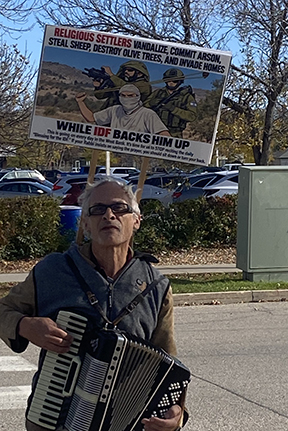
(Tuesday, October 27) We received the following press release about Marty Green being arrested again, both at the University of Manitoba and at Shaarey Zedek Synagogue:
Both sides came to blows on Saturday, October 24, at the Shaarey Zedek Synagogue as security personnel sought to prevent Marty Green from interfering with synagogue traffic as he protested just outside synagogue grounds against the actions of religious settlers in Israel’s occupied West Bank territory. Synagogue Executive Director Rena Secter Elbaze quickly intervened to prevent further escalation. Police arrived shorty thereafter and detained Green for 45 minutes before driving him home and releasing him. It is not clear whether their decision not to lay charges was the result of their own onsite investigation or whether it was at the request of the synagogue executive.
Green has now been arrested four times in the last month and faces multiple charges for disturbing the peace, including two episodes at the Asper Campus and one more this past Friday (Oct. 23) at the University of Manitoba. While Green says initially he was merely handing out leaflets (at the Asper Campus), since his first arrest on September 23, he has returned to the campus with a large placard and an acccordion, accompanying himself while singing songs with lyrics that include such phrases as “The Jews Are Bananas….B-A-N-A-N-A-S”. In addition to listing actions of the religious settlers as including arson, vandalism, and theft, he pointedly alleges that the IDF has been backing up the settlers in their actions.
Green had earlier notified the Shaarey Zedek that he was contemplating bringing his protest to the synagogue. He was told that if he attempted to enter the grounds he would be prevented from doing so. At that time, Secter Elbaze told Green that his intentions were inappropriate, declaring the synagogue to be “a house of worship dedicated to prayer, learning, community, and spiritual engagement.” Green responded that if the synagogue were willing to contact the Crown and inform them that “that there was never any legal basis for their claims that I was conducting myself inappropriately at the Asper Campus” (with regard to his earlier arrests) that he would “voluntarily refrain from carrying his informational campaign to the synagogue(s).”
Green further argues that the recent “psak” (religious ruling) by leading Israeli rabbi Rov Dov Lior, in which Lior declares that it is not merely permissible but praiseworthy for Jews to steal olives from Arab orchards….that this ruling brings his protest within the proper realm of religious discourse. He says further that if the local rabbis were willing to speak out to their congregations against the aforesaid psak, that he might have refrained from taking his campaign to their grounds.
Although Green was released on Saturday without charges, police confiscated his placard. They explained that it was being held as evidence pending an investigation by Major Crimes as to whether it constituted hate literature.
There was no further information given as to what happened at the University of Manitoba.
Local News
Third annual JFest Winnipeg will be offering programs for all ages

By MYRON LOVE JFest Winnipeg is back with a good variety of musical performances, a book launch, popular Jewish-themed films, children’s activities, and a family-oriented Shabbat dinner.
“JFest,” observes Laura Marjovsky, the Rady JCC Director of Programming, “is an opportunity for our community to experience Jewish art and culture. With our range of JFest events, we are trying to reach out beyond what has been our base audience and appeal to all ages. We have a commitment to bring top notch Israeli performers to share the highest caliber of Israeli entertainment with our audiences.”
The week-long festival (November 14-21) kicks off with a performance by top-ranked Israeli singer-songwriter Harel Skaat. The popular Israeli star began singing as a child. He shot to fame when he finished second in the second season of “Kochav Nolad” – Israel’s version of “American Idol.” His first album was released in 2006 and achieved Platinum status – with one of the songs being ranked as “song of the year.” He followed that up in 2009 with a second album that reached Gold status. In 2010, he represented Israel at the Eurovision competition.
Skaat’s performance is scheduled for the Seven Oaks Performing Arts Centre (which is attached to Garden City Collegiate) beginning at 8:00 P.M. on Saturday, November 14. Patrons will have the opportunity to purchase an enhanced ticket to attend a meet and greet with Harel.
All other JFest programs and activities will be at the Rady JCC.
Music Producer Karla Berbrayer says Ben Caplan’s performance on Saturday, November 21 will also be another highlight. “Ben Caplan redefines what it means to be a modern folk artist,” Berbrayer says. “His music and stories are matched by his larger-than-life stage presence. This concert focuses on how his Jewish upbringing has influenced his entire performance career.”
“Flatland Famous” is returning by popular demand. This quintet, known for its performances at Winnipeg Jets games, will be presenting its concert, “Jewish Soul of Rock and Roll,” on Wednesday, November 18, at 7:30 pm. This year’s show will feature songs by Amy Winehouse, Neil Diamond, Barbra Streisand, Simon and Garfinkel, and other famous Jewish icons.
On Tuesday, November 17, local author Deborah Schnitzer will be taking centre stage with the launch of her new book, “The Woman Who Swallowed West Hawk Lake.” The University of Winnipeg English Professor Emeritus’s new novel explores intergenerational trauma related to Nazi breeding programs. Joining Schnitzer on stage will be a panel of professionals who have experience working with children who have experienced trauma.
And of course, “Best of the Fest” is back. Films to be presented will include“The Floaters” and “We Met at Grossingers,” two wildly popular movies at last spring’s Winnipeg International Jewish Film Festival.
“The Floaters,” to be screened on Monday , November 16 at 7:00 pm is a funny and bang-on depiction of Jewish summer camp culture.
“We Met at Grossingers” is a loving look back at the Borscht Belt in New York’s Catskills, where generations of young Jewish performers earned their dues and developed their acts. The film will be screened on Thursday, November 19 at 7:00 P.M.
On Friday November 20, JFest will host a Family Shabbat dinner featuring Anat Kriger, an Israeli-born, Toronto-based musician, actor, and children’s performer, who has made several appearances in Winnipeg at major communal events.
Kidfest on Sunday, November 15, will be a day-long potpourri of programming that will include live performances, workshops, bouncy castles, games and crafts, and much more.
Readers seeking more information about JFest can contact Laura Marjovsky at 204 477-7539 or lmarjovsky@radyjcc/com
