


Obituaries
CHANA KEMPNER STERN (Z’L) Feb 15, 1928 – Jun 16, 2022
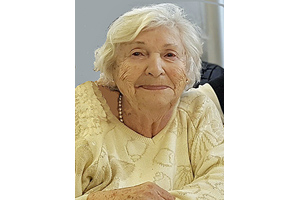 It brings great sadness to announce the passing of Chana Kempner Stern (Z’L) who was the beloved wife of Max Stern who pre-deceased her. She leaves to mourn her step-son, David Stern, as well as many cousins and friends in Canada, Israel and US. Chana died in Winnipeg on June 16, 2022, and was buried in Israel on June 29, 2022.
She was 94 years old. There will be a celebration of her life event to be held in her honour, with her step-son, David, along with relatives and friends, in Winnipeg next month.
The following obituary was written by Esi and Amy Zion, cousins of Chana’s, from Edmonton, AB:
Chana Kempner Stern nee Shapiro was my grandmother’s cousin and was like an aunt to my mother and a great-aunt to me. Chana and my grandmother grew up together in Suchedniow, Poland; she went to Beit Yakov, a school for girls where she learned to read and write in Yiddish as well as Polish school. Chana was the eldest of three children in her family: Asher and Hershel were named after their zaidas. At age 12, she went to work in Factory Camp B, then A, in the nearby Skarzysko-Kamienna concentration camp on the false promise that it would save the rest of her family. On our last visit together, I recorded her story. She said that in fact, her family was rounded up on Yom Kippur while she was working in the camp, and they were taken to Treblinka. She was spared because she was working and she never saw them again. My grandmother, and my grandmother’s brother, and another cousin, Rochshe, were her only surviving relatives. After liberation, she recalled the cold reception from her fellow Poles who were surprised to see that a Jew had survived and would not let survivors enter the emptied Jewish homes.
Recovering from a lung problem after the war, she was found in a German sanitarium by shlichim who were looking for orphaned survivors to populate kibbutzim. Once she recovered, they went through the Alps into Italy with fake passports bound for Israel. Her boat reached the port of Haifa, but was re-routed by the British to Cyprus. Chana was almost 17 at the time. After about nine months in Cyprus, once the State was declared in ’48, Chana was sent back to the port of Haifa where she was ordered into a tank with the barrel pointed at the sky. They told her to shoot at any enemy airplanes. Thankfully, she recalled, she never had to pull the trigger. In Israel, she learned Hebrew, she met her first husband, her great love, Judah (Yehudah). For many years they lived in Petach Tikvah, where Chana worked as a telephone operator. Chana found a new life in Israel and a new family in Judah.
Judah passed away decades later, but Chana never stopped speaking about what a good and kind person he was. Eventually she got remarried to a Canadian, Max Stern, and relocated to Winnipeg. In Winnipeg she had a wonderful life with Max, found friendship in the large Jewish community where she could speak Yiddish fluently while learning English day by day. They were avid card players. Chana excelled in bridge and enjoyed trips to the casino until the end of her life. She and Max welcomed people into their home like family – she enjoyed constantly entertaining, cooking traditional Jewish food for her guests, and recounting funny stories and memories.
In 2005, Chana was widowed a second time. She continued to have a zest for life in spite of all that she went through. Chana was a loyal and committed friend, and a joyful presence in everyone’s life. A complaint was never uttered from her lips; she always focused on gratitude for the simple pleasures and privileges in life. During Covid, she would list the items in her house that she was thankful for: her TV, her phone, having heat, and enough to eat: “What more could I ask for?” Always on the phone with friends or family, she remained a telephone operator of a different sort, until her last day. Chana was not only our family – she was a dear friend and advisor to my mother and me. She was always interested in our lives, always listened, asked questions, and wanted to know everything. We loved calling her and speaking to her, there were always laughs to be had, and Chana always laughed from the belly.
I remember begging her to get a Covid vaccination, and she only relented when she found out she would otherwise be barred from the casino and the bridge club at Gwen Secter. She was practical to the enth degree. She was the last Holocaust survivor in our family, and the last first-hand witness of the atrocities that took most of our relatives. She was a model in how she not only survived, but lived and flourished in spite of everything. But as she told me when she spoke about the war, regardless of the smile on her face, such pain as losing her family all at once never leaves you, nor the guilt that went with it. “Thank G-d I’m alive – or do I? That is a big question, and some questions cannot be answered.”
We cannot believe she is gone. We will miss our Chana’le dearly. We take solace knowing that her final wish was fulfilled: to be buried beside Judah in the land of Israel that took her in when she had no one.
Obituaries
Recent funerals – as posted on the Chesed Shel Emes website

| Danny Rich | Dan ben Sender v’Mindel | 30/04/1938 | 17/09/2026 | 6 Tishrei 5787 | Shaarey Zedek Cemetery | More Info |
| June Marie Black | Zahava bat Avraham v’Sarah | 30/06/1931 | 16/09/2026 | 5 Tishrei 5787 | Shaarey Zedek Cemetery | More Info |
| Ruth Billinkoff | Rachel bat Moshe v’Shaindel | 25/04/1928 | 15/09/2026 | 4 Tishrei 5787 | Shaarey Zedek Cemetery | More Info |
| Adele Heidinger | Odela bat Avraham V’Freida | 14/05/1924 | 11/09/2026 | 29 Elul 5786 | Shaarey Zedek Cemetery | More Info |
| Fred Arnold Rosenblatt | Ephraim ( Freidel Chuna) ben Zvi haKohen v’Gusta | 10/12/1947 | 10/09/2026 | 28 Elul 5786 | Hebrew Sick Benefit Cemetery | More Info |
| Jack Shrom | Yaacov ben Aryeh Leib v’Rachel | 02/03/1931 | 08/09/2026 | 26 Elul 5786 | Shaarey Zedek Cemetery | More Info |
| Raymond Richard Green | Reuben Rafael ben Leib Natan v’Yetta | 04/02/1951 | 31/08/2026 | 18 Elul 5786 | Shaarey Zedek Cemetery | More Info |
| Rhoda Kravetsky | Tziril Tovah bat Mendel v’Doba | 21/05/1948 | 29/08/2026 | 16 Elul 5786 | Shaarey Zedek Cemetery | More Info |
| Brent Drew Cohen | Binyamin ben Zvi ha’Kohen v’Esther | 02/10/1958 | 28/08/2026 | 15 Elul 5786 | Bnay Abraham Cemetery | More Info |
| Liza Lyuber | Laya bat Lazer v’Malka | 05/12/1926 | 28/08/2026 | 15 Elul 5786 | Shaarey Zedek Cemetery | More Info |
| Michael Tennenhouse | Melech Shimon ben Hersh Tzvi v’Gileh | 22/04/1949 | 28/08/2026 | 15 Elul 5786 | Shaarey Zedek Cemetery | More Inf |
| Lillian Neaman | Leah Rivka bat Eliyahu v’Chana | 16/02/1934 | 21/08/2026 | 8 Elul 5786 | Shaarey Zedek Cemetery | More Info |
| Malik Juravsky | Melech ben Levi Yitzchak v’Luba | 24/03/1931 | 19/08/2026 | 6 Elul 5786 | Shaarey Zedek Cemetery | More Info |
| Harvey Appelle | Chaim Tzvi ben Yehoshua v’Bayla | 08/05/1940 | 15/08/2026 | 2 Elul 5786 | Shaarey Zedek Cemetery | More Info |
| Mordy “Buddy” Brownstone | Mordechai Leib ben Yishia v’Machla | 28/07/1926 | 11/08/2026 | 28 Av 5786 | Shaarey Zedek Cemetery | More Info |
| Karen Leslie Gomori | Gayla bat Shlomo haLevi V’Chaya Sarah | 15/02/1950 | 10/08/2026 | 27 Av 5786 | Shaarey Zedek Cemetery | More Info |
| Rhona Shnier | Rachel bat Shaul v’Chana | 04/07/1927 | 09/08/2026 | 26 Av 5786 | Shaarey Zedek Cemetery | More Info |
| Belle Burke | Bluma bat Zalman v’ Sara Elka | 12/05/1926 | 06/08/2026 | 23 Av 5786 | Shaarey Zedek Cemetery | More Info |
| Reesa Gail Langhans | Reesa bat Yishayahu haKohen v’Faigel Tzipora | 17/09/1948 | 06/08/2026 | 23 Av 5786 | Hebrew Sick Benefit Cemetery | More Info |
| Gerald Kalef | Gershon ben Yitzchak v’Chana | 24/06/1928 | 01/08/2026 | 19 Av 5786 | Shaarey Zedek Cemetery | More Info |
| Arthur Joseph Nitikman | Aharon Yosef ben Yisrael v’Devorah | 17/05/1940 | 29/07/2026 | 15 Av 5786 | Shaarey Zedek Cemetery | More Info |
| Sheldon Berney | – | 06/10/1936 | 28/07/2026 | 14 Av 5786 | Shaarey Zedek Cemetery | More Info |
| Arthur Arkin | Avraham ben Yitzchak haLevi v’Sarah | 22/05/1927 | 24/07/2026 | 10 Av 5786 | Shaarey Zedek Cemetery | More Info |
| Dick Bell | Daniel ben David v’Chana | 28/12/1927 | 19/07/2026 | 5 Av 5786 | Shaarey Zedek Cemetery | More Info |
| Reesa Nerman | Rivka bat Shlomo v’ Shaindel Leah | 30/05/1954 | 18/07/2026 | 4 Av 5786 | Rosh Pina Memorial Park | More Info |
| Garry Israel Frankel | Gershon Israel ben Shlomo Moshe v’Miriam | 14/08/1953 | 13/07/2026 | 28 Tamuz 5786 | Rosh Pina Memorial Park | More Info |
| Caroline Shelley Raber | Tzipi bat Yisrael v’Ita | 30/01/1955 | 11/07/2026 | 26 Tamuz 5786 | Bnay Abraham Cemetery | More Info |
| Estelle Meyers | Esther Tzivia | 26/10/1941 | 10/07/2026 | 25 Tamuz 5786 | Shaarey Zedek Cemetery | More Info |
| Alice Grace Lazar | Sarah bat Avraham v’Sarah | 27/12/1926 | 08/07/2026 | 23 Tamuz 5786 | Bnay Abraham Cemetery | More Info |
| Paula Wolfman | Piya bat Mordechai v’Esther | 15/09/1953 | 08/07/2026 | 23 Tamuz 5786 | Hebrew Sick Benefit Cemetery | More Info |
| Sharon Ricki Feuer | Sharona Rivka bat Avraham v’Sarah | 14/05/1940 | 08/07/2026 | 23 Tamuz 5786 | Hebrew Sick Benefit Cemetery | More Info |
| Neil Margolis | Nissan ben Chaim Nechemia v’Deveorah | 29/07/1936 | 01/07/2026 | 16 Tamuz 5786 | Shaarey Zedek Cemetery | More Info |
| Sheldon Paul Nemy | Solomon ben Moshe haKohen v’Rachel | 01/04/1947 | 23/06/2026 | 8 Tamuz 5786 | Hebrew Sick Cemetery | More Info |
| Murray Kadys | Moshe ben Shmuel v’Bayla | 12/01/1945 | 19/06/2026 | 4 Tamuz 5786 | Beit Chayim Mikdash Shalom, Chapel Lawn Cemetery, 4000 Portage Ave | More Info |
| Richard Gordon | Yitzchak ben Yaakov v’Dina | 06/11/1943 | 14/06/2026 | 29 Sivan 5786 | Grays’ Ridge Cemetery, Alonsa MB | More Info |
| David Harold Diamond | David ben Avraham Yehoshua haLevi | 08/04/1929 | 09/06/2026 | 24 Sivan 5786 | Shaarey Zedek Cemetery | More Info |
| Sidney Green | Simcha ben Aharon v’Rosa | 01/08/1929 | 07/06/2026 | 22 Sivan 5786 | Hebrew Sick Benefit Cemetery | More Info |
| Cecile Kowall | Tzivia bat Shlomo David v’ Sluva Mata | 24/05/1935 | 03/06/2026 | 18 Sivan 5786 | Shaarey Zedek Cemetery | More Info |
| Joan Hargrave | Chana Henya bat Binyamin Mayer haLevi v’ Miriam Dina | 14/07/1953 | 01/06/2026 | 16 Sivan 5786 | Shaarey Zedek Cemetery | More Info |
| Irwin Barry Stronger | Yitzchak Dov ben Matityahu v’Baila | 16/09/1941 | 31/05/2026 | 15 Sivan 5786 | Shaarey Zedek Cemetery | More Info |
| David Ivan Cohen | David Yitzchak ben Yaakov Moshe v’Sara Liba | 06/06/1956 | 30/05/2026 | 14 Sivan 5786 | Hebrew Sick Benefit Cemetery | More Info |
| Phyllis Maxine Hochman | Tziporah bat Shmuel v’Esther | 31/12/1940 | 30/05/2026 | 14 Sivan 5786 | Rosh Pina Memorial Park | More Info |
| Alvin Murray Zivot | Avraham Moshe ben Yaakov v’Leah Miriam | 03/08/1931 | 27/05/2026 | 11 Sivan 5786 | Rosh Pina Memorial Park | More Info |
| Tova Vickar | Tova bat Nachum v’Yenta | 24/08/1949 | 22/05/2026 | 6 Sivan 5786 | Shaarey Zedek Cemetery | More Info |
| Karen Leipsic | Chaya Tova bat Kalman v’Raizel | 03/04/1944 | 21/05/2026 | 5 Sivan 5786 | Shaarey Zedek Cemetery | More Info |
| Phyllis Lee Dana | Fayge-Leah bat Moshe BenZion v’Chaya | 05/10/1936 | 17/05/2026 | 1 Sivan 5786 | Shaarey Zedek Cemetery | More Info |
| Betty Brina Simon | Bayla bat Yitzchak v’Miriam | 27/07/1935 | 15/05/2026 | 28 Iyar 5786 | Hebrew Sick Benefit Cemetery | More Info |
| Basia Bayla Fliegel | Bayla bat Leib | 31/05/1930 | 13/05/2026 | 26 Iyar 5786 | Rosh Pina Memorial Park | More Info |
| Harold Diamond | Tzvi ben Yaacov v’Chana | 04/12/1935 | 12/05/2026 | 25 Iyar 5786 | Shaarey Zedek Cemetery | More Info |
| Gary Rayburn | Gershon Aaron ben Hersh Ber v’Masha | 21/09/1965 | 09/05/2026 | 22 Iyar 5786 | Bnay Abraham Cemetery | More Info |
| Ray Schnoor | Raizel bat Ephraim v’Rachel | 13/06/1927 | 05/05/2026 | 19 Iyar 5786 | Shaarey Zedek Cemetery | More Info |
| Gila Ruth Fainstein | Rachel bat Kiva v’Leah | 25/06/1935 | 04/05/2026 | 14 Iyar 5786 | Rosh Pina Memorial Park | More Info |
| Toby Schwartz | Chaya Tovah bat Moshe v’Chana | 16/07/1932 | 01/05/2026 | 14 Iyar 5786 | Shaarey Zedek Cemetery | More Info |
| Rachel Wolman | Rachel Bayla bat Moshe v’Malka | 03/02/1962 | 24/04/2026 | 7 Iyar 5786 | Shaarey Zedek Cemetery | More Info |
| Leah Gitlin | Laya bat Yosef v’Frayda | 04/09/1926 | 08/04/2026 | 21 Nisan 5786 | Shaarey Zedek Cemetery | More Info |
| Lin Joseph Rosenbaum | Yosef Levi ben Hershel Zvi v’Dvorah | 17/10/1952 | 06/04/2026 | 19 Nisan 5786 | Hebrew Sick Benefit Cemetery | More Info |
| Norman Stein | Nachum ben Avraham v’Chaya | 10/06/1932 | 06/04/2026 | 19 Nisan 5786 | Bnay Abraham Cemetery | More Info |
| Marvin Saul Silver | Menachem Shaul ben Avraham v’Chana Gitel | 20/11/1941 | 05/04/2026 | 18 Nisan 5786 | Shaarey Zedek Cemetery | More Info |
| Kimberley Dawn Kirshenbaum | Isabella bat Avraham v’Sarah | 09/12/1969 | 03/04/2026 | 17 Nisan 5786 | Rosh Pina Memorial Park | More Info |
| Walter Ganetsky | Zev ben Yosef haLevi v’Tziporah | 23/09/1940 | 02/04/2026 | 15 Nisan 5786 | Bnay Abraham Cemetery | More Info |
| Lorelei Camille Lavitt | Rachel bat Yaakov v’Raisa | 11/04/1936 | 26/03/2026 | 8 Nisan 5786 | Rosh Pina Memorial Park | More Info |
| Melvin Myers | Moshe ben Chaim v’Rachel | 24/04/1936 | 24/03/2026 | 7 Nisan 5786 | Shaarey Zedek Cemetery | More Info |
To see more funerals go to https://chesedshelemes.org/records-of-the-deceased/
Obituaries
AARONA PERLOV (née WEINBERG)

It is with profound sadness that we announce the tragic and unexpected passing of Aarona Perlov (nee Weinberg) on September 25, 2026, at 76 years of age. Rona passed in hospital surrounded by her family, after a short battle with pancreatic cancer.
Left to mourn her are children, son Daniel (Heather), and daughter Allison; and grandchildren Hayden, Oliver and Eden. She is also survived by her sister Judy Git, nieces Aliah and Nomi, as well as many nieces, nephews, great-nieces like Alexandra, great-nephews, and cousins. She was predeceased by her parents, Elie and Lillian Weinberg, and beloved friend Sheila Perlmutter. She will be dearly missed by her family and many, many friends.
Rona was born on May 11, 1950. She dedicated herself to building a home and a life for her children while also committing 45 years to a career in dental hygiene. She was passionate about her hobbies, like crocheting, bridge and word games, but even more so about her many friendships. In her retirement, she joined her son Daniel as a best friend and business partner in the pursuit of developing modern and accessible medical clinics. She was her daughter, Alli’s biggest fan, attending nearly every Fringe improv show she performed in. Rona loved theatre, film, summertime at Gimli beach and winters in Palm Springs. She was an incredible cook, had a great sense of humor and energy that will never be forgotten.
Rona was a devoted family matriarch. She will be missed by many, but especially by her grandkids. She would always attend her grandchildren’s activities and performances, treat them each to special time with her, and was consistently supportive in everything they did. She was the best Baba in the world.
The funeral was held on Monday, September 28th at Rosh Pina Cemetery. In lieu of flowers, donations can be made to Cancercare Manitoba, Winnipeg Jewish Theatre, or a charity of your choice.
Obituaries
BRUCE MILTENBERG
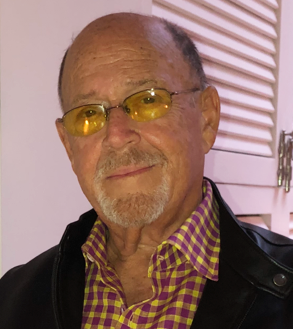
b. October 1st, 1940, d. 9 pm August 31st, 2026 (20th Elul 5786)
Bruce Miltenberg was a true New Yorker, born and reared on the West Side of Manhattan. He came of age in the New York of the 1940s, ‘50s, and ‘60s, and built his life largely through his own initiative, judgment, and persistence. His mother, a Ziegfeld follies girl, supported her two boys as an actress, and insisted they learn Accounting. Bruce attended Stuyvesant High School, Hunters College, became a Licensed CPA, and opened his first tax office in the basement of Berman’s candy store on Broadway (where he’d worked since age 12). During the early ‘60s he did a stint with the U.S. Army Reserve.
Meantime, from that first basement office courtesy the Berman Brothers, Bruce established accounting practices in Flushing, Fort Washington, and at Eighty-First Street on Broadway. By the end of the ‘60s he was buying residential multifamily buildings in Upper Manhattan and the Bronx. Ultimately Bruce closed his tax practice to devote himself to real estate, with holdings eventually in New York, Boston. Philadelphia and Canada.
There was much more to Bruce than his real estate holdings. That was merely the matrix upon which he lived his philosophy of life and nurtured his family. He was an explorer in every sense. He loved ideas, conversation, and a spirited discussion. He often said: “I may not be big enough to push anyone around, but I am too big to be pushed around”. He believed fiercely in independence, courage, and resilience. He encouraged his family to take chances, see the world, stand up for themselves, and meet life’s challenges head on. Bruce was deeply proud of his Jewish heritage and was a lifelong supporter of Israel. He was also extraordinarily generous, often quietly meeting needs and supporting causes without recognition.
In the early 90s Bruce met Cynthia Cohen, of Winnipeg, who was then living in NYC. They married in 1994 at the Shaarey Zedek Synagogue, her family’s shule. They began to summer in Winnipeg Beach. As well travelled as he was, (his curiosity took him to some of the world’s most distant places, from Bhutan to Ushuaia), it was Winnipeg Beach—and especially the treasured friends he made there—that became his favourite place in the world. Here is a quote from one of these friends: “Bruce had a way of engaging each and every person who came into his sphere of life. He knew how to reach out to uncover what was important in their lives, while finding new ways to grow himself. He made us laugh, question what’s happening around us and strive to be a better person. Throughout his humour there was an undeniable honesty that we loved and will forever miss.”
Bruce is survived by his wife Cynthia nee Cohen, their daughters Rachel and Leah, his son Andrew (Jennifer), and daughter Alissa Wade (William), his grandchildren Skylar Vertes, Isabel and Jacob Miltenberg, Ava Miltenberg.
