


Uncategorized
A pioneering Reform synagogue makes way for a booming Iranian Jewish community
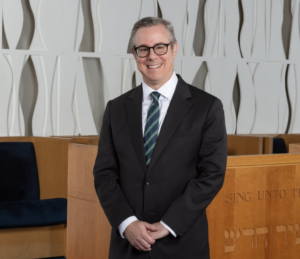
Temple Beth-El is an island of Reform Judaism in the Iranian milieu of deep Great Neck, a suburb on the North Shore of Long Island 35 minutes away from Manhattan by train. There are around two dozen synagogues in Great Neck; three of them are Reform, and two of those are tucked away at the edges of the peninsula. Temple Beth-El stands bravely at the center, with frontage on Middle Neck Road, the main street, just steps away from multiple Orthodox synagogues and kosher restaurants serving a spectrum of cuisines.
As an Iranian-American Jew from Great Neck, I’ve been to Temple Beth-El twice before: once, in middle school, for a classmate’s bar mitzvah, and then, in 2021, to get the COVID vaccine. I called it, simply, “the Ashkenazi synagogue.” Tonight, as the oldest synagogue in Great Neck prepares to downsize, I am here for the third time ever, for Friday night services.
Temple Beth-El formed in 1928, when Great Neck was dominated by Protestants. The presence of the synagogue made even more Jews from the city want to move east. Its rabbis were outspoken civil rights activists and hosted Martin Luther King, Jr. in 1967. Now, as Great Neck’s demographics shift further toward more religious Jews, Temple Beth-El’s congregation is shrinking. The synagogue is selling its property to an Iranian Orthodox yeshiva and will be leasing back a portion of it.
In the mid 1980s, Temple Beth-El had around 1,500 families, with a 500-person waiting list, said Stuart Botwinick, the synagogue’s executive director. Now, as members have died off and younger ones aren’t joining as quickly, it has around 400, and can’t fill up its main sanctuary on Rosh Hashanah. Wielding cold economic calculus, I can envision someone arguing that if fewer people choose to attend a synagogue, then whatever happens to it must be natural, or deserved. I can even envision myself arguing that. It’s not guilt, because I did nothing wrong, but as a member of the majority group, some sense of duty makes me want to see with my own eyes what is being lost.
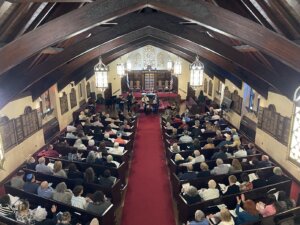
A man hands me a siddur and wishes me a Shabbat shalom. The chapel is beautiful, with a dark wood vaulted ceiling, stained glass and hanging lanterns. I find a seat in the gender-integrated pews among some 30 congregants. I try to follow the prayers, but I don’t know any of the tunes — my home synagogue is not nearly this musical. I am surprised to see some men not wearing kippahs. Rebelliously, I stray from the page everyone else is on and flip briefly to the back of the siddur. There are lyrics to “Hatikvah,” “America the Beautiful,” “God Bless America,” “The Star-Spangled Banner” and, maybe worst of all, “O Canada.” My inner Satmar rebbe shudders.
Fortunately, national hymns are not part of tonight’s repertoire. From the bimah, the rabbi, Brian Stoller, outs me as a Forward reporter. The moment the service ends, several excited Ashkenazi seniors approach me; clearly, the name of this news outlet carries much more clout here than in my typical Great Neck circles.
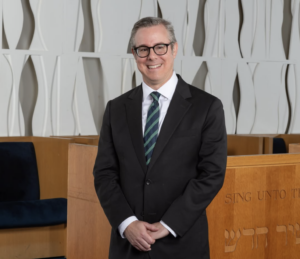
Stoller holds an optimistic vision of Temple Beth-El’s future that emphasizes adult education and cultural arts above physical space. In other words, “we’re not here to be landlords,” says Jennifer Still-Schiff, a co-president of the synagogue sisterhood. Still, losing ownership and part of their space must be somewhat traumatic. Once the service ends, Howard Herman, an honorary vice president of the board who’s been a member since the 1980s, gives me a tour and shows me all of the things the synagogue will need to sell.
“We have this beautiful Judaica museum, and we’re going to be selling it or giving a lot of it away,” he says. Then he shows me the large sanctuary. We can’t find the light switch, so we turn on our cell phone flashlights to inspect a 55-foot-long sculpture behind the bimah: “The White Flame of the Six Million” by Louise Nevelson. In the sculpture, which integrates the Torah ark, shapes carved out from white wood represent the uniqueness of every life lost in the genocide. “We’re going to have to sell this,” Herman says. “Who can buy this?”
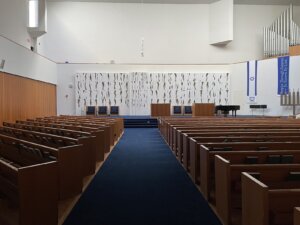
That sanctuary, where Temple Beth-El used to hold regular Shabbat services and now only holds High Holy Day services, seats almost 900 people. It will become part of the yeshiva’s space. Sisterhood co-president Rochelle Rosenbloom says the chapel, which seats about 250, will be enough to seat worshipers even on the High Holy Days. If it isn’t, she and Still-Shiff said, they can stagger two sets of services or have people watch the services on a TV in the lobby.
At a time when Great Neck was still mostly Christian, the existence of Temple Beth-El “was an essential sign that Jews could live in Great Neck and that there were enough of them, committed to religious participation through the Reform movement, to make it safe and desirable for others to try it out,” historian Judith Goldstein wrote in her book Inventing Great Neck. It was the peninsula’s only synagogue until 1941, when Temple Israel of Great Neck formed, said Brad Kolodny, an amateur historian of Long Island Jewish history. In the 1960s, Jews — particularly liberal, Reform Jews — began to outnumber Christians in Great Neck. Temple Beth-El had to build a bigger sanctuary. At times, even that sanctuary — the one with the Holocaust memorial sculpture — filled up, and administration had to set up overflow seating in other rooms.
Persian synagogues started cropping up in Great Neck after the Islamic Revolution in 1979. Great Neck has Iraqi and Syrian synagogues, too, plus several synagogues that are not officially Mizrahi but have Mizrahi congregants. Now, any car trying to drive on, say, Steamboat Road on a Saturday morning must use caution, as the sidewalks aren’t wide enough for the large groups of skipping children, bike-riding kippah-clad young men, and moms pushing double strollers in their Shabbat finest.
People in the Jewish world can get accused of being “Ashkenormative,” but since 1979, Great Neck has become Mizrahi-normative. When I was a child, a last name like “Weiss” or “Katz” connoted nothing to me, and for the longest time I assumed that my classmates whose hair was lighter than mine couldn’t possibly be Jewish. I used to watch The Nanny with my mom; one night, as Fran and Sylvia Fine peppered their speech with schleps, schvitzes, and other Yiddishisms, I asked my mom what language the characters were speaking. “I don’t know,” she said.
Fran was a prime example of what I eventually came to understand as the stereotype of the liberal American Jew, a character so familiar to American audiences that she could speak Yiddish and expect to be understood. But as the growth of the Orthodox community outpaces that of other denominations, I realize that stereotype is becoming less and less accurate. Forty-four percent of Jews ages 65 or older identify as Reform, but only 29% of Jews who are 18 to 30. And more concerningly: among people raised Reform, 12% of them are “no longer Jewish,” according to a 2020 Pew research study. When, in 1994, Fran Fine wished for “a husband and a house in Great Neck,” she was talking about a place already in flux, a place where a legacy of civil rights activism would soon give way to people who voted heavily for Donald Trump and helped elect George Santos.
When I told my mom I was writing about Temple Beth-El, she told me in an approving tone of voice that they lend out wheelchairs and other medical equipment for free, and collect donations from families of people who’ve died and no longer need theirs. Indeed, “social action” is an important value here: The synagogue also sends volunteers to an interfaith food pantry based at a local church, and some congregants volunteer to support undocumented immigrants, said Botwinick.
That willingness to look outward distinguishes Temple Beth-El from, say, my synagogue, and Botwinick argues many Iranian Jews benefit from it. “We believe that the Jewish community and the greater community actually falls in line with a lot of what we do and what we believe,” but doesn’t say so “because of cultural pressures,” Botwinick said. “Equal rights is important, health is important, caring for the immigrant community matters. It takes a strong voice — Temple Beth-El is that strong voice — to say these things matter.”
This is the most compelling thing anyone has told me for this story: that even Orthodox Jews benefit from having a Reform synagogue for a neighbor. If, for example, Temple Beth-El hadn’t opened as a vaccine hub, I struggle to see my synagogue, where many congregants are vaccine-skeptical, filling that gap.
Dr. Gary Zola, Temple Beth-El’s historian in residence, addressed the threats of decline facing Reform Judaism in a March 13 sermon, and said the synagogue’s long history should serve as a source of hope. “Let’s not forget that 98 years ago, a handful of Jewish scholars decided to create a Jewish community out of nothingness.”
“It is clear that the enervation of liberal Jewish life is a challenge,” he said, “but it’s a challenge that awaits our response.”
The post A pioneering Reform synagogue makes way for a booming Iranian Jewish community appeared first on The Forward.
Uncategorized
Whatever you think of Ilhan Omar, these threats are unconscionable

The Trump administration is reportedly planning to build a case to strip Congresswoman Ilhan Omar (D-MN) of her citizenship and eventually deport her.
It is my hope that American Jews — even those who do not like Omar and can recite every questionable comment she has made over the past 15 years to illustrate why — will understand this as offensive and outrageous not only because they are Americans, but because they are Jews.
The Trump administration may claim that it is building a case against Omar due to paperwork (reports suggest that they are interested in whether her father listed her age as 17 on her citizenship application when she was really 18). It is similarly filing dozens of lawsuits attempting to denaturalize citizens by trying to prove they lied in the process of gaining citizenship. However, that this is happening now, ahead of the midterm elections against a sitting member of Congress, a high-profile progressive whom the president has said should “go back” to her country of origin, suggests that it is, to put it mildly, politically motivated.

Evidently, the Trump administration sees citizenship not as a right or a responsibility but as a reward, one that can be taken away if that is seen as useful to the president and his adherents. That use could be silencing political opposition or something as simple (and callous) as an opportunity to brag about the sheer number of attempted denaturalizations.
Jews, too, have found themselves on the wrong end of political denaturalization. I do not mean to compare the Trump administration to the Nazis, but the stubborn fact is that Jews were indeed stripped of their citizenship as part of a political project in Germany and elsewhere in Europe in the 1930s and 40s. And in the early 20th century in the United States, it was Jews who politicians claimed were incapable of assimilating, of ever really being a part of the United States. These arguments culminated in legislation that kept out Jews who could have found refuge here. The threat of denaturalization and the experience of perpetual otherness is a grievous part of modern Jewish history; we should be offended by its presence in our political present.
Jewish tradition as well as history encourages us to stand up to authority when that authority is wrong. Mordecai refuses to bow to Haman; Nathan yells at King David for sleeping with Bathsheba and having her husband killed; Moses famously urges Pharoah to change his oppressive ways. Even God is on the receiving end of pushback when Abraham pleads and negotiates to spare Sodom.
I do not think one needs to be Jewish to be outraged by the attempt to denaturalize Ilhan Omar. I think it is also bone-chilling as an American who believes we, including our elected officials, have the right to openly oppose our president, and I am worried as a person who thinks it would be good to continue to live in a democratic republic. And I am sure that there are Jews who will say that Omar deserves to lose her citizenship because she has said things about Israel they do not like.
But the Jewish lens through which I see this is that it is right to challenge power when it is abused, and it is wrong for the powerful to make a show of trying to cast their opponents out of the country.
The point is not whether Trump can make good on the threat to strip Omar of her citizenship and deport her, but that it is obscene to use denaturalization as punishment for being a high-profile political opponent in the first place. If he is trying to make it more dangerous to speak out while being from the “wrong” country, then the rest of us need to say that this is a fundamental misunderstanding of what it means to be an American citizen.
We should do this because we are Americans and we should do this because we are Jews. We should do this because of the ways in which our American and Jewish identities bleed into one another. And, we should do this because we may not know exactly whether it is as Americans or as Jews that we know we have to protect the right to speak truth to power, but we know we need to do it all the same.
The post Whatever you think of Ilhan Omar, these threats are unconscionable appeared first on The Forward.
Uncategorized
Germany couldn’t stop Hitler’s election tactics; can America stop Trump’s?

Herding political opponents into prisons and concentration camps, suspending civil liberties, and sending SA thugs to destroy newsrooms and beat up journalists were among the means used by Adolf Hitler to game Germany’s parliamentary election of March 5, 1933, won by the Nazis.
As much as Donald Trump might fantasize about deploying such brutal tactics to subvert our midterm elections, he hasn’t done so — yet. But his objective is the same: Detonate constitutional barriers standing in the way of his lust for power. “Cheat like hell,” Trump told the GOP’s midterm convention last month.
Historian Timothy Ryback has just published a book about the last gasps of the Weimar Republic, titled 53 Days: How Hitler Dismantled A Democracy. The 53 days begin when Hitler becomes chancellor on Jan. 30, 1933, and end with the Reichstag’s March 23 passage of the Enabling Act, which gave him absolute power.
For our own perilous time, there is another number to take note of: 652 — the number of days between Trump’s second inauguration and our Nov. 3 midterm elections.
Hitler’s long march to despotic power occurred over 3,422 days — from his failed Beer Hall Putsch on Nov. 8-9, 1923, up until passage of the Enabling Act.

After spending less than a year of a five-year sentence for the failed 1923 coup, Hitler returned to a Nazi party that was in utter disarray. But the Great Depression turned the Nazis’ fortunes around, as jobless and disaffected Germans flocked to Hitler with his promises to make Germany great again. In parliamentary elections in 1930, the number of Reichstag seats held by the Nazis rose dramatically from 12 to 107, and more than doubled that in elections in 1932, making them the largest party. After some backroom political wheeling and dealing, President Paul von Hindenburg offered the chancellorship to Hitler, which he accepted on Jan. 30, 1933.
Even though Hitler was chancellor, his coalition wasn’t dominated by Nazis. When the Reichstag went up in flames on Feb. 27, 1933, der Führer had the pretext he needed to begin dismantling the last remnants of democracy. The Nazis’ first targets were Communists. More than 4,000 were arrested in the initial hours after the fire. It didn’t take long for Social Democrats, trade unionists and Jews to also face raids, arrests, beatings and terror, as Hindenburg — at Hitler’s urging — issued a decree that suspended Germans’ civil liberties.
There was still a barrier standing in Hitler’s way: the Reichstag. But Hitler had a scheme for getting rid of it: calling for a new election and ultimately engineering a vote by the Reichstag to abolish itself.
In the days and nights before the national election, set for March 5, Nazis carried out a campaign of repression and menace across the country. Brandishing firearms, storm troopers ruled the streets. Homes of Hitler critics were raided. His campaign speeches were blasted from loudspeakers. Voters were offered rides to the polls in transports organized by the Nazis, an unsubtle hint at which party they should vote for.
In the election, the Nazis and their Nationalist allies won a majority of seats in the Reichstag but fell short of the two-thirds needed to amend the constitution. But Hitler had a workaround: Convene the Reichstag to vote on a measure that would allow him to declare laws without the approval of the federal legislative body. With Communist delegates of the Reichstag either in hiding or in custody, Hitler already had a structural advantage; they wouldn’t be there to vote. With the Reichstag building destroyed, the delegates convened on March 23 inside the Kroll Opera House, which swarmed with armed storm troopers and members of the SS who harassed and threatened delegates who were either on the fence about giving Hitler absolute power or were known to oppose it.
In the end, weeks and months of trying to tilt elections through terror and intimidation gave Hitler his ultimate prize: of 538 delegates in the Kroll Opera House, only 94 — all Social Democrats — voted against the Enabling Act. In effect, German democracy was steered by Hitler into committing suicide.
In an essay for Literary Hub, Timothy Ryback noted parallels between Hitler’s election victory on March 5, 1933 and our midterm elections and cataloged them.
They include Trump’s “brazen attempt to quash negative press coverage” and Hitler’s and Trump’s virtually identical pre-election low approval ratings. Both the Nazi leader and the American president had gone to court to try to have earlier election results overturned, and the German election, like our fast-approaching midterms, was seen as a referendum on the nation’s leader.
“Amidst all the turmoil, everyone understood that the March 5 election was a make-or-break moment not only for the Hitler chancellorship but for democracy itself,” Ryback wrote.
With the midterms just around the corner, this can be said about America as well.
Since Trump’s second inauguration on Jan. 20, 2025, he has thrown more effort into trying to rig the midterms for the Republicans than into virtually any other endeavor — other than perhaps misusing his powers to enrich himself and his family, and dreaming up monuments to himself.
Trump’s pardon of 1,500 insurrectionists who stormed the capitol on Jan. 6 was an early signal that the defeated president had no intention of playing fair during the 2026 midterms. What followed was a barrage of assaults on the election system. Here’s just a partial list: lawsuits demanding sensitive voter data, the gutting of oversight bodies, intimidation of election officials and orders for key GOP-led states to redraw their congressional districts — all designed to both undermine Americans’ trust in the election system and manufacture pretexts for contesting any midterm outcomes that displease him.
Amid these relentless attempts to subvert the midterms, the Democrats have had success at blocking some of Trump’s poisoned salvos, such as holding the line against the so-called SAVE America Act and fending off Trump’s attempts to seize voter information. But none of this deters Trump, who just comes back with more schemes. The latest revelations come from documents obtained by Democracy Forward, a legal advocacy organization.
Those documents show that “U.S. Immigration and Customs Enforcement (ICE) collected tens of millions of voter records, explored undercover investigations against voter registration groups and considered feeding state election data into a system used to locate people for deportation as part of a sweeping federal effort to find alleged voter fraud ahead of the 2026 midterms,” according to Democracy Docket, which reviewed the documents.
“This is an absolute smoking gun,” said Democracy Docket founder Marc Elias.
Trump has openly suggested a federal takeover of election administration, and during the past several months it seems like he’s been laying the groundwork for that to happen if he doesn’t get the results he wants on Nov. 3. It’s all too easy to imagine horror scenarios: Trump claims massive voter fraud, his supporters storm county election offices in protest, the FBI seizes ballots and voting machines, unrest erupts across the country, Trump declares martial law.
If Trump’s schemes trigger the kind of disorder he appears to be preparing for, the question will be whether our courts, our press, our civil servants and our voters stand firm. Germany’s institutions bent until they broke. Ours have bent, but they have not yet snapped. What happens next will reveal whether they still possess the steel that Germany’s lacked.
The post Germany couldn’t stop Hitler’s election tactics; can America stop Trump’s? appeared first on The Forward.
Uncategorized
Sally Rooney’s publisher stops selling her books in Britain, citing ban on pro-Palestinian group she backs
(JTA) — Sally Rooney’s publisher says it will stop supplying her books in the United Kingdom because current legislation prevents it from passing her earnings on to her.
The best-selling Irish writer, whose work includes the novel “Normal People,” which was adapted into a hit BBC drama, has long been a vocal supporter of the Palestinian cause.
Faber said it would no longer supply her books in the United Kingdom because of her backing for Palestine Action, a group that the British government last year proscribed as a terrorist organization, saying it had “orchestrated a nationwide campaign of direct criminal action against businesses and institutions.”
“Current legislation in the UK has led to circumstances where Faber cannot pass on UK earnings to Sally Rooney for her work,” the publisher said.
“To sell a writer’s work and not be able to pass on earnings is an unconscionable situation for a publisher,” it said. “As such, and in full agreement with Sally, we have taken the decision that we can no longer supply her works in the UK in any format. We remain the proud publisher of her remarkable body of work, which we will continue to sell in other territories.”
Faber had no further comment, the statement said.
Yvette Cooper, then the Home Secretary, banned Palestine Action last year following an attack by the group on the Royal Air Force base at Brize Norton which caused millions of pounds of damage. It had previously targeted businesses and premises which it said were linked to Israeli defence companies.
Soon after the announcement, Rooney wrote an opinion piece in the Irish Times in which she doubled down on her support for Palestine Action, adding that she would give the proceeds of her books to back the group. “If this makes me a ‘supporter of terror’ under British law, so be it,” she wrote.
In a statement following the action announced by Faber, Rooney cited her Irish Times opinion piece as she explained that the publication of her books “could now constitute a serious criminal offence.”
The ban of Palestine Action has proven to be highly contentious in Britain. Back in February, the group’s co-founder Huda Ammori challenged the move in the High Court, with Rooney providing a supportive witness statement. She said at the time that she was “almost certain” her work would be dropped in Britain if the ban persisted.
The court ruled in Ammori’s favor, but that decision was overturned by the Court of Appeal in June. The Supreme Court is due to hear an appeal next month.
Rooney said on Wednesday: “After a process of consultation and deliberation, and with my full agreement, my publisher Faber has therefore determined that it can no longer supply my work within the UK.
“I have made every effort to be honest with the public about my beliefs and intentions, and I am wholly prepared to accept the consequences.”
Rooney’s support for the Palestinian cause predates the attack by Hamas on Oct. 7, 2023, and the subsequent war in Gaza. In 2021 she declined to sell Hebrew translation rights for her novel “Beautiful World, Where Are You?” to the Israeli publisher that had previously released her books in Hebrew.
At the time, she said she supported the BDS movement and would not work with an Israeli publisher unless it is willing to “publicly distance itself from apartheid and support the U.N.-stipulated rights of the Palestinian people.”
That move prompted backlash in Israel and beyond, including calls to boycott Rooney’s work. Israeli bookstore chains reportedly removed some of her books from shelves.
However, earlier this year she agreed to have her latest novel, “Intermezzo,” published by an Israeli publisher approved by boycott activists.
This article originally appeared on JTA.org.
The post Sally Rooney’s publisher stops selling her books in Britain, citing ban on pro-Palestinian group she backs appeared first on The Forward.
